Do This: 5 Steps to Grow an Apple Tree From Seed
Growing your own apple tree from seed can feel overwhelming, especially if you’re new to gardening or worried about not getting it right. Many people struggle with starting their own orchard, but don’t worry—you’re not alone. With a little guidance, you can turn that tiny seed into a thriving tree.
To grow an apple tree from seed, start by selecting high-quality, ripe seeds from heirloom apples. Clean and cold-stratify them in the fridge for 6-8 weeks.
Plant the seeds about half an inch deep in well-draining soil in early spring.
Keep young trees healthy with regular watering, sunlight, and proper pruning. Watch for pests and nutrient issues along the way.
If you’re curious about detailed steps, there’s more to uncover in this guide.
Key Takeaways
- Select high-quality, mature seeds from ripe, heirloom apples for true-to-type growth.
- Cold-stratify seeds in the refrigerator for 6-8 weeks to break dormancy.
- Plant seeds half an inch deep in well-draining, organic-rich soil in early spring.
- Provide consistent water, sunlight, and proper pruning to support healthy growth.
- Monitor for pests and nutrients, and address issues promptly for optimal tree development.
How to Choose Apple Seeds for Growing Your Own Tree
Choosing the right apple seeds is key to growing a healthy tree. Start with high-quality, mature seeds from ripe apples.
Look for seeds from heirloom varieties, which often have unique flavors and genetics that can be passed down. These seeds tend to be more reliable because they come from apples grown with traditional methods, ensuring better quality.
Heirloom apple seeds offer unique flavors and reliable genetics from traditional, trusted sources.
Avoid store-bought or hybrid apples when sourcing your seeds, as their seeds might not produce true-to-type trees. Instead, focus on trusted sources like local orchards, farmers’ markets, or reputable growers who specialize in heirloom apples.
Always pick seeds from fully ripe, freshly harvested apples. Healthy seeds from reliable sources give you a better chance of developing a vigorous seedling capable of growing into a productive, delicious apple tree.
Preparing and Cold-Stratifying Apple Seeds for Germination
Once you’ve chosen good-quality apple seeds, the next step is to prepare them for germination with cold stratification. This process mimics winter conditions, helping the seed break dormancy and boosting germination success.
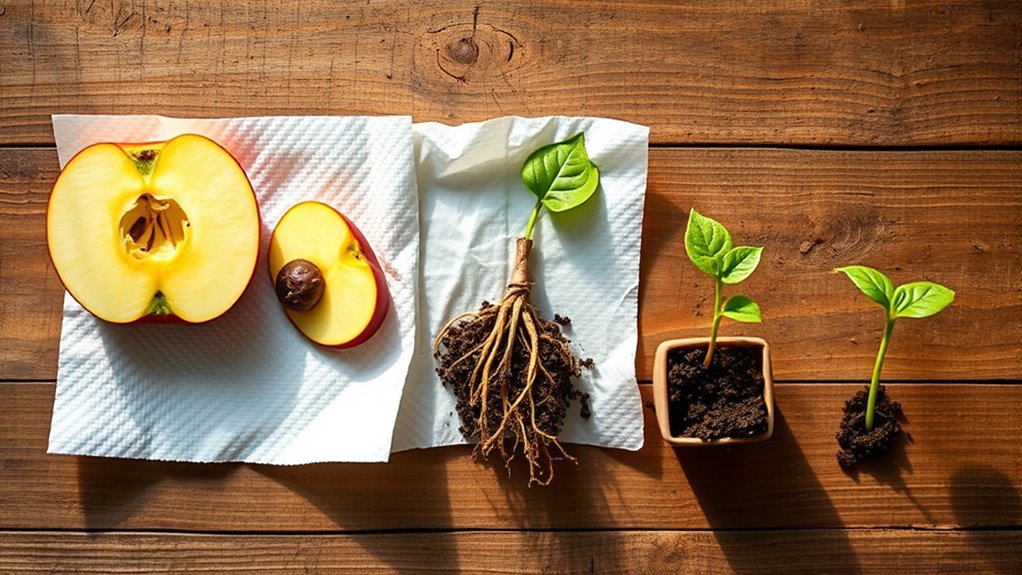
Start by cleaning your seeds to remove any leftover fruit flesh and dry them thoroughly. Then, place the seeds in a damp paper towel or cloth, and put them inside a plastic bag or airtight container.
Store the container in the refrigerator at 34-41°F (1-5°C) for about 6 to 8 weeks. During this time, check periodically to make sure the seeds stay moist but not soaked.
Cold stratification signals to the seed that it’s time to sprout, increasing your chances of successful germination. Once the period ends, you’re ready to move on to planting, confident that your seeds have gone through the necessary steps to get started.
Planting Apple Seeds for Optimal Growth
To give your apple seeds the best chance to grow, plant them about half an inch deep in well-draining soil, ideally in early spring after the last frost. When choosing seeds, pick healthy, plump ones from a trusted source to boost germination chances.
The right soil type is super important. Loamy soil with good drainage and organic matter helps roots develop and prevents waterlogging. Stay away from heavy clay soils, which hold too much moisture, or sandy soils that drain too quickly.
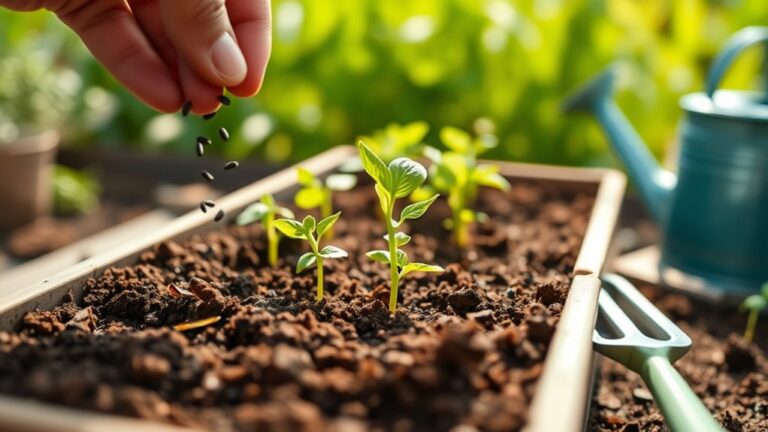
Before planting, loosen the soil and mix in compost to make it more fertile. Place the seeds individually, spacing them a few inches apart so each one has room to grow. Cover the seeds lightly with soil and gently water to settle the soil around them.
Choosing good seeds and the right soil sets a strong foundation for your apple seed’s growth. This increases your chances of nurturing a healthy young tree.
Caring for Your Young Apple Tree as It Develops
As your young apple tree begins to grow, providing consistent care is essential for healthy development. Regularly monitor its growth, making sure it gets enough water and sunlight.
Use proper pruning techniques to shape the tree and promote strong, fruitful branches. Be gentle but firm when removing dead or crossing limbs to prevent damage and encourage airflow.
Pest management is vital during this stage. Keep an eye out for common pests like aphids and codling moths, and take swift action to control them. Healthy trees resist pests better, so maintaining overall vigor helps prevent infestations.
| Care Aspect | Emotional Impact |
|---|---|
| Pruning techniques | Watching your tree thrive fills you with pride |
| Pest management | Protecting your tree creates a sense of accomplishment |
| Watering | Nurturing your tree deepens your connection |
| Sunlight | Providing warmth fosters growth and hope |
| Monitoring | Regular care brings peace of mind |
Stay consistent, and your young apple tree will flourish.
Troubleshooting Common Challenges in Growing Apple Trees From Seed
Growing an apple tree from seed can be rewarding, but it often comes with unexpected hurdles. One common challenge is pest management; pests like aphids or apple maggots can damage your young tree. Regularly inspect your tree and use organic or chemical controls as needed, making sure to target pests early before they cause significant harm.
Another issue is nutrient deficiencies, which can stunt growth or cause poor fruit development. To prevent this, provide a balanced fertilizer suited for fruit trees and improve the soil with compost. Watch for signs like yellowing leaves or slow growth, and address deficiencies quickly.
Additionally, maintaining proper watering and pruning helps keep pests and diseases away. By staying attentive and proactive, you can troubleshoot these challenges effectively, giving your apple seedling the best chance to grow into a healthy, fruitful tree.
Frequently Asked Questions
How Long Does It Take for an Apple Seed to Sprout?
It typically takes 1 to 8 weeks for an apple seed to sprout, depending on how you prepare the seed and the germination temperature.
To speed things up, soak your seeds in water for 24 hours and keep them in a warm spot, ideally between 65-75°F.
Consistent moisture and the right temperature help your seed sprout faster, so keep an eye on these conditions to give it the best chance to grow into a healthy seedling.
Can I Grow an Apple Tree Indoors From Seed?
Yes, you can grow an apple tree indoors from seed, turning your space into a mini indoor orchard! With the right light, temperature, and patience, seed propagation can be successful.
Keep in mind, it’s a slow process—taking years for your tree to produce fruit. But it’s really rewarding to watch that tiny seed sprout and grow right in your home.
Indoor environments need extra care, but nurturing a tree from seed makes it all worth it!
What Are the Best Soil Types for Apple Seed Germination?
You should use well-draining soil for apple seed germination because proper drainage prevents root rot and keeps the seed oxygenated.
Opt for a loamy mix that balances nutrients, providing what the seed needs to grow healthy and strong.
Avoid heavy clay soils since they hold too much water, which can drown the seed.
Also, steer clear of overly sandy soils that lack essential nutrients for growth.
A balanced, nutrient-rich, and well-draining soil creates the perfect environment for your apple seed to sprout and thrive.
Do Apple Trees Grown From Seed Produce Fruit Identical to the Parent?
No, apple trees grown from seed usually don’t produce fruit identical to the parent because of genetic variation. The seed’s genetics can differ quite a bit, leading to different flavors, textures, and sizes.
To get apples similar to what you want, it’s best to carefully select seeds from high-quality, desirable fruit. Keep in mind that orchard-grown trees are often grafted to guarantee fruit consistency, unlike seed-grown trees.
How Often Should I Water My Apple Seedling During Early Growth?
You should water your apple seedling frequently during early growth, keeping the soil consistently moist but not soggy.
In seedling care, watering once every 2-3 days usually works, but it depends on your climate and soil type.
Check the top inch of soil—if it feels dry, it’s time to water.
Regular watering helps develop strong roots and healthy growth, setting a good foundation for your young tree.
Conclusion
So, after all this effort, you might be surprised to find your apple tree finally bearing fruit—only to realize it’s not the perfect apple you envisioned. But hey, even nature’s little surprises have a charm of their own.
Growing an apple tree from seed isn’t just about the fruit. It’s about the journey, the patience, and those unexpected twists that come along the way.
Who knew that cultivating an apple tree could teach you so much about life and irony? In the end, it’s all part of the fun of growing an apple tree from seed.