What Makes Chia Seeds High in Fiber?
Are you looking for a simple way to boost your daily fiber intake? Many people struggle to find effective, natural sources that actually make a difference in their digestion and health. If that sounds familiar, you’re not alone.
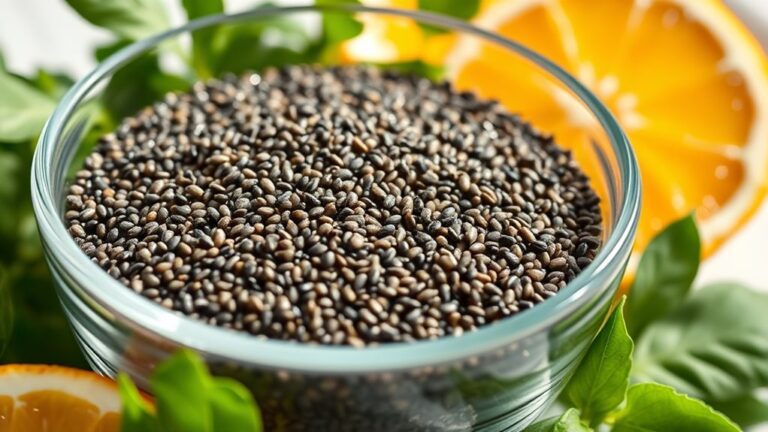
Chia seeds are high in fiber because of their unique structure, featuring a tough outer shell and porous design that traps fiber-rich components. They contain about 34 grams of both soluble and insoluble fiber per 100 grams.
The soluble fiber forms a gel that aids digestion and moderates blood sugar, while insoluble fiber adds bulk for regularity.
Their small size and high water absorption improve fiber accessibility, making them highly effective—discover how these features work together to boost your health.
Key Takeaways
- Chia seeds pack about 34 grams of fiber per 100 grams, made up of both soluble and insoluble fibers.
- Their porous, capsule-like structure traps fiber-rich components and helps them absorb water during digestion.
- The mucilage from soluble fibers forms a gel-like coating, which makes digestion easier and boosts fiber intake.
- The tough outer shell and cell walls protect the fiber and control how it’s released during digestion.
- How they’re processed also matters; proper milling keeps the fiber’s quality and nutritional benefits intact.
Why Are Chia Seeds So Rich in Fiber?
Chia seeds are incredibly rich in fiber because they contain a high amount of soluble and insoluble fibers, which make up about 34 grams per 100 grams of seeds. This dense fiber content offers numerous benefits, especially for your digestive health.
The soluble fiber forms a gel-like substance when mixed with liquids, helping to slow digestion and keep your gut functioning smoothly. Insoluble fiber adds bulk to your stool, promoting regularity and preventing constipation.
Because of this, incorporating chia seeds into your diet can help maintain a healthy digestive system. The combination of both fiber types makes chia seeds a powerful tool for supporting overall gut health.
Moreover, their high fiber content can help control blood sugar levels and manage weight, making them a versatile addition to your nutritional routine. Overall, chia seeds are a simple, natural way to boost your fiber intake and improve digestion.
What Structural Features of Chia Seeds Enable High Fiber Content?
Chia seeds have a pretty interesting structure that makes them super high in fiber. Their unique capsule-like shape helps trap and protect all those fiber-rich components inside. When you soak chia seeds, their high mucilage content forms a gel-like layer around them, which not only increases their fiber levels but also makes digestion easier.
Plus, the tough cell walls of chia seeds play a big role in keeping those fibers intact. This means you get the benefits of the fiber over a longer period, supporting your health in a steady and reliable way. So, it’s really all about their special structure that makes chia seeds such a powerful source of dietary fiber.
Unique Seed Capsule Structure
A key factor behind chia seeds’ impressive fiber content is their unique seed capsule structure. This capsule acts as a protective and functional shell that boosts their fiber-rich properties.
The structural benefits include a tough outer shell that keeps the seed’s nutrients and fiber safe. It also has a porous design that allows water to be absorbed and the seed to swell.
Inside, there are layers that protect the seed’s core, helping preserve its fiber integrity. Plus, the compact design makes it easy to add chia seeds into various foods, helping you increase your fiber intake.
This special seed capsule not only safeguards the seed’s nutrition but also contributes to its high fiber content. That makes chia seeds a powerful and healthy dietary choice.
Their structural features are key to unlocking their health benefits.
High Mucilage Content
One of the main reasons chia seeds pack such a high amount of fiber is their remarkable mucilage layer, which is directly linked to their structural features. This mucilage is a gel-like substance formed from soluble fibers in the seed’s outer layer.
Its unique mucilage properties enable it to absorb water rapidly, creating a thick, sticky coating around each seed. This gel helps keep the fiber inside the seed even after processing or digestion.
The mucilage’s ability to swell greatly contributes to the seed’s high fiber content, providing bulk and aiding digestion. Its natural sticky quality also helps trap nutrients and water, making chia seeds a potent source of dietary fiber that benefits gut health and promotes satiety.
Robust Cell Wall Composition
Chia seeds get their high fiber content from their strong cell wall structure, which acts like a sturdy framework. This keeps dietary fibers intact even during processing and digestion.
The cell wall is made up of cellulose and hemicellulose, which help retain those fibers. Its rigidity stops fibers from breaking down easily, so they reach your digestive system whole.
This dense structure allows chia seeds to hold both soluble and insoluble fibers. Thanks to this resilience, they provide lasting fiber benefits that support digestion and help you feel full longer.
Which Types of Dietary Fiber Are Found in Chia Seeds?
Chia seeds are a rich source of dietary fiber, containing several different types that support digestive health. These fibers include both soluble and insoluble fibers, each with its own benefits.
Soluble fiber forms a gel-like substance when mixed with water, helping to regulate blood sugar levels and lower cholesterol. Insoluble fiber adds bulk to your stool, promoting regular bowel movements and preventing constipation.
Soluble fiber forms a gel to regulate blood sugar and lower cholesterol.
Together, these fibers contribute to the nutritional benefits of chia seeds, making them a valuable addition to your diet. The soluble fibers also act as prebiotics, nourishing beneficial gut bacteria and supporting overall gut health.
Their high fiber content helps you feel full longer, which can aid in weight management. By including chia seeds in your meals, you enhance your intake of diverse fiber sources, essential for a healthy digestive system and overall wellness.
How Does Water Absorption Increase the Fiber Benefits of Chia Seeds?
When chia seeds come into contact with water, they quickly absorb it and swell, forming a gel-like coating around each seed. This process significantly boosts their fiber benefits.
The increased water retention allows the seeds to expand, making them more filling and helping you stay full longer. The gel they form is rich in soluble fiber, which supports digestion and fiber absorption in your gut.
This gel slows down digestion, giving you a steady release of energy throughout the day. It also helps keep your bowel movements smooth by softening stool.
Plus, the extra water content helps your body process fiber more efficiently. The gel acts as a barrier that can curb hunger pangs, making it easier to manage your weight.
How Does the Composition of Chia Seeds Support Digestive Health?
Chia seeds are loaded with soluble fiber, which is great for your digestion. When you mix them with liquid, they turn into a gel-like substance that helps keep things moving smoothly in your gut. It’s like giving your digestive system a gentle boost!
Plus, their special composition encourages the growth of healthy gut bacteria. That means they not only help with digestion but also support your overall gut health. So, adding chia seeds to your diet can be a simple way to keep your digestive system happy and functioning well.
Rich in Soluble Fiber
Because soluble fiber dissolves in water to form a gel-like substance, it supports your digestive health. This type of fiber helps slow digestion and regulate blood sugar levels.
Chia seeds are especially rich in soluble fiber, which keeps your gut healthy. Here’s how they boost your digestion:
- They help you feel full longer, so you’re less likely to overeat.
- They soften stool, making bowel movements easier and preventing constipation.
- They slow down sugar absorption, helping to keep blood sugar stable.
- They nourish good gut bacteria, improving overall digestion.
Gel-Forming Properties
The unique composition of chia seeds allows them to form a gel-like substance when soaked in water. This gel plays an important role in supporting digestive health.
This happens because of their fiber structure, mainly soluble fiber, which swells and creates a viscous layer. As the seeds absorb liquid, their fibers expand, forming a thick gel that helps regulate digestion.
The gel slows down the movement of food through your gastrointestinal tract, making nutrient absorption more efficient. It also adds bulk to your stool, which can reduce constipation.
Promotes Gut B菌rowth
The gel-forming properties of chia seeds not only help digestion but also create a great environment for good gut bacteria to grow. This boosts your gut microbiome by supporting fiber fermentation, which produces short-chain fatty acids that are essential for gut health.
To get the most benefits, keep these points in mind:
- The soluble fiber in chia seeds feeds the good bacteria, encouraging their growth.
- The gel slows down digestion, giving bacteria more time to ferment fiber effectively.
- Fermentation produces nutrients that help keep your intestinal lining healthy.
- A healthy gut microbiome improves nutrient absorption and boosts your immune system.
How Do the Cell Walls of Chia Seeds Help Preserve Their Fiber?
The cell walls of chia seeds are key in protecting their fiber content. These walls are made up of complex carbohydrates, mainly insoluble fiber, that form a tough barrier around the seed’s interior.
This structure helps keep the fiber intact during processing and digestion, preventing it from breaking down easily. When you soak chia seeds, the cell walls become more permeable, letting water in and activating the fiber’s benefits.
The sturdy cell wall also shields the seed’s nutrients from environmental damage, helping maintain fiber integrity over time. Because of this protective layer, more of the fiber stays intact until you eat the seeds, boosting their health benefits.
Basically, the cell wall acts like a natural safeguard, making sure the fiber remains preserved and effective in your digestive system. This preservation enhances chia seeds’ reputation as a high-fiber superfood.
What Role Do the Outer Coats Play in Chia Seed Fiber Content?
Outer coats on chia seeds play a key role in keeping their fiber content intact by acting as a barrier against things outside the seed. This coat helps protect the internal fiber structures, making sure they stay whole during storage and digestion.
It also helps control how water interacts with the seed, which is important for fiber swelling and gel formation. This means the seed can develop that gel-like texture more easily when you eat it.
The structure of the outer coat influences how simply fiber is released during digestion. Plus, it acts as a shield to prevent nutrient loss, helping the seed keep its high fiber content.
How Does the Tiny Size of Chia Seeds Make Their Fiber More Accessible?
Ever wondered why chia seeds are such a powerhouse of fiber despite their tiny size? It’s because their small seed size actually improves fiber accessibility.
Smaller seeds have a larger surface area relative to their volume, making it easier for your digestive system to access the fiber. When you eat chia seeds, their tiny size means they break down quickly in your stomach, exposing the fiber inside.
This increased surface area helps your body digest and absorb the fiber more easily. Larger seeds might pass through your system with less fiber breakdown, but chia seeds work differently.
Plus, the small size allows chia seeds to disperse evenly throughout your meals, ensuring you get a steady fiber intake.
Do Processing Methods Affect the Fiber in Chia Seeds?
Processing methods like milling and soaking can really change how much fiber you actually get from chia seeds. When you mill the seeds, you’re breaking down their structure, which can make the fiber more accessible and easier for your body to absorb. On the other hand, soaking the seeds might soften them up and could even alter the fiber content a bit. Knowing how these methods affect the fiber helps you choose the best way to get the most benefit from chia seeds and boost your fiber intake.
Impact of Milling Process
The way chia seeds are processed can really influence their fiber content and nutritional benefits. Milling methods directly affect how much of the seed’s natural fiber stays accessible.
When seeds are ground very finely, their surface area increases. This can sometimes reduce fiber quality if not done carefully. On the other hand, coarser milling helps preserve more of the seed’s original fiber structure.
Think about the type of milling equipment used, as it impacts fiber preservation. The degree of grind also matters, as it influences how accessible the fiber is.
Processing speed is another factor—if it’s too fast, heat can build up and degrade the fiber. How you handle the seeds after milling is important too, since rough handling can harm fiber integrity during packaging.
Choosing the right milling method ensures you keep the maximum fiber benefits from chia seeds. That makes them more nutritious and better for your diet.
Effects of Soaking Method
Soaking chia seeds can really change how their fiber properties work and how your body accesses them. The length of time you soak them determines how much gel-like substance forms, which affects digestibility and nutrient release.
Longer soaking, like overnight, lets the seeds soak up more water and softens the fiber matrix, making them easier to digest. Shorter soaking might leave some fibers less accessible, though.
Temperature also matters: warm water speeds up hydration, while cold water keeps the seeds in a more raw state. Higher temperatures may slightly change the fiber’s structure but won’t significantly reduce the fiber content.
How Can You Incorporate Chia Seeds Into Your Diet to Boost Fiber Intake?
Looking for simple ways to boost your fiber intake? Incorporating chia seeds into your diet is easy and effective. Here are four quick ideas:
- Add them to smoothie recipes—just sprinkle a tablespoon into your blender for a creamy, fiber-rich boost.
- Mix chia seeds into breakfast bowls with yogurt, fruit, and granola for added texture and nutrients.
- Make chia pudding by soaking seeds in milk overnight. It’s a delicious, fiber-packed snack or breakfast.
- Stir chia seeds into oatmeal or cereal to increase fiber content and help you feel full longer.
These methods are convenient, versatile, and perfect for busy mornings. You can easily customize these ideas to suit your taste, making it simple to increase your fiber intake daily. Whether in smoothies, bowls, or puddings, chia seeds are a fantastic way to support your digestive health while enjoying tasty meals.
Frequently Asked Questions
Are There Any Potential Side Effects of Consuming High-Fiber Chia Seeds?
Consuming high-fiber chia seeds can cause potential side effects if your fiber tolerance is low. You might experience bloating, gas, or digestive discomfort, which can affect your digestive benefits.
To avoid this, start with small serving sizes and gradually increase them. High fiber intake can also interfere with nutrient absorption if you eat too much at once.
Monitoring your body’s response helps maintain a healthy balance and prevents adverse effects.
How Much Chia Seeds Should I Eat Daily for Optimal Fiber Intake?
You should aim for about 1 to 2 tablespoons of chia seeds daily for ideal fiber absorption. That small amount packs a punch, providing enough fiber to boost your digestion dramatically!
Just remember, a daily serving like this can support your gut health without overdoing it. Add them to smoothies, yogurt, or oatmeal, and watch your fiber intake soar, transforming your digestive wellness!
Can Chia Seeds Replace Other Fiber Sources in My Diet?
Chia seeds can replace some fiber sources in your diet, but they shouldn’t be the only source of dietary fiber.
They’re high in soluble fiber, which helps with digestion, but it’s good to include a variety of fruits, vegetables, and whole grains to get a wider range of nutrients.
Use chia seeds as a supplement or a small part of your diet, but don’t forget to keep your overall diet balanced to meet all your fiber needs.
Do Organic Chia Seeds Have Higher Fiber Content Than Non-Organic Ones?
You’ll be glad to know that organic chia seeds don’t necessarily have higher fiber content than non-organic ones. In fact, both contain about 10-11 grams of fiber per ounce.
Organic benefits mainly include fewer pesticides and a better environmental impact, not fiber comparison. So, choosing organic is more about health and sustainability.
Fiber levels stay pretty consistent regardless of farming methods. Focus on quality and sourcing to get the most health benefits from your chia seeds.
How Does the Age or Health Condition Affect Chia Seed Fiber Benefits?
Your age and health condition can influence how you experience the fiber benefits from chia seeds.
As you get older, your digestive system might slow down, so chia’s fiber can help keep things regular and support your gut health.
If you have health issues like diabetes or heart problems, chia seeds can be especially helpful. They can assist with managing blood sugar levels and lowering cholesterol.
Make sure to adjust your intake based on your personal health needs for the best results.
Conclusion
Incorporating chia seeds into your diet unleashes a fiber powerhouse so incredible, it practically transforms your digestive system into a well-oiled machine! With their unique structure and water-absorbing superpowers, these tiny seeds pack a punch that can turn your health around faster than you can say “fiber boost.”
So, don’t wait—add chia seeds today and experience the astonishing, almost magical, benefits for your gut and overall wellness. Their high fiber content is what makes chia seeds a true nutritional superstar.