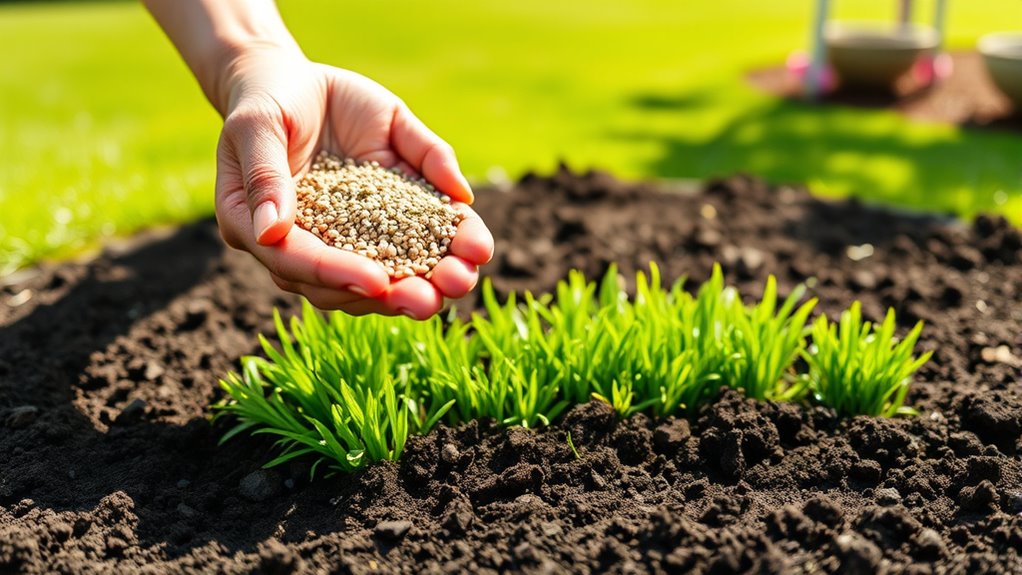
10 Essential Steps to Seed Your Lawn Successfully
Many people dream of having a lush, green lawn, but getting there can feel overwhelming. If you’ve struggled with patchy grass or uneven growth, you’re not alone.
Luckily, with the right approach, you can turn things around and create a beautiful yard you’re proud of.
To seed your lawn successfully, start with soil testing and amend the soil with compost and pH adjustments for healthy growth.
Choose grass suited for your climate and conditions. Spread the seed evenly, keeping it shallow and ensuring good seed-to-soil contact.
Water consistently to keep the soil moist without over-saturating. Protect seeds from birds and pests, and mow carefully once the grass is established.
Avoid common mistakes to achieve a lush, green lawn—continue for more detailed guidance.
Key Takeaways
- Conduct soil testing and add organic matter to give your seeds the best chance to germinate.
- Pick a grass seed that fits your climate, soil, and sunlight conditions for a healthy lawn.
- Prepare your soil by leveling, aerating, and making sure it drains well before planting.
- Spread the seeds evenly at the right depth, and keep the soil moist during germination.
- Protect your young seedlings with mulch or mesh, and follow proper mowing and care routines.
How to Prepare Your Soil for Seeding
Before you start seeding, it’s important to prepare your soil properly. Begin with soil testing to understand its current condition, including nutrient levels and pH. This helps you spot any deficiencies or imbalances that could prevent your grass from growing well.
Next, check how well your soil drains. Good drainage is key because poor drainage can lead to root rot and other problems. If the pH isn’t right, adjust it so it’s slightly acidic to neutral, which most grasses prefer.
Adding organic amendments like compost or aged manure can boost the soil’s fertility and improve its texture. Also, consider aeration, such as core aeration, to loosen compacted soil and allow roots to grow deeper and oxygen to circulate.
Choosing the Best Grass Seed for Your Lawn
Picking the right grass seed really comes down to your climate, soil type, and the specific area where your lawn is. You want to choose a seed that’s happy in your local conditions so it can grow strong and healthy. Take some time to think about these factors — it’ll make a big difference in how your lawn turns out.
Climate Compatibility
Selecting the right grass seed for your lawn depends heavily on your climate, as different grass types thrive under specific weather conditions. Your regional climate determines which varieties will adapt best, considering seasonal changes and temperature swings.
Some grasses do well with high moisture, while others are better suited for drought resistance. Humidity levels also play a role, affecting disease risk and growth patterns. Frost tolerance is important if you live in a colder area.
If you face harsh winters or hot, dry summers, pick a seed that can handle those conditions. Choosing the right seed for your climate helps keep your lawn lush and healthy all year round.
Matching your seed to your climate reduces maintenance and helps create a resilient, thriving lawn.
Soil Type Suitability
Understanding your soil type is essential because it directly influences how well grass seeds will establish and thrive in your lawn.
First, test your soil pH to see if it’s acidic, neutral, or alkaline. Different grasses prefer specific pH levels—for example, cool-season grasses usually do best in soils with a pH of 6.0 to 7.0.
Next, check how well your soil drains. Does water flow quickly through it, or does it tend to pool? Well-draining soil helps prevent root rot and disease, while poorly draining soil might need amendments like organic matter to improve flow.
Knowing your soil’s characteristics helps you pick grass seed varieties suited to those conditions. This increases your chances of success and leads to a healthier, more resilient lawn.
Grass Zone Recommendations
To guarantee your lawn thrives, it’s important to match your grass seed to your specific climate zone. Knowing your zone helps you choose the right grass type, whether it’s native grasses or drought-resistant varieties.
Native grasses are adapted to your local conditions, requiring less water and maintenance. They’re a great choice for a sustainable lawn that’s easier to care for.
If you experience dry summers, go for drought-resistant varieties that can handle drought stress and help conserve water.
Also, consider your soil type and sunlight exposure when selecting a grass seed, as some varieties perform better in certain environments.
When and How to Spread Lawn Seed Properly
Timing is essential when spreading lawn seed to give your new grass the best chance to grow strong and healthy. Ideally, do this when soil temperatures are between 50-65°F, and conditions are dry but not overly dry.
Use effective seed distribution techniques, like broadcast spreading or a seed spreader, to ensure even coverage without gaps or overlaps. Pay close attention to seed depth—usually about 1-2 times the seed’s diameter.
Seeds that are too shallow might dry out, while those too deep won’t germinate properly. After spreading, lightly rake the soil to incorporate the seeds and ensure good contact with the surface.
This step boosts germination chances and helps develop strong roots. Proper timing and technique set a solid foundation for healthy growth, giving your lawn the best start possible.
Water Your Newly Seeded Lawn for Best Germination
After spreading your seed and lightly raking the soil, the next step is watering properly to encourage germination. You want to make sure the seed is at the right depth—too deep and it won’t sprout; too shallow and it might dry out or wash away.
Use a gentle, consistent spray to keep the soil evenly moist without displacing the seeds. Proper moisture retention is key to healthy germination, so avoid letting the soil dry out completely between waterings.
Water lightly multiple times a day instead of one heavy soak, which can cause runoff and uneven moisture. Keep the soil consistently moist but not soggy, as excess water can drown the seeds.
Maintaining ideal moisture levels helps the seed absorb water efficiently and promotes sprout development. Regular, careful watering supports germination and helps establish strong roots for a resilient lawn.
Protect Your Seed During Germination From Birds and Pests
Since seeds are vulnerable during germination, it’s important to protect them from birds and pests that might dig up or eat your newly planted lawn. Using seed protection methods helps ensure successful germination.
One effective way is to apply a light layer of mulch or straw over the seeded area. This acts as a barrier against birds and pests, keeping them from disturbing your seeds. You can also install mesh or chicken wire cages around the seed bed, especially in areas with lots of pest activity.
Commercial seed coverings or biodegradable mats are great options too. They provide a protective shield without blocking the seed’s contact with soil moisture. These barriers prevent birds from pecking at seeds and pests from digging up or eating them.
Make sure to check your lawn regularly after planting to keep these protections in place and working well. Properly safeguarding your seeds increases the chances of healthy germination and a lush, green lawn.
Applying Fertilizer at the Right Time for a Healthy Lawn
Applying fertilizer at the right time is key to a healthy, vibrant lawn. Timing helps your grass absorb nutrients better and promotes strong root growth.
Usually, fertilize soon after seeding or when your grass starts to grow actively. Use the right type of fertilizer, like starter formulas with phosphorus for new seedlings, or balanced mixes for ongoing health.
Be sure to spread the fertilizer evenly with a broadcast or drop spreader, avoiding overlaps or missed spots. Lightly water your lawn afterward to help the nutrients soak in.
Don’t fertilize during extreme heat or drought, as this can harm the roots. Regular, timely feeding keeps your grass lush, strong, and less prone to weeds and pests.
How to Keep Weeds and Pests Away During Lawn Establishment
While establishing your lawn, it’s important to take steps to keep weeds and pests away to ensure healthy growth. Using natural herbicides can help target weeds without harming your new grass.
Keep weeds and pests at bay with natural herbicides and organic pest control for a healthy, thriving lawn.
Organic pest control methods, like introducing beneficial insects or applying neem oil, can keep pests at bay naturally. Regularly check your lawn for early signs of weeds or pests and remove them promptly.
Mulching around the edges helps suppress weed growth and keeps soil moisture in check. Avoid chemical herbicides that might damage your young grass roots.
Instead, opt for organic options that promote a healthy ecosystem. Maintaining healthy soil and keeping your lawn strong makes it more resistant to pests and weeds.
When and How to Mow Your New Lawn for Optimal Growth
After establishing your lawn and taking steps to keep weeds and pests at bay, the next important phase is managing mowing. Proper mowing techniques are essential for healthy growth.
Wait until your grass reaches about 3 to 4 inches tall before mowing for the first time. This gives the roots time to establish firmly. When you mow, set your mower to a higher blade height, around 3 inches, to avoid stressing the young grass.
Cutting too low can weaken the roots and hinder growth. Regular mowing, about once a week, helps promote dense, healthy turf. Always use sharp blades to ensure clean cuts, which reduce stress and prevent disease.
Avoid removing more than one-third of the grass height at a time. This preserves the grass’s energy reserves. By following these mowing tips and keeping the blade height appropriate, you give your new lawn the best chance to develop strong roots and lush, even growth.
Common Mistakes to Avoid When Seeding Your Lawn
Skipping soil preparation can really hurt your chances of having a lush, green lawn. If you don’t get the soil ready first, your seeds might not germinate properly, and you could end up with patchy spots. It’s a step you definitely don’t want to skip!
And don’t forget about watering. If you ignore a good watering schedule, your seeds might dry out or get washed away before they even have a chance to take root. Staying consistent with watering helps give your new grass the best start possible.
Overlooking Soil Preparation
One of the most common mistakes when seeding your lawn is neglecting proper soil preparation. Without soil testing, you won’t know if your soil has the right nutrient balance for healthy grass growth. Failing to amend the soil can lead to weak roots and patchy grass.
Before seeding, evaluate your soil’s pH and nutrient levels to make necessary adjustments. To help you, here’s a quick guide:
| Step | Action | Benefit |
|---|---|---|
| Test soil | Use a soil test kit or lab | Identify deficiencies |
| Amend soil | Add lime or fertilizer as needed | Achieve ideal nutrient balance |
| Loosen soil | Aerate or till the area | Improve seed-to-soil contact |
| Level ground | Rake smooth | Prevent uneven germination |
Ignoring Proper Watering
Proper watering is essential for successful lawn seeding, yet it’s easy to overlook or delay this step. If you don’t water correctly, your seeds won’t establish properly.
Keep the seed at the right depth, usually about 1/4 to 1/2 inch, to protect it and promote germination. Ignoring watering frequency can lead to dry patches or overly saturated soil, both harmful to seedlings.
You should water lightly and frequently—about once or twice daily—until the grass begins to grow. Once roots develop, gradually reduce watering frequency but increase the depth of each session.
Missing these cues can cause seed failure, so stay attentive and consistent. This way, your new lawn gets the moisture it needs for healthy growth.
Maintaining Your Lawn for Long-Term Health and Beauty
To keep your lawn healthy and beautiful over the long term, consistent maintenance is key. Regular seasonal tasks help preserve its look and stop problems before they start.
Make sure to mow at the right height, fertilize properly, and aerate each year to encourage strong root growth. Water deeply but less often to build drought resistance.
Here’s a quick guide to seasonal tasks:
| Season | Maintenance Task | Purpose |
|---|---|---|
| Spring | Aerate and fertilize | Boost growth and soil health |
| Summer | Water early mornings | Prevent drought stress |
| Fall | Reseed and clean debris | Prepare lawn for winter |
Focusing on these tasks keeps your lawn lush and vibrant, making your yard look great. Consistent care also helps it resist pests and diseases better.
Frequently Asked Questions
How Deep Should I Plant Grass Seeds for Best Results?
You should plant grass seeds at a depth of about 1 to 2 inches for the best results. Before you start planting, make sure to prepare the soil by loosening it and removing any debris. This helps the seeds establish strong roots.
Avoid planting the seeds too deep because they might have a hard time reaching the surface and germinating. Keep the soil consistently moist, and you’ll soon see your lawn grow healthier and faster.
Can I Seed My Lawn During the Winter Months?
You can seed your lawn during the winter months, but it’s best for certain grass types like cool-season grasses. These grasses handle colder temperatures well.
Winter seeding can work if you choose hardy varieties and wait for the right conditions—like soil that’s not frozen and some moisture.
Avoid warm-season grasses because they won’t establish properly in winter. Overall, plan carefully and be patient for spring germination.
What Are the Signs of Poor Seed Germination?
You’ll notice your seed’s hopes fading if poor germination signs appear, like patches of lifeless soil or stubborn bare spots. Low seed quality or harsh environmental factors can turn your lawn’s dreams into a dry desert.
If seedlings struggle to sprout or if germination is uneven after several weeks, it’s time to reassess your seed choice and environmental conditions. This way, your future lawn isn’t fighting an uphill battle.
How Long Does It Take for New Grass to Establish Fully?
You can expect new grass to establish fully within 4 to 6 weeks, but this depends on the seed germination timeline and ideal soil conditions.
If the soil is moist, well-drained, and has proper nutrients, germination happens faster.
Keep the area consistently moist and avoid heavy foot traffic during this period.
With proper care, your lawn will develop strong roots and become lush and healthy in no time.
Is It Necessary to Aerate Before Seeding?
Think of your lawn as a garden needing open gates before new visitors arrive. Aerating breaks up compacted soil, letting air, water, and nutrients reach roots more easily. This improves the benefits of aeration.
This step is especially important before seeding with seed types that need deep soil contact. By aerating, you create a welcoming environment for new grass seeds.
It ensures your seeds have the best chance to grow strong and lush. Aeration helps your lawn thrive from the ground up.
Conclusion
Think seeding your lawn is just about spreading grass seed? Not quite. The truth is, proper preparation and care can make or break your lawn’s success.
Did you know that overwatering can drown seeds or that early mowing can weaken roots? These small mistakes can really set you back.
By following these essential steps, you’re giving your lawn the best chance to thrive. With patience and attention, you’ll soon enjoy a lush, healthy yard that’s the envy of the neighborhood.
Starting with the right techniques will help you succeed in seeding your lawn effectively.