How to Determine if Coconut Oil Is a Seed Oil
Are you overwhelmed trying to figure out which oils are healthiest for your diet? You’re not alone—many people struggle with distinguishing between different types of cooking oils and their benefits.
Understanding whether coconut oil is a seed oil can help you make better choices for your health.
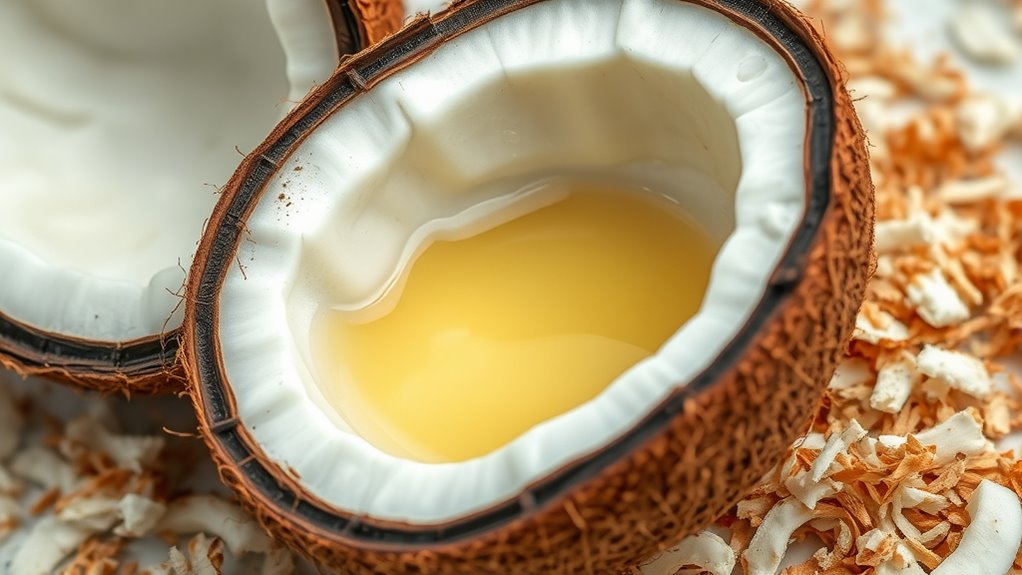
To determine if coconut oil is a seed oil, check its source—coconut oil comes from the flesh of coconuts, not seeds. It’s made through cold pressing or wet-milling, preserving natural nutrients and unrefined qualities.
Seed oils, on the other hand, are extracted from plant seeds like sunflower or soybean. Their composition differs, especially in high polyunsaturated fats.
Keep exploring to uncover more about what sets coconut oil apart from seed oils.
Key Takeaways
- Coconut oil comes from coconut flesh, not plant seeds, so it’s different from seed oils.
- Look at where the oil comes from: if it’s from the coconut flesh, it’s a fruit oil. If it’s from seeds, then it’s a seed oil.
- Check how the oil is made: cold pressing coconut flesh makes fruit oil, which is different from how seed oils are extracted.
- Look at the fatty acids: coconut oil is high in saturated fats, while seed oils usually have more polyunsaturated fats.
- The label or product info often says if the oil is from seeds or fruits, helping you identify its type easily.
What Are Seed Oils and Why Do They Matter?
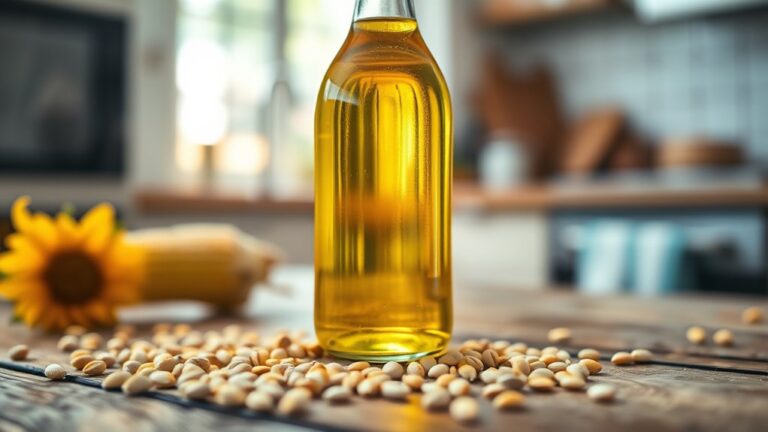
Seed oils are oils extracted from the seeds of plants like sunflower, soybean, and canola. They’re popular in cooking because they have a neutral flavor and a high smoke point, making them versatile.
Nutritional benefits depend on the seed, but many seed oils offer healthy fats, especially polyunsaturated and monounsaturated fats, which can support heart health.
However, some seed oils undergo heavy processing and may contain added chemicals or trans fats. It’s best to choose minimally processed options when you can.
Knowing what seed oils are and why they matter helps you make smarter choices in your diet and kitchen. They’re great for frying, baking, and dressings, but it’s good to be aware of their composition and potential health effects.
Understanding seed oils allows you to balance their benefits with other nutrient sources for overall better health.
How Is Coconut Oil Made and Extracted?
Sure! Here’s a more conversational version of the text:
So, to make coconut oil, you begin by harvesting the meat from mature coconuts. Once you’ve got that, the next step is to extract the oil from the meat. There are a few different ways to do this—like cold pressing or fermentation—and each method can affect the quality of the oil. After extraction, refining is usually done to remove any impurities and give the oil a cleaner, more polished look.
Understanding these steps really helps explain how coconut oil is made and what makes each type different from one another.
Harvesting Coconut Meat
Harvesting coconut meat starts with choosing mature coconuts that have fallen from the palm or are picked straight from the tree. Look for ones with brown husks and good weight—that’s a sign they’re ready.
Once you’ve got your coconuts, crack them open to get to the meat inside. Carefully remove the outer shell and extract the thick, white flesh.
This process is important because fresh coconut meat has high moisture, which can affect the quality of the oil.
After you get the meat out, clean it up and prepare it for what’s next—whether you want to use it raw or dry it out.
Proper harvesting and extraction help ensure you end up with high-quality coconut meat, which is key for making good coconut oil.
Extraction Methods Used
Coconut oil is extracted through different methods, and each one affects the oil’s quality and purity. The most common techniques are cold-pressing, expeller-pressing, and wet-milling.
Cold-pressing keeps the oil’s natural nutrients intact and usually results in better extraction efficiency, leading to higher-quality oil. Expeller-pressing uses mechanical force to get the oil out, often producing a larger yield but possibly slightly reducing some nutrients.
Wet-milling uses water to extract oil from fresh coconut meat, which creates virgin coconut oil with minimal processing. The method you choose directly impacts both how much oil you get and how pure it is.
Generally, higher-quality oils come from less invasive extraction methods, making it important to understand these techniques when evaluating coconut oil’s seed oil status.
Refining Process Overview
After the initial extraction, the refining process further purifies the coconut oil to improve its clarity, stability, and shelf life. Refining methods vary, including physical, chemical, or a combination of both, to remove impurities, odors, and color.
These methods help guarantee higher oil purity, making the product more appealing and stable for storage. During refining, you might encounter processes like bleaching, deodorizing, or filtering, which eliminate residual moisture, free fatty acids, and other contaminants.
The goal is to produce a clean, neutral oil with consistent quality. While some refining techniques may strip away nutrients or flavors, they greatly improve oil stability and shelf life.
Understanding these refining methods helps you determine the quality and purity of coconut oil and distinguish it from less processed or seed oils.
Where Does Coconut Oil Come From Compared to Seed Oils?
The origins of coconut oil are quite different from those of seed oils. Coconut oil comes from the flesh of mature coconuts, making it a fruit oil and part of tropical oils.
Coconut oil is derived from coconut flesh, making it a tropical fruit oil.
It’s produced by cold pressing or extracting from dried coconut meat, highlighting its natural coconut roots. On the other hand, seed oils come from the seeds of plants like sunflower, soybean, or rapeseed, often using mechanical or chemical extraction methods.
Understanding oil classifications helps explain their origins. Coconut oil is a fruit oil, coming from coconut flesh. Seed oils are classified based on the plant’s seed, like sunflower or soybean.
The way each oil is extracted impacts its purity and properties, reflecting their botanical sources. This fundamental difference in origin influences their composition and how they’re used.
What’s Inside Coconut Oil vs. Seed Oils?
Understanding what’s inside coconut oil compared to seed oils reveals key differences in their composition. Coconut oil mainly contains saturated fats, which give it unique properties like solidifying at cooler temperatures and high stability. Seed oils, on the other hand, are rich in polyunsaturated fats, making them more prone to oxidation and rancidity.
Here’s a quick comparison:
| Component | Coconut Oil | Seed Oils | Functionality |
|---|---|---|---|
| Main Fat Type | Saturated fats | Polyunsaturated fats | Affects stability and shelf life |
| Coconut Composition | Lauric acid and medium-chain triglycerides | Linoleic acid and alpha-linolenic acid | Influences health benefits |
| Oil Properties | Solid at room temperature, stable | Liquid at room temperature, less stable | Determines cooking uses |
| Oxidation Resistance | High | Low | Impacts storage and longevity |
These differences show how coconut oil’s composition affects its properties, unlike seed oils.
Do the Source and Composition Determine If an Oil Is a Seed Oil?
Determining whether an oil is a seed oil depends mainly on its source and chemical makeup. The source tells us if the oil comes from seeds or other plant parts, which helps in classification.
The chemical composition, like fatty acid profiles and phytochemicals, also plays a big role in identifying seed oils. To figure this out, check if the oil is from seeds like sunflower, sesame, or flax.
Look at the fatty acids—seed oils often have specific ratios of polyunsaturated fats like omega-3 and omega-6. The extraction method, whether cold-pressed or solvent-extracted, can also give clues about the oil’s origin.
How Do Nutritional Profiles of Coconut and Seed Oils Differ?
While the source and chemical makeup help identify whether an oil is a seed oil, their nutritional profiles show how they affect health differently. Coconut oil is mainly made up of saturated fats, especially medium-chain triglycerides (MCTs), which are quickly absorbed and used for energy.
In contrast, seed oils like sunflower or soybean oil contain higher levels of polyunsaturated fats, which can support heart health when eaten in moderation. Nutritional comparisons show that coconut oil can boost energy and may support brain health thanks to MCTs.
Seed oils, on the other hand, provide essential fatty acids like omega-3 and omega-6 that your body can’t produce on its own. Knowing these differences helps you choose oils based on your diet goals, whether that’s quick energy, heart health, or essential nutrients.
This knowledge helps guide healthier choices based on your specific nutritional needs.
How Processing Affects Whether Coconut Oil Is Considered a Seed Oil
Processing methods play an essential role in whether coconut oil is classified as a seed oil. The way the oil is extracted and refined influences its categorization within oil classification systems.
Cold pressing, for example, preserves more of the coconut’s natural composition. This aligns coconut oil with other minimally processed oils. Conversely, highly refined coconut oils undergo extensive processing, which can strip away original plant characteristics. This makes them less comparable to seed oils.
Key factors affecting oil classification include the extraction method used during processing, the degree of refinement and bleaching, and the presence or absence of chemical solvents.
These processing methods determine the oil’s chemical profile and purity. They impact whether coconut oil is seen as similar to seed oils. Understanding how processing affects coconut oil helps clarify its classification and potential health implications.
Debunking Myths: Is Coconut Oil a Seed Oil or Not?
Many folks think coconut oil is a seed oil because of all the health talk surrounding it. But when you really look at what it’s made of, it tells a different story. Unlike seed oils, which are usually full of polyunsaturated fats, coconut oil is mostly saturated fat. So, understanding these differences can help clear up whether coconut oil really belongs in the seed oil category or not.
Coconut Oil Composition
Coconut oil’s composition often sparks debate about its origins and classification. It mainly consists of saturated fats, especially medium-chain triglycerides (MCTs), which are quickly absorbed for energy. Unlike seed oils, coconut oil contains no polyunsaturated fats typical of many seed oils.
Its unique makeup contributes to its health benefits, including supporting heart health and boosting metabolism. When considering coconut oil benefits and uses, understanding its composition helps clarify misconceptions.
It’s rich in lauric acid, which is known for its antimicrobial properties. Coconut oil also contains antioxidants that support skin health. Overall, it’s composed primarily of saturated fats, not polyunsaturated seed oils.
Seed Oil Characteristics
While coconut oil is often grouped with seed oils because of its popularity in plant-based diets, its chemical makeup tells a different story. Seed oils usually contain polyunsaturated fats and come from seeds, but coconut oil is rich in saturated fats from the meat.
Understanding oil classifications helps clarify their nutritional benefits. For example, seed oils tend to have high omega-6 levels, while coconut oil provides medium-chain triglycerides that support energy.
Here’s a quick comparison:
| Characteristic | Coconut Oil | Typical Seed Oil |
|---|---|---|
| Main Fat Type | Saturated fats | Polyunsaturated fats |
| Extraction Source | Coconut meat | Seeds like sunflower or soybean |
| Nutritional Benefits | Energy boost, antimicrobial | Heart health, omega-6 support |
| Oil Classification | Tropical oil | Seed oil |
This comparison shows why coconut isn’t classified as a seed oil.
When Should You Think of Coconut Oil as a Seed Oil?
You should start thinking of coconut oil as a seed oil when it’s derived from the seeds or kernels of the coconut rather than from the fruit’s flesh. This distinction is important for understanding how coconut oil is classified and avoiding confusion with seed oils.
Typically, if the oil is extracted from the dried coconut seed or kernel, it aligns more with seed oils. Conversely, if it’s obtained from the coconut’s white flesh, it’s considered a fruit oil.
Consider these points:
- When the extraction involves the coconut’s seed or kernel, it’s more appropriate to classify it as a seed oil.
- If the oil is produced from the coconut’s flesh, it’s generally viewed as a fruit oil.
- The method of extraction and source help determine whether you should think of coconut oil as a seed oil, helping clear up seed oil confusion.
Recognizing this distinction helps you better understand coconut oil’s classification and its relation to other seed oils.
Summary: Is Coconut Oil a Seed Oil or Not?
Determining whether coconut oil qualifies as a seed oil depends on its source and extraction method. In the coconut oil classification, it’s clear that coconut oil isn’t a seed oil because it’s derived from the flesh of coconuts, not seeds.
The oil source debate centers on this distinction—seed oils come from the seeds of plants, like sunflower or soybean oil, while coconut oil comes from the fruit’s pulp. This fundamental difference influences the oil’s composition and health profile.
If you’re trying to classify coconut oil based on botanical origins, it’s not a seed oil. Instead, it’s considered a fruit oil, rich in saturated fats.
Frequently Asked Questions
Can Coconut Oil Be Classified as a Seed Oil Based on Its Health Benefits?
No, coconut oil isn’t classified as a seed oil, even with its health benefits. It’s made from the meat of coconuts, not seeds, and has unique nutritional value, including healthy fats.
When you consider cooking, coconut oil offers benefits like antimicrobial properties and a good flavor. While it’s healthy, it doesn’t belong to the seed oil category, which usually comes from plant seeds like sunflower or sesame.
Are There Specific Plant Parts Used to Produce Coconut Oil?
Think of coconut oil as the treasure from the coconut’s hidden cave. You use the meat, or kernel, from the coconut fruit, not the seeds, for extraction.
The coconut plant anatomy shows that the edible white flesh is the key part. It’s processed via cold-pressing or expeller-pressing methods.
These oil extraction methods maximize yield while preserving nutrients, making coconut oil a unique fruit oil rather than a seed oil.
How Does the Fatty Acid Profile Influence Seed Oil Classification?
Your understanding of fatty acid composition directly influences oil classification. Seed oils usually have higher levels of polyunsaturated fats, while coconut oil is rich in saturated fats.
When analyzing the fatty acid profile, if the oil contains mostly saturated fats like lauric acid, it’s more likely classified as a non-seed oil, such as coconut oil. On the other hand, high levels of polyunsaturated fats suggest seed oil origins.
Is Cold-Pressed Coconut Oil Different From Seed Oils in Processing?
Cold-pressed coconut oil differs from seed oils mainly because of how it’s extracted. Cold-pressed uses minimal heat, so it keeps more of its natural nutrients.
Many seed oils, on the other hand, often go through refining, bleaching, or deodorizing, which can strip away some of their properties. This gentle process helps preserve coconut oil’s natural qualities.
That’s why cold-pressed coconut oil stays true to its original form, unlike some heavily processed seed oils. It’s a more natural option if you’re looking for pure, nutrient-rich oil.
Does the Botanical Family of Coconut Affect Its Seed Oil Status?
Think of coconut classification like a family tree—its botanical distinctions place it firmly in the palm family, not as a seed oil. Unlike seed oils from plants like sunflower or sesame, coconuts are drupes, not seeds.
Conclusion
Understanding whether coconut oil is a seed oil depends on its source and extraction process. Unlike seed oils, which come from crushed seeds, coconut oil is derived from the fruit’s flesh.
Notably, over 70% of seed oils are highly refined and processed, affecting their nutrient content. So, while coconut oil isn’t technically a seed oil, knowing its unique origin and composition helps you make informed choices about its use in your diet and skincare.
When it comes to seed oils, they come from seeds like sunflower, soybean, or canola. Coconut oil, on the other hand, is made from the flesh of the coconut.
This difference in origin means coconut oil has a different nutrient profile and processing method than seed oils.
Understanding whether coconut oil is a seed oil helps you decide how to incorporate it into your health and beauty routines.