Can Dogs Eat Sunflower Seeds?
Many dog owners want to share their snacks with their furry friends but worry about what’s safe and what’s not. You’re not alone—figuring out if sunflower seeds are okay for dogs can be confusing.
You can give your dog sunflower seeds in moderation, but you need to remove the shells to prevent choking or digestion issues. Choose plain, unsalted seeds and avoid flavored or salted ones to prevent health problems like sodium poisoning.
Sunflower seeds offer health benefits like healthy fats and antioxidants, but overfeeding may lead to stomach upset or weight gain.
To learn how to feed them safely and recognize warning signs, investigate the details below.
Key Takeaways
- Sunflower seeds are safe in moderation if they’re unsalted and shell-free. Just avoid flavored or salted varieties.
- Make sure to remove the shells to prevent choking or digestive blockages.
- They’re nutritious and provide vitamin E, healthy fats, and antioxidants that can be good for your dog’s health.
- But be careful not to overfeed. Too many seeds can cause upset stomach, weight gain, or even toxicity, especially if they’re salted or seasoned.
- Keep an eye out for any bad reactions like vomiting or allergies, and check with your vet if you notice anything unusual.
Are Sunflower Seeds Safe for Dogs to Eat?
Are sunflower seeds safe for dogs to eat? In moderation, they can be safe, but it’s important to consider the benefits and your dog’s dietary needs.
Sunflower seeds contain healthy fats, vitamin E, and antioxidants, which can help support your dog’s coat and immune system. However, they are high in fat and calories, so overfeeding might cause weight gain or upset your dog’s stomach.
Sunflower seeds provide healthy nutrients but should be given in moderation to avoid weight gain or stomach upset.
Always remove the shells before giving seeds to your dog, since shells can cause choking or gastrointestinal blockages. Also, avoid salted or flavored sunflower seeds, as too much sodium isn’t good for dogs.
Small amounts can be a healthy treat, but they shouldn’t replace a balanced diet. It’s best to check with your veterinarian before adding sunflower seeds to your dog’s meals, especially if your pet has health issues or allergies.
What Are Sunflower Seeds and Why Do Dogs Like Them?
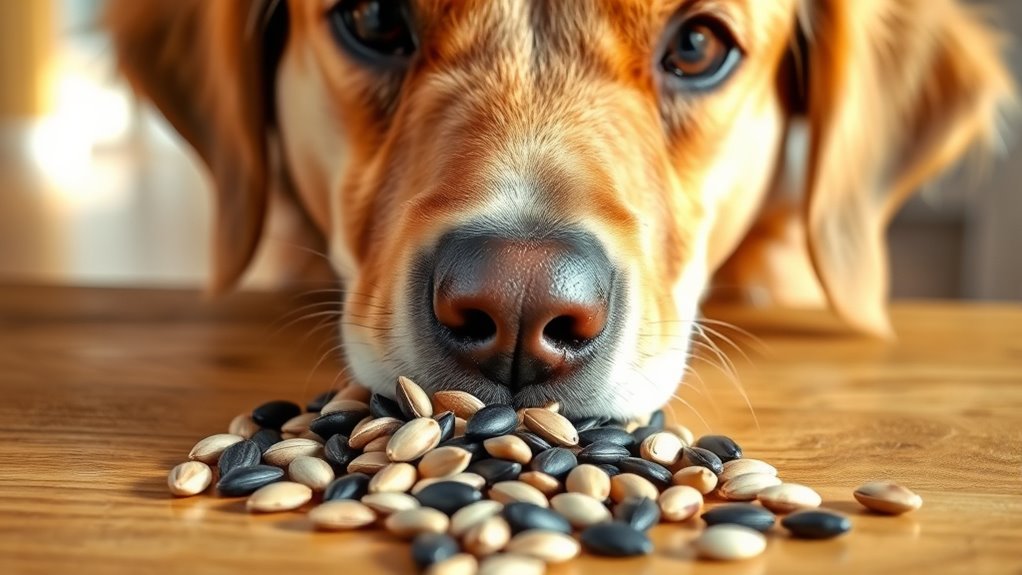
Sunflower seeds are tiny, nutrient-packed snacks that lots of dogs really seem to love. Their crunchiness and gentle flavor make them quite tempting for your furry friend. Plus, their natural smell can be pretty enticing, which is probably why dogs find sunflower seeds so appealing.
And it’s not just about the taste—these seeds do have some nutritional perks too. Of course, it’s always good to give them in moderation, since too many can cause tummy troubles. But overall, many dogs enjoy the crunch and aroma of sunflower seeds as a tasty treat!
Nutritional Value Highlights
Though small in size, sunflower seeds pack a powerful nutritional punch, making them a popular snack for both humans and dogs alike. They are rich in fiber, which supports healthy digestion and helps regulate bowel movements.
Plus, sunflower seeds are loaded with essential vitamins, including vitamin E, which acts as an antioxidant, and B vitamins that promote energy and overall well-being. These nutrients contribute to a shiny coat, healthy skin, and improved immune function for your dog.
While they’re small, their nutrient density makes them a valuable supplement in moderation. Keep in mind, though, that their nutritional benefits come with the need to watch portion sizes and avoid added salts or flavorings.
When fed responsibly, sunflower seeds can be a wholesome treat.
Texture and Flavor Appeal
Dogs often find sunflower seeds appealing because of their crunchy texture and mild, nutty flavor. The satisfying crunch appeals to many dogs’ texture preferences and gives them a fun, chewable treat that can keep them busy.
Their flavor variety, from subtly nutty to slightly sweet, makes these seeds enticing without overwhelming your dog’s palate. The crunchy exterior offers a pleasant mouthfeel, while the mild flavor isn’t too overpowering, encouraging dogs to enjoy them as a snack or treat.
Some dogs are especially drawn to the texture and find it fun to chew on, which can help satisfy their natural chewing instincts. Overall, the combination of texture and flavor makes sunflower seeds an attractive option for dogs who like crunchy, nutty treats.
Natural Dog Attractant
Sunflower seeds are small, nutrient-rich kernels that naturally attract many dogs thanks to their appealing crunch and mild flavor. Their scent and texture make them a great natural attractant, especially during training sessions.
Using sunflower seeds as treats can motivate your dog to focus and perform. The crunchy texture engages your dog’s senses and makes training more interesting.
Because they’re easy to carry and portion out, sunflower seeds are convenient for treat motivation. Many dogs find the taste irresistible, which helps reinforce positive behaviors.
Just remember, moderation is key—overfeeding can lead to health issues. When used thoughtfully, sunflower seeds can enhance your training while satisfying your dog’s love for tasty, crunchy treats.
Can Sunflower Seeds Improve My Dog’s Health?
Have you ever wondered if sunflower seeds could actually boost your dog’s health? They can offer some benefits when given in moderation, making them a potential seed alternative to traditional treats. Here are four ways sunflower seeds might improve your dog’s well-being:
- Rich in Nutrients: Sunflower seeds contain vitamin E, magnesium, and selenium, which help support your dog’s immune system.
- Healthy Fats: The healthy fats in sunflower seeds promote a shiny coat and healthy skin.
- Antioxidants: They help fight oxidative stress, potentially reducing inflammation and signs of aging.
- Energy Boost: The protein and healthy fats provide a quick energy source for active dogs.
While sunflower seeds can be a nutritious addition, they shouldn’t replace a balanced diet. Use them as an occasional treat or seed alternative to add some variety and health benefits to your dog’s diet.
Are There Risks or Harmful Stuff in Sunflower Seeds for Dogs?
While sunflower seeds can offer health benefits, they also come with potential risks that you should be aware of. Sunflower seed toxicity is rare, but eating large amounts can cause digestive upset or blockages, especially if your dog swallows shells.
Some seeds are salted or seasoned, which can be harmful to dogs. This could lead to salt poisoning or gastrointestinal issues. Watch out for allergic reactions, which are uncommon but can include itching, swelling, vomiting, or trouble breathing.
These reactions happen if your dog has sensitivities to sunflower seeds or related plants. Always check that the seeds are plain, unsalted, and free of flavorings before giving them to your dog.
If your dog shows any signs of distress after eating sunflower seeds, contact your veterinarian right away. Being cautious helps prevent potential health problems related to sunflower seed consumption.
How Much Sunflower Seeds Can a Dog Eat Safely?
Determining the right amount of sunflower seeds for your dog depends on their size, health, and overall diet. It’s important to practice portion control to prevent overfeeding and potential health issues.
Generally, a small handful—about 1-2 teaspoons—is a safe serving size for most dogs, especially as an occasional treat. Larger dogs can handle slightly more, but it’s best to check with your vet for personalized advice.
A small handful or 1-2 teaspoons is safe for most dogs as an occasional treat.
Keep these points in mind:
- Stick to small portions to avoid excess calories.
- Adjust the serving size based on your dog’s weight and activity level.
- Limit sunflower seed treats to a few times a week.
- Always watch your dog after giving a new treat to see if there are any adverse reactions.
Should I Give My Dog Sunflower Seeds With Shells or Without?
Thinking about giving your dog sunflower seeds? Well, whether to give them with shells or without really depends on what’s safest and easiest for your pup.
While shells might seem like a natural treat, they can actually be a choking hazard or tough for your dog to digest. So, it’s usually better to stick with shelled sunflower seeds to keep things safe and simple.
Shells: Safe or Not?
Giving your dog sunflower seeds with shells might seem harmless, but it’s generally not recommended. Shell types vary, and these hard shells can pose digestion concerns. Feeding shells increases the risk of choking or damaging your dog’s teeth.
Consider these points:
- Hard shells can cause choking hazards.
- Some shells are difficult to digest and may cause blockages.
- Shell fragments can irritate your dog’s mouth or digestive tract.
- Removing shells guarantees safer consumption and reduces health risks.
While sunflower seed shells are natural, they’re not designed for canine digestion. It’s best to remove the shells entirely before offering seeds. Or, better yet, give your dog shelled sunflower seeds to avoid these concerns altogether.
Ease of Digestion
Feeding sunflower seeds with shells to your dog can make digestion trickier and pose health risks. The shells are tough and hard for your dog’s digestive enzymes to break down, which can cause stomach discomfort or blockages.
Without the shells, sunflower seeds are much easier for your dog to process, helping their gut stay healthier. Removing the shells lets your dog absorb nutrients better and puts less strain on their digestive system.
Plus, shells can carry dirt or bacteria, increasing the chances of upset stomach or infection. For the best digestion, give your dog shelled sunflower seeds in moderation, making sure they’re plain and unsalted.
Doing this helps keep your dog’s gut happy and reduces the risk of digestive problems.
What Are Signs My Dog Might React Badly to Sunflower Seeds?
How can you tell if your dog is having a negative reaction to sunflower seeds? Watch for signs like allergic reactions, digestive issues, or skin irritations. If your dog shows any of these, stop offering sunflower seeds immediately. Here are four common warning signs:
- Vomiting or lethargy that continues after eating sunflower seeds
- Excessive drooling or unusual behavior, like restlessness or agitation
- Behavioral changes such as hiding, whining, or seeming discomfort
- Skin irritations or redness around the mouth or paws
These symptoms suggest your dog might be reacting badly, possibly due to an allergy or sensitivity. Remember, allergic reactions can get worse quickly, so don’t wait to contact your vet if you notice any of these signs. Always keep an eye on your dog after trying new treats, especially seeds, to keep them safe and happy.
What Are Better Healthy Snacks for Dogs?
Looking for healthier snack options for your dog? You might want to try giving them natural treats that don’t contain any artificial ingredients—that way, you know exactly what they’re eating. Fresh fruits like apples or blueberries are great because they’re packed with beneficial nutrients and most dogs really enjoy their taste.
You can also consider crunchy veggie treats such as carrots or green beans. These are low in calories but still provide plenty of nutrition, making them a smart choice for a healthy snack your pup can enjoy anytime.
Natural Snack Options
When choosing healthy snacks for your dog, natural options often give the best benefits without added preservatives or artificial ingredients. Instead of store-bought treats, think about homemade treats or simple snack alternatives that promote health.
These options are easy to prepare and can be tailored to your dog’s needs. Here are some top choices:
- Carrot sticks – low-calorie and crunchy, great for teeth.
- Green beans – steamed or raw, full of fiber and vitamins.
- Cooked sweet potatoes – naturally sweet and nutrient-rich.
- Plain popcorn – air-popped and unsalted, a fun snack.
These natural snack options help you give your dog a healthy, tasty treat while avoiding unnecessary additives.
Fresh Fruit Benefits
Fresh fruits can be a smart addition to your dog’s diet, offering natural sweetness and a variety of health benefits. They provide essential vitamins that support immune function and improve overall well-being.
The natural sugars in fresh fruit give your dog a quick energy boost without the crash of processed treats. Plus, the high water content offers a hydration boost, especially on hot days.
Fruits like berries, apples, and melons contain antioxidants that fight free radicals, promoting healthy cell function. Their fiber aids digestion and helps maintain digestive health.
When you include fresh fruit in your dog’s snacks, you’re improving nutrient absorption and providing a tasty, nutritious treat. Just be sure to serve in moderation and remove any seeds or pits that could be harmful.
Veggie Treats
Veggie treats are a great way to give your dog healthy, low-calorie snacks that support their overall wellness. Instead of relying only on store-bought options, you can make homemade treats using fresh vegetables.
These veggie alternatives are nutritious and free from artificial additives. Plus, they’re super easy to prepare and serve as healthy alternatives to processed snacks.
Try options like carrot sticks, which are crisp and naturally sweet, or green beans, whether steamed or raw. Cucumber slices are refreshing and hydrating, and baked sweet potato chunks add sweetness and fiber.
Incorporating veggie treats into your dog’s diet can promote better digestion, dental health, and overall well-being.
How Can I Safely Feed Sunflower Seeds to My Dog?
Are sunflower seeds safe for your dog? If you decide to share them, proper sunflower seed preparation is essential. Always remove shells to prevent choking or digestive issues, as shells can be hard for dogs to break down.
Stick to plain, unsalted sunflower seeds without added oils or seasonings, which can upset your dog’s stomach or contain harmful ingredients. When offering sunflower seeds, start with small quantities to see how your dog reacts.
Consider sunflower seed alternatives like pumpkin seeds or unsweetened, unflavored treats if you’re unsure. These options can provide similar nutritional benefits without the risk of choking or digestive discomfort.
When Should I Talk to My Vet About Giving Sunflower Seeds?
You should talk to your vet about giving sunflower seeds to your dog if you notice any unusual symptoms after feeding them, such as vomiting, diarrhea, or signs of discomfort. Monitoring your dog’s sunflower seed health is essential, especially when introducing new treats.
Consulting with a veterinarian helps ensure you’re making safe choices and avoids potential health risks. Here are four situations when you should reach out to your vet:
- Persistent gastrointestinal issues—ongoing vomiting or diarrhea after feeding sunflower seeds.
- Signs of allergic reactions—itchiness, swelling, or difficulty breathing.
- Unusual behavior—lethargy, weakness, or signs of pain.
- Concerns about seed preparation—if seeds are salted, flavored, or contain added ingredients that could harm your dog.
Always seek veterinary advice if you’re unsure about your dog’s sunflower seed health or if it’s suitable as part of their diet. Your vet can give tailored guidance to keep your pet safe.
Frequently Asked Questions
Are Sunflower Seeds Suitable for All Dog Breeds?
Sunflower seeds aren’t suitable for all dog breeds because some might have sensitivities or allergies. Smaller breeds could have trouble with the size or shell, which could be a choking hazard.
That said, the benefits of sunflower seeds, like healthy fats and nutrients, can be good for many dogs if given in moderation and shelled. Always check with your vet first to make sure your specific breed can safely enjoy sunflower seeds.
Can Sunflower Seeds Cause Allergic Reactions in Dogs?
Did you know that about 1 in 10 dogs may experience food allergies? Sunflower seed allergies are possible, and your dog could develop symptoms like itching or swelling.
While rare, some dogs with food sensitivities might react to sunflower seeds. To keep your pup safe, introduce new treats gradually and watch for signs of allergic reactions.
If you’re unsure, it’s always best to consult your vet before sharing sunflower seeds with your dog.
Are Flavored or Salted Sunflower Seeds Safe for Dogs?
Flavored or salted sunflower seeds aren’t safe for dogs because they often contain ingredients like salt, spices, or artificial flavorings that can harm your pet.
While plain sunflower seeds offer health benefits like healthy fats and vitamins, you should limit serving sizes to avoid upset stomachs or weight gain.
Always prioritize unseasoned seeds, and it’s a good idea to check with your vet before sharing any human snacks with your dog.
How Do Sunflower Seeds Compare to Other Dog Treats?
Sure, sunflower seeds might seem trendy, but compared to other dog treats, they’re more like snack food for humans—less about nutritional benefits and more about crunch.
You’ll want to watch serving sizes carefully because too many can lead to unhealthy weight gain or upset stomachs.
Unlike dedicated treats that are designed for dogs’ health, sunflower seeds lack essential nutrients, making them less ideal for regular rewards.
Can Dogs Eat Sunflower Seed Butter Safely?
Yes, dogs can eat sunflower seed butter safely in moderation. It provides nutritional benefits like healthy fats, vitamin E, and protein, which can help support your dog’s coat and immune system.
Just keep an eye on the serving size and choose a variety that doesn’t have added sugars or artificial ingredients. Always introduce new treats gradually.
And if your dog has allergies or health concerns, it’s best to check with your vet first.
Conclusion
While sunflower seeds can be a delightful treat for your dog, it’s best to offer them with caution and in moderation. Keep an eye on how your pet responds, and always prioritize their well-being above all.
When in doubt, consulting your veterinarian is the safest way to ensure you’re guiding your canine companion along a healthy and happy path. With thoughtful care, you can share sunflower seeds as a subtle, enjoyable indulgence in your dog’s balanced diet.