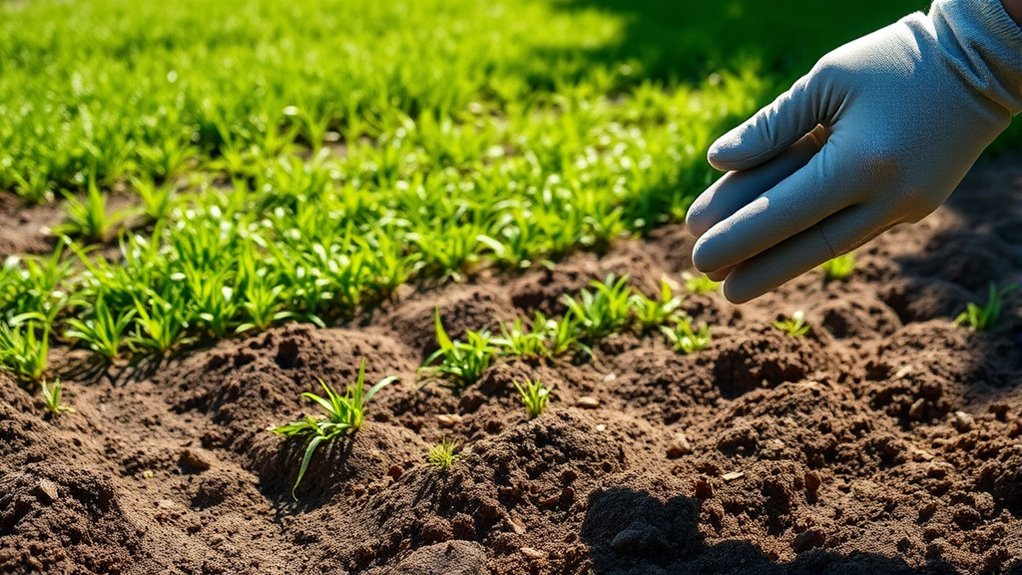
10 Steps to Successfully Plant Grass Seed
Are you dreaming of a lush, green lawn but feeling overwhelmed by where to start? You’re not alone—many people struggle with turning patchy grass into a beautiful yard. The good news is, with a little know-how, you can achieve that perfect lawn you’ve been wanting.
To successfully plant grass seed, start by preparing your soil. Test pH, remove weeds, and improve the soil to give your grass the best start.
Choose the right seed for your climate, then evenly spread it using a spreader or by hand. Protect the seeds with a light mulch and keep the soil moist for germination.
Mow once grass reaches about 3 inches and fertilize at ideal times. Address problems early to maintain a lush lawn.
For detailed steps, keep exploring the complete guide.
Key Takeaways
- Prepare soil by testing pH, removing weeds, and enriching it with nutrients for the best seed germination.
- Choose the right grass seed based on your climate and spread it evenly using proper techniques.
- Cover the seeds lightly with soil or mulch to protect them and help retain moisture.
- Water consistently to keep the soil moist during germination and mow once the grass reaches about 3 inches.
- Fertilize at key growth stages and keep an eye out for pests or weeds to help your lawn grow healthy.
Getting Your Soil Ready for Grass Seed Planting
Before planting grass seed, you need to prepare your soil to guarantee healthy growth. Start by testing your soil pH; ideally, it should be between 6.0 and 7.0 for most grasses. Adjust the pH with lime or sulfur if necessary.
Check nutrient levels and enrich the soil with amendments or compost to increase fertility. Improving soil texture is essential—if your soil is heavy clay, incorporate organic matter to improve drainage and aeration.
Remove weeds thoroughly to prevent competition for nutrients and water. Use aeration techniques like coring or tilling to loosen compacted soil, promoting better root growth.
To further improve drainage, consider adding sand or organic matter. Apply compost evenly across the area to enrich the soil and foster healthy grass development.
Proper soil preparation creates a strong foundation, ensuring your grass seed has the best environment to grow lush and resilient.
How to Choose the Best Grass Seed for Your Climate
Choosing the right grass seed depends on understanding your local climate conditions. If you live in cooler regions, go for cool season grasses like Kentucky bluegrass or fescues, which grow best in lower temperatures.
Select grass seed suited to your climate for a thriving, healthy lawn.
In warmer climates, warm season grasses such as Bermuda or St. Augustine thrive and give you a lush, resilient lawn. Consider drought-resistant varieties if water conservation is a priority, especially in dry areas.
Soil pH matters too. Test your soil to pick grass types that do well within your pH range for the best growth. Native grass options can be a smart choice since they’re adapted to your environment and often need less upkeep.
When choosing seed blends, look for ones with disease resistance traits and similar growth rates to ensure a uniform, healthy lawn. Matching your seed to your climate, soil, and maintenance habits will give you the best shot at a vibrant, healthy yard.
How to Spread Grass Seed Evenly for a Lush Lawn
Spreading grass seed evenly is key to getting a lush, uniform lawn. Proper seed distribution techniques help your lawn grow evenly and cut down on patchiness. To do this right, follow these simple lawn care tips:
- Split the seed into two halves and spread each half in different directions using a broadcast spreader or by hand. This ensures an even coat across your area.
- Walk slowly and steadily to avoid clumping or missing spots, keeping the seed flow consistent.
- Lightly rake the area after spreading to mix the seeds into the soil surface. This improves germination and helps seeds make good contact with the soil.
Using these seed spreading tips helps cover the ground well and encourages healthy growth. Take your time and stay consistent to get the best results. Remember, a well-spread seedbed is the foundation for a vibrant, healthy lawn. Mastering these steps gives you the best shot at growing lush grass.
The Best Ways to Cover and Protect Your Grass Seed
Covering and protecting your grass seed is key to ensuring it germinates successfully and grows healthy. Using the right seed covering techniques helps shield the seeds from birds, wind, and erosion, while keeping good soil contact.
Lightly raking the soil after spreading the seed helps make sure the seeds stay in contact with the soil, which speeds up germination. For extra protection, you might add mulch options like straw, compost, or special seed blankets.
Gently rake soil after seeding to ensure good contact and promote faster germination.
These mulches help keep moisture in, prevent seeds from washing away, and stop weeds from growing. Just pick a mulch that lets water and air through but still acts as a barrier against pests.
Spreading a thin, even layer of straw or mulch over the seeded area gives a good balance of protection and access for the grass to grow. Properly covering your seed reduces disturbance and creates the perfect environment for healthy grass to develop.
Watering Tips to Help Your Grass Germinate Quickly
Want your grass to germinate quickly? Just remember to keep the soil moist but not soaked. It’s best to water early in the morning or later in the afternoon—this way, you can cut down on evaporation and make sure the moisture stays steady.
And don’t forget, regular, gentle watering is the way to go. It’ll give your new grass the best possible start and help it grow strong and healthy.
Consistent Moisture Levels
Maintaining consistent moisture levels is key to helping your grass seed germinate quickly and evenly. Keeping the soil moist encourages healthy root growth and prevents the seed from drying out.
To do this, try using light, frequent watering to retain the right amount of moisture. It’s better than heavy watering that can cause runoff and disturb the seedbed.
Here are some tips:
- Water lightly several times a day to keep the topsoil consistently moist.
- Avoid overwatering, which can wash away seeds and reduce seed-to-soil contact.
- Use a fine spray to spread water evenly without disturbing the soil.
Best Watering Times
The best time to water your grass seed is early in the morning, when temperatures are cooler and the wind is calmer. Morning watering keeps the soil moist without quick evaporation, helping your grass germinate fast.
If you prefer to water in the evening, do so at least a few hours before sunset. This prevents the soil from staying wet overnight, which can lead to disease.
Consistent watering times help your grass develop strong roots.
| Time of Day | Benefits | Tips |
|---|---|---|
| Morning watering | Cooler temps, less evaporation | Water deeply, avoid run-off |
| Evening watering | Keeps soil moist overnight | Avoid late-night watering to prevent disease |
| Both (alternating) | Balanced moisture, faster germination | Adjust based on weather conditions |
How Often and How Much to Water Your New Lawn
Watering your new lawn correctly is key to healthy grass growth. It’s all about giving the seeds enough moisture without overdoing it, which can drown the seeds or cause runoff.
Try watering 2-3 times a day to keep the soil just damp enough. Use a gentle spray or sprinkler to avoid displacing the seeds and to get even hydration.
As your grass starts to establish, gradually cut back on how often you water. Shift toward deeper, less frequent watering to help the roots grow strong and deep.
Prevent Common Problems Like Thinning or Weed Growth
To prevent common problems like thinning or weed growth, it’s important to check your lawn often and deal with issues early.
Thinning usually means overseeding bare spots to help the grass grow evenly and densely. If the soil is compacted, aerate it to improve root growth, and make sure you’re watering just right to avoid drought stress.
Overseed bare spots, aerate compacted soil, and water carefully to keep your lawn healthy and lush.
Consistent watering and proper fertilization help your grass develop strong roots, which reduces the chances of thinning. For weeds, apply a pre-emergent herbicide early on to stop weed seeds from sprouting.
Keep your lawn healthy by mowing at the right height and removing weeds quickly to stop them from spreading. Regularly check your yard for unwanted plants or patches, and deal with problems right away.
When and How to Mow Your New Grass for Healthy Growth
When your new grass has grown to about 3 inches tall, it’s time to give it its first mow. Just make sure you keep the mower blades high—around 2.5 to 3 inches—so you don’t stress those young roots.
It’s a good idea to mow regularly, about once a week, to help your lawn grow thick and healthy. This way, you’re encouraging dense growth without putting too much strain on the grass.
Timing of First Mow
The timing of your first mow is key to keeping your grass healthy and strong. Mowing too early can harm tender shoots, while waiting too long might cause thatch buildup.
Wait until your grass reaches about 3 inches tall before mowing. This helps promote deep roots and overall grass health.
Use proper mowing techniques: keep your blades sharp, change up your mowing patterns, and don’t cut more than a third of the grass height at once.
Mow when the grass is dry to avoid tearing and to get a clean cut. This encourages healthy growth and reduces stress on your lawn.
Mowing Height Guidelines
For new grass, setting the right mowing height is key to promoting healthy growth and building a strong root system. Always use the appropriate mower and keep the blades sharp for clean cuts.
Mowing too short can stress your grass, while cutting too high can lead to disease. Usually, aim for a height of 2-3 inches, but adjust based on your grass type.
Use proper mowing techniques, like avoiding mowing when the grass is wet and never removing more than one-third of the height at a time. This helps prevent damage and encourages dense, healthy turf.
| Grass Type | Recommended Mowing Height |
|---|---|
| Cool-season grass | 2.5 – 3 inches |
| Warm-season grass | 1.5 – 2.5 inches |
| Fescue | 2.5 – 3 inches |
| Bermuda | 1 – 2 inches |
Frequency of Mowing
Maintaining the right mowing frequency encourages healthy growth and prevents stress on new grass. Usually, mow when the grass gets about one-third taller than your desired height. Seasonal changes matter too—you’ll want to cut more often in spring and summer when the grass grows quickly, and less in cooler months.
To get the best results, mow regularly—about every one or two weeks—to keep your lawn dense and healthy. Adjust how often you mow based on how fast your grass is growing, and don’t cut it too short.
Keep an eye on the weather as well. Avoid mowing when the grass is wet or during drought conditions, as these can harm your lawn and make mowing more difficult.
Fertilizing Your Lawn for Strong, Vibrant Grass
Fertilizing your lawn is key to growing strong, vibrant grass that looks great all season long. Picking the right fertilizer, like organic options, helps improve soil health naturally.
Think about soil amendments to boost nutrient absorption and adjust pH if needed. This creates the perfect environment for your grass to thrive.
Timing matters—apply nutrients when your grass actively grows, usually in early spring and late summer. Using slow-release fertilizers gives a steady nutrient supply and reduces runoff.
Pay attention to nutrient timing to keep your grass healthy and resilient. Proper fertilization promotes strong roots, lush foliage, and stress resistance.
Consistent, targeted seasonal applications help maintain a vibrant lawn and prevent nutrient deficiencies. Following these tips will keep your yard looking fantastic year-round.
Troubleshooting Common Grass Growing Issues
Even with proper care, your grass can run into issues that affect how it looks and feels. Common problems include patchiness, weeds, and disease. To troubleshoot effectively:
- Check for pests and soil nutrients. Look for pests and make sure your soil has the right nutrients. Poor soil and pests weaken your grass, making it more vulnerable to disease and weeds.
- Maintain good lawn habits to prevent disease. Keep your mowing height correct, don’t overwater, and aerate your lawn. These steps help stop fungal infections and other diseases before they start.
- Use the right herbicides and fungicides when needed. Regularly overseed thin patches to promote dense, healthy growth. This naturally helps your lawn resist weeds and disease.
Frequently Asked Questions
How Long Does It Typically Take for Grass Seed to Germinate?
Grass seed usually germinates within 7 to 21 days, depending on factors like soil temperature, moisture, and seed type. Warm-season grasses tend to sprout faster in summer, while cool-season varieties may take longer in cooler months.
To get quick germination, keep the soil consistently moist and choose seed types that are suited for your climate. Proper prep and care can really help your grass seed sprout as quickly as possible.
Can I Plant Grass Seed During the Winter or in Cold Climates?
Planting grass seed during winter or in cold climates is like trying to wake a sleeping giant—challenging but not impossible. In cold climates, winter planting isn’t ideal because seeds struggle to germinate in freezing temperatures.
If you must plant, choose cold-hardy grass varieties and wait until early spring for better results. Protect your new grass with mulch or coverings, but remember that timing is key to a lush, healthy lawn.
What Are the Signs of Poor Grass Seed Germination?
You’ll notice poor grass seed germination if the seeds don’t sprout within the expected time or if the new grass looks weak and sparse.
This often happens because of poor seed quality or not preparing the soil properly.
Make sure the soil was well-prepared, with good drainage and proper seed-to-soil contact.
If conditions weren’t ideal, try re-seeding using high-quality seed and improve your soil preparation to get healthier germination.
How Do I Prevent Pests From Damaging My New Grass?
Imagine your fresh grass as a delicate green carpet, vulnerable to tiny invaders. To keep pests away, try natural repellents and good lawn habits.
Making sure your soil is healthy is key. Good drainage and plenty of nutrients help your grass stay strong and resistant.
Regularly check your lawn for pests, and remove any you find early. Also, avoid overwatering, which can attract pests and harm your grass.
Can I Overseed an Existing Lawn Successfully With New Seed?
Yes, you can overseed your existing lawn successfully by using proper overseeding techniques.
Start by preparing the soil—mow your grass short, dethatch, and aerate to create the best conditions.
Spread the new seed evenly over the lawn, making sure it contacts the soil well.
Keep the soil moist by watering frequently.
With patience and good care, your lawn will fill in and become lush and healthy over time.
Conclusion
Now that you’re armed with these 10 essential steps, your dream lawn is within reach. But remember, the journey doesn’t end here—your grass will face challenges and surprises along the way.
Will you stay patient and attentive as your lawn grows? The future of your lush, vibrant yard depends on your dedication.
With a little care, you’ll soon enjoy the stunning outdoor space you’ve always wanted. Properly planting grass seed is the key to a beautiful lawn, so stay committed and watch it thrive.