7 Simple Steps to Successfully Plant Lemon Seeds
Many people dream of growing their own citrus trees, but it can feel overwhelming to get started with lemon seeds. You’re not alone—planting lemon seeds successfully is a common struggle for aspiring gardeners. With a little guidance, you’ll be on your way to nurturing your very own lemon tree.
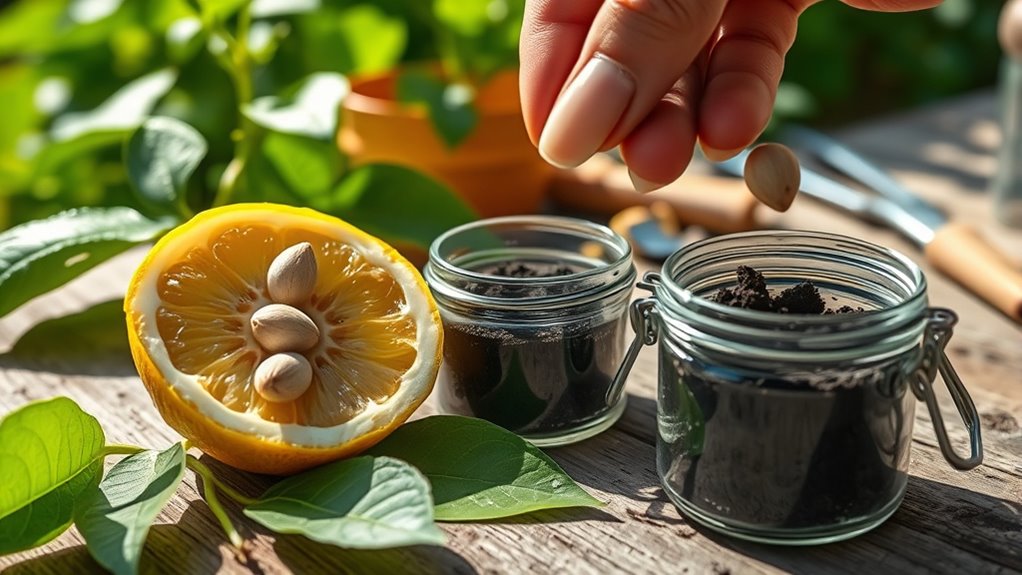
To successfully plant lemon seeds, start by choosing fresh, ripe lemons from trusted sources. Soak the seeds in water for 24 hours before planting them half an inch deep in a well-draining soil mix inside a container with drainage holes.
Place the container in a warm, bright spot and keep the soil moist but not waterlogged. Fertilize periodically and watch for pests.
For detailed guidance to grow healthy lemon trees, continue exploring each step carefully.
Key Takeaways
- Pick fresh, ripe lemon seeds from healthy fruits to give them the best shot at germinating.
- Soak the seeds in water for 24 hours before planting to help them sprout more easily.
- Plant the seeds about half an inch deep in well-draining soil inside a container that has drainage holes.
- Put the container in a warm, bright spot where it gets at least 6 hours of sunlight each day.
- Keep the soil moist but not soaked, and fertilize regularly to support healthy growth.
What You Need to Know Before Growing Lemon Trees From Seed
Before you start growing lemon trees from seed, it’s good to know that not all lemon seeds will produce fruit exactly like the parent. Seed viability can vary, so choosing healthy, fresh seeds gives you the best shot at success.
To increase your chances, pick seeds from ripe, high-quality lemons. Keep in mind that lemon seeds need the right conditions to germinate and grow. This includes the proper temperature, moisture, and light levels.
If you’re not planting right away, store your seeds properly. Exposure to air and heat can reduce their viability. When planting, make sure the soil drains well and is rich in nutrients.
Creating the right environment—like consistent warmth and humidity—helps your seeds sprout and grow strong. Understanding seed viability and setting up ideal conditions from the start will give your lemon trees a better chance to thrive and produce fruit.
How to Choose the Best Lemon Seeds for Planting
Choosing the best lemon seeds for planting starts with picking fresh, healthy fruits. Look for ripe, firm lemons because healthy ones usually have viable seeds.
Select ripe, firm lemons to find healthy seeds for better growth and successful planting.
When selecting seed varieties, go for lemons known for good growth and flavor, like Eureka or Lisbon. These tend to germinate better and grow into strong trees.
To ensure quality, buy your seeds from trusted sources like local nurseries or reputable online suppliers. Avoid seeds from fruits with blemishes, mold, or signs of disease since unhealthy seeds are less likely to sprout.
It’s also best to extract seeds from mature lemons, as immature seeds often don’t develop fully. Remember, the quality of your seeds really impacts your success.
Take your time to choose the best seeds from reliable sources to give your lemon trees the best start.
Prepare Your Soil and Containers for Lemon Seed Growth
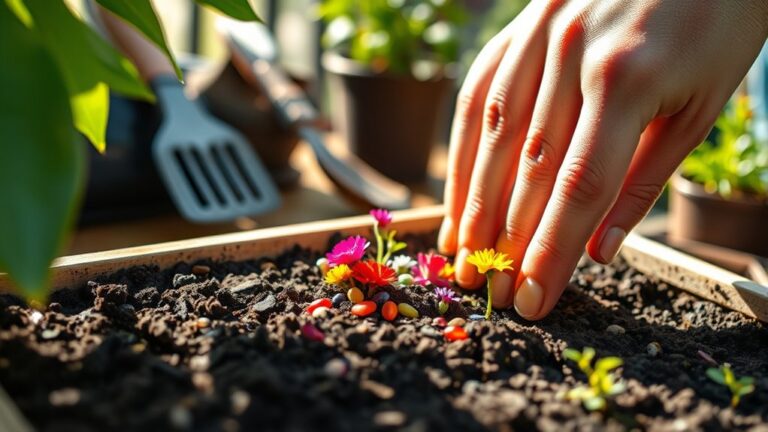
Start by choosing the right containers and preparing the soil to give your lemon seeds the best chance to grow. Pick containers with drainage holes—around 4 to 6 inches in size—to avoid waterlogging.
Use a well-draining soil mix, like a combination of peat moss, perlite, and compost. This ensures good aeration and keeps moisture balanced. Fill your container with this soil, leaving about an inch of space at the top.
Keep these tips in mind:
- Choose container sizes that match your seedlings’ growth stage
- Use soil that balances drainage and moisture retention
- Make sure containers have drainage holes to prevent root rot
- Fill containers with nutrient-rich, well-draining soil for healthy growth
How to Plant Lemon Seeds in 7 Easy Steps
Planting lemon seeds is easy and can be really rewarding if you follow a few simple steps. To help the seeds germinate, soak them in water for 24 hours first.
Next, plant the seeds about half an inch deep in your prepared soil or container, with the pointed end facing down. Keep the soil moist and warm to give the seeds the best chance to sprout.
Lightly cover the seeds with soil and place the container in a bright, warm spot. Be sure to maintain consistent moisture but avoid overwatering.
Patience is important because seed germination can take anywhere from 2 to 6 weeks. Follow these tips, and you’ll boost your chances of growing healthy lemon plants.
How to Care for Your Lemon Seedling After Planting
Once your lemon seedling has sprouted, giving it proper care is essential to help it grow strong and healthy. Focus on a few key things to ensure it thrives.
First, keep the soil consistently moist but not waterlogged. Make sure your seedling gets at least 6 hours of direct sunlight each day, as lemon seedlings love the sun.
Keep soil moist but not soaked, and ensure your lemon seedling gets at least 6 hours of sunlight daily for healthy growth.
Fertilize every few weeks with a balanced, citrus-specific fertilizer to support healthy growth. Regularly check for pests like aphids or mites and treat any infestations with organic solutions.
Be careful not to overwater, as too much moisture can cause root rot. Ensure good drainage in the pot or soil so excess water can escape easily.
Troubleshooting Common Lemon Tree Growing Problems
As your lemon seedling grows, you might encounter some common issues that can hinder its development. One problem is pest infestations, like aphids or spider mites, which can damage leaves and stunt growth. Regular pest control, such as removing pests manually or applying organic insecticides, helps keep these problems in check.
Another issue is nutrient deficiencies; if leaves turn yellow or growth slows, your plant may lack essential nutrients like nitrogen or magnesium. To fix this, use a balanced, citrus-specific fertilizer and follow the recommended application schedule.
Overwatering can cause root rot, so make sure your soil drains properly and avoid waterlogging. Inconsistent watering or poor soil quality can weaken your plant’s health. Keep an eye out for signs of stress and adjust your watering, fertilizing, or pest control routines as needed.
Addressing these common problems early will help your lemon tree stay healthy and thrive.
When Will Your Lemon Tree Start Producing Fruit?
Wondering when your lemon tree will start producing fruit? Usually, you can expect the fruit to mature about 3 to 5 years after planting. But this can vary depending on your tree’s health and growing conditions.
A healthy tree with proper care will generally bear fruit sooner. Keep an eye on a few key factors:
- Consistent watering and proper fertilization
- Plenty of sunlight exposure
- Correct pruning techniques
- Pest and disease control
Your tree’s health directly impacts how quickly it produces fruit. Strong, vigorous growth typically means earlier fruiting and better yields.
A healthy, vigorous lemon tree tends to fruit earlier and produce higher yields.
Be patient because young lemon trees need time to establish their roots and develop the strength for fruit production. Regularly check on your tree’s overall health, and you’ll start noticing signs of fruit maturity over time.
With the right care, your lemon tree will reward you with fresh, ripe lemons in just a few years.
Frequently Asked Questions
How Long Does It Take for Lemon Seeds to Sprout?
Lemon seeds usually take about 1 to 3 weeks to sprout if you keep the conditions just right.
To give your seeds the best shot, soak them overnight before planting and keep them moist.
Make sure the soil stays warm and drains well.
Place your container somewhere bright and warm.
Patience is important, but setting up proper seed prep and germination conditions can help you see sprouts faster.
Can Lemon Seeds Be Planted Outdoors in Colder Climates?
Imagine a tiny lemon seed tucked in cold, frosty soil. It’s unlikely to germinate in colder climates. Lemon seed germination struggles below 50°F, so outdoor planting isn’t ideal in chilly areas.
Instead, try starting seeds indoors or in a greenhouse. Gradually acclimate your lemon seedlings to the outdoor environment. This helps protect them from frost and gives your lemon plant a better chance to thrive.
What Are the Signs of a Healthy Lemon Seedling?
A healthy lemon seedling shows steady growth, with vibrant green leaves and strong stems. You’ll notice new leaf development and an upright posture, which indicates resilience.
Keep an eye out for signs of pests like holes or sticky residue. Addressing these early helps protect your seedling from damage.
Consistent watering and proper sunlight are key. They support healthy growth and keep your lemon seedling vigorous and ready for transplantation or more care.
How Often Should I Water My Lemon Seedling?
You should water your lemon seedling when the top inch of soil feels dry, usually every 2-3 days. It’s important to keep the soil moist but not soaked.
Make sure you’re not overwatering, as that can lead to root rot. At the same time, avoid underwatering, which can stress your plant.
Adjust your watering schedule based on humidity and temperature. This way, your seedling stays healthy and grows strong.
Do Lemon Seeds Require Any Special Fertilization?
Lemon seeds do require some special fertilization to support seed germination and healthy growth. Use a balanced, citrus-specific fertilizer or a diluted liquid fertilizer every few weeks.
Make sure your soil is well-draining and rich in organic matter, which helps the seed germination process. Avoid over-fertilizing, as it can harm delicate roots.
Proper fertilization encourages strong seedlings and vibrant lemon trees.
Conclusion
With patience and care, your lemon seedling will grow into a vibrant tree that turns your space into a sunny oasis.
Follow these simple steps, nurture it diligently, and watch your efforts blossom into a harvest of juicy, fragrant lemons. It’s truly a reward that’s worth more than gold.
Remember, every great lemon tree begins with a tiny seed. Keep going, and soon you’ll be savoring citrus perfection right from your own backyard!