How to Plant Peach Seeds – A Step-by-Step Guide
Many gardening enthusiasts dream of growing their own delicious peaches at home but feel overwhelmed by the process. You’re not alone—starting from seed can seem tricky, but with a little guidance, it’s totally doable.
If you’re eager to grow your own peach tree, here’s how to plant peach seeds step-by-step.
To plant peach seeds, start by selecting healthy, firm seeds from ripe, organic fruit. Clean and dry them before placing in a moist medium in the fridge for 4-8 weeks to cold stratify.
After that, plant the seeds 1-2 inches deep in well-draining soil or containers with sunlight. Keep the soil moist and protect young seedlings from pests.
For detailed steps on ensuring healthy growth, continue exploring the full guide.
Key Takeaways
- Select healthy, mature peach seeds and clean them thoroughly before preparing for stratification.
- Cold stratify seeds in moist sand or peat moss at 32-41°F for 4-8 weeks.
- Plant stratified seeds 1-2 inches deep in well-draining soil or containers in a sunny spot.
- Water consistently, keep the soil moist, and protect young seedlings from pests and environmental stress.
- Transplant the seedlings outdoors after the last frost into a prepared site with proper spacing and soil conditions.
How to Choose the Best Peach Seeds for Planting
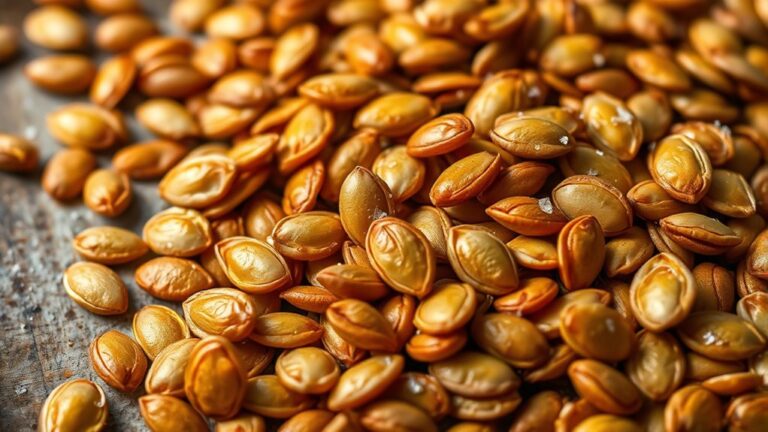
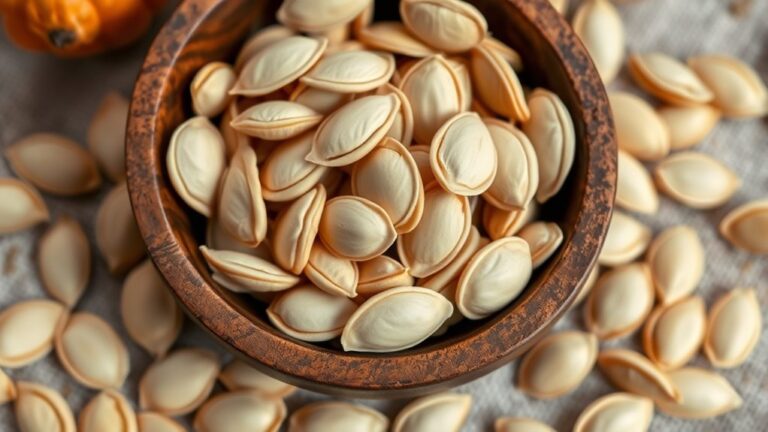
How do you determine which peach seeds are best for planting? First, look at seed varieties, focusing on healthy, plump seeds from mature fruit. Select seeds that are firm and free of cracks or damage, as these are more likely to germinate successfully.
Organic sourcing is essential. Choose seeds from peaches grown without chemical pesticides or synthetic fertilizers. Organic fruit usually indicates healthier seeds, which improves your chances of successful growth.
Avoid seeds from fruit with soft spots or mold, as these can carry diseases. When harvesting, make sure the seeds are fully ripe—overripe or underripe seeds tend to have lower viability.
Keep in mind that some seed varieties are better suited for your climate or taste preferences, so do your research beforehand. By selecting quality seeds with organic sourcing and paying attention to their condition, you set a strong foundation for healthy peach trees in the future.
Preparing Peach Seeds for Germination
Before you plant your peach seeds, it’s a good idea to clean them off really well and let them dry completely. You want to make sure there’s no leftover residue or pulp on the seeds before you move on to the next step.
Once they’re clean and dry, you’ll need to prepare them for cold stratification. Just place the seeds in a moist environment—like in a damp paper towel or a small container with some soil—and then pop them in the refrigerator. Keep them there for several weeks. This cool, moist setting mimics winter conditions, which helps the seeds break dormancy and increases your chances of successful germination.
Cleaning and Drying
Start by removing any remaining fruit flesh from the seed to prevent mold and decay. This step helps keep your seed healthy during storage and germination.
Next, rinse the seed under cool water to wash away any leftover flesh. Pat it dry with a paper towel, making sure not to leave any moisture behind.
Choose a well-ventilated, dry spot for air drying for 1-2 days. Then, store the seed in a paper bag or breathable container, especially if you’re planning to select seed varieties for future planting.
Proper cleaning and drying set your seed up for successful planting. Handle the seeds gently and keep them dry to avoid mold, especially if you’re storing them for a while.
Cold Stratification Process
To break dormancy and encourage germination, you’ll need to subject the peach seeds to a cold stratification process. This mimics winter conditions and helps release the seed’s potential to sprout.
Cold stratification benefits include improving germination rates and ensuring healthy seed growth. To do this, place your cleaned seeds in a moist medium like sand or peat moss inside a plastic bag.
Keep the bag in the refrigerator at temperatures of 32-41°F (0-5°C). This cold period should last about 4-8 weeks, depending on your seed’s age.
During this time, check regularly to make sure the medium stays moist but not waterlogged. Proper cold stratification prepares the seed for successful sprouting when conditions are right.
Stratify Peach Seeds to Break Dormancy
Stratifying peach seeds is an important step to break their dormancy and encourage healthy germination. This process simulates winter conditions naturally, helping to improve seed viability testing.
Here’s how to do it right:
First, clean your seeds and check for any damage or shriveling. Discard any that are not in good shape.
Next, place the seeds in a moist medium like damp peat moss or sand, then put everything inside a sealed plastic bag.
Store the bag in the refrigerator at 34-41°F (1-5°C) for 8-12 weeks.
Remember to check the medium occasionally to ensure it stays moist but not waterlogged. Watch out for mold or rot during this time.
This cold stratification helps break the seed’s dormancy, increasing the chances of successful germination.
Be patient; proper stratification boosts seed viability testing results and helps set the stage for healthy peach seedlings.
Plant Your Peach Seeds Step-by-Step
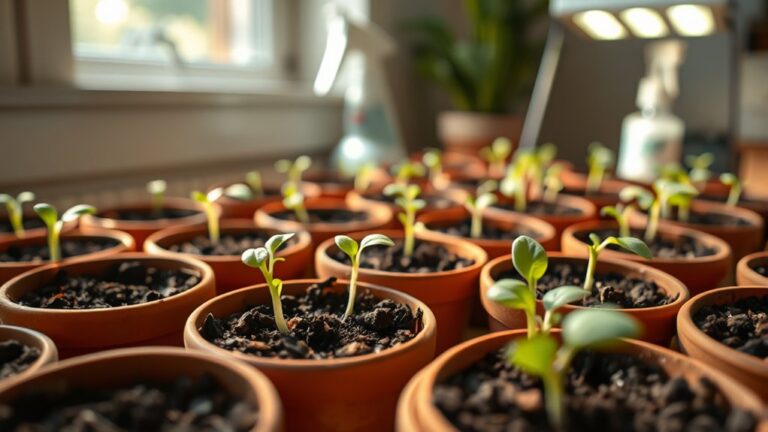
Once your peach seeds have undergone stratification and are ready to plant, choose a well-draining container or prepare a garden bed in a sunny spot.
If planting in a container, fill it with quality potting mix, ensuring good drainage. For garden beds, loosen the soil and remove weeds.
When selecting the planting site, consider the peach varieties you want to grow, as some may require specific conditions.
Plant each seed about 1 to 2 inches deep, placing it horizontally with the rounded side facing down. Cover the seeds lightly with soil and water gently to settle the soil around them.
If you’ve stored your seeds, do so in a cool, dry place until planting time. Be sure to label your seeds if you’re trying different peach varieties.
Proper planting now sets the foundation for healthy seedlings and future fruit production. Keep the soil moist but not waterlogged as your seeds begin to sprout.
Set Up the Right Soil for Your Peach Seedlings
The soil you choose for your peach seedlings is crucial for their growth and health. Focus on soil composition and drainage to create the right environment.
Use well-draining soil to prevent root rot and ensure oxygen reaches the roots. Mixing sandy loam with organic matter like compost can boost soil fertility.
Aim for a pH level between 6.0 and 7.0, which helps your seedlings absorb nutrients better. Avoid heavy clay soils that hold too much water; if needed, amend them with sand or organic materials.
Water and Maintain Moisture for Young Peach Trees
To keep your young peach trees healthy, it’s really important to water them regularly and stick to a consistent schedule. Think of it like giving your trees a little drink every now and then so they stay strong and happy.
Adding mulch around the base of the trees can make a big difference. It helps keep the moisture in the soil and prevents it from drying out too quickly, especially during hot days. Just make sure to check the soil often—if it feels dry, it’s time to water again. Keeping the soil evenly moist will give your peach trees the best chance to grow healthy and produce delicious fruit.
Consistent Watering Schedule
Maintaining a consistent watering schedule is key to helping your young peach trees develop strong roots and stay healthy. Proper watering supports nutrient uptake and reduces stress on the tree.
To get the best results, use effective irrigation methods like drip or soaker hoses to deliver steady moisture. Water early in the day to minimize evaporation and let the leaves dry.
Check your water quality and ensure it’s clean and non-saline to avoid harming the roots. Keep the soil evenly moist to prevent drought stress or waterlogging.
Mulching for Moisture Retention
Mulching around your young peach trees helps lock in soil moisture, which is key for healthy growth. It reduces water evaporation, keeps the soil temperature steady, and keeps weeds at bay that would compete for nutrients.
Choosing the right mulch is important. Organic options like straw, wood chips, or shredded bark break down over time and add nutrients to the soil. Inorganic mulches like landscape fabric or gravel also work well for moisture retention.
Apply a 2-3 inch layer around the base of your tree, keeping it a few inches away from the trunk to prevent rot. Check your mulch regularly and add more as needed, especially during hot or dry spells.
Proper mulching keeps your peach tree consistently moist and healthy, making a big difference in its growth.
Protect Your Peach Seeds From Pests and Diseases
Protecting your peach seeds from pests and diseases is key to ensuring they grow into healthy trees. Without proper care, your seeds might not develop properly.
To keep them safe, start by inspecting the seeds regularly for any signs of pests or damage. If you notice anything, take action quickly.
Regularly check seeds for pests or damage and act promptly to protect their growth.
You can use organic or chemical treatments to keep common pests like aphids or beetles away. Just be sure to follow the instructions carefully.
Keeping the planting area clean is also important. Remove fallen leaves or debris that can harbor diseases and pests.
Finally, make sure to water your seeds properly and allow good airflow around them. This helps prevent mold and fungal infections that can harm their growth.
Care for Your Growing Peach Tree: Pruning and Fertilizing
As your peach tree starts to grow, taking care of it with proper pruning and fertilizing is key to healthy growth and lots of fruit. Use good pruning techniques to remove dead, diseased, or crossing branches, which helps air flow and sunlight reach the tree.
Focus on shaping the tree to build a strong structure, usually by pruning in late winter or early spring. Set up a fertilizing routine that gives nutrients at important growth stages—apply a balanced fertilizer in early spring, then again after the fruit sets.
Be careful not to over-fertilize because too much can lead to lots of leafy growth instead of fruit. Regular pruning and timely fertilizing keep your peach tree healthy, vigorous, and productive. Keep an eye on how your tree responds to these practices to adjust your care and get the best growth and harvest.
Troubleshoot Common Peach Seedling Problems
Even with proper pruning and fertilizing, peach seedlings can face problems that slow their growth and development. Common issues include seedling diseases, nutrient deficiencies, pests, and environmental stress.
To troubleshoot effectively, focus on these key areas:
- Seedling diseases: Check for discolored or rotting roots. Improving drainage and avoiding overwatering can help prevent fungal infections.
- Nutrient deficiencies: Yellowing leaves often mean a lack of nitrogen or iron. Use a balanced fertilizer designed for fruit trees.
- Pest management: Look for holes or chewed leaves. Organic insecticides or beneficial insects like ladybugs can keep pests in check.
- Environmental stress: Too much heat, cold, or wind can weaken your seedling. Providing shade, windbreaks, and consistent watering makes a big difference.
Addressing these problems early helps your peach seedling recover and grow strong. Regular monitoring and quick action are essential for overcoming common issues.
When and How to Transplant Your Peach Seedling Outdoors
You want to transplant your peach seedling outdoors at just the right time — usually after the danger of frost is gone and the soil has warmed up nicely. It’s best to wait until the weather is consistently warm enough so your seedling can settle in comfortably.
When you’re ready, pick a sunny spot with well-drained soil. Make sure there’s plenty of space around the plant so it can grow strong and healthy. Prepare the planting hole by digging deep enough to accommodate the roots without bending or crowding them. Be gentle when placing the seedling into the hole, and take care to spread out the roots carefully.
Finally, give your new peach tree a good watering. This helps it settle in and start growing roots in its new home. With these simple steps, your seedling will have a great start outdoors!
Ideal Transplanting Timing
Timing is crucial when transplanting peach seedlings outdoors to ensure they grow successfully. You want to wait until the weather matches their needs and provides the right climate.
Here are some key points to keep in mind:
- Transplant when the risk of frost is gone, which is usually late spring.
- Make sure daytime temperatures stay above 65°F (18°C).
- Nighttime temps shouldn’t drop below 50°F (10°C).
- Check that your seedling is healthy, with strong roots and leaves.
Getting the timing right helps your seedling adapt quickly and thrive. Proper timing boosts growth potential and reduces stress, setting your peach tree up for a fruitful future.
Preparing Outdoor Site
Before transplanting your peach seedling outdoors, choosing and preparing the right site is key for healthy growth. Make sure the soil drains well, is rich in organic matter, and is slightly acidic to neutral.
Avoid heavy clay or overly sandy soils, as they can make it hard for roots to develop properly. The site should get full sunlight, ideally 6 to 8 hours a day, to help your tree grow strong and produce fruit.
Clear the area of weeds, rocks, and debris to reduce competition and pests. If your soil isn’t perfect, you can improve it by adding compost or organic matter to boost fertility and drainage.
Proper site prep creates a stable environment for your seedling, encouraging vigorous growth and future fruit production.
Proper Planting Techniques
Transplanting your peach seedling outdoors at the right time helps it establish well and thrive. To do this properly, follow these steps:
- Choose the right season: Wait until the risk of frost passes and the soil warms up.
- Prepare the hole: Dig a hole twice as wide as the seedling’s root ball and deep enough to fit the seed at about 2-3 inches below the soil surface.
- Maintain proper spacing: Space each seedling about 6-8 feet apart to give them room to grow.
- Plant carefully: Place the seedling in the hole, making sure the seed is just below soil level, then fill gently to avoid air pockets.
Following these steps will help your peach tree grow healthy and develop properly.
Frequently Asked Questions
How Long Does It Take for Peach Seeds to Sprout?
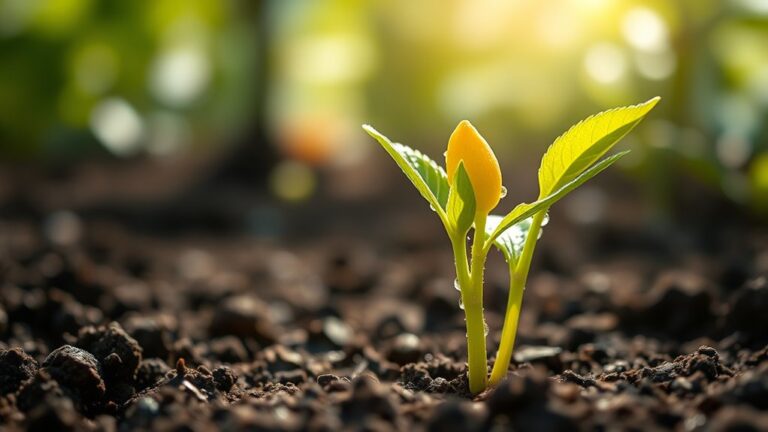
Peach seed germination usually takes about 2 to 4 weeks once you plant the seed under the right conditions.
To help it sprout faster, keep the soil warm, ideally between 65-75°F, since temperature is really important for germination.
You might see some seeds sprout sooner, but patience is key.
Just keep the soil moist and in a warm environment, and you’ll see your peach seed start to sprout within that timeframe.
Can Peach Seeds Be Planted Directly Outdoors?
Like a wise gardener preparing for a new season, you can plant peach seeds directly outdoors, but first, you need to mimic nature’s chill. Peach seed stratification, or cold treatment, helps break dormancy for successful sprouting.
Follow outdoor planting tips by choosing a sunny spot with well-draining soil, and plant your seeds in fall. Be patient—your seed may take several months to sprout, but with care, you’ll soon see growth.
What Are Common Signs of Seedling Diseases?
You’ll notice seedling diseases through signs like wilting, yellowing, spots, or fuzzy mold on your plants.
To prevent these issues, practice good seedling care by ensuring proper watering, good airflow, and avoiding overwatering.
Keep your seedlings healthy by maintaining cleanliness and using disease-resistant varieties when possible.
Regularly inspect your plants and act quickly if you spot any symptoms to stop the spread of disease and encourage strong growth.
How Do I Prevent Peach Seed Rot?
Don’t let your peach seeds fall through the cracks. Prevent rot by starting with proper seed storage in a cool, dry place.
Before planting, check that the soil has excellent drainage to stop excess moisture from lingering around the seed. Water sparingly and avoid overwatering, as soggy soil invites rot.
Keep these steps in mind, and you’ll give your peach seeds the best chance at healthy growth and a fruitful future.
When Is the Best Time to Harvest Mature Peach Seeds?
You should harvest mature peach seeds when the fruit is fully ripe, usually in late summer to early fall.
Look for signs of seed maturity, like a darkened, hardened seed inside the fruit.
Use gentle harvesting techniques, such as carefully twisting or cutting the peach from the tree, to avoid damage.
Timing is important; wait until the fruit’s flesh is soft and the seed easily separates for the best results.
Conclusion
Don’t worry if your peach seedling looks small or slow to develop. Patience is key! With proper care like watering, pruning, and protecting it from pests, your tree will thrive over time.
Remember, every great peach tree started small. Keep nurturing your plant, and soon enough, you’ll be enjoying homegrown peaches.
Stick with it—your efforts will pay off in a delicious harvest you can be proud of!