How Many Apple Seeds Will Kill Humans?
Are you ever curious about the tiny things we consume daily and whether they’re truly safe? Many people struggle with questions about common foods and their hidden risks. One such concern is apple seeds and the idea that they might be dangerous.
Consuming a large number of crushed or chewed apple seeds could release enough cyanide to be deadly, but you’d need to eat hundreds of seeds at once.
Typically, a few seeds pose minimal risk since they contain small quantities of cyanide, which your body can detoxify. Factors like seed size, how much you chew, and your body weight influence toxicity.
Curious about the exact risks? Keep going to understand safe practices and realistic dangers.
Key Takeaways
- A lethal dose of cyanide for humans is around 50-200 milligrams, depending on body weight and sensitivity.
- Each apple seed releases about 0.03 milligrams of cyanide, so you’d need to swallow thousands of seeds to reach dangerous levels.
- Eating fewer than 100 crushed or chewed seeds probably won’t cause cyanide poisoning.
- Swallowing whole seeds is usually safe because they pass through your digestive system intact.
- To stay safe, it’s best to remove seeds or limit how much you chew them to reduce the risk of cyanide poisoning.
Are Apple Seeds Dangerous? What You Need to Know
Many people wonder if apple seeds are truly dangerous, and the answer is more nuanced than a simple yes or no. There are many apple seed myths circulating, often fueled by cyanide myths suggesting that eating seeds could be deadly.
In reality, apple seeds contain a compound called amygdalin, which can release cyanide when broken down. However, the small amount of cyanide produced from accidental ingestion usually isn’t enough to cause harm.
Apple seeds contain amygdalin, which releases cyanide, but small amounts from accidental ingestion are generally harmless.
Your body can usually detoxify minor cyanide exposure without issue. Keep this in perspective: swallowing a few apple seeds accidentally probably won’t poison you.
The real danger only comes if you consume a large quantity of crushed or ground seeds in a concentrated form, which could release more cyanide than your body can handle.
Do Apple Seeds Contain Cyanide, and How Much Is in Each Seed?
Have you ever wondered if apple seeds truly contain cyanide? They do, but only in tiny amounts. Inside each seed, there’s a compound called amygdalin, which can release cyanide when broken down during seed consumption.
Your body’s cyanide metabolism helps process small doses safely. But eating lots of seeds could lead to cyanide buildup. The amount of cyanide in each seed varies, but it’s usually harmless if you eat a few accidentally.
Typically, one apple seed has about 0.6 milligrams of amygdalin, which can produce roughly 0.03 milligrams of cyanide. Given your body’s ability to detoxify small doses, a few seeds usually won’t cause harm.
However, eating many seeds at once might overwhelm your system and cause poisoning. Rest assured, casually swallowing a seed or two isn’t dangerous. Still, moderation is key when it comes to seed consumption.
How Many Apple Seeds Are Usually Found in a Typical Apple?
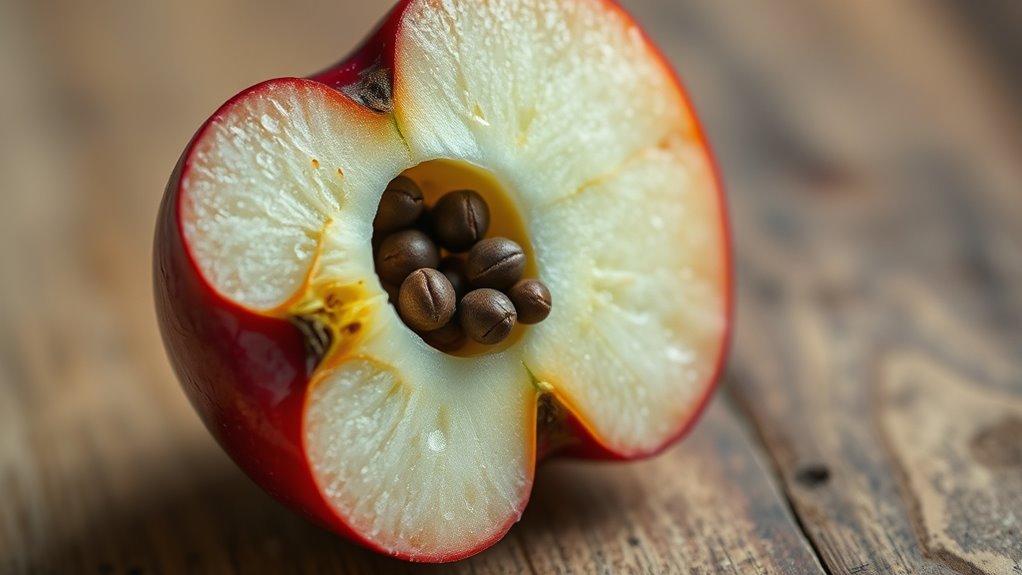
A typical apple contains about five to ten seeds, though the exact number can vary depending on the apple’s size and variety. Different types of apples tend to have different seed counts, with some producing more seeds than others.
Larger apples usually have more seeds, while smaller ones have fewer. The seed count can also depend on factors like pollination and growing conditions.
Here’s a quick overview:
| Apple Variety | Average Seed Count | Notes |
|---|---|---|
| Fuji | 6-8 | Usually seedier |
| Gala | 5-7 | Fewer seeds on average |
| Granny Smith | 4-6 | Typically fewer seeds |
Knowing the seed count helps you estimate potential cyanide exposure, but keep in mind, the number alone doesn’t determine how dangerous it is. Other factors also matter.
What Factors Affect How Much Cyanide Is Released When Chewing Seeds?
The amount of cyanide released when you chew apple seeds really depends on a few things. For starters, the size of the seeds matters—smaller seeds might release less cyanide compared to larger ones, but it also depends on how many you’re actually chewing.
Then there’s how vigorously and how long you chew. If you chew your seeds thoroughly and for a longer time, you’re more likely to release more cyanide. So, all these factors—seed size, how many you eat, and how you chew—can really change how dangerous the seeds might be.
Seed Size and Quantity
When you chew apple seeds, the amount of cyanide released depends a lot on their size and how many you eat. Larger seeds have more amygdalin, which can produce more cyanide when you chew them.
If you accidentally swallow a few small seeds whole, less cyanide is released because they’re less likely to break open in your digestive system. Chewing multiple seeds, on the other hand, increases the risk because more of their contents are exposed.
This means that the total cyanide produced depends on how many seeds you consume and their size. Eating a handful of crushed seeds is much riskier than swallowing a few whole. Knowing this helps you understand how seed size and quantity can affect toxicity risks.
Chewing Intensity and Duration
Chewing seeds more vigorously or for a longer time can significantly increase the amount of cyanide released. Your chewing style directly affects how the seed is processed and how much cyanide becomes available.
The longer you chew, the more the cell walls break down, releasing more cyanide compounds. To better understand this, take a look at the different techniques and their impact:
| Chewing Technique | Duration of Chewing | Cyanide Release Level |
|---|---|---|
| Gentle, quick bites | Less than 10 seconds | Low |
| Moderate biting | 10-30 seconds | Moderate |
| Vigorous chewing | Over 30 seconds | High |
| Crushing with teeth | Continuous for minutes | Very high |
As you can see, increased intensity and duration boost cyanide release. This highlights the importance of being mindful when processing seeds.
How Much Cyanide Is Needed to Be Lethal for Humans?
Cyanide’s lethal dose really depends on a person’s sensitivity and their body weight, so it’s not easy to give a precise number. Some folks can handle higher amounts without much trouble, while others might be affected by even tiny doses.
This variability is important to keep in mind when we talk about things like apple seeds. Sure, they contain small amounts of cyanide, but for it to actually be dangerous, you’d need to consume a pretty large quantity—more than most people typically eat at once. Understanding these differences helps us see why most small exposures aren’t a big deal, but larger doses can definitely be harmful.
Cyanide Toxicity Levels
Understanding what makes cyanide dangerous requires knowing how much of it can be lethal to humans. Cyanide toxicity depends on factors like cyanide metabolism, which varies among individuals. In general, ingesting about 50 to 200 milligrams of cyanide can be fatal.
Apple toxicity from seeds is often overstated, but the cyanide released is usually too small to harm most people unless seeds are chewed extensively. Most apple seeds contain small amounts of cyanide, making accidental poisoning rare.
Knowing the toxicity levels helps clarify the real risk. The following table shows the effects of different cyanide doses:
| Cyanide Dose | Effect |
|---|---|
| 50 mg | Possible mild symptoms |
| 100 mg | Severe symptoms, risk of death |
| 200 mg | Likely fatal |
Human Sensitivity Variations
Since human sensitivity to cyanide varies quite a bit, the amount needed to be lethal can differ from person to person. Your genetic makeup affects how your body processes cyanide, making some people more vulnerable than others.
Environmental factors also matter. If you’re exposed to toxins or have existing health issues, your risk goes up. For example, certain enzyme deficiencies can make it harder for your body to break down cyanide, increasing toxicity risks.
Age, weight, and overall health also influence how you respond. Because of all these differences, a dose that’s harmless to one person could be deadly to another.
Understanding your unique genetic and environmental factors can help explain why cyanide’s lethal dose isn’t the same for everyone. It’s a reminder that individual responses vary widely.
Can Swallowing or Chewing Apple Seeds Cause Cyanide Poisoning?
Have you ever wondered if chewing or swallowing apple seeds could lead to cyanide poisoning? The answer is generally no, thanks to apple seed myths that exaggerate the danger.
While apple seeds do contain amygdalin, a compound that can release cyanide when broken down, your body usually handles small amounts safely. When you chew or swallow a few seeds, the amount of cyanide released isn’t enough to harm you because the seeds’ tough outer shell often remains intact, preventing amygdalin release.
Your digestive system can detoxify small cyanide amounts effectively. Consuming large quantities of crushed seeds might pose a risk, but typical accidental ingestion isn’t dangerous. Cyanide safety measures are in place, meaning your body can usually handle minor exposure.
What Do Scientific Studies Say About Apple Seed Toxicity and Safety?
Scientific research consistently shows that the risk posed by apple seeds is minimal when consumed in typical amounts. Many myths and safety misconceptions exaggerate the danger, making people believe a few seeds could be deadly.
Studies reveal that the cyanide released from seed digestion is far below harmful levels. Your body can usually detoxify small amounts without issue.
To clarify, here’s a comparison:
| Aspect | Reality |
|---|---|
| Cyanide in seeds | Very small, usually harmless in typical intake |
| Toxicity myths | Overstate the danger of occasional seed ingestion |
| Body’s detox system | Efficient at neutralizing minor cyanide doses |
| Seed chewing vs swallowing | Both pose minimal risk in normal eating habits |
| Large quantities needed | Unlikely for regular consumption to be dangerous |
Are There Safe Ways to Eat Apples Without Risking Cyanide Exposure?
You can enjoy apples safely by following simple practices that reduce any risk of cyanide exposure from seeds. The main idea is to avoid eating or crushing the seeds, which can release harmful cyanide compounds.
To stay safe while eating apples, try these tips:
- Remove seeds before eating or cooking.
- Don’t crush or chew the seeds intentionally.
- Opt for apple slices instead of eating whole apples with seeds.
- Consider other apple snacks like applesauce or dried apple slices.
How Does Apple Seed Toxicity Compare to Other Common Foods?
While apple seeds contain compounds that can release cyanide, their toxicity is relatively low compared to many other common foods.
For example, bitter almonds and cassava have higher levels of cyanogenic compounds, making them more dangerous if not prepared properly.
Cooking methods really matter; boiling or thoroughly cooking these foods breaks down cyanide compounds and reduces the risk.
In contrast, apple seeds are tough to digest, and you’d need to eat a lot for toxicity to be a real concern.
Eating a few seeds accidentally isn’t usually dangerous, especially if you don’t chew them extensively.
Proper food safety practices, like removing seeds before eating or crushing them during processing, help minimize the risk.
Overall, apple seed toxicity is mild compared to foods with naturally higher cyanide levels, and safe preparation methods help prevent issues.
Knowing these differences means you can enjoy apples without worrying too much about toxicity.
What Are the Symptoms of Cyanide Poisoning From Apple Seeds?
Even though apple seeds contain cyanide-releasing compounds, it’s important to recognize the symptoms of cyanide poisoning in case of accidental ingestion. The severity of symptoms depends on how much cyanide your body absorbs and can develop quickly.
You might notice headaches and dizziness, which are early signs of poisoning. Rapid breathing and shortness of breath can also occur as your body struggles to get enough oxygen.
Nausea, vomiting, or stomach pain might indicate systemic poisoning. In more severe cases, you could experience confusion, seizures, or even lose consciousness.
These symptoms happen because cyanide affects your body’s ability to use oxygen, leading to tissue hypoxia. Mild cases may cause just minor discomfort, but larger doses can be life-threatening.
It’s crucial to recognize early signs because symptoms can escalate fast. If you suspect cyanide poisoning from apple seeds, seek medical help immediately to prevent serious health problems.
Frequently Asked Questions
Can Apple Seed Poisoning Occur From Eating Cooked Apple Products?
Yes, apple seed poisoning can happen from eating cooked apple products, especially if the seeds are crushed or ground.
Cooking methods that involve breaking or extracting seeds release amygdalin, which turns into cyanide. If you consume a lot of crushed or ground seeds, even in cooked apples, you could be at risk.
To stay safe, it’s best to remove the seeds before cooking or eating apples, especially if you’re planning to eat large amounts.
Are Certain Apple Varieties Safer Than Others Regarding Seed Toxicity?
Certain apple varieties are safer than others regarding seed toxicity because seed toxicity varies slightly among varieties. You should know that while some apples have lower amounts of amygdalin in their seeds, eating large quantities of seeds from any variety can still pose health risks.
Always remove seeds if you’re concerned about toxicity, especially with small children. Enjoy your apples without risking seed-related poisoning.
How Does Body Weight Influence Cyanide Poisoning Risk From Apple Seeds?
Your body weight influences cyanide poisoning risk from apple seeds because larger bodies can better metabolize cyanide, reducing toxicity. Cyanide metabolism varies among individuals, so a heavier person might tolerate more seed toxicity without adverse effects.
Smaller individuals process cyanide less efficiently, increasing their risk of poisoning. It’s important to understand that seed toxicity depends on cyanide release, which varies with seed quantity and individual metabolic capacity.
Is There a Safe Amount of Apple Seeds to Consume Regularly?
There’s no safe amount of apple seeds to consume regularly because of seed toxicity risks. While small quantities may not cause harm, eating them often can lead to cyanide buildup in your body.
It’s best to avoid intentionally eating apple seeds, especially in large amounts. If you enjoy apples, just remove the seeds to reduce any potential health risks.
This way, you can enjoy your apples safely without worrying about cyanide poisoning.
Do Children Face a Higher Risk From Apple Seed Cyanide Exposure?
Think of apple seeds as tiny time bombs. Children face a higher risk from cyanide exposure because their smaller bodies are more vulnerable.
Their developing systems make child safety a top priority, so it’s important to be aware of cyanide in seeds and prevent accidental ingestion.
While a few seeds won’t harm, teaching kids about cyanide awareness helps protect them from potential dangers lurking in everyday snacks.
Conclusion
So, next time you enjoy an apple, keep in mind that swallowing a few seeds isn’t likely to harm you—it’s a coincidence many overlook. While the seeds do contain cyanide, you’d need to chew and swallow a significant number to risk poisoning.
It’s a reminder that nature often balances danger and safety. Sometimes, a simple bite of an apple is just a moment of everyday pleasure—nothing more, nothing less.
As for how many apple seeds will kill humans, the answer isn’t straightforward. It would take a large amount of seeds, and most people wouldn’t ingest enough to cause harm.
But it’s still good to be cautious. Remember, the key is moderation, even with something as innocent as apple seeds. Enjoy your fruit, worry less, but stay informed about the risks.