How to Tell Autoflower from Photoperiod Cannabis Plants: A Clear Guide
Distinguishing an autoflower cannabis plant from a photoperiod one is best done by observing their flowering triggers and life cycles. Autoflowers start flowering automatically after about 2-4 weeks regardless of light schedule, while photoperiod plants require a change in light hours—typically 12 hours of darkness—to enter flowering.
This difference matters because growers need to tailor their environment and timeline to each type. Autoflowers provide quicker harvests and don’t depend on strict light cycles, making them ideal for beginners or quick-growing operations. Photoperiods, by contrast, offer more control over growth phases and often produce larger yields but require managing lighting schedules precisely.
This article will explain the biological and visual differences between autoflower and photoperiod cannabis plants, including details on genetics, flowering behavior, growth characteristics, and cultivation techniques. Understanding these distinctions helps growers choose the right type for their needs and avoid confusion during cultivation.
Understanding Cannabis Genetics: Autoflower vs Photoperiod

The Role of Ruderalis Genetics in Autoflowers
Autoflower cannabis plants contain Ruderalis genetics, which provide the automatic flowering trait independent of light cycles. Ruderalis originated in harsh climates with short growing seasons, evolving to flower quickly without relying on day length changes.
This genetic makeup results in plants that initiate flowering roughly 2-4 weeks after germination, regardless of whether the light schedule is 18 hours or 24 hours of light daily. This trait differentiates autoflowers fundamentally from photoperiod strains.
Photoperiod Cannabis: Flowering Based on Light Schedules
Photoperiod cannabis strains typically derive from Indica and Sativa genetics. These plants remain in a vegetative state under long daylight hours and only flower when the light period shortens to around 12 hours, signaling the end of the growing season.
Growers manipulate light hours indoors to trigger flowering on photoperiod plants, allowing control over when flowering begins. This sensitivity to daylight is absent in autoflowers.
Flowering Patterns and Growth Cycles

Autoflowering Cycle Duration and Traits
Autoflower strains complete their entire life cycle—from seed to harvest—in approximately 8-12 weeks. The automatic transition to flowering avoids the need for a light cycle change, making growth cycles more predictable and quicker.
They tend to be smaller and bushier due to their shorter growing window, which suits compact growing spaces and multiple harvests per season.
- Lifespan: 8-12 weeks
- Automatic flowering irrespective of light hours
- Compact size suitable for discreet growing
Photoperiod Flowering Duration and Flexibility
Photoperiod cannabis plants have a flexible vegetative stage and only enter flowering after the light schedule shifts to roughly 12 hours of darkness daily. Flowering typically lasts 8-12 weeks.
The total grow time varies widely based on how long the vegetative phase lasts, affording growers control over plant size and yield, although it demands more attention to photoperiod management.
- Variable vegetative phase length
- Flowering triggered by light cycle changes
- Potential for larger plants and yields
Visual Differences in Plant Structure and Leaves
Autoflower Physical Characteristics
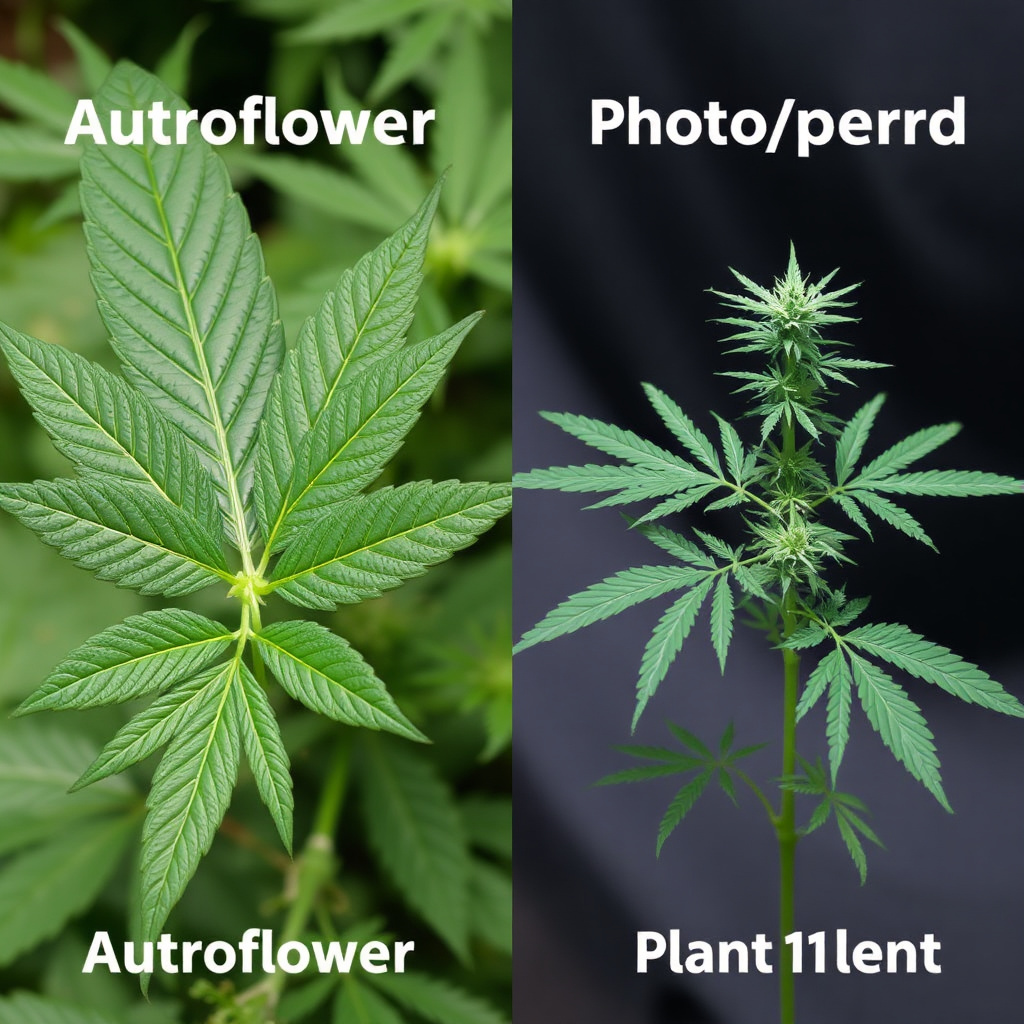
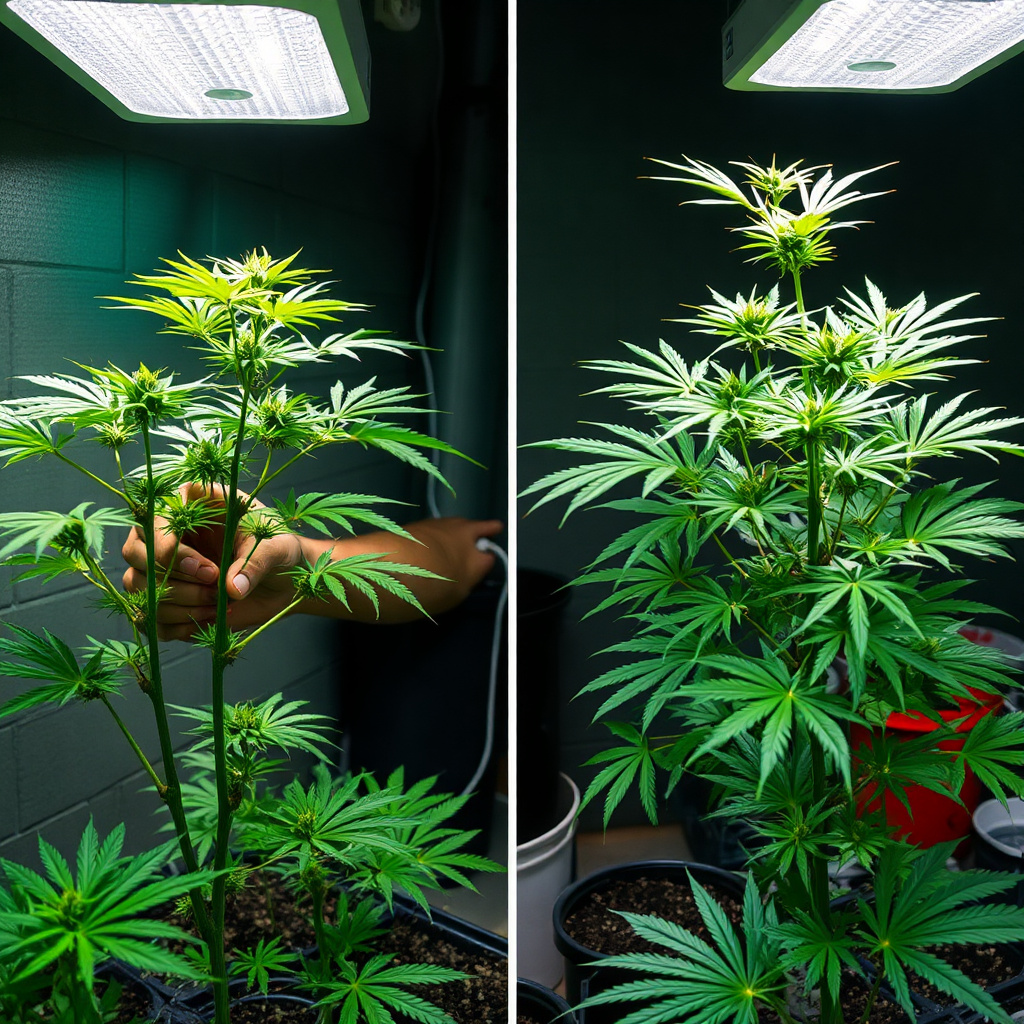
Autoflowering plants are often more compact, with a bushier and shorter stature compared to photoperiod varieties. Their leaves tend to be broad with fewer elongated leaflets, adapting to faster growth cycles.
The smaller size fits well for indoor or limited-space grows, and buds form more quickly after auto flowering initiates.
For more on this, see our related guide: How to Choose Fast Flowering Cannabis Seeds for Quick Harvests.
Traits Typical of Photoperiod Plants
Photoperiod cannabis plants can grow taller and develop longer stems and branches when kept in vegetative growth. Their leaves often have slender, pointed leaflets, especially in Sativa-dominant strains.
They usually develop a more open canopy and have more extended flowering periods, which contributes to potentially larger flower clusters.
Cultivation Environment and Light Management
Lighting Requirements for Autoflower Cannabis
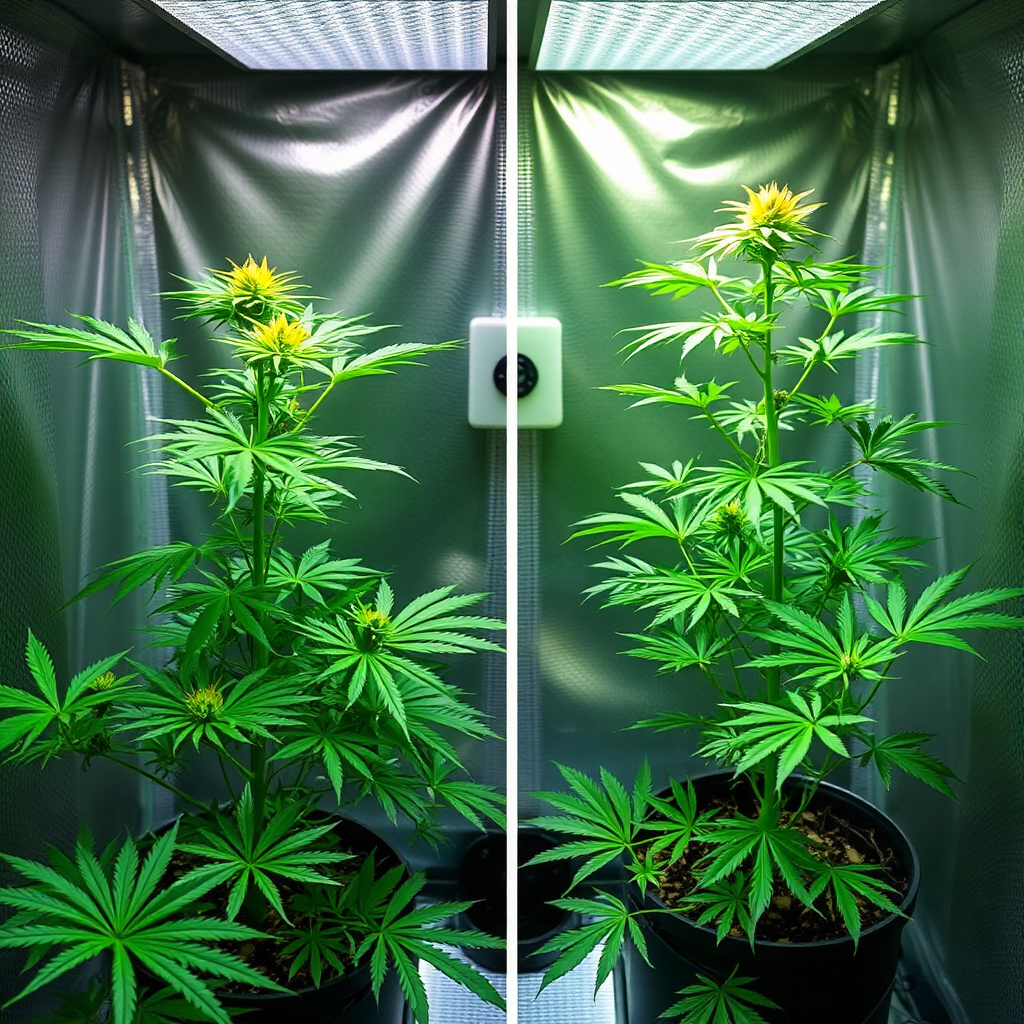
Autoflower plants do not require changes in lighting schedules to begin flowering and generally do well under consistent light periods, often 18-24 hours of light daily.
This feature reduces the need for precise light management and eliminates the risk of light leaks disrupting flowering, simplifying grow room setups.
- Constant light exposure works well
- Simple lighting schedules reduce complexity
- No blackout periods needed
Lighting Control for Photoperiod Cannabis
Photoperiod strains depend on a strict light schedule to trigger flowering, typically needing 12 hours of uninterrupted darkness and 12 hours of light daily.
Growers use timers and light-proof grow areas to maintain these cycles, which can be challenging but allows intentional control over the flowering process and harvest timing.
- Requires strict light/dark cycles
- Timers and blackout tents commonly used
- Mismanaged light can delay or reverse flowering
Yield Expectations and Harvest Timing

What to Expect from Autoflower Yields
Autoflower plants typically produce less yield per plant than photoperiod varieties due to their smaller size and rapid growth cycle. However, multiple harvests per year can compensate for this.
They are excellent for growers who want speed and multiple harvests instead of a single large yield.
- Moderate yield per plant
- Fast turnaround allows multiple grows per season
- Good for limited space or stealth grows
For more on this, see our related guide: How to Identify Good Cannabis Seeds: A Practical Guide.
Photoperiod Yield Potential
Photoperiod plants generally yield more per harvest because of their larger size and longer growth cycles. Fine control over vegetative duration can maximize flower production.
Growers aiming for high yields often choose photoperiod strains despite the added complexity in lighting control.
- Potential for large yields
- Flexible growth duration aids yield optimization
- Requires more grow space and experience
Selecting the Right Type Based on Grower Goals
When Autoflowers Are the Better Choice
Autoflowers suit newcomers, those with limited space, or growers needing fast turnaround. Their independence from complex light cycles reduces risk and labor, making them ideal for small-scale and stealth grows.
They also perform well in outdoor climates with shorter seasons, ensuring flowering before frost or cold arrives.
For a detailed overview of cannabis plant life cycles, including photoperiod and autoflower distinctions, you can visit this reliable source. photoperiod cannabis information.
Choosing Photoperiod Strains for Greater Control
Photoperiod cannabis is preferred by experienced growers seeking high yields and fine control over plant size and harvest timing. These strains thrive in controlled indoor environments where precise light management is possible.
They are well-suited for breeders or growers prioritizing flavor profiles, potency, and flower quality.
Comparison of Autoflower vs Photoperiod Cannabis
This table highlights key differences between autoflower and photoperiod cannabis plants to help clarify distinctions.
| Characteristic | Autoflower | Photoperiod |
|---|---|---|
| Flowering trigger | Automatic after 2-4 weeks | Light schedule change to ~12 hours dark |
| Growth cycle length | 8-12 weeks total | Variable; typically 12+ weeks |
| Plant size | Smaller, compact | Larger, taller |
| Light management needs | Constant light (18-24 hrs) | Strict light/dark cycles |
| Yield per plant | Moderate | High |
| Ideal for | Quick harvests, beginners | Experienced growers, large yields |
Frequently Asked Questions
Can you switch a photoperiod plant to flower without changing the light cycle?
No, photoperiod cannabis plants require a reduction in light periods, usually to 12 hours of darkness, to trigger flowering. Without this change, they remain in vegetative growth.
Do autoflower plants grow as large as photoperiod plants?
Autoflowers generally remain smaller and bushier due to their fast life cycle, while photoperiod plants can grow much taller when vegetated longer.
Is it possible to get multiple harvests per year with photoperiod plants?
Yes, but harvest frequency depends on climate and grower management. Photoperiod plants have longer cycles, so usually fewer harvests occur annually compared to autoflowers.
Are autoflowers more resistant to pests or diseases than photoperiods?
Autoflowers aren’t inherently more resistant, but their shorter growth cycle may reduce exposure time to pests and diseases compared to photoperiod plants.
Do autoflower plants produce the same potency as photoperiod plants?
Many autoflower strains now match photoperiod potency levels, though some growers find certain photoperiod strains produce more complex cannabinoid profiles.
Key Takeaways
- Autoflowers flower automatically after 2-4 weeks regardless of light cycle.
- Photoperiod cannabis plants require a 12-hour dark cycle to start flowering.
- Autoflowers grow faster and smaller, ideal for quick and discreet grows.
- Photoperiod strains offer larger yields and greater growth control.
Conclusion
Determining whether a cannabis plant is autoflower or photoperiod hinges on understanding its flowering triggers and growth cycle. Autoflowers begin flowering automatically, independent of light schedules, making their cultivation simpler and faster, especially in intermittent lighting environments. Photoperiod plants, on the other hand, rely on environmental lighting changes to dictate the transition from vegetative growth to flowering, offering growers greater influence over plant size and timing. Evaluating these biological and practical differences is fundamental when selecting the right plant type to optimize your cultivation goals and environmental constraints.
For growers prioritizing rapid harvests, multiple growing cycles yearly, or minimal lighting management, autoflower cannabis is the better choice due to its reliable and speedy flowering cycle. Conversely, photoperiod strains excel for those who want detailed control over the growth cycle, potentially larger yields, and the ability to customize vegetative periods, particularly in controlled indoor environments. Both plant types have their advantages: autoflowers thrive in outdoor spaces with shorter seasons and indoors where simplicity is valued, while photoperiods suit detailed foundational grows aimed at maximum flower production.
Whichever cannabis type you choose, understanding the key differences in genetics, flowering triggers, and cultivation demands will empower you to make informed decisions. Start by identifying your grow space, time availability, and yield expectations to decide between autoflower and photoperiod plants. From there, invest in strains that align with those criteria and tailor your growing environment accordingly for the best results.