Safely Enjoying Apples and the Poisonous Myth of Apple Seeds
Are you someone who loves apples but worries about the tiny seeds inside? Many people struggle with whether those seeds are safe to eat or if they pose a health risk. You’re not alone—there’s a lot of confusion around this common fruit.
Apple seeds contain small amounts of cyanide, but eating a few accidentally is usually safe. Chewing or crushing seeds releases limited cyanide, and most people can handle tiny doses without issue.
To enjoy apples freely, avoid crushing the seeds and keep seed intake under ten per day.
Myth-busting reassures you that small amounts aren’t dangerous, but certain groups should be cautious.
Want to learn how to enjoy apples safely? Keep going to get all the facts.
Key Takeaways
- Apple seeds contain cyanogenic compounds, but they’re usually safe to eat in small amounts, like a few seeds a day.
- Just avoid crushing or chewing the seeds too much to prevent releasing cyanide and reduce health risks.
- Washing the apple and carefully removing the seeds helps make sure it’s safe to eat.
- Kids, pregnant women, and people with health issues should limit how many seeds they eat since there’s a potential toxicity.
- The idea that apple seeds are super toxic is mostly a myth; for most people, small amounts aren’t a big deal.
Are Apple Seeds Truly Dangerous? The Facts You Need to Know
Are apple seeds truly dangerous? Many people worry about eating apple seeds because of their potential toxicity. While apples are nutritious and contain fiber, vitamins, and antioxidants, their seeds have small amounts of compounds that can release cyanide when crushed or chewed.
That said, you’d need to eat a large number of seeds to experience any harmful effects. For casual seed consumption, the risk is pretty minimal. If you’re concerned, just avoid crushing or chewing a lot of seeds.
If you accidentally swallow a few seeds, there’s no need to panic. They’ll pass through your system without any issues. The tiny amount of cyanogenic compounds in apple seeds isn’t enough to harm you during normal eating.
What Are Apple Seeds and How Do They Contain Cyanogenic Compounds
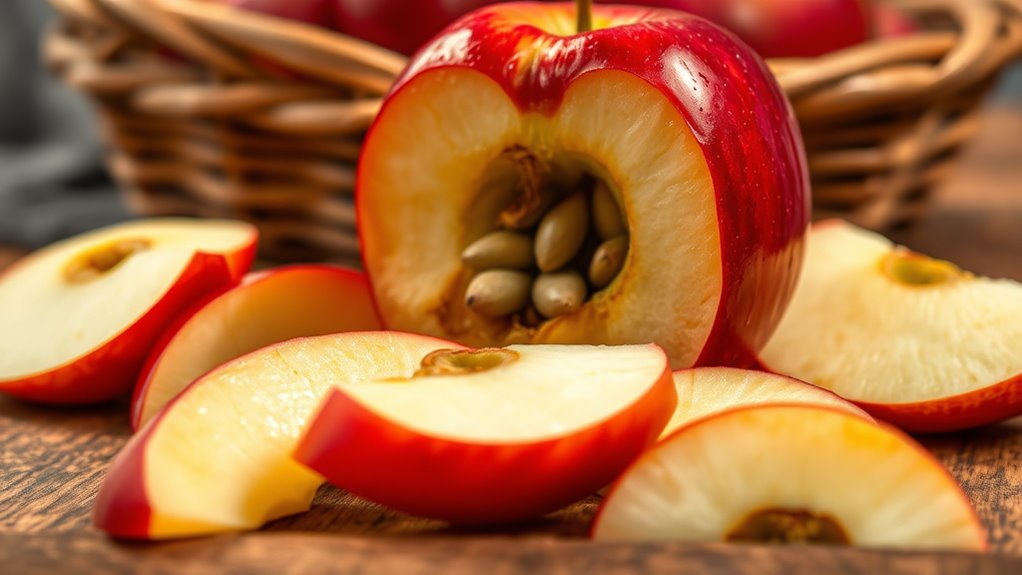
Apple seeds are the small, hard pits found inside the core of an apple, serving as the fruit’s reproductive structures. Their seed composition includes a variety of compounds, some with cyanogenic properties. These cyanogenic compounds can release cyanide when the seeds are chewed or crushed, which is why people worry about eating apple seeds.
Understanding seed composition helps clarify how these compounds work. Apple seeds contain amygdalin, a compound with cyanogenic properties. When broken down, amygdalin releases cyanide, a toxic substance. The cyanogenic potential varies depending on seed maturity and apple variety.
Most of the cyanide remains trapped in the seed unless it’s chewed or crushed extensively. While the seeds do contain cyanogenic compounds, the amount released from typical consumption is usually too small to cause harm. This knowledge can help you enjoy apples safely without unnecessary concern.
How Much Cyanide Is Released When You Chew or Crush Apple Seeds
So, when you chew or crush apple seeds, a tiny amount of cyanide is actually released from the compounds inside them. But don’t worry too much—it’s usually not enough to cause harm. The amount released really depends on things like how big the seeds are, how thoroughly you crush them, and how many seeds you actually eat.
Basically, these factors can influence how much cyanide gets released, but in most cases, eating a few apple seeds isn’t something to be overly concerned about. It’s good to know, though, because it helps you understand the potential risks if you’re thinking about nibbling on a bunch of seeds or making a habit of it.
Cyanide Quantity Released
Although chewing or crushing apple seeds can release cyanide, the amount is usually very small and not enough to cause harm in most cases. When you chew seeds, tiny amounts of amygdalin break down into hydrogen cyanide, which your body can process through cyanide metabolism.
The actual cyanide released depends on seed size and how thoroughly you crush them. Typically, a few crushed seeds contain less than 1 milligram of cyanide, far below toxic levels. Your body can usually detoxify this small amount without issue.
Keep in mind that seed toxicity depends on cumulative exposure. In most situations, accidental ingestion poses little risk, but eating large quantities could potentially overwhelm your body’s ability to metabolize cyanide efficiently.
Factors Influencing Toxicity
The amount of cyanide released from apple seeds depends mainly on how thoroughly you crush or chew them. When you do, more of the amygdalin turns into cyanide, which can increase the risk of reaching toxic levels.
Small seed intake usually releases only a tiny amount of cyanide that your body can easily detoxify. But eating a lot of crushed seeds can raise cyanide levels close to or above safe limits, potentially causing poisoning.
The toxicity varies based on seed size, how much they’re processed, and your body’s ability to detoxify cyanide. To stay safe, limit seed intake and avoid crushing large amounts.
How Many Apple Seeds Are Safe to Eat? Understanding the Risks
You might be curious about how many apple seeds you can safely eat, right? Well, it’s good to know that while a few seeds probably won’t cause any problems, there are some risks involved if you eat too many. That’s because apple seeds contain a compound called amygdalin, which can release cyanide when it’s broken down in your digestive system.
Safe Quantity Limits
Eating a small number of apple seeds is generally safe, but eating too many can be risky. To stay safe, limit how many seeds you eat and prepare them properly.
Usually, swallowing a few seeds by accident isn’t a big deal. But if you’re intentionally eating them, keep the amount minimal.
To stay safe, don’t chew the seeds too much to avoid releasing toxins. Remove seeds before blending or cooking apple dishes.
Try to keep your seed intake under 10 seeds a day. And if you’re unsure, it’s always a good idea to check with a healthcare professional.
Cyanogenic Compound Risks
Apple seeds contain cyanogenic compounds, which can release small amounts of cyanide when broken down in your digestive system. While swallowing a few seeds usually isn’t harmful, eating large quantities can increase the risk of seed toxicity.
Cyanogenic compounds in apple seeds are naturally present, but they only become dangerous when enough seeds are chewed or crushed, releasing significant cyanide levels. The body can usually detoxify small amounts of cyanide, but eating too many seeds might cause symptoms like dizziness or nausea.
To stay safe, avoid deliberately chewing or swallowing lots of seeds at once. Remember, the risk isn’t high with normal apple-eating habits, but knowing the potential dangers helps you enjoy apples without worry.
Debunking Myths About Apple Seeds and Poisoning
Many people believe apple seeds are highly toxic and should be avoided at all costs, but that’s mostly a myth. While apple seeds do contain small amounts of cyanogenic compounds, the risk of poisoning from normal eating is very low. Knowing the facts helps you enjoy apples safely without unnecessary worry.
Apple seeds contain small amounts of cyanide, but eating them in normal amounts is generally safe.
Here’s what you need to know about seed safety:
- Small doses are harmless: Swallowing a few seeds won’t hurt you because your body can handle the tiny amount of cyanide released.
- Seed crushing releases toxins: Eating whole seeds is less risky than chewing or crushing many seeds, which can release more cyanide.
- Accidental ingestion isn’t dangerous: Accidentally swallowing a few seeds during an apple snack isn’t something to worry about.
- Moderation is key: Eating large amounts of crushed seeds over time could be risky, but normal eating habits are safe.
How to Remove Apple Seeds Safely When Preparing Fruit
When preparing apples, it’s important to remove the seeds carefully to minimize any potential risk. Using effective seed removal techniques helps you avoid accidentally ingesting seeds or damaging the fruit.
Start by washing the apple thoroughly. Then, use a sharp knife or an apple corer to cut around the core. For easy seed removal, cut the apple into quarters or slices, exposing the core.
Gently scoop out the seeds with the tip of the knife or a small spoon. Alternatively, you can use a corer to remove the entire core in one swift motion.
These apple preparation methods are simple and safe, helping you prepare apples efficiently while reducing the chance of seed ingestion. Always discard the seeds properly and avoid crushing them to prevent any potential release of toxins.
Following these steps keeps your apple preparation safe and enjoyable.
Tips for Enjoying Apples Without Worrying About Seeds
To enjoy apples without worrying about seeds, you can take simple steps to make the process safer and more convenient. First, choose apple varieties that are easier to prepare, like those with smaller seeds or softer flesh.
Next, think about seed preparation methods that cut down on worries, such as coring or slicing out the seed areas. These techniques help you avoid accidentally swallowing seeds.
You can also use tools like apple corers to quickly remove the core and seeds, making the process smoother and less messy.
Always make sure to wash your apples thoroughly to remove any residues or contaminants before eating. By picking the right apples and using effective seed removal methods, you can enjoy apples confidently without concerns about seeds.
Who Should Avoid Eating Apple Seeds? When to Be Extra Cautious
If you’re a kid or someone with a smaller body size, you might want to be careful about eating apple seeds because the toxin they contain can hit you harder. It’s just one of those things to keep in mind, especially if you’re still growing or sensitive to certain substances.
People who have medical issues like liver problems or digestive concerns should think twice before munching on apple seeds. It’s a good idea to chat with your doctor if you’re unsure — better safe than sorry!
And remember, eating a few seeds here and there probably isn’t a big deal, but eating a lot of them isn’t a good idea. Moderation is key, no matter who you are.
Children and Small Adults
Children and small adults should be especially careful about eating apple seeds because their smaller bodies are more vulnerable to the natural compounds inside.
These seeds contain substances that can release cyanide when chewed, which can be dangerous. Children’s bodies don’t process toxins as efficiently as adults do.
Small adults may also feel the effects more quickly, especially if they swallow several seeds or seed fragments. Even small amounts can pose risks if eaten regularly or in large quantities.
To stay safe, it’s best to remove seeds before giving apples to children or small adults. Always encourage cautious consumption for good health.
People With Medical Conditions
People with certain medical conditions should be especially cautious about eating apple seeds because their bodies may react more strongly to the toxins released. If you have health issues like thyroid problems, liver concerns, or allergies, even small amounts of seed toxins could cause problems.
If you follow specific dietary restrictions, such as avoiding potential toxins or chemicals, it’s important to be more careful. Apple seeds contain trace amounts of cyanogenic compounds, which can be harmful in sensitive individuals or when eaten in large quantities.
It’s best to limit or avoid eating apple seeds altogether if you’re managing health issues or worried about toxins. If you’re unsure how apple seeds might affect your health or your diet, always check with your healthcare provider.
Excessive Seed Consumption
While small amounts of apple seeds are generally safe for most people, eating large quantities can pose risks. Consuming too many seeds might cause cyanide buildup, which can be harmful.
To stay safe, avoid eating lots of seeds from multiple apples at once. Be especially careful if you’re pregnant or have health conditions that affect detoxification.
Don’t rely on seed ingestion as a remedy for health problems. Instead, enjoy apple seeds in moderation, especially if you notice any symptoms.
Knowing when to be extra cautious helps protect your health. Practicing moderation and being mindful of seed intake allows you to enjoy apples without unnecessary risks.
Are Apple Seeds More Dangerous Than Other Fruit Pits?
Are apple seeds truly more dangerous than other fruit pits? Not necessarily. You might think they’re especially toxic, but many fruit pits contain similar compounds.
The main difference is the seed’s size and how much you’d need to eat to get sick. Compared to larger pits like cherries, apricots, or peaches, apple seeds are small and less likely to release dangerous levels of cyanogenic compounds unless eaten in huge amounts.
In a fruit pit comparison, apple seeds pose minimal risk if you only eat a few. Most people don’t need to avoid apples altogether; just don’t chew and swallow large quantities of seeds.
Final Tips for Savoring Apples Safely and Confidently
To enjoy apples safely and confidently, start by selecting fresh, blemish-free fruits and washing them thoroughly before eating. Knowing your apple varieties can improve your experience—some, like Fuji or Gala, are sweeter, while others like Granny Smith are tart. If you’re concerned about seeds, consider seed alternatives like sliced apples without seeds or pureed apples for cooking. Always remove any visible seeds or core if you prefer to avoid them altogether.
Here are some final tips:
- Choose organic apples when possible to reduce pesticide exposure.
- Use a produce brush to scrub apples gently.
- Opt for slicing apples at the moment of eating to maintain freshness.
- Experiment with different apple varieties to find your favorites.
These simple steps will help you savor apples safely and confidently, making each bite a delightful and worry-free experience.
Frequently Asked Questions
Can Apple Seed Poisoning Cause Long-Term Health Issues?
Apple seed poisoning is unlikely to cause long-term health issues because seed toxicity is generally low, and small accidental ingestion isn’t dangerous. Most health myths exaggerate the risks, so you don’t need to worry about harmful effects from occasional seed swallowing.
However, eating large quantities of seeds could cause discomfort or health concerns, but long-term problems are rare. Overall, enjoy apples without fear of serious health issues from seed toxicity.
Are There Any Symptoms From Ingesting Small Amounts of Cyanide?
If you accidentally ingest a small amount of cyanide from apple seeds, you might feel dizzy, have a headache, or feel nauseous within minutes.
For example, if someone chews on a handful of seeds, they could notice these symptoms. But usually, small amounts are safe because your body can detoxify minor quantities.
It’s good to know that swallowing whole seeds isn’t usually risky, but try not to chew them.
Do Organic Apples Have Fewer or More Seeds Containing Cyanogenic Compounds?
Organic apple varieties generally contain similar cyanogenic compound levels in their seeds as conventional apples do. The amount of cyanide released depends on seed size and how many you chew or break open.
If you avoid crushing or swallowing large quantities of seeds, you minimize risk. Remember, small amounts from occasional seed ingestion usually don’t cause harm, but it’s best to remove seeds if you’re eating a lot of apples or concerned about cyanide exposure.
How Does the Body Metabolize Cyanide From Apple Seeds?
When you eat apple seeds, your body works to break down the cyanide they contain. Enzymes in your body convert cyanide into a less harmful substance called thiocyanate.
Your kidneys then help eliminate this thiocyanate from your system. Usually, small amounts from just a few seeds aren’t harmful.
However, eating large quantities can cause seed toxicity.
Thankfully, your body’s ability to process cyanide helps keep you safe.
Still, it’s a good idea to avoid eating lots of apple seeds just to be safe.
Is There a Safe Way to Test if an Apple Seed Is Toxic?
Think of seed toxicity like a hidden storm—dangerous if you don’t know where the clouds gather.
There’s no safe way to test an apple seed’s toxicity at home; chemical analysis is needed.
Instead, focus on safe consumption: enjoy apple flesh, and avoid crushing or ingesting large amounts of seeds.
Conclusion
While apple seeds contain cyanogenic compounds, enjoying apples without worry is easy—just avoid chewing or crushing many seeds at once.
Think of the seeds like the pit of a cherry: harmless in small doses but potentially risky if you go overboard. So, savor your apple slices and share with friends, knowing that moderation is key.
After all, life’s sweet moments should be enjoyed seed-free and worry-free. Remember, apple seeds are safe when eaten in moderation, so don’t let the myth hold you back from enjoying your favorite fruit.