What Seeds Do Cranberries Have?
If you’re someone who loves cranberries but finds yourself wondering about what’s inside the fruit, you’re not alone. Many people are curious about the tiny seeds hidden within these tart berries and what they mean for your health.
Cranberries contain small, oval-shaped seeds that develop naturally inside each fruit during pollination. Most cranberries have 1 to 5 tiny seeds, measuring about 1-2 mm, with a tough shell and reddish-brown color.
These seeds are safe to eat and offer a nutty flavor along with nutritional benefits like fiber, antioxidants, and healthy fats.
To learn more about how these seeds form and their uses, keep exploring.
Key Takeaways
- Cranberries contain small, oval-shaped seeds called cranberry seeds, typically measuring 1-2 mm in size.
- Each cranberry fruit usually has between 1 and 5 seeds embedded within its flesh.
- The seeds have a tough, reddish-brown outer shell with textured ridges or bumps.
- Cranberry seeds are edible and have a nutty flavor. They’re also rich in fiber, antioxidants, and healthy fats.
- These seeds play an important role in plant reproduction and germination processes.
What Are Cranberry Seeds and How Do They Form?
Cranberry seeds are the small, hard pits found inside each cranberry fruit. These seeds form through natural seed formation processes as the plant reproduces.
When a cranberry flower is pollinated, the fertilized ovule develops into a seed inside the fruit. Over time, the seed matures along with the berry, ready for propagation if planted.
Pollinated cranberry flowers develop fertilized ovules that mature into seeds, ready for propagation when planted.
Cranberry seeds contain the genetic material needed to grow new plants, but they often need specific conditions to germinate successfully. In nature, seed dispersal happens when animals eat the berries and later excrete the seeds, helping the plant spread.
Cultivators can also plant seeds intentionally to grow new cranberries, though this isn’t as common as vegetative propagation. Overall, seed formation is a key part of the cranberry’s reproductive cycle, ensuring the species continues and giving options for new plant growth.
What Do Cranberry Seeds Look Like?
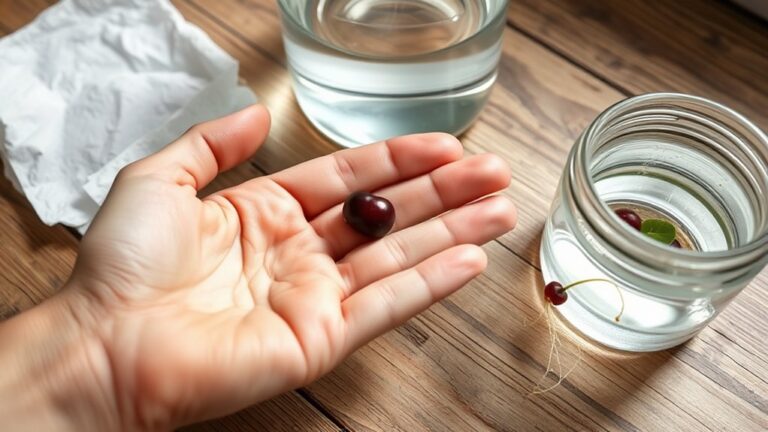
Cranberry seeds are pretty tiny and oval-shaped, kind of like a small pea. They have this tough outer shell that’s a reddish-brown color, and the surface isn’t perfectly smooth — it’s got a slightly textured feel to it.
Inside, there’s a hard core that holds all the nutrients and the potential to grow into a new plant someday. So, when you’re looking at cranberries, that’s what the seeds look like up close!
Shape and Size
The seeds inside a cranberry are tiny and hard, usually measuring about 1 to 2 millimeters long. They have a smooth, rounded shape that fits snugly within the fruit.
During seed development, they stay small but become more defined in size and form. Their shape is generally oval or slightly flattened, like shown below:
| Shape | Size | Surface Texture |
|---|---|---|
| Oval | 1-2 mm in length | Smooth and hard |
| Slightly flattened | 1-2 mm in width | Firm to the touch |
| Rounded | Consistent with seed development | Compact and dense |
These features make cranberry seeds small, resilient, and well-suited for their role inside the fruit.
Color and Texture
Inside a cranberry, the seeds show a subtle but distinct color palette, usually from pale tan to deep brown. These variations make each seed a little unique, adding visual interest when you look closely.
The textures are noticeably different too: some seeds feel smooth and glossy, while others have a more matte or slightly rough surface. They’re firm to the touch, with a dense, compact feel that makes them sturdy.
You might notice tiny ridges or bumps on the surface, emphasizing their textured differences. These visual and tactile details help you tell cranberry seeds apart from other small fruit seeds.
Inside the Seed
Within the seed, you’ll find a small, compact core that holds the developing embryo. This core is essential for seed development and is protected by the seed coat. Cranberry seeds are tiny, oval-shaped, and hard, designed to survive seed dispersal.
The seed coat shields the embryo from damage and helps it endure harsh conditions. Inside, the embryo includes a tiny shoot and root, ready to grow once conditions are right.
The seed’s structure guarantees it can travel far during dispersal, reaching new areas for growth. Here’s a quick look at seed features:
| Feature | Description | Function |
|---|---|---|
| Seed Shape | Oval, small | Fits into fruit easily |
| Seed Coat | Hard, protective | Protects embryo |
| Embryo | Tiny, developing plant | Grows into new plant |
| Dispersal Type | Via animals or water | Spreads seeds far |
| Size | Few millimeters | Easy to transport |
How Many Seeds Are Usually in a Cranberry?
Most cranberries contain just a few seeds—usually between one and five per berry. These seeds are small and embedded within the flesh, so it’s easy to overlook them when eating.
The number of seeds in each cranberry varies, but they rarely have more than five. If you’re into seed germination, understanding seed dispersal is helpful because cranberry seeds are naturally spread by water and animals.
Seed dispersal helps move the seeds to new spots, allowing the plant to grow in different areas. Even though the seeds are tiny, they play a big role in how the cranberry plant reproduces.
Knowing that most cranberries only have a few seeds can give you insight into how the plant spreads and grows. Whether you’re a gardener or just curious, it’s good to understand their growth and propagation process.
Are Cranberry Seeds Edible and Safe to Eat?
You might be curious about whether cranberry seeds are safe and worth eating. The good news is, these small seeds are actually edible and can provide some nutritional perks. However, it’s always smart to think about safety and how they fit into your diet. So, let’s take a closer look and see if including cranberry seeds is a good idea for you.
Edibility of Cranberry Seeds
Cranberry seeds are generally safe to eat and are often found in various cranberry products. They’re small, hard, and have a nutty flavor, making them easy to enjoy.
These seeds can grow into new cranberry plants if properly planted, showing the seed diversity within the species. Eating cranberry seeds won’t harm you, and they don’t contain toxins like some other seeds do.
Many people like the texture and subtle taste of these tiny seeds, especially in smoothies or baked goods. Their presence also boosts the seed diversity of cranberries, which helps with plant resilience and genetic variation.
Nutritional Benefits of Seeds
Cranberry seeds are not only safe to eat but also offer notable nutritional benefits, making them a valuable addition to your diet. These tiny seeds contain essential nutrients like fiber, healthy fats, and antioxidants that support your overall health.
Including cranberry seeds in your meals can boost seed nutrition, helping you absorb important vitamins and minerals. Proper seed storage is essential to keep them fresh and maintain their nutritional value, so keep them in a cool, dry place.
Consuming these seeds can promote digestive health and provide anti-inflammatory benefits. Their nutrient profile makes cranberry seeds a smart, healthy snack or ingredient, adding crunch and nutrition without excess calories.
Incorporating them into your diet is an easy way to improve your seed intake and support your wellness goals.
Safety Considerations
Despite their small size, cranberry seeds are safe to eat for most people when consumed in moderation. Seed safety isn’t usually a concern, as cranberry seeds naturally contain no toxins.
However, some individuals with allergies or sensitivities might experience discomfort. Processing methods like grinding or blending can make seeds easier to digest and boost their nutritional benefits.
If you’re buying products with cranberry seeds, check labels to ensure proper processing and quality standards. Whole seeds are safe to eat, but eating too many could cause minor digestive issues for some people.
What Is the Role of Cranberry Seeds in Fruit Growth?
Cranberry seeds are key to growing new cranberry plants. When conditions are just right, the seed can sprout and grow into a new plant. This process is a vital part of how cranberry plants reproduce and survive over time.
The seed holds all the genetic info needed to develop into a mature cranberry vine. Once planted in good soil and given enough moisture and warmth, it begins to sprout, sending out roots and shoots.
These early growth stages are super important because they set the foundation for the plant’s health and how much fruit it will produce later on. Without successful germination, new plants can’t grow, and the cycle gets interrupted.
Do Cranberry Seeds Add Nutritional Value?
Cranberry seeds are pretty interesting because they pack a punch when it comes to nutrition. They’re loaded with things like fiber, antioxidants, and healthy fats, which are all good for your body. Adding them to your diet could help with digestion and give your immune system a little boost too.
Nutritional Content of Seeds
Seeds are often overlooked as nutritional powerhouses, but they can really boost the health benefits of your diet. Cranberry seeds, for example, contain healthy fats, fiber, and antioxidants that support overall nutrition and seed health.
They also help preserve nutrients during processing, so you get the most out of them. Including seeds in your meals is a simple way to add valuable nutrients to your daily routine.
| Nutritional Components | Benefits |
|---|---|
| Healthy Fats | Promote heart health and reduce inflammation |
| Fiber | Aid digestion and help keep blood sugar stable |
| Antioxidants | Protect your cells from damage caused by oxidative stress |
| Vitamins & Minerals | Support your immune system and boost energy levels |
Health Benefits of Cranberry Seeds
Including cranberry seeds in your diet can greatly boost your nutritional intake, thanks to their rich content of healthy fats, fiber, and antioxidants. These seeds offer impressive antioxidant properties that help fight oxidative stress and support overall health.
Their high fiber content promotes better digestion by aiding regularity and gut function. Cranberry seeds also contain essential nutrients that can strengthen your immune system and reduce inflammation.
Consuming these seeds regularly may improve your heart health by managing cholesterol levels. Their nutritional profile makes them a great addition to smoothies, salads, or snacks.
How Can You Use Cranberry Seeds in Recipes?
Have you ever thought about adding cranberry seeds to your recipes for a nutritious boost? These tiny seeds can easily enhance a variety of dishes with their crunch and health benefits.
Cranberry seed recipes often feature them as toppings or mix-ins, giving dishes texture and a subtle nutty flavor. You can sprinkle crushed seeds over yogurt, oatmeal, or salads to boost fiber and antioxidants.
They also work great in baked goods like muffins or granola bars, adding a satisfying crunch. For savory dishes, toss them into salsas or grain bowls for extra texture.
Because of their mild flavor, cranberry seeds blend seamlessly without overpowering other ingredients. Their versatility makes them a popular choice when you want to add nutrition without changing the taste.
Experiment with different recipes to see how these small seeds can elevate your meals.
Are There Health Benefits or Risks From Cranberry Seeds?
Adding cranberry seeds to your recipes not only boosts flavor and texture but also offers potential health advantages. These seeds contain antioxidant properties that can help fight oxidative stress and support your immune system.
Consuming cranberry seeds may contribute to better heart health by reducing inflammation and lowering cholesterol levels. But it’s good to be aware of possible health risks as well.
Cranberry seeds may support heart health but should be enjoyed in moderation to avoid potential risks.
Eating large amounts of cranberry seeds could cause digestive discomfort or allergic reactions in some people. Plus, they contain natural compounds that might interact with certain medications like blood thinners.
As with any food supplement, moderation is key. Incorporating cranberry seeds into a balanced diet can be beneficial, but overdoing it may pose risks. Always listen to your body and talk to a healthcare professional if you have concerns, especially if you’re on medication or have health conditions.
How Are Cranberry Seeds Removed During Processing?
During processing, cranberry seeds are usually separated from the fruit flesh through a combination of mechanical and sometimes gentle chemical steps. Seed extraction often involves crushing or pressing the cranberries to break the fruit open and release the seeds.
Processing techniques may include using specialized equipment like rollers or grinders that gently separate seeds from the pulp without damaging them. Sometimes, mild chemical treatments are used to loosen the seeds, making them easier to extract.
The main goal is to remove the seeds efficiently while keeping the remaining juice or concentrate in good condition. After separation, the seeds are typically washed and filtered to remove any pulp or debris.
This process ensures that the final cranberry product is seed-free or has minimal seed material, depending on what it’s meant for. Overall, these methods are designed to be efficient and to preserve the quality of the cranberry concentrate.
Can Cranberry Seeds Be Preserved or Used in Cooking?
Can cranberry seeds be preserved or used in cooking? Yes, with proper seed preservation techniques, you can incorporate cranberry seeds into various culinary creations. These tiny seeds add texture and a nutty flavor to dishes.
Cranberry seeds can be preserved and added to dishes for crunch, flavor, and nutritional benefits.
You might consider drying and storing them for future use or grinding them into powder for smoothies or baked goods. Some culinary uses include adding crushed seeds to salads for crunch, incorporating seed powder into sauces or dressings, or using whole seeds as a garnish.
You can also blend seeds into smoothies for added fiber. While cranberry seeds are often discarded during processing, they can be preserved for culinary purposes. Proper storage in airtight containers keeps them fresh and prevents spoilage.
Experimenting with seed preservation techniques allows you to enjoy their nutritional benefits and unique flavor in many recipes.
Frequently Asked Questions
Are Cranberry Seeds Commercially Harvested or Left in the Fruit?
Cranberry seeds are usually left in the fruit during commercial cultivation, and seed extraction isn’t common.
Farmers harvest the berries mainly for processing into juices and products. The seeds typically aren’t separated because they don’t impact the final product.
If you’re interested in cranberry seed extraction, it’s mostly done in research settings. Commercial growers focus on harvesting the berries for their juice and flavor.
Do All Cranberry Varieties Contain the Same Number of Seeds?
Like a painter’s palette, cranberry varieties display seed variation, influencing their seed development. Not all cranberry varieties contain the same number of seeds; some have fewer, while others possess more.
These differences stem from genetic diversity, much like the nuances in a symphony. So, as you investigate different cranberries, expect a range of seed counts, each telling its own story of natural variation and botanical diversity.
Can Cranberry Seeds Be Used for Planting New Cranberry Plants?
Yes, you can use cranberry seeds for planting new plants. Just focus on seed germination and proper planting techniques.
Start by cleaning and stratifying the seeds, which mimics winter conditions. Then, plant them in acidic, well-draining soil and keep it moist.
With patience and good care, your cranberry seeds can sprout and grow into healthy new plants. It might take some time for them to mature, but it’s definitely possible.
How Do Cranberry Seeds Compare Nutritionally to Other Berry Seeds?
You’ll find that cranberry seeds are smaller and less nutrient-dense than seeds of berries like blueberries or blackberries.
While they still offer nutritional benefits, such as fiber and antioxidants, their seed composition is lighter in fats and proteins.
Notably, cranberry seeds contain unique phytochemicals that support health, but overall, their nutritional profile is modest compared to other berry seeds.
This makes cranberry seeds less of a concentrated source of nutrients.
Are Cranberry Seeds Commonly Used in Traditional Medicine?
Cranberry seeds aren’t commonly used in traditional medicine, but they do offer health benefits. They are mainly valued for their high fiber and antioxidant content.
In herbal remedies, cranberry seed oil is sometimes used for skin health and to reduce inflammation.
While not a staple, adding cranberry seeds or seed oil to your diet can help boost antioxidants and support overall wellness.
Conclusion
Ultimately, understanding cranberry seeds helps you appreciate their role and relevance. By balancing benefits and barriers, you can confidently incorporate these tiny treasures into your treats.
Recognize their resilience, relish their richness, and respect their role in ripening. These seeds are more than just small parts of the berry—they symbolize strength, sustainability, and surprises.
Welcome exploration, enrich your recipes, and enhance your eating experience. Remember, cranberry seeds are an underrated gem in your favorite dishes.
So seed your curiosity and savor the journey of cranberries with confidence and care. Enjoy discovering their secrets and adding a little extra magic to your culinary adventures.