Can You Swallow Pomegranate Seeds?
Many people love the idea of enjoying a fresh, juicy pomegranate but get stuck on what to do with those tiny seeds. You’re not alone—figuring out whether to swallow or spit them out can be confusing. If you’re wondering whether you can swallow pomegranate seeds, you’re in the right place.
Yes, you can safely swallow pomegranate seeds, and doing so allows you to enjoy their nutrients without chewing or spitting them out. The seeds are edible and rich in fiber and antioxidants, offering health benefits like improved heart health and immunity.
While some prefer to spit them out to avoid digestive discomfort, swallowing them is generally safe for most people.
If you want to learn about the best ways to enjoy pomegranate seeds, keep exploring.
Key Takeaways
- Yes, pomegranate seeds are safe to swallow and are edible. They provide fiber and antioxidants that are good for you.
- Chewing seeds thoroughly can help with digestion and might reduce any potential discomfort.
- Swallowing seeds can boost your fiber intake but may cause bloating in some sensitive people.
- If you don’t like the texture or experience digestive issues, it’s perfectly fine to spit out the seeds.
- Both swallowing and spitting are safe options; just choose what works best for your preference and digestive comfort.
What Are Pomegranate Seeds and Are They Edible?
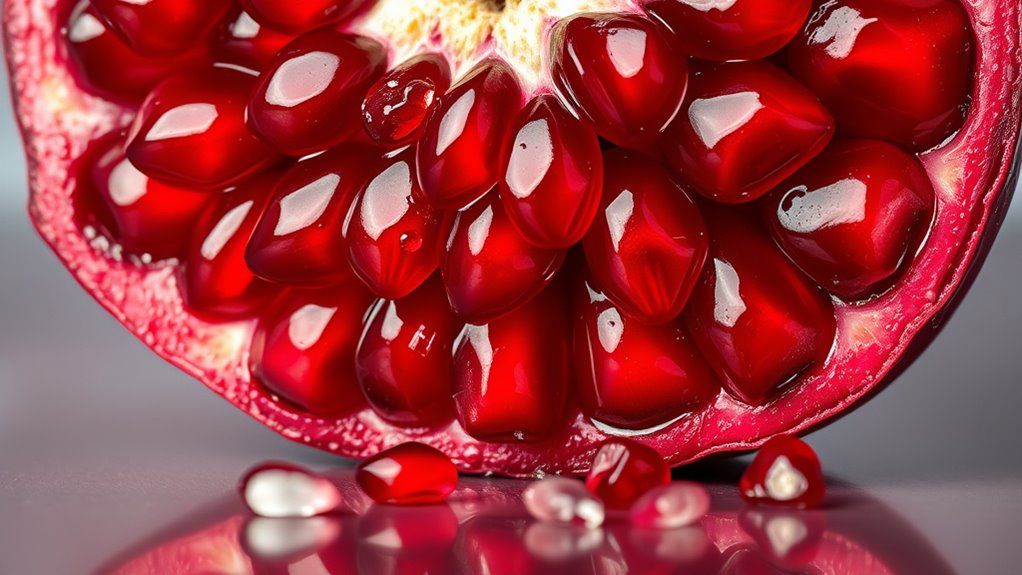
Pomegranate seeds are the small, juicy arils inside the fruit, each holding a tiny, edible seed. These seeds come from different pomegranate varieties that can vary in size, color, and flavor.
Some varieties have larger, sweeter seeds, while others are smaller and more tart. The texture of the seeds also varies—some are soft and easy to chew, others are firmer and crunchier.
Some pomegranate seeds are larger and sweeter, while others are smaller and more tart in flavor.
All pomegranate seeds are safe to eat and packed with nutrients like antioxidants, vitamins, and fiber. You might wonder if the seeds are edible, and the answer is yes—you can swallow them without any harm.
Many people enjoy the burst of flavor and juice they give. The seed’s edible part is perfectly safe to eat. Whether you prefer to chew or swallow whole, knowing the seed’s characteristics helps you enjoy pomegranates more fully.
How to Safely Prepare and Eat Pomegranate Seeds
Want to enjoy pomegranate seeds safely? The first step is to carefully remove them so you don’t damage the fruit. You can eat the seeds straight up or toss them into your recipes — just make sure to wash your hands and the fruit before you start.
It’s also a good idea to keep safety in mind. If you’re sensitive to seeds, don’t go overboard with how much you eat. And when handling the pomegranate, do it gently to avoid making a mess. Enjoy your pomegranate seeds!
Removing Seeds Properly
Removing pomegranate seeds safely is simple once you know the right technique. Start by scoring the pomegranate with a knife, then break it open over a bowl of water to loosen the seeds.
Use your fingers or a spoon to gently extract the seeds, avoiding the pith, which can be bitter. This method minimizes mess and helps keep the seeds intact.
Once separated, place the seeds in a clean container and dry them if needed. For storage, keep the seeds in an airtight container in the fridge to stay fresh.
If you want to save them longer, consider freezing the seeds in a single layer before transferring them to a freezer bag. Proper storage tips will keep your seeds fresh and ready for snacking or recipes.
Best Eating Methods
After successfully removing the seeds, it’s important to prepare and eat them safely to enjoy their flavor and health benefits. You can consume pomegranate seeds raw, add them to salads, or blend them into smoothies.
These methods help preserve their nutrients and maximize health benefits like antioxidants and vitamins. For culinary uses, sprinkle seeds over yogurt or oatmeal for added texture and flavor.
You might also incorporate them into desserts or salsas for a tangy twist. To enjoy pomegranate seeds safely, avoid cooking at high temperatures that may degrade nutrients.
Instead, enjoy them fresh or chilled. This way, you maintain their vibrant taste and nutritional value while exploring versatile culinary uses.
Proper preparation improves your experience and supports your health goals.
Safety Precautions To Know
While pomegranate seeds are generally safe to eat, it’s important to handle and prepare them properly to avoid potential choking hazards or digestion concerns. To keep things safe, remove seeds carefully from the fruit, avoiding force or rushing, which might cause choking.
Chew the seeds thoroughly, especially if you have sensitive digestion, since swallowing large seeds could cause discomfort or blockages. If you’re prone to digestion issues, consider spitting out the seeds or limiting how many you eat.
Washing the seeds before eating helps reduce the risk of contamination. Always enjoy pomegranate seeds in moderation, especially if you’re unsure how your digestive system will react.
Is It Safe to Swallow Pomegranate Seeds?
Swallowing pomegranate seeds is usually safe and can actually be good for you because they contain fiber and antioxidants. That said, some folks might find that they experience some digestive discomfort or bloating after eating them. So, it’s a good idea to pay attention to how your body reacts.
Before adding a bunch of seeds to your diet, just consider your own tolerance and any safety concerns you might have. If you’re unsure or have any health issues, it’s always best to check with a healthcare professional.
Nutritional Benefits of Seeds
Pomegranate seeds are packed with nutrients that can boost your health, making them a great addition to your diet. They’re high in fiber, which helps with digestion and keeps you feeling full longer.
The seeds also have strong antioxidant properties that protect your cells from damage caused by free radicals. Eating pomegranate seeds can support heart health, reduce inflammation, and boost your immunity.
To get the most benefits, try adding them to smoothies, salads, or just enjoy them as a snack. The seeds are edible and safe to swallow, providing nutrients straight from nature. Incorporating pomegranate seeds into your meals is an easy way to increase your nutrient intake without much effort.
- High fiber content for digestion support
- Rich in antioxidants for cell protection
- Naturally nutritious and versatile food source
Potential Digestive Effects
Eating pomegranate seeds is generally safe, and many people swallow them without any issues. However, some might wonder how these seeds affect their digestion.
Pomegranate seeds contain fiber and natural compounds that can influence your digestive enzymes, helping with seed digestion. For most people, swallowing the seeds doesn’t cause discomfort because your body can break down the seed coat and extract nutrients efficiently.
But if you have a sensitive stomach or digestive issues, eating large amounts might cause bloating or minor upset. The fiber can help regulate bowel movements, but it’s important to pay attention to how your body reacts.
Safety Considerations
While swallowing pomegranate seeds is usually safe, it’s good to keep a few things in mind. The texture of the seeds varies—some are crunchy, others softer—which can affect how comfortable they are to swallow.
If you have sensitive digestion or any digestive issues, swallowing large amounts might cause discomfort or blockages. It’s best to chew thoroughly if you’re unsure about swallowing them whole.
Here are some safety tips:
- Be cautious if you’ve had digestive problems or blockages before.
- Chew the seeds well to help digestion and reduce choking risk.
- Consider removing seeds if their texture irritates you or makes swallowing hard.
Most of the time, swallowing pomegranate seeds won’t cause any harm, but listening to your body is the key to staying safe.
What Are the Health Benefits of Eating Pomegranate Seeds?
Consuming pomegranate seeds offers a variety of health benefits that can boost your overall well-being. These tiny seeds are packed with antioxidants, which help protect your cells from damage caused by free radicals.
Regularly eating pomegranate seeds can support your immune system and reduce inflammation, lowering your risk of chronic diseases. The fiber in the seeds also helps keep your digestion healthy and makes you feel full, which can help with weight management.
The natural compounds in pomegranate seeds may also improve heart health by helping to lower blood pressure and cholesterol levels. You can easily add these seeds to your diet by sprinkling them on salads, yogurt, or enjoying them on their own.
Including pomegranate seeds in your meals is a simple way to give your body a nutrient-rich boost that supports overall health and wellness.
Can Eating Pomegranate Seeds Cause Digestive Issues?
Although pomegranate seeds offer many health benefits, they can sometimes cause digestive issues in some people. If you have a sensitive stomach, eating a lot of seeds might lead to discomfort.
Pomegranate seeds can cause digestive discomfort, especially for sensitive stomachs or if eaten in large quantities.
This is because seed digestion can be slow, and the tough outer layer might irritate your digestive tract.
Potential issues include bloating or gas due to difficulty breaking down the seeds. Constipation can also happen if you don’t chew thoroughly or drink enough water.
Mild stomach pain might occur from seed fibers irritating your intestines. Usually, these symptoms are temporary but can be uncomfortable.
To help reduce the risk, try chewing the seeds thoroughly or limit how much you eat if you notice any discomfort. Keep in mind, seed digestion varies from person to person.
Some people tolerate pomegranate seeds better than others. If you experience ongoing problems, it’s a good idea to talk to a healthcare professional.
Are There Nutritional Risks in Pomegranate Seeds?
Pomegranate seeds are generally safe to eat and packed with nutrients, but it’s good to be aware of some potential risks. They contain antioxidants, vitamins, and fiber that support your overall health.
Eating large amounts might cause digestive discomfort, especially if your digestive system isn’t in top shape. The seeds have compounds that could lead to bloating or minor stomach upset in sensitive people.
Since pomegranate seeds are high in natural sugars, eating too many could increase your calorie intake or cause blood sugar spikes. This is especially important if you have diabetes or insulin resistance.
While enjoying pomegranate seeds in moderation can be beneficial, it’s best to include them as part of a balanced diet. Listen to how your body reacts and talk to a healthcare professional if you’re worried about nutritional risks.
How to Incorporate Pomegranate Seeds Into Your Diet
You can easily incorporate pomegranate seeds into your diet by tossing them into yogurt or oatmeal. It’s a quick way to add a burst of flavor and some extra nutrition.
If you’re into smoothies, try blending in a handful of seeds — they give your drink a nice nutritional boost without altering the taste too much. And don’t forget about salads! Sprinkling pomegranate seeds over your greens adds a lovely crunch and a touch of sweetness that’s hard to beat.
Adding Seeds to Yogurt
Adding pomegranate seeds to your yogurt is a simple way to boost both flavor and nutrition. They make great toppings, adding sweetness and crunch.
To improve your flavor pairing, try combining seeds with creamy Greek yogurt or tangy flavored varieties. Sprinkling seeds over fruit-flavored or vanilla yogurt creates a vibrant contrast.
For added visual appeal and taste, consider these ideas:
- Mix seeds into plain or flavored yogurt for a colorful, nutrient-rich snack
- Layer seeds with granola and fresh fruit for a balanced breakfast
- Use seeds as a topping on yogurt parfaits to add texture and flavor
Experiment with different combinations to find your favorite way to enjoy pomegranate seeds in your yogurt.
Blending Into Smoothies
Blending pomegranate seeds into smoothies is a quick and easy way to boost their flavor, texture, and nutritional value. You can blend the seeds directly into your favorite recipes for a burst of antioxidants and a touch of tartness.
These seeds add a nice seed texture that pairs well with creamy fruits and greens. To customize your smoothies, try adding ingredients like:
| Ingredient | Effect on Texture/Flavor |
|---|---|
| Banana | Creates a creamy base and masks seed crunch |
| Spinach | Adds nutrients and blends smoothly |
| Mango | Adds sweetness and balances tartness |
| Yogurt | Makes it creamier and improves seed texture |
| Honey | Adds natural sweetness and offsets tartness |
Experiment with these options to make smoothies that suit your taste and preferred texture.
Using Seeds in Salads
Pomegranate seeds add vibrant color, juicy texture, and a burst of sweetness to salads, making them a versatile topping or mix-in. They instantly boost flavor and make your dish look more appealing.
To incorporate them, just sprinkle seeds over greens, grains, or roasted vegetables for a refreshing touch. They go well with many ingredients and help improve the overall flavor.
You can also mix seeds with nuts, cheese, or fruits to create a layered, complex salad. For the best flavor, toss the seeds with a simple vinaigrette before adding them to your dish.
Here are some ideas:
- Top mixed greens with pomegranate seeds and feta
- Mix seeds into quinoa salads with herbs and citrus
- Add seeds to roasted vegetable salads for a juicy pop
Should You Spit Out or Swallow Pomegranate Seeds? Pros and Cons
Have you ever wondered whether you should spit out or swallow pomegranate seeds? The choice really depends on what you prefer and how your digestion feels.
Pomegranate seeds have a crunchy texture that some people enjoy, while others prefer to avoid swallowing the seed itself. Swallowing the seeds can boost your intake of dietary fiber and antioxidants.
Pomegranate seeds add crunch and boost fiber and antioxidants, but swallowing them depends on your comfort and digestion.
But keep in mind, it also means your digestive enzymes have to work harder to break down the seed coating. If you’re sensitive to seed texture or have digestive issues, spitting out the seeds might be more comfortable.
On the bright side, swallowing seeds can help your body absorb more nutrients and support digestion over time. Still, some folks worry about choking hazards or seed discomfort.
In the end, whether you spit or swallow comes down to what feels best for you. Both options are safe, so understanding how your digestive system handles seeds can help you decide what’s right.
How Do Pomegranate Seeds Compare to Other Fruit Seeds?
How do pomegranate seeds compare to other fruit seeds regarding texture, nutritional value, and safety? The seed texture of pomegranate seeds is tender with a slight crunch, making them more palatable than the often tougher or larger seeds in fruits like apples or cherries.
Nutritionally, pomegranate seeds are rich in antioxidants, fiber, and vitamins, offering health benefits similar to other seed-bearing fruits like berries and grapes. Regarding safety, pomegranate seeds are generally safe to eat, much like many small fruit seeds.
However, some people might find their seed texture unpleasant or experience digestive discomfort if they eat too many. Overall, pomegranate seeds are easier to chew and provide comparable or even better nutritional benefits.
What Do Nutrition Experts Say About Eating Pomegranate Seeds Whole?
Nutrition experts generally agree that eating pomegranate seeds whole is safe and can be beneficial, thanks to their rich nutritional content. These seeds pack antioxidants, vitamins, and fiber, which support overall health.
Regarding seed digestion, experts say that chewing or swallowing seeds whole doesn’t harm your digestive system. The seed coat is tough but designed to withstand stomach acids, allowing nutrients to be released during digestion.
Some people worry about choking, but if you chew the seeds properly, you’ll avoid this concern. Eating seeds whole can help maximize nutrient intake without losing any benefits.
Furthermore, the fiber in the seeds promotes healthy digestion and can aid in weight management. Overall, nutrition experts see no major risks in consuming pomegranate seeds whole, provided you chew them well.
Incorporating these seeds into your diet can boost your nutritional profile while supporting your digestive health.
Frequently Asked Questions
Can Swallowing Pomegranate Seeds Cause Any Health Problems?
Swallowing pomegranate seeds usually doesn’t cause health problems, but it can lead to digestive issues if you eat a lot of them since the seeds are high in fiber.
There’s also a choking risk, especially if you don’t chew the seeds well or if you have trouble swallowing.
To stay safe, make sure to chew the seeds thoroughly and eat them in moderation, especially if you’re prone to choking or have digestive sensitivities.
Are Pomegranate Seeds Safe for Children to Eat?
Yes, pomegranate seeds are safe for children to eat and offer great nutritional benefits like antioxidants, vitamin C, and fiber.
You should serve them in small, manageable portions, maybe mixed into yogurt or fruit salads, to make them easier to enjoy.
Always supervise young children while eating to help prevent choking.
Adding seeds to their diet can boost their health and make meals more tasty and nutritious.
Do Pomegranate Seeds Contain Any Harmful Substances?
Pomegranate seeds are generally safe to swallow and don’t contain harmful substances. In fact, they offer nutritional benefits like antioxidants, fiber, and vitamins that support your overall health.
Eating the seeds can also help your digestive health by adding fiber to your diet. Just make sure you chew them well to enjoy their benefits and avoid choking, especially if you’re sensitive or have trouble swallowing.
Can Pomegranate Seeds Help With Weight Loss?
You’ll be surprised to learn that pomegranate seeds can help with weight management because they’re high in fiber. About 7 grams of fiber per 100 grams helps you feel full longer, so you’re less likely to overeat.
Pomegranate benefits include antioxidants that boost your metabolism and fight inflammation. Incorporating seeds into your diet makes a tasty, healthy snack that supports your weight loss goals.
Plus, they add flavor and texture to your meals, making healthy eating more enjoyable. It’s a simple way to give your diet a nutritious boost.
Are There Any Allergy Concerns Related to Pomegranate Seeds?
Yes, you should be cautious of pomegranate allergies and seed sensitivities. Some people might have allergic reactions to pomegranate seeds, which can include itching, swelling, or difficulty breathing.
If you know you have seed sensitivities or are allergic to similar fruits, it’s a good idea to check with your doctor before eating pomegranate seeds. Starting with a small amount can help you see how your body responds and avoid any allergic reactions.
Conclusion
Ultimately, understanding and enjoying pomegranate seeds is simple and satisfying. So, swallow or spit, savor or skip—your choice is yours!
With their wonderful wellness benefits, these tiny treasures tease your taste buds and boost your health. Don’t hesitate to incorporate them into your diet daily, delighting in their delicious, nutritious nature.
Welcome the edible, easy, energizing experience of pomegranate seeds. Your health, happiness, and happy taste buds will thank you!