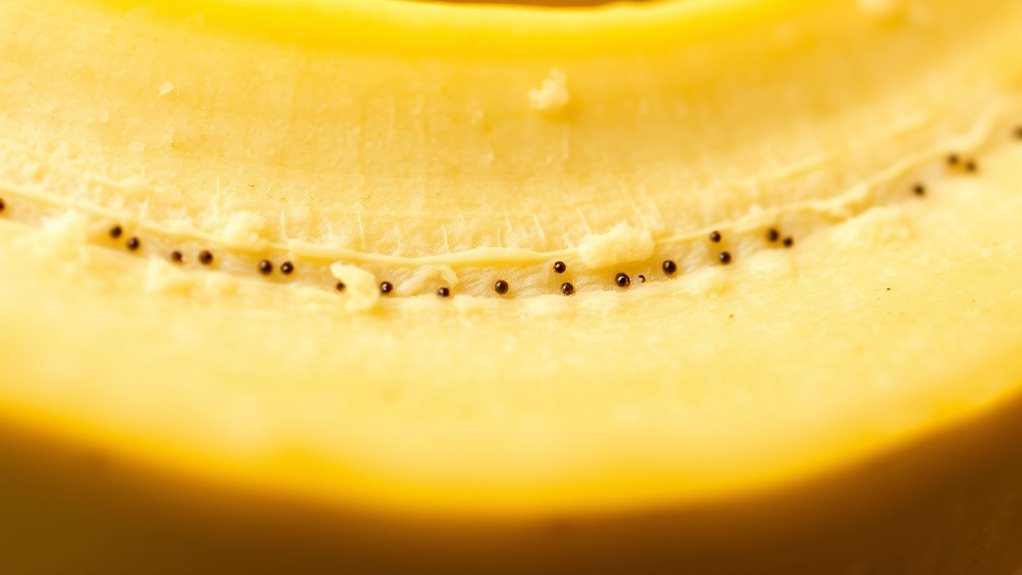
Do Bananas Have Seeds?
Are you tired of biting into a banana only to find tough, inedible seeds? You’re not alone—many people struggle with wild bananas that are full of large, hard seeds, making them less enjoyable.
Most bananas you find in stores are seedless because farmers use selective breeding and cloning to produce smooth, sweet, and easy-to-eat fruits.
Wild bananas, however, naturally have large, hard seeds that make them less convenient to eat. These seeds can occupy most of the fruit’s interior.
If you want to know how bananas went from wild, seed-filled fruits to the seedless varieties we eat today, there’s more to uncover.
Key Takeaways
- Wild bananas have large, hard seeds that fill most of the fruit, making them tough to eat.
- Cultivated bananas are mostly seedless because of selective breeding, with tiny, infertile seeds.
- The seedlessness in commercial bananas comes from hybridization and tissue culture techniques.
- Wild banana seeds are quite noticeable, but cultivated varieties usually have little or no visible seeds.
- Modern genetic methods are used to improve seedless traits while keeping crop diversity and resilience.
What Are Wild Bananas and How Do They Differ From Cultivated Varieties?
Wild bananas, unlike their cultivated counterparts, grow naturally in forested regions across Southeast Asia and Africa. Their characteristics include small, often irregular-sized fruits, and they typically have a tough, fibrous peel.
The wild banana’s flesh is usually less sweet and more starchy compared to cultivated varieties. They also contain large, hard seeds that take up most of the fruit’s interior, making them tricky to eat without removing the seeds first.
In contrast, cultivated bananas have been selectively bred for traits like larger size, seedlessness, and sweeter taste. These traits result in smooth, seedless fruit that’s easier to eat and more visually appealing.
While wild bananas are naturally resilient to pests and environmental stress, cultivated bananas prioritize size, flavor, and ease of eating. Understanding these differences shows how human cultivation has transformed wild varieties into the bananas we enjoy today.
Do Wild Bananas Have Large, Hard Seeds?
You might notice that wild bananas are quite different from the cultivated ones we usually see. One big difference is their seeds.
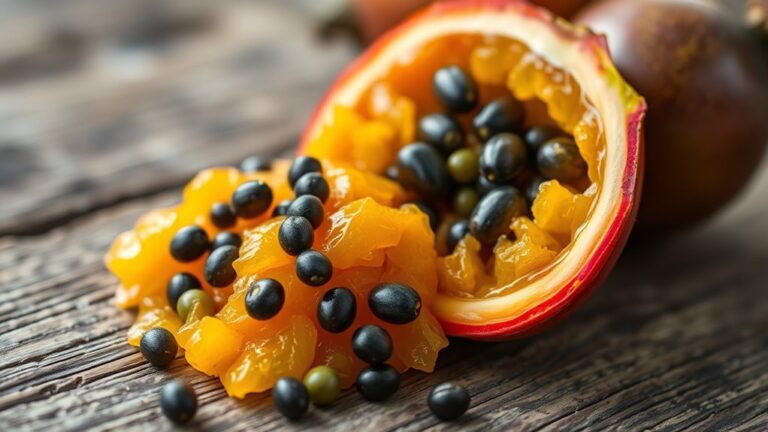
Wild bananas have large, hard seeds that are easy to spot when you bite into them. Their seeds tend to take up most of the inside of the fruit.
These seeds are dense, tough, and usually brown or black, which can make eating wild bananas less enjoyable.
In comparison, cultivated bananas have been bred to have tiny, soft seeds or none at all.
That’s why store-bought bananas are smoother and mostly seedless.
So, yes, wild bananas do have large, hard seeds that stand out inside the fruit.
Those seeds are part of what makes wild bananas different from the varieties you find in stores today.
Why Are Most Commercial Bananas Seedless?
Most commercial bananas are seedless because they’ve been selectively bred through a process called parthenocarpy. This allows the fruit to develop without fertilization, making the bananas easier to eat.
Most commercial bananas are seedless thanks to selective breeding through parthenocarpy, making them more convenient to enjoy.
This method affects banana reproduction, leading to seedless bananas that are more convenient for consumers. Over time, the tiny, undeveloped seeds in cultivated bananas don’t interfere with the fruit’s texture.
Unlike wild bananas, which have large, hard seeds, commercial varieties are bred for ease and enjoyment. This selective breeding has made seedless bananas more popular because they’re easier to peel and chew.
Reducing the size of seeds is a result of human intervention, focusing on traits that favor edible fruit over seed development. Most bananas we buy today lack the prominent, hard seeds seen in their wild ancestors.
This makes them more accessible and appealing for everyday use. The process has transformed bananas into the seedless, easy-to-eat fruit we enjoy today.
How Do Farmers Grow Seedless Bananas?
Farmers grow seedless bananas mainly by using special plant propagation techniques like cloning and tissue culture. Basically, they take cuttings or small pieces of the banana plant and grow new plants from them. This way, they can make sure the bananas stay seedless because they’re copying the original plant exactly.
Since seedless bananas can’t reproduce through seeds like regular plants, these methods are really important. They help farmers produce lots of consistent, seedless bananas that people love. So, every new plant is just like the last one, keeping that seedless trait intact.
Plant Propagation Techniques
Seedless bananas, which make up most commercial production, are propagated through vegetative methods instead of traditional seeds. This approach helps produce identical plants with desirable traits.
You, as a farmer, use specific propagation techniques to ensure consistency and quality. These methods are quick and reliable for cloning bananas.
| Propagation Method | Key Benefit |
|---|---|
| Sucker Division | Fast, keeps genetic traits intact |
| Tissue Culturing | Disease-free, scalable |
Both techniques focus on preserving the genetic makeup that makes seedless bananas desirable. They help you grow uniform, high-yield crops efficiently. Sucker division uses shoots from the parent plant, while tissue culture creates new plants from small tissue samples in labs.
Cloning Through Tissue Culture
Cloning through tissue culture lets you produce lots of identical banana plants quickly and easily. It involves taking small tissue samples from a healthy plant and growing them in a controlled environment.
This method is popular because it guarantees uniform plants that are free of diseases. You can create clones that keep desirable traits, like being seedless, without using traditional seeds.
Using tissue culture helps farmers skip the long process of growing from seeds, which are often sterile or don’t develop properly. Instead, they generate clones that are exactly like the parent plant.
This technique is key for maintaining seedless varieties and boosting production, making it a vital tool in modern banana farming.
Maintaining Seedless Traits
To keep bananas seedless, growers use careful propagation techniques that preserve their unique traits. They focus on maintaining seedless genetics through methods like tissue culture and cloning, making sure each new plant stays seedless.
These techniques prevent genetic variation that could bring back seeds, which is something wild bananas have naturally developed over time. By choosing plants with the best traits, farmers keep the seedless quality consistent across generations.
| Propagation Method | Purpose | Key Benefit |
|---|---|---|
| Tissue Culture | Clone plants directly | Preserves seedless genetics |
| Conventional Breeding | Cross-pollinate varieties | Risk of seed reintroduction |
| Micropropagation | Rapid mass production | Consistent seedless traits |
| Grafting | Attach desired parts | Maintains genetic consistency |
| Somatic Hybridization | Combine traits | Improves seedless qualities |
How Did Hybridization Make Bananas Seedless?
Hybridization played an essential role in making bananas seedless by selectively breeding varieties that produce sterile, seedless fruits. By crossing different banana species, growers boosted hybrid vigor, which results in stronger, more resilient plants.
This process also disrupted normal seed development, preventing the formation of mature seeds. Instead of developing fully formed seeds, the bananas you see today carry tiny, undeveloped seed remnants inside the fruit.
Over time, repeated hybridization efforts focused on favoring traits that produced seedless bananas, making them easier to eat and more appealing. This selective breeding reduced the natural seed formation process, ensuring that the bananas remain soft and seedless.
The result is a fruit that’s cultivated mainly for its edible flesh, with minimal seed development. This process not only improved the fruit’s texture and flavor but also made bananas a convenient, seedless snack for consumers worldwide.
Can You Find Seeds in Store-Bought Bananas?
Most store-bought bananas don’t have visible seeds because they’re bred to be seedless. Yeah, it’s pretty interesting—these bananas are cultivated in a way that makes them easier and more convenient to eat.
On the other hand, wild bananas actually do have big, hard seeds. Those seeds can make eating them a bit of a challenge, which is probably why you don’t see them in the grocery store. So, next time you peel a banana, you can thank modern farming for giving us the seedless variety that’s so easy to enjoy!
Seed Presence in Commercial Bananas
You might be surprised to learn that store-bought bananas typically don’t contain the large, hard seeds you might expect. This is because commercial varieties have been extensively cultivated, leading to minimal seed development.
In these bananas, the seeds are either tiny or completely absent, making the fruit easier and more enjoyable to eat. The seed development process is intentionally reduced through selective breeding, which results in sterile plants that produce seedless fruit.
These seedless bananas are propagated through cloning, which ensures consistency and quality across each harvest. Unlike wild bananas with prominent seeds, commercial varieties are bred to be seedless or have very small, undeveloped seeds.
This focus on seedless fruit is what makes store-bought bananas so convenient and popular around the world.
Differences Between Wild and Cultivated
While commercial bananas are bred to be seedless for easier eating, wild bananas tell a different story. Wild banana characteristics include large, hard seeds that dominate the fruit’s interior, making the flesh less accessible.
In contrast, cultivated banana traits focus on soft, seedless pulp, which consumers prefer for its smooth texture. The difference comes from selective breeding: wild bananas evolved to reproduce through their tough seeds.
Cultivated varieties have been bred to eliminate these seeds altogether. This process results in bananas that are more convenient to eat but less suited for natural seed dispersal. If you find seeds in a store-bought banana, it’s likely a wild or less domesticated variety, not the typical commercial type.
Are All Banana Varieties Seedless or Just the Common Cavendish?
Are all banana varieties seedless, or is that trait limited to the well-known Cavendish? Most cultivated bananas, including Cavendish, are seedless because they reproduce asexually. In these bananas, seed development is minimal, producing tiny, infertile seeds that you rarely notice.
However, wild banana varieties aren’t seedless—they have large, hard seeds that make seedless eating impossible. So, seedlessness isn’t true for all bananas, just the common cultivated ones like Cavendish.
What Does the Seedless Nature of Bananas Mean for Taste and Nutrition?
The seedless nature of bananas really affects their taste and nutrition. Without big seeds, they have a smooth, consistently sweet flavor that’s great for snacking and cooking.
This seedless trait also makes bananas easier to digest and means they have less fiber than seeded varieties. The creamy texture from no seeds boosts their flavor, making them even more appealing.
Seedless bananas are easier to digest and have a rich, creamy flavor that enhances their natural appeal.
Because they’re reliably sweet, bananas are a quick energy boost. They’re packed with vitamins like B6 and C, with minimal nutrient loss since there are no seeds.
Seedless bananas also tend to have higher water content, helping keep you hydrated. Plus, their easy-to-eat nature makes them a popular choice for healthier snacking habits.
What’s Next for Banana Cultivation and Seed Development?
Advances in genetic engineering are really opening up new possibilities for developing better banana varieties, including seedless ones. It’s pretty exciting to see how scientists are working on these innovations to improve banana cultivation.
At the same time, there’s a lot of focus on creating sustainable strategies to protect these crops from pests and the impacts of climate change. These efforts are all about making sure that banana supplies stay reliable and accessible in the future.
Advances in Genetic Engineering
Recent breakthroughs in genetic engineering are transforming banana cultivation by offering new ways to develop resilient and high-yield varieties. By harnessing advances in plant genetics and genetic modification techniques, scientists are targeting disease resistance, drought tolerance, and improved nutritional content.
You can expect future bananas to be more adaptable to changing climates and less vulnerable to pests. These innovations involve precise gene editing, like CRISPR, to improve desirable traits while minimizing unintended effects.
As a result, banana breeders are moving beyond traditional methods, which speeds up development cycles and increases genetic diversity. To deepen your understanding, consider exploring topics like CRISPR applications, disease resistance, genetic diversity, ethical considerations, and impacts on global markets.
Developing Seedless Varieties
Genetic engineering breakthroughs are paving the way for developing seedless banana varieties, addressing both consumer preferences and cultivation challenges. Seedless advantages include easier eating, less seed debris, and increased appeal for global markets.
By focusing on seedless traits, scientists can improve fruit quality and meet consumer demands. However, maintaining genetic diversity is essential to ensure resilience against pests, diseases, and climate change.
Breeding seedless varieties requires balancing the benefits of uniform, seedless fruit with preserving a broad genetic pool. Advances in biotechnology enable precise modifications that produce seedless bananas without sacrificing genetic variation.
As these innovations progress, you’ll see more consistent, high-quality bananas. This makes cultivation more efficient while safeguarding the crop’s adaptability for future environmental challenges.
Sustainable Cultivation Strategies
As banana cultivation faces growing environmental and economic challenges, adopting sustainable farming practices is more important than ever. You can focus on methods that improve soil health, save water, and boost biodiversity to keep the crop thriving long-term.
Embracing organic farming and eco-friendly techniques helps cut down on chemical use and lessen environmental harm. Incorporating agroecological systems and crop rotation naturally improve soil quality and break pest cycles.
These practices not only make farming more sustainable but also help your farm stand up better to climate change and market ups and downs. By choosing sustainable methods, you support a healthier ecosystem and secure stable yields.
Ways to do this include enriching soil with organic amendments, using drip irrigation to conserve water, and planting a variety of crops to promote biodiversity. Crop rotation is key to preventing soil depletion, and eco-friendly pest management reduces chemical reliance.
How Have Hybridization and Breeding Shaped Bananas?
Hybridization and breeding have played a key role in shaping the bananas we enjoy today. Over time, farmers selectively bred different varieties to improve flavor, size, and disease resistance.
Early wild bananas had large, hard seeds that made eating less convenient. As years went by, seed evolution led to seedless or nearly seedless bananas, which are easier to eat and more popular.
Modern cultivars like the Cavendish come from deliberate hybridization efforts to create resilient, high-yield plants. These efforts have reduced reliance on wild, seed-filled bananas and increased seedless types.
Breeding techniques also help develop bananas that can withstand pests and environmental stresses. Your favorite banana varieties are the result of centuries of hybridization and selective breeding.
They’ve been transformed from wild, seed-filled plants into the smooth, seedless fruits enjoyed worldwide. This ongoing process continues to shape the future of banana cultivation.
Frequently Asked Questions
Are Seedless Bananas Naturally Occurring or Only Cultivated?
Seedless bananas are mainly grown by humans, not found naturally in the wild. You won’t see wild seedless bananas growing on their own.
Instead, cultivation methods like asexual reproduction and genetic modification create these seedless varieties. Farmers clone the plants to keep them seedless because natural seeds are tough and inedible.
Can Wild Bananas Produce Edible Fruit Without Seeds?
Imagine you’re in a lush jungle, like adventurers in the 1800s, uncovering wild banana varieties. Yes, wild bananas can produce edible fruit without seeds, but it’s rare. Most wild bananas have large seeds, making the fruit less convenient.
These edible wild bananas do exist, though, and they’re essential for breeding cultivated varieties. Their seedless, edible fruit shows how adaptable nature can be, even if it’s less common in the wild.
Do Seedless Bananas Have Any Disadvantages Compared to Seeded Varieties?
Seedless bananas generally don’t have major disadvantages. They offer a consistent flavor profile and are more convenient to eat.
Some people argue they might have slightly reduced genetic diversity, which could affect their long-term resilience.
Nutritional differences are minimal, so you probably won’t notice much change in nutrients.
How Do Seedless Bananas Reproduce if They Lack Seeds?
Ironically, seedless bananas don’t grow from seeds but through clever propagation techniques.
You see, they’re propagated via cloning, using tissue culture or cuttings, thanks to genetic modification.
This method guarantees consistency and the desired traits, but it also means they lack the natural seed dispersal method.
Are There Any Health Concerns Related to Seedless Bananas?
Seedless bananas are safe to eat, and there are no significant health concerns related to them.
They offer great health benefits, like providing essential nutrients such as potassium, vitamin C, and dietary fiber, which support heart health and digestion.
Their nutritional value remains high, making them a healthy snack option. Just make sure to buy from reputable sources to avoid any contamination.
Enjoy their natural sweetness as part of a balanced diet.
Conclusion
Just like seeds symbolize potential and new beginnings, the seedless banana represents innovation and adaptation. It’s stripped of its natural complexity but still offers easy, accessible nourishment.
As you enjoy its sweet, smooth flesh, remember it’s a reflection of human ingenuity shaping nature’s course. Bananas remind us that sometimes progress requires embracing the seedless future.