What Processes Do Pine Seeds Come From?
Getting into the world of pine trees can be confusing, especially when you’re curious about where pine seeds come from. If you’ve ever wondered how these tiny seeds are made and where they come from, you’re not alone. Many people struggle with understanding the natural processes behind seed formation and dispersal.
Pine seeds come from a series of natural processes starting with cone development, where female cone scales protect seed formation. Pollination occurs when pollen lands on ovules, leading to fertilization and seed growth inside the cone.
These seeds mature with a hard coat and are eventually dispersed by wind, animals, or water, often triggered by environmental changes like temperature or rainfall.
If you’re curious about how these processes work together, there’s plenty more to uncover.
Key Takeaways
- Pine seeds develop from fertilized ovules inside female cones.
- Pollen fertilizes ovules, starting seed formation and development within the cone.
- Cones open and release seeds when triggered by environmental factors like temperature and moisture.
- Seeds are dispersed by wind, animals, water, or gravity, helping forests grow.
- For seeds to germinate successfully, they need moist soil, the right temperature, and often cold stratification.
How Do Pine Cones Develop and Produce Seeds
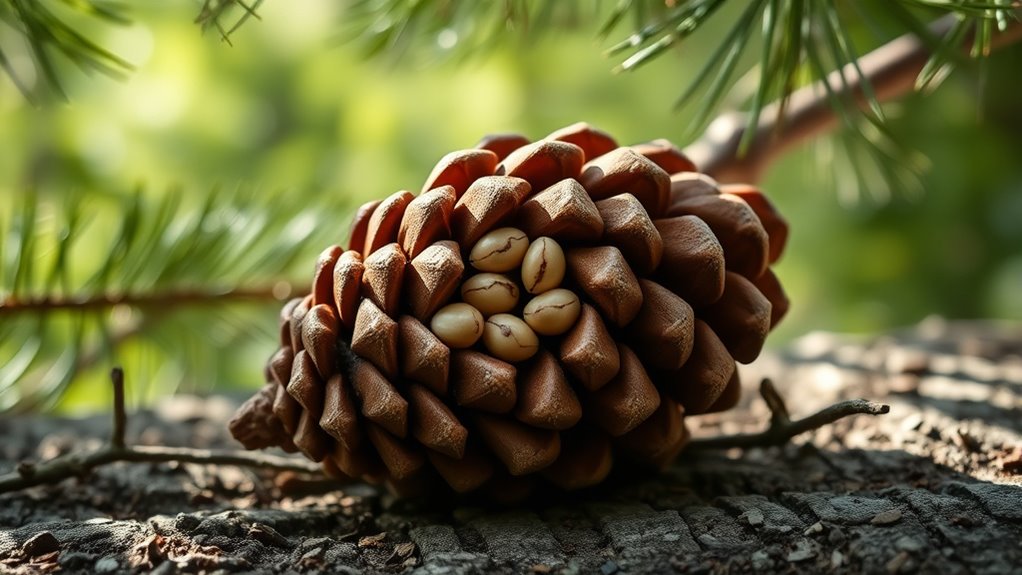
Pine cones develop through a fascinating process that starts with fertilization of female cone scales. Each cone has scales that protect and support seed development.
Pine cones begin their journey with fertilization of the female scales, supporting seed development and protection.
When pollination happens, pollen lands on the ovules inside these scales. Fertilization then occurs, kickstarting seed formation.
As the seeds grow and mature, the cone’s scales gradually open up to let the seeds disperse. The structure of the cone plays a key role in protecting the developing seeds and making sure they stay viable.
Healthy, well-formed seeds have strong tissues, making them capable of germinating successfully. The whole process is influenced by environmental factors like temperature and moisture, which affect seed development and dispersal readiness.
How Pine Seeds Form Inside the Tree
So, you can see how pollination and fertilization kickstart the process of forming pine seeds inside the tree. Once the ovules are fertilized, they start developing into seeds right within the pine cone. It’s pretty fascinating to watch how these tiny things grow and mature over time.
Eventually, when the seeds are fully developed and ready, they get dispersed from the tree. That’s how the cycle continues, with new trees growing from those seeds. It’s a neat way nature ensures the survival of pine trees for generations to come.
Pollination and Fertilization
Pollination and fertilization are key steps in how pine seeds form inside the tree. When you understand how pollination works, you see how tiny pollen grains travel through the air, searching for ovules.
Timing is really important. Fertilization needs to happen when pollen reaches the ovule at just the right moment to make seed development possible.
Here’s what happens:
- Pollen is released from male cones and drifts on the breeze.
- It lands on female cone scales and waits patiently.
- Fertilization timing lines up so sperm can join the ovule.
- This union starts seed formation inside the cone.
Your appreciation for the intricate dance of nature that creates each pine seed will grow.
Seed Development Process
Once fertilization happens, seed development begins inside the cone. You’ll notice the fertilized ovule grow, with its traits like size, shape, and resilience influenced by seed genetics.
Inside the cone, the embryo forms from genetic material, while nearby tissues transfer nutrients to support its growth. This stage is really important because it shapes the seed’s future potential and how well it can adapt.
The developing seed stays protected within the cone, making sure it’s ready for dispersal later on. Ecologically, this process is vital because it guarantees the next generation of pines.
The genetic diversity created during seed development helps keep pine forests healthy. It allows them to withstand environmental stresses and pests. Your understanding of this process shows how crucial it is for maintaining strong, resilient ecosystems.
Maturation and Dispersal
As the seed matures inside the cone, it undergoes a series of developmental changes that prepare it for dispersal. During the maturation stages, the seed develops its hard coat and stores energy, ready for its journey. You might feel a thrill as you watch these tiny wonders prepare to leave the tree.
The dispersal methods vary:
- Wind carries lightweight seeds far and wide.
- Gravity drops seeds close to the parent tree.
- Animals like squirrels carry seeds away, unknowingly planting new trees.
- Some seeds hitch rides on water, traveling to new locations.
Each method helps ensure the seed’s survival, inspiring hope for future forests. Your understanding of these processes shows how resilient and adaptable pine trees really are.
How Pollination Turns Into Fertilization in Pines
When pine trees release their pollen, it drifts through the air and lands on the female cones. Pollen transfer happens when wind carries pollen grains to receptive scales on the cone’s surface.
Once pollen lands, it sticks to the sticky surface of the ovule, starting the fertilization process. Inside the ovule, pollen grains grow a pollen tube that extends toward the egg cell.
The timing of fertilization is important; it usually occurs weeks to months after pollination, depending on environmental conditions. During this time, the pollen tube navigates through tissues, guided by chemical signals.
When the tube reaches the egg, sperm cells are released, fertilizing the ovule. This marks the shift from pollination to fertilization. After fertilization, the ovule begins developing into a seed, starting the next phase in the pine’s reproductive cycle.
How Pine Seeds Grow and Mature Inside the Cone
After fertilization occurs inside the ovule, seed development begins. Inside the cone, the fertilized ovule turns into a tiny pine seed that gradually grows and matures.
As this happens, the seed’s nutrition is carefully directed to support its growth. You can see this process unfold through several key stages:
- The seed enlarges inside the cone, drawing nutrients from the surrounding tissue.
- The seed’s embryo forms, getting ready for future growth.
- The seed coat hardens, protecting the developing seed inside the cone.
- The cone’s scales close tightly as the seed matures, preparing for dispersal.
Throughout this process, the cone acts as a nurturing environment, ensuring the seed develops fully and safely. Its intricate anatomy plays a crucial role in providing nutrition and safeguarding the seed until it’s ready to be released and grow into a new pine tree.
What Triggers Pine Seeds to Disperse From the Cone?
The trigger for pine seed dispersal often starts with environmental changes, like shifts in temperature and humidity levels. When conditions become just right, these cues signal that it’s time for seeds to leave the cone.
As the seed’s lifespan progresses, the cone’s scales dry out and open, usually influenced by temperature and moisture changes. Warmer temperatures cause the cone to dry and loosen, which helps release the seeds.
Humidity also plays a key role. Low moisture levels help dry the cone faster, making it easier for seeds to disperse. Pine seeds are generally ready to be released once the cone opens.
This process can take months or even years, depending on the pine species and environmental conditions. These triggers ensure seeds are released at the best time for germination, increasing their chances of survival.
Understanding these environmental cues helps explain why seed dispersal varies across different climates and pine species.
How Animals Help Spread Pine Seeds
Animals are pretty important when it comes to spreading pine seeds. They often eat pine cones, and in doing so, they end up carrying the seeds to different places.
Sometimes, the seeds survive the journey through the animal’s digestive system and get dropped off in new spots. This helps the trees spread out and grow in areas they might not have reached on their own.
All in all, this natural process makes seed dispersal much easier and helps ensure that pines continue to thrive and expand their range.
Animal Consumption of Cones
Many animals play an essential role in spreading pine seeds by eating the cones. During cone predation, animals like squirrels and birds nibble away at the cones, often removing the seeds inside.
Sometimes, they forget or intentionally hide some seeds for later, practicing seed caching. This helps the seeds survive and grow somewhere else.
Your involvement includes watching animals crack open cones and retrieve seeds with skill and purpose. Notice how some seeds are left behind and buried in the ground, ready to sprout.
Recognize that cone predation actually reduces seed predation, helping balance forest growth. Seed caching unintentionally disperses seeds across the landscape, encouraging new trees to grow.
This natural activity ensures the continuation and diversity of pine forests for generations.
Seed Dispersal Mechanisms
When pine cones release their seeds, animals play a key role in spreading them across the forest. Many seeds have special features like wings or buoyant parts that help them travel further.
Animals such as squirrels, birds, and rodents collect and hide seeds, unintentionally helping in seed dispersal. This process boosts forest regeneration and increases genetic diversity.
As animals carry seeds away from parent trees, they often stash some in hidden spots. These spots can turn into new trees, helping the forest grow.
Without animals, many pine species would have a tough time reproducing over large areas. Their seed adaptations work together with animal behaviors to make seed dispersal effective.
This natural teamwork keeps forest ecosystems healthy and thriving over time.
Environmental Factors That Influence Seed Release
Environmental factors play a key role in triggering seed release because they directly influence when a seed is ready to disperse. Climate conditions like temperature and humidity can cause pine cones to open or close, signaling it’s time to release seeds.
Soil composition is important too. Certain nutrients and moisture levels help seeds develop properly and make it easier for them to be released.
You might notice these effects:
- Temperature changes that make cones expand or contract, prompting seed dispersal.
- Rainfall and humidity that soften cones, making seed release simpler.
- Seasonal shifts that align seed release with the best growing conditions.
- Soil nutrients that affect cone strength and seed viability.
How Pine Seeds Travel and Spread Through the Forest
Pine seeds travel and spread through the forest mainly by natural dispersal methods that take advantage of their lightweight design and special features. These strategies help seeds reach new places, which is key for the survival of the species.
Wind dispersal is the most common method. The seeds often have wing-like structures or papery husks that catch the breeze. When a pine cone releases its seeds, the wind carries them away from the parent tree, sometimes over long distances.
This allows seeds to land in spots that are good for germination, reducing competition with the parent tree. Some pine seeds also have buoyant traits, helping them spread via water along streams or wetlands.
What Conditions Do Pine Seeds Need to Germinate?
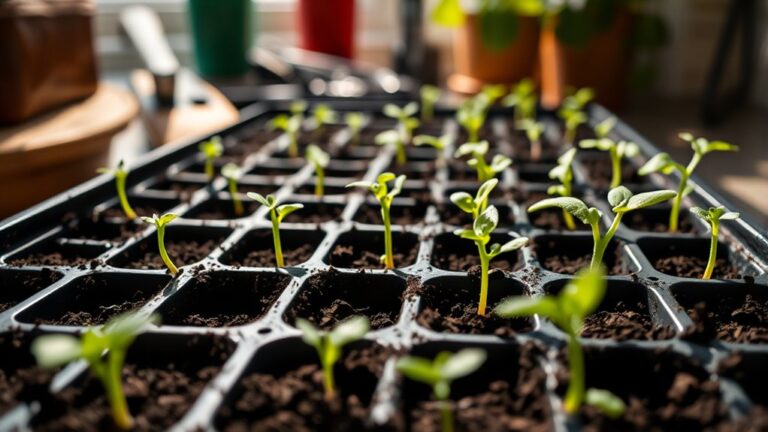
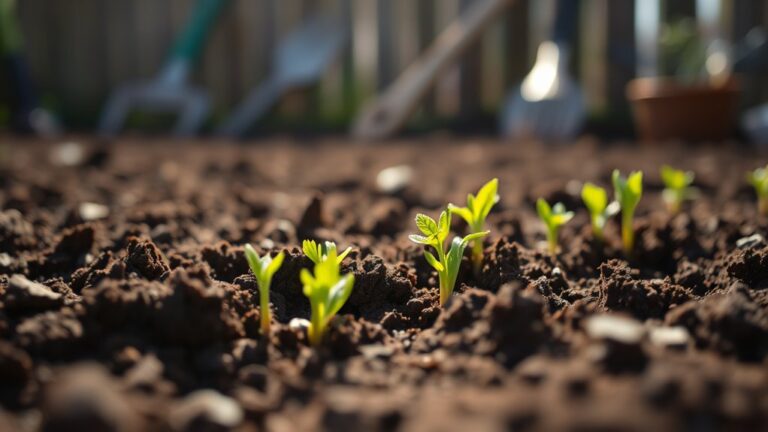
If you want your pine seeds to germinate, one of the most important things is making sure the soil stays moist. Dry soil can really stop the seeds from sprouting, so keeping it damp but not waterlogged is key.
And don’t forget about the temperature! Pine seeds usually need a specific range—usually somewhere between 60 and 70 degrees Fahrenheit—to encourage sprouting. When both the moisture and the temperature are just right, your seeds have a much better shot at growing into healthy little pine trees.
Adequate Soil Moisture
For pine seeds to successfully germinate, keeping the soil moist is really important. Without enough water, seeds can’t start the process or break dormancy. Proper drainage is key to making sure excess water doesn’t drown the seeds, while good moisture retention keeps the soil damp.
Focus on making sure the soil stays moist but not waterlogged to prevent root rot. Choose soil with balanced drainage so water doesn’t pool around the seeds. Regularly check moisture levels, especially during dry spells.
Mulching around the seed area helps conserve moisture and keeps the soil temperature steady. These steps create the right environment for healthy germination and growth. Remember, consistent moisture is crucial—too dry or too wet can stop the process entirely.
Proper Temperature Range
Germinating pine seeds needs specific temperature conditions to ensure successful sprouting. The ideal range is usually between 20°C and 30°C (68°F to 86°F).
This temperature range is crucial because it directly affects seed viability. If it’s too cold, metabolic processes slow down, making germination less likely.
On the other hand, excessive heat can damage the seed or slow growth. Keeping a steady, warm environment helps promote even sprouting and improves seed viability.
Fluctuations outside the ideal range can stress the seed, reducing the chances of successful germination. So, it’s important to monitor temperatures carefully and avoid extremes.
Providing the right temperature ensures the seed’s internal processes work properly, increasing the chances of healthy seedling development and starting your pine tree off right.
Tips to Boost Pine Seed Germination and Grow New Trees
Starting the process with proper preparation can really boost your chances of successful pine seed germination. To help your seeds sprout and grow into strong trees, focus on seed stratification techniques. These mimic natural winter conditions to break seed dormancy.
Proper preparation with seed stratification boosts pine seed germination success and healthy tree growth.
Make sure you understand the light requirements too. Pine seeds need bright, indirect sunlight during germination to thrive.
Here are four simple tips to increase your success:
- Stratify Seeds Properly: Cold stratify for 30-60 days in moist, refrigerated conditions to simulate winter.
- Enhance Light Conditions: Place seeds in a bright area but avoid direct sunlight that can dry them out.
- Use Well-Draining Soil: Keep the soil moist but not waterlogged to prevent rot.
- Maintain Consistent Temperatures: Keep the environment between 60-70°F for the best germination results.
Following these steps can help you nurture healthy seedlings and eventually grow majestic pine trees.
Frequently Asked Questions
How Long Does It Take for Pine Seeds to Mature?
Pine seeds typically take about 18 months to mature, but this can vary depending on the species and environmental conditions.
During the seed maturation process, you’ll notice the cones developing and opening up, releasing the seeds.
The stages include pollination, seed development, and eventually seed dispersal.
Patience is key here because the whole cycle ensures the seeds are viable and ready to grow.
Are All Pine Species Capable of Producing Edible Seeds?
Not all pine species produce edible seeds, as seed edibility varies widely among different types of pine trees.
Some species, like the Eastern White Pine, have seeds that are safe to eat and nutritious, while others contain compounds that can be harmful if consumed.
To enjoy pine seeds safely, you need to identify the specific pine species and confirm its seed edibility.
Since consuming the wrong type could lead to health issues, it’s important to be cautious.
What Environmental Conditions Are Necessary for Seed Development?
You need specific environmental conditions for pine seed development. Warm temperatures and enough moisture help the seeds germinate, while proper soil nutrients support healthy growth.
Make sure the area has well-drained soil and plenty of sunlight, as these factors help the seeds mature properly.
Consistent moisture and stable temperatures are key for successful seed development, leading to strong saplings and healthy pine trees.
Can Pine Seeds Remain Dormant for Extended Periods?
Yes, pine seeds can stay dormant for a long time, acting like natural time capsules waiting to sprout. This dormancy helps protect their viability during tough conditions.
Dormancy mechanisms, like thick seed coats or chemical inhibitors, stop germination until the environment is just right. When things improve, these seeds wake up and start to grow.
Your patience can pay off because some seeds stay viable for years before they finally sprout.
How Do Climate Changes Affect Seed Production Cycles?
Climate changes greatly impact seed production cycles by disrupting natural patterns and timing. You might notice shifts in seed dispersal, as warmer or unpredictable weather affects when and how seeds are released.
Pine trees adapt through climate adaptation strategies, changing how they grow and produce seeds to survive these new conditions. These changes can cause seeds to be dispersed earlier or later than usual.
Such shifts influence forest regeneration and the overall health of pine populations, making it harder for forests to recover naturally.
Conclusion
Now that you know the fascinating journey from pollination to dispersal, you’re better equipped to appreciate where pine seeds come from. Understanding these processes gives you a new perspective on how pine trees produce seeds.
By learning about how pollination leads to seed development, you can see the intricate steps involved in making new pine trees. It’s a remarkable cycle of nature working together smoothly.
So, seize the chance to observe, understand, and perhaps even support pine trees as they sprout, scatter, and sustain the forest’s future. The process of pine seed formation is key to maintaining healthy forests.
Cherish this cycle of creation, continuation, and conservation in every pine seed’s pivotal process. It all begins with how pine seeds come from the processes of pollination and seed development.