Do You Germinate Avocado Seeds in 5 Simple Steps?
Many people love the idea of growing their own avocado trees, but figuring out how to germinate the seed can feel tricky. You’re not alone—most beginners struggle with starting their own avocado plant from scratch.
Yes, you can germinate avocado seeds in five simple steps. Start by carefully removing the seed and cleaning off any fruit residue.
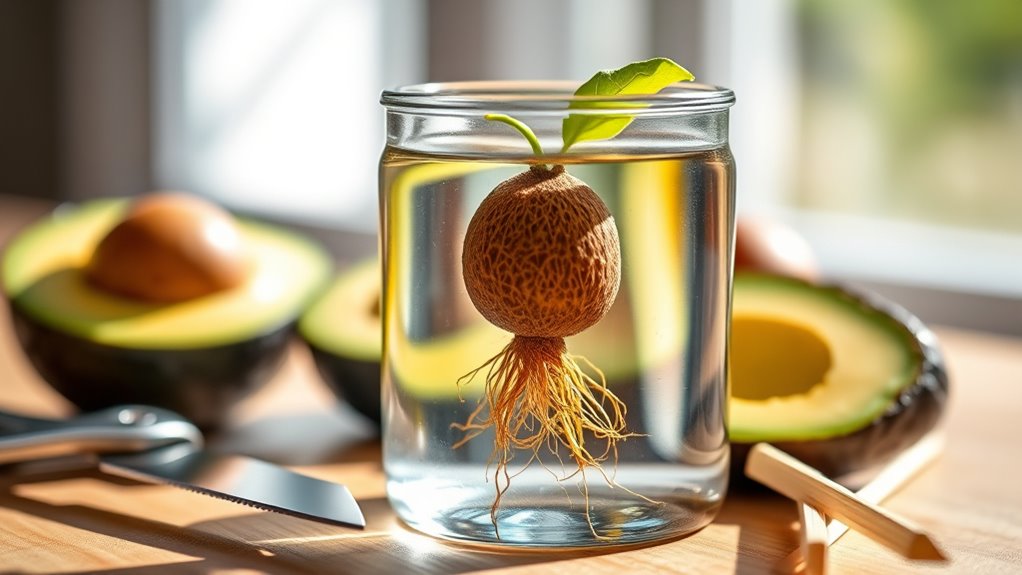
Next, use toothpicks to suspend the seed in water or plant it directly into well-draining soil.
Provide bright but indirect sunlight, keep the soil moist, and maintain a warm temperature.
As your seedling grows, watch for signs of trouble and learn when to transplant.
If you keep going, you’ll uncover detailed tips to guarantee success.
Key Takeaways
- Remove and clean the seed, making sure it’s firm and free of mold or cracks.
- Use the water germination method with toothpicks to suspend the seed, keeping the bottom submerged.
- Keep the environment warm, around 65-75°F, and place the seed where it gets indirect sunlight to help it sprout.
- Make sure to keep the seed moist but not waterlogged, and check regularly for signs of sprouting.
- When the seed has rooted and sprouted, transplant it into soil to keep it growing.
Preparing Your Avocado Seed for Germination
To prepare your avocado seed for germination, start by carefully removing it from the fruit without damaging the outer skin. Choose a seed that’s firm, free of mold, and has a smooth surface—these are signs of a good seed.
Avoid seeds that are cracked or shriveled, as they’re less likely to sprout successfully. Once you’ve picked a healthy seed, gently clean off any remaining fruit flesh with water, making sure no pulp stays behind.
Choose healthy seeds and gently clean off any fruit residue for successful germination.
Proper water requirements are key during germination; your seed needs consistent moisture but shouldn’t sit in water. Keep the seed in a damp environment, but avoid sogginess, which can cause rot.
You can place it on a damp paper towel or in water, but always check regularly to keep the moisture level just right. Preparing your avocado seed carefully with attention to seed selection and water needs helps set a strong foundation for successful germination.
Best Methods to Germinate Your Avocado Seed
Once your avocado seed is properly prepared, choosing the right germination method can really improve your chances of success. The most popular way is the water germination technique, where you suspend the seed over water using toothpicks placed around its middle. Just make sure the water covers the bottom half of the seed and keep it consistent.
Keep the seed in a warm environment with temperatures between 65-75°F (18-24°C), which helps it sprout more easily. Alternatively, you can plant the seed directly in soil, but make sure it’s well-draining and stays moist.
Some people like to use the paper towel method by wrapping the seed in damp paper towels and placing it in a warm, dark spot. Just remember to check the water levels regularly to keep it damp.
Key points to remember include changing the water regularly, keeping temperatures within the ideal range, and maintaining proper moisture and warmth for successful germination.
How to Care for Your Avocado Seedling
Caring for your avocado seedling means providing the right environment, consistent watering, and proper sunlight to help it grow healthy. Make sure it gets enough light by placing it where it receives indirect, bright sunlight for several hours each day.
Keep the soil moist but not waterlogged by sticking to a steady watering schedule. This supports healthy root development. Regularly check for pests and take action quickly to prevent damage.
Maintain moist soil with regular watering to promote healthy roots and prevent pests effectively.
Fertilize with a balanced, slow-release fertilizer every few months to keep the soil nutrients in check. Temperature is key—keep your seedling in a warm, stable space, ideally between 65-75°F (18-24°C).
Pruning is also important; remove dead or overcrowded leaves to improve airflow and encourage new growth. Follow these tips, and your avocado seedling will develop into a strong, healthy young tree ready for transplanting in the future.
When and How to Transplant Your Young Avocado Tree
Knowing the right time to transplant your young avocado tree is essential for healthy growth. Wait until it has a strong root system and is at least 6-12 inches tall. Proper timing helps your tree adapt well to its new environment.
When you’re ready, choose a larger pot with good drainage, ideally one that allows for root expansion. Pick a well-draining soil mix, like compost, sand, and peat, to promote healthy roots.
Pay attention to watering—water deeply but avoid waterlogging, especially right after transplanting. Make sure the plant gets plenty of bright, indirect sunlight to help it settle in.
Consider using a balanced, slow-release fertilizer to support growth during this transition. Taking care with pot selection, soil, and watering will give your avocado tree the best start in its new home.
Troubleshooting Germination and Growth Problems
Troubleshooting germination and growth problems can be tricky, but catching issues early can save your avocado seedling. If your seed isn’t sprouting, check for problems like improper moisture levels or temperature, which are common causes.
When your seedling shows stunted growth or yellowing leaves, nutrient deficiencies might be to blame—especially a lack of nitrogen or iron. Keep an eye out for pests like aphids or spider mites, which can damage young plants and slow growth.
To fix these issues, make sure you’re providing consistent moisture, enough sunlight, and balanced nutrients. Regularly inspect your seedling for pests and treat infestations quickly with natural or chemical controls.
If problems continue, consider adjusting your watering habits or adding more nutrients. Early detection and quick action are key to helping your avocado seedling grow into a healthy, thriving tree.
Frequently Asked Questions
How Long Does It Typically Take for an Avocado Seed to Sprout?
It usually takes about 2 to 8 weeks for an avocado seed to sprout, depending on ideal conditions.
To speed up sprouting, keep the seed in a warm, bright spot and make sure it stays moist. You’ll first notice a tiny root, then a shoot.
Patience is key because sprouting time varies with temperature, light, and humidity. With proper care, you’ll see growth soon.
Can I Germinate Multiple Avocado Seeds at Once?
Yes, you can germinate multiple avocado seeds at once using simple techniques. Just make sure to prepare the seeds properly—clean and dry them thoroughly.
Use a container with water or moist soil, giving each seed enough space to grow. Keep the environment warm and bright, and change the water regularly if you’re soaking the seeds.
What Are Common Pests That Affect Germinating Avocado Seeds?
Like a vigilant gardener guarding treasures, you’ll want to watch for common pests such as aphids, fungus gnats, and scale insects that can attack germinating avocado seeds.
To prevent these, use seed treatment techniques like a gentle neem oil spray or a mild fungicide. Pest prevention is key to healthy sprouting, so keep your environment clean and monitor regularly.
This helps ensure your avocado seed’s journey to growth stays smooth and undisturbed.
Does the Seed Type Influence Germination Success?
Yes, the seed type influences germination success. Different seed varieties have varying genetic traits, which affect their ability to sprout under certain conditions.
You’ll notice that some avocado seeds have thicker shells or different sizes, and this can impact how easily they germinate. To boost your chances, focus on providing the right conditions like proper moisture, temperature, and light.
Knowing your seed variety helps you customize these conditions, making it more likely that your seeds will successfully sprout.
How Do I Know When My Seedling Is Strong Enough to Transplant?
You know your seedling is ready to transplant when it shows healthy growth, with strong, vibrant leaves and a sturdy stem.
Check for well-developed roots that aren’t crowded in the container. Make sure the seedling has enough height and leaf development to handle outdoor conditions.
Good seedling health and proper root growth are key indicators for transplant timing, helping your avocado plant adapt quickly and continue to thrive.
Conclusion
Now you’re on the verge of growing an avocado tree that could rival the tallest in the world! With just a little patience and these simple steps, you’ll soon see your tiny seed sprout into a lush, fruit-bearing giant.
Imagine biting into your very own homegrown avocados, bursting with flavor and pride. Keep caring, stay persistent, and soon, your backyard will be the birthplace of the next avocado legend—thanks to germinating avocado seeds the right way!