What Happens When You Eat Pomegranate Seeds?
Many people struggle with finding simple ways to boost their health without overhauling their entire diet. If you’re looking for a tasty, natural option, pomegranate seeds might just be what you need.
When you eat pomegranate seeds, your body benefits from a rich source of antioxidants, fiber, and essential vitamins that support your overall health.
Chewing softens the seeds, releasing nutrients that your stomach acids and enzymes break down, aiding digestion. These seeds help protect your cells from damage, improve heart health, and boost your immune system.
Keep exploring to uncover how incorporating them into your diet can make a real difference.
Key Takeaways
- Pomegranate seeds release nutrients and antioxidants that support overall health and fight oxidative stress.
- Chewing softens the seeds, so you can enjoy the juice while the tough seed coats pass through your digestive system.
- Eating seeds adds fiber to your diet, helping with digestion and keeping your gut healthy.
- The antioxidants in seeds help protect your cells from damage and boost your immune system.
- Consuming seeds may also improve heart health by lowering bad cholesterol and reducing inflammation.
What Are Pomegranate Seeds and How Do You Eat Them?
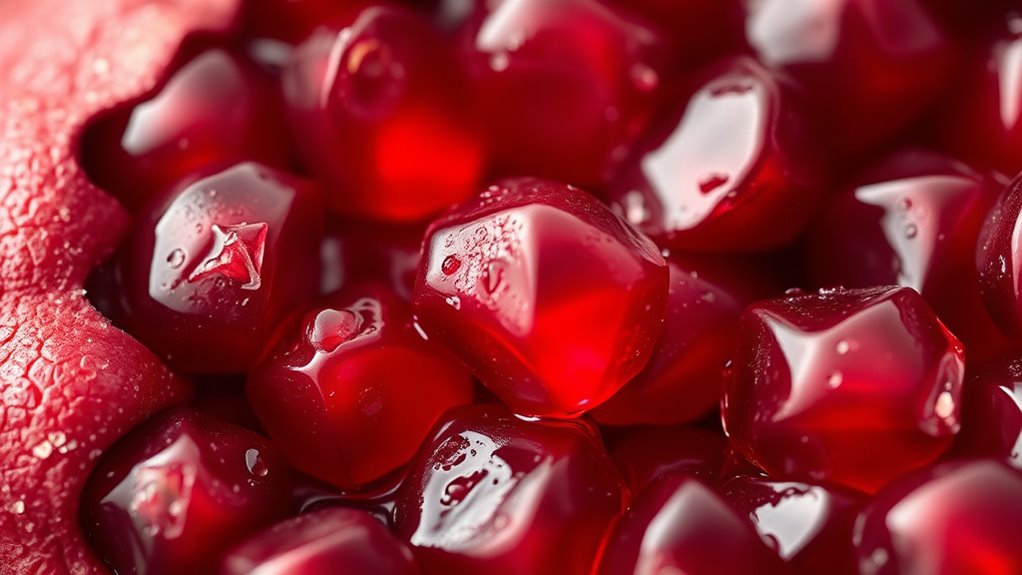
Pomegranate seeds, also called arils, are the juicy, ruby-red kernels inside the fruit. Different varieties can give you slightly different seed sizes, flavors, and seed-to-pulp ratios.
To prepare the seeds, cut the fruit into halves or quarters. Then gently loosen the seeds using your fingers or a spoon. Some people soak the pomegranate in water first to make seed removal easier and keep things tidy. The seeds sink, while the membrane floats, making separation simpler.
You can eat the seeds whole or spit out the white pith, which is bitter and fibrous. Many prefer to remove the seeds carefully to avoid crushing them, so the juice bursts in your mouth.
Whether you’re enjoying fresh seeds or adding them to recipes, knowing the different pomegranate varieties and how to prepare the seeds helps you get the best flavor and texture.
How Your Body Digests Pomegranate Seeds
When you eat pomegranate seeds, your digestive system kicks in to break them down and get the nutrients out. The process starts in your mouth, where chewing softens the seed’s outer layer.
Once you swallow, your stomach’s acids and enzymes continue breaking down the seed, releasing the juice and nutrients inside. The tough seed coat usually stays intact and passes through your digestive tract mostly undigested.
After swallowing, stomach acids release nutrients while the tough seed coat often remains intact.
Your intestines then absorb the nutrients like vitamins, antioxidants, and fiber, while waste moves toward elimination. The fiber helps promote healthy digestion and regularity.
Some of the seed’s tough exterior may be excreted, but most of the edible parts are broken down and absorbed efficiently. Overall, your body makes sure you get the valuable nutrients from pomegranate seeds, even if the seed itself isn’t fully digestible.
What Are the Nutritional Benefits of Pomegranate Seeds
Pomegranate seeds are full of antioxidants, which are great for protecting your cells from damage. It’s like giving your body a little shield against free radicals.
They’re also rich in dietary fiber, so they help with digestion and can keep you feeling full longer. Plus, they come packed with essential vitamins that give your overall health a nice boost.
Rich in Antioxidants
Because they are packed with powerful compounds, pomegranate seeds are considered a rich source of antioxidants. These antioxidants offer significant benefits, helping your body fight free radicals that can cause cellular damage.
When you eat pomegranate seeds, you’re giving your cells a boost of protective compounds like polyphenols and flavonoids. This can enhance your overall antioxidant intake and support your body’s natural defenses.
By reducing oxidative stress, these compounds help protect your cells from aging and disease. Incorporating pomegranate seeds into your diet is a simple way to naturally boost your antioxidant levels.
As a result, you may notice improved cellular health and a stronger foundation for overall wellness.
High in Dietary Fiber
The antioxidants in pomegranate seeds not only support your body’s defenses but also boost digestive health thanks to their high fiber content. When you eat these seeds, you’re adding a good amount of dietary fiber to your diet, which helps keep your bowel movements regular and prevents constipation.
The fiber benefits help promote a healthy gut by supporting beneficial bacteria and improving overall digestion. Pomegranate seeds have both soluble and insoluble fiber, which work together to slow digestion and stabilize blood sugar levels, while also adding bulk to your stool.
Including these seeds in your diet can help you feel fuller longer, which supports weight management and reduces cravings. Overall, their high fiber content makes pomegranate seeds a smart choice for maintaining a healthy digestive system.
Packed With Vitamins
Rich in essential vitamins, pomegranate seeds deliver a powerful nutritional punch that supports your overall health. They are packed with vitamin C, vitamin K, and several B vitamins, which help improve vitamin absorption and boost your energy levels.
Eating these seeds regularly can strengthen your immune system, making it easier for your body to fight off illnesses. The vitamins in pomegranate seeds play a key role in maintaining healthy skin, supporting blood clotting, and improving cellular function.
Because they are nutrient-dense, a small serving provides a significant dose of crucial nutrients. Incorporating pomegranate seeds into your diet is an easy, natural way to boost your vitamin intake and support better health and vitality.
Do Pomegranate Seeds Have Any Risks or Side Effects?
Pomegranate seeds are usually safe to eat, but sometimes, a few people might have allergic reactions or get a bit of an upset stomach. If you notice things like itching, swelling, or stomach troubles after eating them, it’s a good idea to check in with a healthcare professional.
Just keeping these potential risks in mind can help you enjoy the seeds without any worries.
Possible Allergic Reactions
Although pomegranate seeds are generally safe for most people, some individuals may experience allergic reactions. If you’re allergic, your immune response can cause symptoms like itching, swelling, or hives.
In rare cases, you might have trouble breathing or experience anaphylaxis, which needs immediate medical attention. Pomegranate allergies are uncommon but possible, especially if you’ve had fruit allergies or sensitivities before.
Recognizing the signs early can help prevent serious reactions. If you notice symptoms such as mouth itching, swelling, or skin rashes after eating pomegranate seeds, stop eating them and see a healthcare professional.
Being aware of how your body responds ensures you can enjoy pomegranate seeds safely without risking an allergic reaction.
Digestive Discomfort Risks
Eating pomegranate seeds can sometimes lead to digestive discomfort, especially if you eat a lot of them. Their high fiber content can throw off your fiber balance, causing more gas or bloating.
This might slow down digestion and put extra strain on your digestive enzymes, making it harder for your gut to process food efficiently. If you’re sensitive to certain foods or have an imbalanced gut microbiome, the seeds could trigger symptoms like stomach pain or irregular bowel movements.
Eating too many seeds might also interfere with nutrient absorption or irritate your gut. To avoid problems, start with small amounts and see how your body reacts. Keeping your intake balanced supports healthy digestion and gut health.
What Happens Inside Your Digestive System When You Eat Pomegranate Seeds
When you swallow pomegranate seeds, they travel down into your digestive system where your stomach’s acids and enzymes start to break them apart. The seeds release their nutrients, and digestive enzymes help break down their fibrous coating.
As the food mixture moves into your small intestine, these enzymes keep working, helping your body absorb antioxidants, vitamins, and minerals from the seeds. Meanwhile, the natural sugars in pomegranate give you quick energy, and the fiber feeds your gut microbiome.
Your gut bacteria ferment some of the seed components, producing beneficial compounds that support overall digestion. The seeds’ antioxidants help fight oxidative stress, and their nutrients get absorbed into your bloodstream, fueling your body.
How Pomegranate Seeds Support Gut Health
Pomegranate seeds play a big role in supporting your gut health because they contain compounds that promote a balanced and diverse microbiome. Their fiber benefits and prebiotic effects encourage the growth of beneficial microbes, boosting microbial diversity. This helps the fermentation process in your gut, producing short-chain fatty acids that improve gut motility and overall digestion.
Here are three ways they support your gut health:
Discover three ways pomegranate seeds boost your gut health and promote a balanced microbiome.
- Enhance nutrient absorption — Better microbial diversity helps your body absorb more nutrients from food.
- Support digestion — Digestive enzymes work more efficiently, easing discomfort and promoting smooth gut motility.
- Strengthen the gut microbiome — Prebiotic effects nourish beneficial bacteria, keeping your microbial balance healthy.
Why Are Pomegranate Seeds Rich in Antioxidants?
You’ve probably seen how many seeds are inside a pomegranate, right? Well, those tiny seeds are actually packed with antioxidants, which are amazing for your health.
These antioxidants help fight off oxidative stress, which is like your cells getting attacked by free radicals. Over time, this damage can lead to aging and even some diseases. So, eating pomegranate seeds can really give your body a boost and help keep you feeling your best.
Potent Antioxidant Content
Because pomegranate seeds are packed with powerful antioxidants, they offer significant health benefits. Their high antioxidant content makes it easier for your body to fight off oxidative damage.
These antioxidants provide strong free radical defense, protecting your cells from damage. Here are three reasons why they’re so potent:
- Rich in polyphenols like punicalagins and anthocyanins that boost your body’s defenses.
- Contain vitamin C and other phytochemicals that support overall antioxidant activity.
- Offer a natural, bioavailable source of antioxidants that work quickly to neutralize harmful free radicals.
Combat Oxidative Stress
Since antioxidants play a crucial role in neutralizing harmful free radicals, the high concentration of these compounds in pomegranate seeds makes them particularly effective at combating oxidative stress.
By reducing oxidative damage, these seeds help protect your cells from aging and disease. The antioxidants in pomegranate seeds support cellular repair processes, allowing your body to recover more efficiently from daily stressors and environmental toxins.
This protection not only preserves your overall health but also boosts your immune system. When you include pomegranate seeds in your diet, you give your body powerful tools to fight oxidative stress at the cellular level.
As a result, you can enjoy better long-term health, improved energy, and a lower risk of chronic conditions linked to oxidative damage.
Can Eating Pomegranate Seeds Improve Your Overall Health?
Eating pomegranate seeds can boost your overall health thanks to their rich concentration of antioxidants, vitamins, and minerals. These nutrients offer many health benefits and make the seeds more nutritious.
Pomegranate seeds are a nutrient-rich superfood that can enhance your health and well-being daily.
When you include pomegranate seeds in your diet, you might notice several positive effects. For example, they can improve heart health by lowering bad cholesterol and reducing inflammation.
They also support better digestion because the fiber helps promote regularity and gut health. Plus, they can strengthen your immune system thanks to high levels of vitamin C and other immune-boosting compounds.
The benefits of pomegranate seeds go beyond just these. They help protect your cells, fight oxidative stress, and reduce inflammation. Eating them regularly is a simple way to boost your diet and stay healthier over time.
Thanks to their concentrated nutrients, pomegranate seeds are easy to add to your daily routine. They can make a noticeable difference in your overall well-being.
How Do Pomegranate Seeds Interact With Other Foods and Supplements?
Adding pomegranate seeds to your diet can boost their health benefits, but it’s good to think about how they interact with other foods and supplements.
Pairing pomegranate seeds with nuts, yogurt, or salads can help you absorb more antioxidants and give your meals a nice flavor. But beware—some foods might block nutrient absorption or cause digestive issues if combined improperly.
When it comes to supplements, pomegranate seeds have compounds that can affect how certain medications work. For example, they might increase the effects of blood thinners or interfere with enzymes that break down drugs.
If you’re on medications or taking supplements, it’s wise to chat with a healthcare professional before eating large amounts of pomegranate seeds. Being aware of these interactions helps you enjoy their benefits without unwanted side effects.
In the end, combining pomegranate seeds with the right foods can give your health a boost. Just make sure to stay mindful of how they might interact with medications or supplements.
Easy Tips to Incorporate Pomegranate Seeds Into Your Diet
Incorporating pomegranate seeds into your daily routine is easier than you might think. They’re versatile and can be added to many meals and snacks. Here are some simple ways to do it:
Adding pomegranate seeds to your daily meals is simple and delicious.
Mix pomegranate seeds into yogurt or oatmeal for a burst of flavor and antioxidants. Add them to salads or grain bowls to improve texture and color. Use pomegranate seeds in your favorite recipes, like smoothies or desserts, for natural sweetness.
Snack ideas include sprinkling seeds over cottage cheese or combining them with nuts for a healthy trail mix. These tips make it effortless to enjoy the health benefits of pomegranate seeds daily.
Whether you’re looking for quick snack ideas or ways to uplift your meals, incorporating pomegranate seeds is straightforward. With a little creativity, you’ll find they’re an easy, delicious addition to your diet.
Frequently Asked Questions
Can Pomegranate Seeds Cause Allergic Reactions?
Yes, pomegranate seeds can cause allergic reactions if you’re sensitive or have seed allergies. While pomegranate benefits include antioxidants and vitamins, some people might experience symptoms like itching, swelling, or difficulty breathing.
If you notice any adverse reactions after eating pomegranate seeds, it’s best to see a healthcare professional. Being aware of seed allergies helps you enjoy the fruit safely and avoid potential allergic responses.
How Many Pomegranate Seeds Are Safe to Eat Daily?
You can safely eat about a quarter to half a cup of pomegranate seeds daily—roughly 100 to 200 seeds—like a burst of flavor in your day. This amount helps you get the nutrition benefits and support your digestion without going overboard.
Eating too many might cause stomach discomfort or allergic reactions, so moderation is key. Incorporate them into your diet confidently, knowing they’re a delicious way to boost your well-being!
Are There Any Medications That Interact With Pomegranate Seeds?
Certain medications, like blood thinners and statins, can interact with pomegranate seeds because of their active compounds. It’s a good idea to talk to your healthcare provider before adding pomegranate to your diet.
While pomegranate can boost your health with antioxidants and vitamins, it might also interfere with how your medications work. Being cautious helps you enjoy its benefits without risking any unwanted interactions, especially if you’re on specific meds.
Do Pomegranate Seeds Affect Blood Sugar Levels?
You might worry pomegranate seeds spike your blood sugar, but they actually have a low glycemic index, making them suitable for diabetes management. Their antioxidant properties help improve overall health.
Eating them in moderation won’t greatly affect blood sugar levels. Just keep portion sizes in mind, and combine them with other low-GI foods to maintain stable blood sugar.
Enjoy the health benefits without worries.
Are Pomegranate Seeds Safe for Children to Consume?
Yes, pomegranate seeds are generally safe for children to eat and offer nutritional benefits like antioxidants and vitamins.
But keep an eye out for choking hazards, especially with younger kids, since the seeds are small and hard. Always supervise children while they eat pomegranate seeds and consider removing some if they’re too young to chew thoroughly.
This way, you can enjoy the health benefits safely.
Conclusion
Eating pomegranate seeds offers a burst of antioxidants, boosts your health, and adds flavor to your meals. By understanding their benefits, risks, and how they interact with your body, you can make smarter choices.
Incorporating pomegranate seeds into your diet allows you to enjoy their nutritional power and the health benefits they bring. They are a tasty way to support your overall well-being.
So, savor the seeds, nourish your body, and enhance your health—because every seed you eat is a step toward a healthier you.