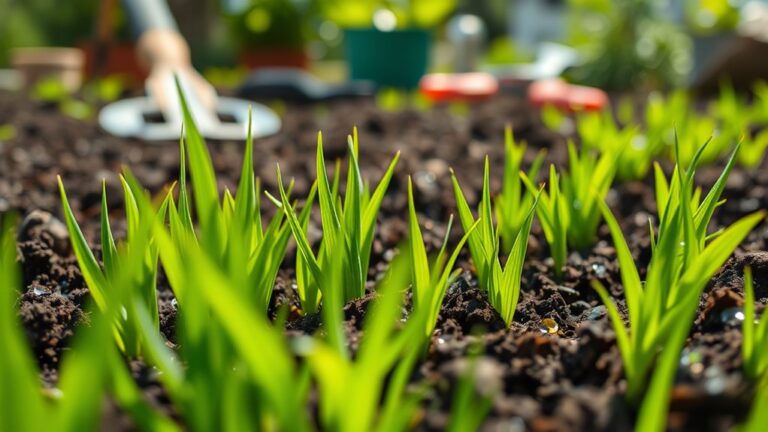
7 Simple Steps to Successfully Plant Marigold Seeds
Many garden enthusiasts dream of bright, cheerful marigolds but often struggle with getting them to grow successfully. You’re not alone—planting marigold seeds can be tricky if you don’t know the right steps. Don’t worry, though, with a few simple tips, you’ll be on your way to flourishing marigolds in no time.
To successfully plant marigold seeds, start by choosing healthy seeds suited to your climate and garden style. Prepare well-draining, fertile soil and plant the seeds about ¼ inch deep in a sunny spot after the last frost.
Keep the soil moist, avoid overwatering, and water early in the day. Be mindful of pests and crowding, and regularly deadhead to promote more blooms.
Keep exploring for more tips to guarantee your marigolds flourish.
Key Takeaways
- Choose healthy marigold seeds suited to your climate and space needs from reputable suppliers.
- Prepare well-draining, nutrient-rich soil by adding organic matter or compost if needed.
- Plant seeds ¼ inch deep in full sun, making sure to space them properly so they don’t overcrowd.
- Keep the soil consistently moist and use mulch to help retain moisture and keep weeds at bay.
- Water gently, watch out for pests, and deadhead regularly to keep the blooms coming.
How to Choose the Best Marigold Seeds for Your Garden
Are you unsure how to select the best marigold seeds for your garden? Start by exploring different marigold varieties to find ones that suit your climate and aesthetic preferences. Some varieties grow tall and bushy, while others stay compact, so choose based on your space and design goals.
When sourcing seeds, look for reputable seed sources that offer high-quality, fresh seeds with good germination rates. Read reviews or ask fellow gardeners for trusted suppliers to avoid low-quality or old seeds.
Check the seed packet for information on size, color, and growth habits to ensure it matches what you want. It’s also helpful to buy from sources that provide detailed planting instructions and guarantees.
Preparing the Soil for Healthy Marigold Growth
To guarantee your marigolds thrive, preparing the soil properly is essential. First, assess your soil types—whether it’s sandy, clay, or loamy—and understand how they affect drainage and aeration. Loamy soil, rich in organic matter, is ideal because it balances drainage and moisture retention.
Assess your soil type and improve drainage with compost or sand for thriving marigolds.
If your soil is heavy clay, improve drainage by mixing in compost or coarse sand. For sandy soil, add organic matter to improve nutrient retention. Check nutrient levels with a simple test kit; marigolds prefer soil with moderate fertility.
If nutrient levels are low, incorporate a balanced, slow-release fertilizer or compost to boost nutrients naturally. Confirm the soil is loose and well-drained, as marigolds dislike soggy roots. Proper preparation creates a healthy foundation that promotes strong root development and vibrant blooms.
Taking these steps guarantees your marigolds will grow vigorously and flourish throughout the season.
When and Where to Plant Marigold Seeds
Timing and location are key to making sure your marigold seeds grow strong and healthy. Plant your seeds once the weather warms up, usually after the last frost date, so they get the right climate to thrive.
Marigolds love full sun, so pick a spot that gets at least six hours of direct sunlight each day. Make sure the soil is well-draining and rich in organic matter for the best results.
Plant the seeds about ¼ inch deep. This depth gives them the right environment to germinate without being too deep or too shallow, which could cause problems.
Choose a spot with good airflow and consistent sunlight. Timing and location are everything—plant at the right time, and your marigolds will have the best start possible.
How to Plant Marigold Seeds Step-by-Step
Once you’ve prepared the soil and chosen the right spot, it’s time to plant your marigold seeds. Start by scattering the seeds evenly across the soil surface, then lightly press them into the soil about ¼ inch deep.
To promote healthy growth, keep leftover seeds stored in a cool, dry place for future planting. Make sure to space the seeds properly to avoid overcrowding, which can lead to pests and disease.
Store leftover seeds in a cool, dry place and space them properly to prevent pests and disease.
Water gently to keep the soil moist but not soaked. Watch out for pests because marigolds usually repel them, but sometimes unwanted insects can still show up if you’re not careful.
Covering the seeds with a thin layer of soil helps protect them from birds and harsh weather. Consistent, gentle watering encourages germination and helps your seeds develop strong roots.
Follow these steps, and you’ll be on your way to growing vibrant, healthy marigolds.
Watering and Caring for Your Marigold Seedlings
After planting your marigold seeds and covering them with soil, the next step is to focus on proper watering and ongoing care. Keep the soil consistently moist but not waterlogged, since overwatering can drown your seedlings.
Water early in the day to give excess moisture time to evaporate and help reduce the risk of disease. As your seedlings grow, use a balanced, diluted fertilizer to give them the nutrients they need for healthy development.
Regularly check your plants for pests like aphids and spider mites. Address any infestations quickly with the right treatments to keep your seedlings healthy and prevent damage.
Mulching around your plants can help retain moisture and suppress weeds, which reduces stress on your seedlings. Stay attentive to watering needs, especially during hot or dry weather, and keep your growing area clean.
Proper watering and care will set the foundation for strong, vibrant marigolds that thrive in your garden.
Common Mistakes to Avoid When Growing Marigolds
Growing marigolds can be rewarding, but many beginners make mistakes that hinder their plants’ growth. One common error is neglecting pest management. If you don’t keep an eye out, pests can quickly infest your marigolds, so make sure to check regularly and remove insects as needed.
Another mistake is ignoring companion planting. Marigolds do better when planted alongside vegetables like tomatoes, which help naturally repel pests. This simple trick can make a big difference in keeping your plants healthy.
Plant marigolds with vegetables like tomatoes to naturally repel pests and boost plant health.
Overwatering is a common issue too. Too much water can cause roots to rot and lead to fungal problems, which stunts growth. Be careful not to water too often and let the soil dry out slightly between watering.
Crowding plants is another mistake that can cause trouble. Planting marigolds too close together reduces airflow, increasing the risk of disease. Giving them enough space helps keep them healthy and vibrant.
Be mindful of these pitfalls to ensure your marigolds grow strong and beautiful.
How to Encourage Vibrant Blooms on Your Marigolds
To keep your marigolds bursting with vibrant blooms, paying attention to their flowering needs is key. Regular pest control is essential because pests like aphids or spider mites can weaken plants and reduce flowering.
Use natural or organic methods, such as neem oil or insecticidal soap, to keep pests at bay without harming beneficial insects. Proper fertilization also boosts bloom production; choose a balanced fertilizer with higher phosphorus, like a 10-20-10 mix, applied every few weeks.
Avoid over-fertilizing, which can lead to lush foliage but fewer flowers. Deadheading spent blooms encourages the plant to produce new blossoms and enhances color and vibrancy throughout the season.
Make sure your marigolds get at least six hours of sunlight daily. This promotes healthy, vibrant blooms. By combining pest control, the right fertilizer, and regular deadheading, you’ll enjoy a continuous display of lively, colorful marigolds all season long.
Frequently Asked Questions
Can I Grow Marigolds Indoors From Seeds?
Yes, you can grow marigolds indoors from seeds. For successful indoor gardening and seed starting, pick a sunny windowsill or add grow lights if needed.
Use well-draining soil and keep it moist but not soggy. Sow the seeds about a quarter-inch deep and make sure there’s good air circulation.
With the right care, your marigolds will sprout and thrive indoors, bringing vibrant color to your space.
What Pests Commonly Target Marigold Seedlings?
You’ll find that aphids are common pests targeting marigold seedlings, often causing damage by sucking sap and weakening the plants. To control them, use insecticidal soap or introduce natural predators like ladybugs.
Marigolds also have nematode resistance, making them a good choice for organic pest control. Regularly inspect your seedlings and act quickly to prevent pest infestations from spreading.
This way, you can keep your marigolds healthy and thriving without much hassle.
How Long Does It Take for Marigold Seeds to Germinate?
Marigold seeds usually sprout within 5 to 7 days, depending on the conditions.
Make sure to give them proper seedling care, keep the soil moist, and maintain warm temperatures for the best germination.
Gentle watering and avoiding soggy soil are key germination tips.
As your tiny seedlings emerge, you’ll see small tips poking through, showing that sprouting is happening.
With patience and good prep, those little seeds will grow into bright, lively marigolds.
Can Marigolds Tolerate Partial Shade?
Yes, marigolds can tolerate partial shade, but their sunlight needs for ideal growth are best met with full sun.
They bloom more vibrantly and grow sturdier when they get at least 4-6 hours of direct sunlight daily.
If you place them in partial shade, expect slightly leggier plants and fewer blooms.
But they’ll still thrive better than in deep shade. Proper sunlight exposure is key to healthy marigold growth.
What Are Natural Methods to Prevent Marigold Diseases?
Like Athena’s wisdom, your best defense against marigold diseases is in natural, organic solutions. Focus on good garden hygiene, like removing any infected debris and making sure plants are spaced properly for good airflow.
Using neem oil or homemade garlic spray can act as a natural shield and help prevent disease. Keep an eye on your plants regularly and avoid overwatering to help your marigolds stay healthy and vibrant through organic methods.
Conclusion
By following these simple steps, you’re not just planting marigolds—you’re bringing sunshine into your garden.
With patience and care, your marigolds will grow and burst into vibrant blooms that brighten your days.
Think of your garden as a canvas, and these seeds as your brushstrokes—each one adding color and life.
So, get ready to nurture your green thumb and watch your garden become a beautiful masterpiece of nature’s beauty with marigold seeds.