10 Easy Steps to Successfully Plant Lotus Seeds
Growing beautiful lotus blooms can feel overwhelming, especially if you’re new to gardening. Many people struggle with getting seeds to sprout and flourish, but don’t worry—you’re not alone.
With a little guidance, you can master the art of planting lotus seeds and enjoy stunning flowers in your pond or garden.
To successfully plant lotus seeds, start by selecting firm, healthy seeds and soaking them in warm water for 24-48 hours, discarding any that float.
Use a wide, shallow container with dechlorinated water, placing the seeds on the surface in warm, sunny conditions. Keep the water level stable between 2-4 inches and maintain a temperature of 75-85°F.
Care for your seedlings by fertilizing and managing pests to encourage healthy growth.
Avoid common mistakes and troubleshoot issues as they arise.
With these tips, you’ll uncover all the essential steps to grow vibrant lotus blooms.
Key Takeaways
- Select healthy, firm seeds with a smooth surface and soak them in warm water for 24-48 hours.
- Use a shallow, wide container with dechlorinated water, keeping the water level 2-4 inches above the seeds.
- Gently place the seeds on the water’s surface in a warm, sunny spot, keeping the water temperature between 75°F and 85°F.
- Keep an eye on the water quality, remove debris, and add balanced aquatic fertilizer once your seedlings start to grow.
- Watch out for pests and remove any dead leaves to help your lotus grow healthy and bloom beautifully.
How to Prepare Lotus Seeds for Planting
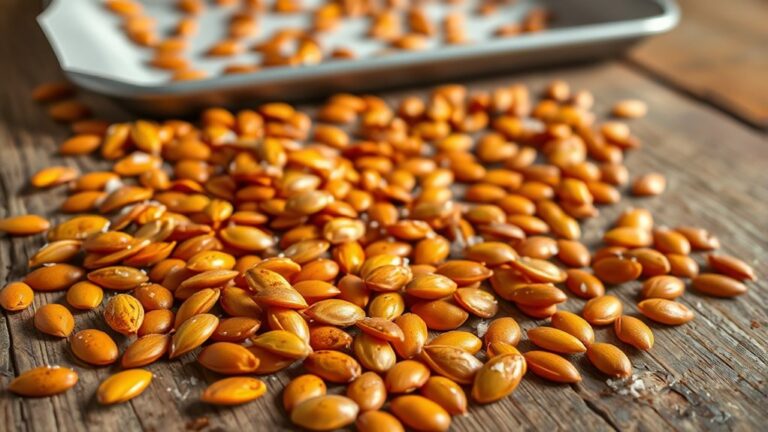
To successfully plant lotus seeds, you need to prepare them properly. Start by evaluating seed viability; only select seeds that feel firm and have a healthy, smooth surface. Avoid any seeds that are cracked, shriveled, or discolored, as these are less likely to germinate.
Proper seed selection is vital to guarantee you’re planting viable seeds with the best chance of sprouting. Before planting, soak the seeds in warm water for 24 to 48 hours. This softens the seed coat and helps identify healthy seeds—those that sink are usually good, while floating seeds are often non-viable.
During this process, discard floating seeds, as they’re unlikely to sprout. Once soaked, gently scarify the seed coat with a file or sandpaper if needed to improve germination. Preparing your seeds with care boosts their viability and sets a strong foundation for healthy lotus growth.
Choose the Right Container and Water Environment
Selecting the right container and water environment helps guarantee your lotus seeds have the best start. Your choice of container materials, like ceramic, plastic, or clay, can affect water temperature and stability. So, pick a sturdy, non-toxic option.
When it comes to water types, use untreated, dechlorinated water to avoid harmful chemicals that could harm your seeds.
Here are some key points to keep in mind:
- Use a wide, shallow container to give your lotus room to grow.
- Make sure the container has no drainage holes to keep the water consistent.
- Fill it with soft, clean water, avoiding tap water with chlorine or chloramine.
- Keep the water level just above the seeds, about 2 to 4 inches deep, to promote healthy germination.
Soak and Stratify Lotus Seeds for Better Germination
Before planting, soaking and stratifying lotus seeds can really improve their chances of sprouting. Proper seed prep is key for successful growth.
Start by soaking the seeds in warm water for 24 to 48 hours. This softens the seed coat and encourages sprouting.
Soak lotus seeds in warm water for 24 to 48 hours to soften the seed coat and promote sprouting.
After soaking, stratify the seeds by placing them in a moist, refrigerated environment at around 40°F (4°C) for 1 to 2 weeks. This mimics natural winter conditions and helps break dormancy.
During this time, check the seeds regularly to make sure they stay moist but not waterlogged. Using stratification increases the chances of healthy sprouting.
Once the stratification period is over, take the seeds out of the refrigerator and keep them in a warm, humid place. This prepares them for successful germination and gives you a better shot at growing healthy lotus plants.
How Do You Plant Lotus Seeds Correctly in Water?
First off, pick healthy, viable lotus seeds. You want to make sure they’re good quality so they have the best chance to grow. Once you’ve got your seeds, fill a shallow container with clean water. Keep it somewhere warm and sunny—that’s super important for good germination.
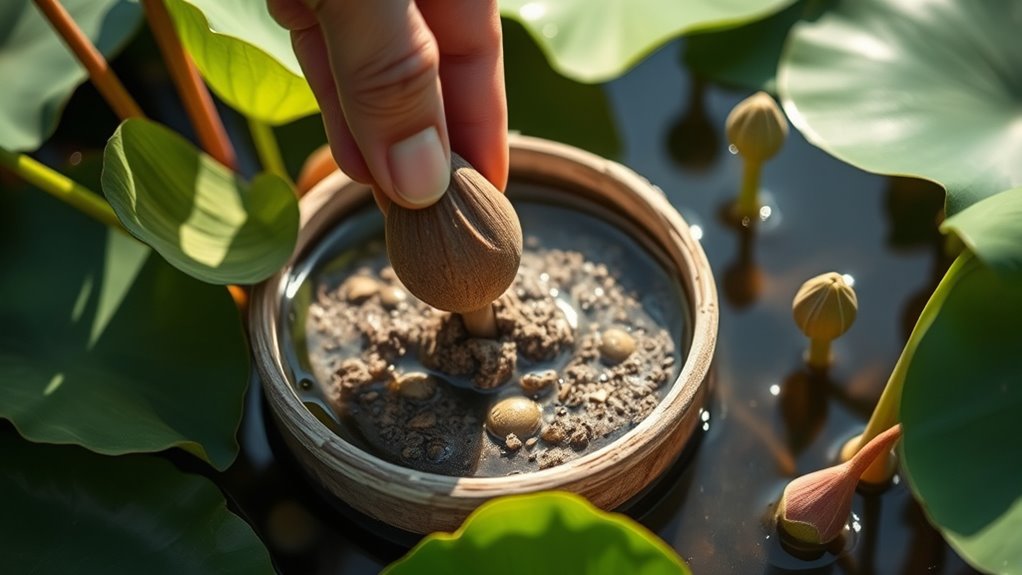
Now, when you’re ready to plant, gently place the seeds on the water’s surface. Just lay them there, making sure they’re properly on top of the water, but don’t bury them underneath. It’s all about giving them the right start!
Select Suitable Seeds
How do you guarantee you’re using the right lotus seeds for planting? Start with essential seed selection tips to ensure success.
First, pick seeds that feel firm and heavy—these usually mean good quality. Second, check for cracks or damage; healthy seeds should be smooth and unblemished.
Third, go for seeds with a slightly convex shape, which indicates viability. Fourth, buy from reputable suppliers to avoid low-quality seeds.
Choosing high-quality seeds gives you confidence and excitement, knowing you’re giving your lotus the best start.
Remember, healthy seeds are your first step toward vibrant blooms.
By following these seed selection tips, you’ll set yourself up for a beautiful, thriving lotus pond.
Quality seeds truly make all the difference in achieving your gardening dreams.
Prepare Water Environment
To guarantee successful lotus planting, you need to prepare the water environment properly. Start by ensuring good water quality; avoid chlorinated or polluted water, and opt for fresh, filtered water instead.
The water should be deep enough to support the plant’s roots—about 12 to 18 inches deep. Maintaining a proper nutrient balance is essential; use a slow-release aquatic fertilizer designed for water plants to provide important nutrients without overdoing it.
Keep the water clean by regularly removing debris and algae, which can hinder growth. Proper water conditions promote healthy root development and strong plant growth.
Properly Sow Seeds
Once the water environment is ready, you can start sowing the lotus seeds by placing them properly in the water. To ensure the seeds stay viable and plant well, follow these simple techniques:
- Gently put each seed on the water’s surface, making sure it’s not too deep underwater.
- Use your fingertips to position the seed carefully, so you don’t damage its delicate outer coating.
- Keep the seeds in a warm, sunny spot to help them sprout.
- Watch for signs of germination, like small roots emerging, and adjust the water level if needed.
These planting methods help maximize seed viability and give your lotus the best chance to grow. Be patient—successful sowing can lead to beautiful blooms.
Create Ideal Water and Light Conditions for Lotus Growth
To help your lotus thrive, it’s important to keep the water temperature just right—ideally between 75°F and 85°F. If the water gets too cold or too hot, your lotus might struggle to grow, so monitoring the temperature is key.
And don’t forget about sunlight! Your pond should get plenty of it, aiming for at least six hours of direct sunlight each day. This will give your lotus the energy it needs to produce those beautiful blooms.
Finally, the water depth matters too. Depending on the size of your lotus plants, keep the water between 2 and 12 inches deep. Too shallow or too deep can affect their growth, so it’s good to find that sweet spot for your specific plants.
Optimal Water Temperature
Maintaining the right water temperature is crucial for healthy lotus growth because it directly affects seed germination and plant development. When the water gets too cold or too hot, seed viability drops, making it harder for your lotus to thrive. Aim for a water temperature between 75°F and 85°F (24°C–29°C) for the best results.
Warm water encourages your seeds to wake up and start germinating, giving them a better chance to grow. Avoid sudden temperature changes because consistent warmth helps boost seed viability.
Check the water regularly using a thermometer to keep it within the ideal range. Patience is key—getting the temperature right increases your chances of success and healthy growth.
Creating the perfect water temperature environment will help your lotus flourish.
Adequate Sunlight Exposure
Adequate sunlight exposure is crucial for healthy lotus growth because it directly influences photosynthesis and the overall vigor of the plant. Finding the right balance of sunlight duration and intensity helps your lotus thrive.
Aim for at least 6 hours of direct sunlight each day to encourage strong blooms and healthy roots. Too little light weakens the plant, while too much can cause stress.
Observe your pond’s surroundings to optimize sunlight exposure. Use the following guide to understand how different sunlight levels affect your lotus:
| Sunlight Duration | Light Intensity | Effect on Lotus |
|---|---|---|
| 4-6 hours | Moderate | Steady growth |
| 6-8 hours | Bright to intense | Vibrant blooms |
| Over 8 hours | Excessive | Risk of stress |
Proper Water Depth
Making sure you have the right water depth is essential for your lotus to thrive. Different varieties need specific depths, so understanding this is key.
Proper water level encourages healthy growth and helps prevent seed rot. To get it right:
- Keep the water 2-4 inches above the soil for delicate varieties.
- For more robust lotus, deepen the water to 6-12 inches.
- Maintain consistent water levels to reduce stress and promote blooming.
- Check that the water is clean and free of pollutants, as poor water quality can hinder growth.
How to Care for and Monitor Your Lotus Seedlings
Keep a close eye on your lotus seedlings as they start to grow, paying attention to their overall health and development. Make sure they get proper seedling nutrition by providing balanced aquatic fertilizer once they develop their first leaves. Healthy growth shows they’re getting enough nutrients.
Regularly check the water quality, keeping it clean and well-oxygenated. Stagnant water can slow growth, so maintaining good water conditions is essential. Watch out for pests like insects, snails, or other critters that might damage your seedlings.
Remove any pests promptly to prevent infestations. Avoid overwatering, as too much water can cause root rot. Also, make sure your seedlings aren’t exposed to extreme sunlight or cold temperatures.
Gently thin out crowded seedlings to reduce competition for nutrients. Consistent care and vigilant monitoring will help your lotus seedlings thrive, ensuring they grow into strong, healthy plants ready for your pond or water garden.
Manage Pests and Diseases in Your Water Garden
Managing pests and diseases in your water garden is key to keeping your lotus plants healthy. Catching issues early helps protect your plants from damage and keeps your blooms vibrant.
Check your lotus regularly for pests like aphids or caterpillars. Remove them by hand or spray gently to keep pests at bay.
Keeping the water clean and well-aerated helps prevent fungal infections and root rot. Good water quality is essential for healthy plants.
Use natural predators, such as fish, to control pests without resorting to chemicals. They help maintain a balanced ecosystem naturally.
Remove decaying leaves or debris as soon as you see them. This reduces disease spread and encourages your lotus to grow strong and healthy.
Tips to Encourage Blooming and Lush Foliage
To encourage your lotus plants to bloom abundantly and develop lush foliage, focus on providing ideal growing conditions. Make sure your pond or water garden has clean, warm water with a stable temperature around 75-85°F.
Maintain warm, clean water at 75-85°F for vibrant lotus blooms and lush foliage.
Use the right fertilizer, like aquatic plant fertilizers or slow-release tablets, to supply essential nutrients without overfeeding. Apply fertilizer regularly, but be careful not to use too much, as that can harm your plants.
Adding companion plants like water lilies or floating ferns can help create a healthy environment. They help prevent algae and improve water quality, which encourages your lotus to thrive and bloom more vigorously.
Be sure to remove dead or yellowing leaves promptly. This helps prevent disease and promotes healthy growth. With consistent care, proper fertilization, and good plant companions, your lotus will reward you with vibrant blooms and lush, expansive foliage.
Common Mistakes to Avoid When Growing Lotus From Seeds
Growing lotus from seeds can be rewarding, but there are some common mistakes you’ll want to avoid. First, steer clear of poor seed selection—damaged or old seeds don’t germinate well.
Next, don’t ignore the right growing environment. Lotus seeds need warm, stable temperatures and clean water to thrive.
Be careful not to plant seeds too deep. Shallow planting helps them access light and sprout more easily.
Finally, don’t rush the process by exposing seeds to cold or inconsistent conditions. This can delay germination or cause rot.
To improve your chances, choose healthy, fresh seeds, keep the environment warm and stable, plant at the right depth, and maintain consistent conditions.
Avoiding these mistakes will give your lotus seeds the best shot at growing strong and vibrant. That way, you’ll bring beauty and tranquility to your water garden.
Troubleshooting Lotus Seed Germination Problems
If your lotus seeds aren’t popping up like you’d hope, there could be a few reasons behind it. Sometimes, the seeds themselves might not be the best quality, or maybe they weren’t soaked for the right amount of time. It’s also easy to run into problems with mold — that nasty stuff can spread quickly if the seeds stay too wet or if they’re overcrowded.
Getting a handle on these common issues can really help you troubleshoot better. Once you know what to look out for, you’ll have a much better shot at getting your lotus seeds to germinate successfully.
Common Germination Challenges
Even with careful preparation, germinating lotus seeds can sometimes be tricky, and several common issues may prevent successful sprouting. One major challenge is inconsistent germination temperatures, which can delay or stop growth altogether.
Seed viability also plays a critical role. If seeds are old or damaged, chances of germination drop considerably.
Here are some common problems you might face:
- Incorrect temperature range – Seeds need warm, consistent temperatures to sprout.
- Unhealthy seeds – Low seed viability leads to poor germination success.
- Overly wet conditions – Excess moisture can cause rot or mold.
- Insufficient patience – Rushing the process may cause you to discard viable seeds prematurely.
Addressing these issues will increase your chances of successfully sprouting lotus seeds.
Preventing Seed Mold
To prevent seed mold during lotus germination, keep your environment clean and balanced. Start with proper seed storage—store your seeds in a cool, dry place until you’re ready to plant.
Avoid excess moisture, which can lead to mold. Make sure containers are sanitized and seeds aren’t kept in damp conditions.
When germinating, use a shallow tray with well-draining soil or water. Change the water regularly to prevent stagnation and mold buildup.
Keep the area well-ventilated and avoid overcrowding. High humidity can promote mold, so give your seeds room to breathe.
Check your seeds often and remove any that show signs of mold right away. By managing moisture and cleanliness, you’ll reduce mold risk and boost your chances of successful germination.
Frequently Asked Questions
How Long Does It Take for Lotus Seeds to Sprout?
You can expect lotus seeds to sprout in about 7 to 21 days once you give them the right conditions. Proper preparation, like soaking and scarifying, can help speed up germination.
Make sure you’re providing ideal sprouting conditions, such as warm temperatures of at least 70°F (21°C) and plenty of sunlight. Keep the water warm and change it regularly to promote healthy growth.
With these steps, you’ll see sprouts emerge within a few weeks.
What Are Common Signs of Unhealthy Lotus Seedlings?
You’ll notice unhealthy lotus seedlings show seedling discoloration, like yellowing or browning leaves, which means they’re having a tough time.
Root rot is another common sign, often caused by overwatering or poor drainage. It results in mushy, blackened roots.
If you spot these signs, it’s important to remove the affected seedlings quickly and adjust how you’re watering.
Healthy seedlings should have vibrant green leaves and firm roots, letting you know they’re doing well.
Can Lotus Seeds Be Grown Indoors Successfully?
Yes, you can turn your indoors into a miniature pond by successfully growing lotus seeds. Think of indoor gardening as nurturing tiny miracles where seed germination blooms under your care.
Place the seeds in a shallow container with water and warm light, mimicking their natural environment. With patience and proper conditions, your lotus will sprout and flourish.
This proves that even amidst four walls, nature’s beauty can thrive.
How Often Should I Change the Water in My Lotus Container?
You should change the water in your lotus container every week to keep it fresh and healthy.
Make sure the water temperature stays steady, ideally between 75-85°F, to help your lotus grow.
Use a container that’s big enough to support the roots and leaves of the plant.
Regular water changes help prevent algae from building up and ensure your lotus gets the oxygen and nutrients it needs to thrive.
What Additional Nutrients Do Lotus Plants Need for Optimal Growth?
To guarantee your lotus plants thrive, provide them with essential nutrients like aquatic plant fertilizer, which supplies crucial nutrient sources. Also, incorporate a nutrient-rich soil composition that contains organic matter and clay to support healthy root development.
You should fertilize regularly during the growing season, typically every 4-6 weeks, to promote vibrant blooms and vigorous growth. Keep an eye on nutrient levels and adjust feeding as needed for peak health.
Conclusion
By following these simple steps, you’ll transform your water garden into a thriving lotus haven. For example, Sarah successfully cultivated vibrant lotus flowers from seed by carefully preparing her seeds and maintaining ideal water conditions.
With patience and proper care, you can enjoy stunning blooms and lush foliage. Remember, avoiding common mistakes and troubleshooting issues early will help your lotus plants flourish.
This way, your pond becomes a serene oasis that blooms beautifully year after year. Growing healthy lotus plants from seed is easier than you think when you follow these tips for planting lotus seeds.