10 Simple Steps to Harvest Sunflower Seeds
Growing your own sunflower seeds can be incredibly rewarding, but many people struggle with knowing exactly when and how to harvest them. If you’ve ever felt unsure about the right time to pick your sunflowers or worried about ruining your crop, you’re not alone.
Harvesting sunflower seeds is simpler than it seems once you know the steps.
To harvest sunflower seeds, start by monitoring the back of the heads until they turn from green to yellow or brown, and seeds become plump and dark-striped.
Use pruning shears to cut the heads and wear gloves for protection. Hang them upside down in a dry, ventilated area for 10-14 days.
Once dry, gently rub or shake to extract seeds, then clean and store in airtight containers in a cool, dark place.
If you’re ready to master each step, there’s more to uncover.
Key Takeaways
- Keep an eye on your sunflower heads for yellow or brown backs and plump, dark-striped seeds. These signs mean they’re ready to harvest.
- When the seeds are fully mature, use pruning shears or a knife to cut the heads off cleanly.
- Hang the heads upside down in a dry, well-ventilated area covered with a cloth. Let them dry for 10 to 14 days.
- Gently rub or shake the heads to release the seeds, then remove any chaff and debris.
- Store your seeds in airtight containers in a cool, dark place. Make sure they’re fully dry before sealing them up.
How to Determine the Best Time to Harvest Sunflower Seeds
Wondering when to harvest sunflower seeds? The key is to watch the sunflower’s maturity and seed development closely.
As the seeds mature, the back of the sunflower head turns from green to yellow or brown, signaling that they’re almost ready for harvest.
You’ll notice the seeds become plump, and their shells change from white to a dark, striped pattern. That’s a sign they’re fully developed.
Check the seed heads regularly; they should feel firm and look dry. When the blooms start to droop and the petals fall away naturally, it’s a good sign the seeds are ready.
Timing is really important. Harvesting too early means immature seeds that won’t store well or germinate properly.
On the other hand, waiting too long can lead to seed loss from shattering or weather damage.
Tools You’ll Need for Harvesting Sunflower Seeds
To harvest sunflower seeds effectively, you’ll want to have a few handy tools on hand. A pair of pruning shears or a sturdy knife works great for cutting the sunflower heads cleanly.
Don’t forget to protect yourself while working! Wearing gloves and long sleeves can help guard against those sharp sunflower bracts and any potential irritants that might bother your skin.
And of course, you’ll need some storage supplies too, like paper bags or containers, to keep your seeds safe and dry once you’ve harvested them.
Essential Harvesting Tools
Gathering sunflower seeds requires a few essential tools to make the process efficient and clean. A sharp pair of pruning shears or scissors helps you harvest the seed heads without damaging the plant.
A sturdy, breathable bucket or basket is ideal for collecting the seeds, preventing mold and moisture buildup. You’ll also want a soft brush or cloth to remove chaff during seed preservation.
For more precise harvesting techniques, a small hand rake can loosen stubborn seeds. Moreover, a drying rack or screen guarantees proper airflow during seed drying.
Using these tools correctly guarantees your seeds stay intact and viable, making seed preservation easier. Having the right tools on hand streamlines the process, saves time, and helps you produce high-quality seeds for future planting.
Protective Equipment Needed
Harvesting sunflower seeds can be messy, so wearing the right protective equipment is essential to keep yourself safe and comfortable. Start with safety gloves to prevent scratches and make handling seeds easier.
Eye protection shields against dust, chaff, and debris that can fly up during harvesting. Since you’ll be working outdoors, wear a hat and sunscreen to guard against UV rays.
Sturdy footwear provides stability and protects your feet from sharp tools or dropped seeds. Dust masks are vital to avoid inhaling fine particles and dust.
Finally, don protective clothing, such as long sleeves and durable pants, to reduce skin exposure and keep dirt away. With the right gear, you’ll stay safe and comfortable throughout the harvesting process.
Optional Seed Storage Supplies
Having the right seed storage supplies on hand guarantees your sunflower seeds stay fresh and quality is preserved. You’ll want durable seed containers that protect against pests and environmental damage.
Choose containers made of airtight materials to help with moisture control, preventing mold and spoilage. Clear containers make it easy to see how much seed you’ve stored without opening them.
Consider using silica gel packs or desiccants inside the containers to further regulate moisture levels. Proper storage supplies not only prolong seed viability but also make organizing your harvest simpler.
Keep your seed containers in a cool, dark place to maintain seed quality. Investing in these optional supplies ensures your sunflower seeds stay fresh, ready for planting or future use.
How to Harvest and Stem Sunflower Heads Safely
To safely harvest and stem sunflower heads, start by spotting mature blooms that have turned their usual yellow color and are starting to droop a bit. It’s important to use proper techniques to avoid damage and stay safe.
Wear gloves to protect your hands from sharp edges and falling debris. When cutting the stem, use sharp pruning shears and make the cut about 12 inches below the head, ensuring safety precautions are in place.
Handle the sunflower head gently to prevent shattering the seeds. Here’s a quick step-by-step guide:
| Step | Action | Safety Tip |
|---|---|---|
| 1. Identify mature blooms | Look for drooping, yellow flowers | Wear gloves for protection |
| 2. Cut the stem | Use sharp pruning shears | Keep fingers clear of blades |
| 3. Support the head | Use a sturdy surface or basket | Handle carefully to avoid seeds falling |
| 4. Transport safely | Carry with both hands | Watch for sharp edges |
| 5. Prepare for drying | Keep in a dry, well-ventilated area | Avoid moisture exposure |
Following these steps will help you harvest sunflower heads safely and efficiently.
How to Dry Sunflower Heads for the Best Seeds
Once you’ve collected your sunflower heads, the next important step is drying them properly so the seeds develop fully and stay intact. Proper drying is key for preserving seeds well and ensuring high quality for next year.
Here are some key sunflower drying tips to follow:
Hang the heads upside down in a warm, dry, and well-ventilated space. This helps prevent mold and promotes even drying.
Cover the heads with a cloth or paper bag to keep dust and insects away.
Let them dry for 10 to 14 days until the back of the head feels brittle and the seeds rattle when shaken.
Check regularly for mold or excess moisture and remove any affected heads quickly.
Step-by-Step: Extracting Sunflower Seeds Effectively
Once your sunflower heads are all grown up and the back turns a nice yellow color, it’s time to think about harvesting. Gently remove those heads and, if needed, let them dry out a bit. This helps make the seed extraction way easier.
When you’re ready, take your time with each step. Be patient and careful to avoid damaging the seeds. Handling everything gently will give you the best results and ensure you get as many seeds as possible without breaking them.
Harvesting Ripe Sunflowers
When your sunflowers are fully mature, you’ll see the back of the flower heads turn yellow or brown, indicating the seeds are ready for harvest. Keep an eye on your sunflower varieties and watch out for seed pests.
Here’s what to do next:
- Use pruning shears to cut the head, leaving a few inches of stem attached.
- Hang the heads upside down in a dry, well-ventilated area.
- Wait until the seeds are fully hardened and come loose easily.
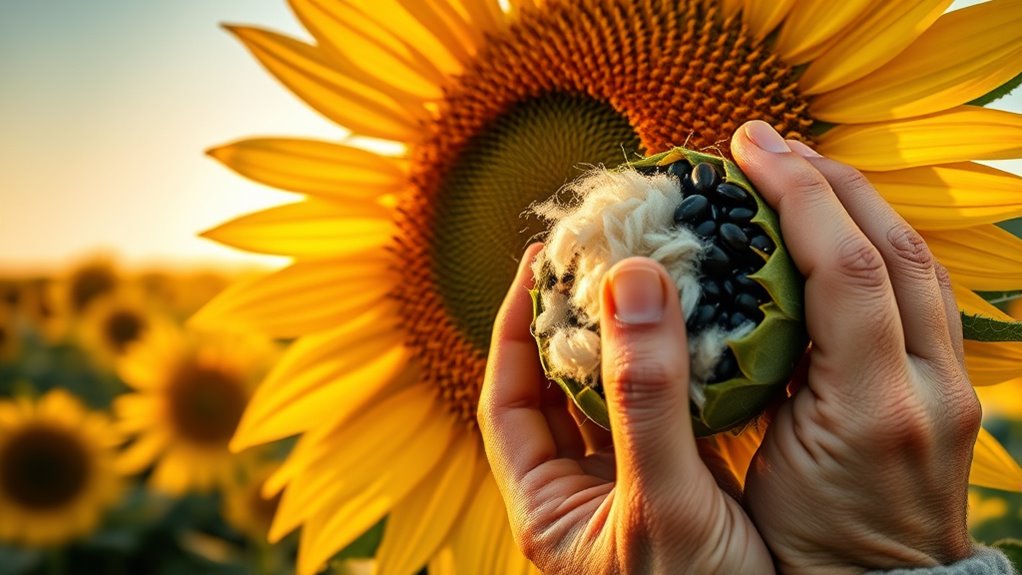
- Gently rub or scrape the seeds from the head, being careful of any pests that may have attacked the blooms.
Following these steps will help you harvest healthy, ripe sunflower seeds efficiently, so they’re ready for drying or storage.
Extracting Seeds Properly
After you’ve hung your sunflower heads to dry, the next step is to extract the seeds carefully and efficiently. Use proper seed extraction techniques to avoid damaging the seeds.
Start by holding the head firmly and rubbing the seeds out with your hands or a tool. For larger heads, a gentle shake can loosen the seeds. To guarantee ideal drying, let the seeds sit in a dry, well-ventilated area after extraction.
| Step | Technique | Tips |
|---|---|---|
| Loosening seeds | Rubbing or shaking head | Avoid crushing seeds |
| Collecting seeds | Using a container | Remove debris and chaff |
| Drying seeds | Air-dry in a cool space | Prevent mold and spoilage |
| Storage | Store in a sealed jar | Keep away from moisture |
How to Clean and Inspect Sunflower Seeds
To guarantee your sunflower seeds are ready for storage or planting, start by cleaning and inspecting them thoroughly. Proper cleaning ensures good seed quality and helps prevent pests.
First, remove any chaff, debris, or damaged seeds. Then, use gentle methods like rinsing with water or air blowing to avoid damaging the seeds’ viability.
Remove chaff and debris gently with water or air to protect seed viability.
Next, inspect each seed for cracks, mold, or discoloration. Discard any seeds that look unhealthy. After that, dry the seeds completely in a well-ventilated area to prevent mold growth during storage.
These steps are essential for maintaining seed quality, preventing pests, and keeping your seeds healthy. Using proper inspection techniques helps you identify seeds that are viable for planting and avoid storing compromised ones.
How to Store Sunflower Seeds to Keep Them Fresh
Once you’ve cleaned and inspected your sunflower seeds, proper storage is key to keeping them fresh and viable. To get the most out of your seeds, choose a cool, dark, and dry spot like a pantry or storage bin.
Moisture control is really important because excess humidity can cause mold and lower seed quality. Use airtight containers, such as glass jars or sealed plastic bins, to keep moisture out. Adding a desiccant packet can help absorb any remaining humidity.
Label your containers with the date you stored the seeds so you can keep track of their freshness. Keep the seeds away from direct sunlight and temperature fluctuations, which can reduce their viability over time.
Regularly check your stored seeds for signs of moisture or spoilage. Following these tips will help your sunflower seeds stay fresh for months, whether you’re planting or snacking.
Proper storage is simple but essential for preserving your harvest and ensuring your seeds stay in great shape.
Tips for Saving Sunflower Seeds for Next Year
If you want to save sunflower seeds for next year, the first thing you need to do is make sure they’re fully mature before you harvest them. You’ll know they’re ready when the backs of the sunflower heads turn yellow or brown, and the seeds are plump and firm.
Once you’ve harvested the seeds, it’s important to store them properly. Keep them in a cool, dry place — like a pantry or a storage container with a tight lid. This helps keep them viable and prevents mold or pests from ruining them.
Paying attention to when the seeds are mature and how you store them can really make a difference. With the right approach, you’ll have healthy, viable sunflower seeds ready to plant next season.
Proper Seed Maturation
As sunflower seeds approach full maturity, it’s important to keep a close eye on their development to know when they’re ready for harvest. Understanding the signs of seed maturation helps you pick the right time to collect.
Here are some key indicators to look for:
- The back of the sunflower head turns yellow or brown.
- The seeds become plump, firm, and show a dark stripe pattern.
- The seed coating feels hard when you touch it.
- The flowering head starts to droop slightly, which signals maturity.
Effective Storage Techniques
Storing sunflower seeds properly ensures they stay viable and free from pests or mold until you’re ready to plant again. Use containers that offer good moisture control and pest prevention, like airtight jars or sturdy storage bins.
Choose containers that allow for ventilation because airflow helps prevent mold and excess humidity. Store seeds in a cool, dark place with stable temperatures to keep their quality over time.
Avoid exposing seeds to direct sunlight or fluctuating temperatures, as this can reduce their viability. Regularly check your stored seeds for signs of pests or mold, and discard any that are compromised.
Following these simple conditions will help your sunflower seeds stay fresh, viable, and ready for planting next season.
Troubleshooting Common Sunflower Harvesting Problems
Even with careful planning, harvesting sunflower seeds can come with some common problems that might affect your yield and seed quality. Addressing these issues quickly helps ensure a successful harvest.
Here are some common problems you might face:
- Pest issues – Birds and insects can peck at the seeds, reducing your harvest. Use bird netting or natural repellents to keep pests away.
- Weather impacts – Unexpected rain or high humidity can cause mold or spoilage. Harvest as soon as the back of the sunflower heads turn brown.
- Mature seed loss – Seeds can fall prematurely if you wait too long, so keep an eye on seed maturity.
- Poor seed drying – Not drying seeds enough can lead to mold or spoilage during storage. Make sure seeds are thoroughly dried before storing.
FAQs About Harvesting and Saving Sunflower Seeds
Harvesting sunflower seeds often raises questions, especially if you’re new to the process. You might wonder which seed varieties are best for harvesting or how to tell when they’re ready.
Usually, seeds are ripe when the backs of the sunflower heads turn yellow or brown, and the seeds feel firm. Some seed varieties have larger or smaller seeds, so it’s helpful to know your specific type beforehand.
Pest management is also a common concern. Birds or insects can damage seeds before you harvest. Covering the heads with a cloth or netting can help protect them from pests.
To save seeds for next year, make sure they’re fully dry—either in the sun or a dry, well-ventilated space—before storing them in an airtight container.
Proper timing and pest management are key to successful harvesting and seed saving. This way, your sunflower crop can thrive year after year.
Frequently Asked Questions
Can Sunflower Seeds Be Harvested Early if the Weather Is Unpredictable?
Yes, you can think about harvesting sunflower seeds early if the weather is unpredictable, but it’s a bit risky. Weather conditions like rain or high humidity can spoil the seeds or cause mold, so keep a close eye on the forecast.
If you notice the back of the sunflower heads turning brown and the back becoming dry, it’s a sign they’re almost ready. Just be careful—harvesting too early might mean the seeds aren’t fully mature yet.
Are There Organic Methods to Enhance Sunflower Seed Production?
You can boost sunflower seed production naturally by embracing organic methods. Companion planting with legumes or herbs improves soil health, leading to healthier plants that produce more seeds.
Mulching conserves moisture and helps prevent weeds, making it easier for your sunflowers to thrive. Organic fertilizers like compost also enrich the soil, giving your plants the nutrients they need.
These simple, eco-friendly practices maximize your sunflower yield and turn your garden into a thriving, seed-producing paradise. Best of all, you can do it without relying on chemical interventions.
Your sunflowers will thank you with abundant, vibrant blooms!
How Do I Identify Pests That Damage Sunflower Seeds?
To identify pests damaging sunflower seeds, look for signs like chewed leaves, holes, or sticky residue on stems. Common sunflower pests include sunflower beetles, moth larvae, and aphids.
Inspect the plant closely, especially the undersides of leaves and flower heads. Keep an eye out for discolored or deformed seeds, which often mean pests are at work.
Regular monitoring helps catch infestations early. This way, you can manage sunflower pests effectively before they cause too much damage.
What Are the Signs of Over-Mature Sunflower Heads?
You’ll recognize over-mature sunflower heads by their seed color turning dark, their heads drooping heavily, and their shells becoming hard and brittle.
These signs show the seeds are fully ripe, but over-maturity can cause seed loss or poor germination. You might also notice the back of the head turning yellow or brown.
That’s a good sign it’s time to harvest before the seeds fall out naturally.
Is It Necessary to Remove All Chaff Before Storage?
No, you don’t need to remove all chaff before seed storage, but doing so makes storage cleaner and helps prevent mold or pests. Chaff removal involves gently brushing off loose debris and leftover plant material.
If the sunflower heads are fully mature and dry, removing most of the chaff is enough. Store the seeds in a cool, dry place to keep them fresh, but removing excess chaff ensures better seed quality over time.
Conclusion
Now that you know these simple steps, your sunflower harvest is within reach. But don’t stop here—there’s always more to learn about perfecting your process and saving the best sunflower seeds.
Are you ready to see your garden flourish next year? With a little patience and care, you’ll be amazed at what you can achieve.
The secret to a bountiful sunflower season is just a harvest away. So, are you prepared to reap the rewards of your sunflower seed harvest?