7 Simple Steps to Grow Tomatoes From Seeds
Growing your own tomatoes from seeds can feel overwhelming, especially if you’re new to gardening or worried about failing. You’re not alone—many people struggle with getting started or ending up with healthy plants.
But with a few simple steps, you can enjoy fresh, homegrown tomatoes all season long.
To grow tomatoes from seeds, start by selecting high-quality seeds and soaking them briefly to boost germination. Choose well-draining, nutrient-rich containers and fill them with suitable soil.
Provide 12-16 hours of light daily and keep the temperature steady between 65-75°F. Water consistently and fertilize appropriately, then monitor seedlings for health issues.
When seedlings develop 2-3 true leaves and roots circle the pot, transplant them carefully.
Keep learning the essential steps for a successful harvest!
Key Takeaways
- Select high-quality tomato seeds and soak them for 12-24 hours to help them sprout more easily.
- Use well-draining, nutrient-rich soil in containers with drainage holes for the best growth.
- Provide 12-16 hours of light daily and keep temperatures between 65-75°F to keep seedlings healthy.
- Keep the soil consistently moist and fertilize with a balanced formula like 10-10-10 during the growing process.
- Transplant your seedlings when they have 2-3 true leaves and strong roots, planting them at the same or slightly deeper level.
Preparing Tomato Seeds for Planting
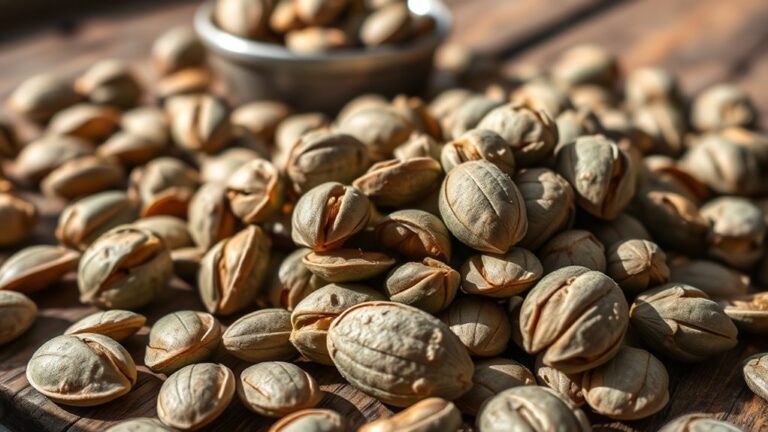
Before planting tomato seeds, it’s important to prepare them properly to ensure healthy germination. Start with careful seed selection; pick fresh, high-quality seeds from a trusted source to get good germination rates.
Once you’ve chosen your seeds, consider soaking them to give them a head start. Soaking in lukewarm water for about 12-24 hours softens the seed coat and speeds up germination.
Soak seeds in lukewarm water for 12-24 hours to soften coats and boost germination.
Just be careful not to soak them too long, as this can cause damage or mold. After soaking, drain the seeds and gently pat them dry with a paper towel.
This step helps break dormancy and increases the chances of sprouting successfully. Remember, healthy seeds are key to a thriving tomato plant.
Proper seed selection and soaking set the stage for successful planting and a productive gardening experience.
Picking the Right Soil and Containers for Tomatoes
Choosing the right soil and containers is key to healthy tomato growth. When picking soil, look for a well-draining, nutrient-rich mix that holds moisture without becoming waterlogged.
A good option is high-quality potting soil with organic matter. It provides essential nutrients and good aeration. Avoid garden soil, which can be heavy or have pests.
For containers, size really matters. Choose a pot at least 18 inches deep and wide to give roots plenty of space to grow. Larger containers promote better growth and need less frequent watering.
Make sure the container has drainage holes. This helps prevent excess water from sitting at the bottom and causing root rot. Using the right soil and container size creates a healthy environment for your tomato seedlings.
This encourages strong roots and vibrant plants. Proper choices here set a solid foundation for a successful tomato harvest.
Ensuring Proper Light and Temperature for Seedlings
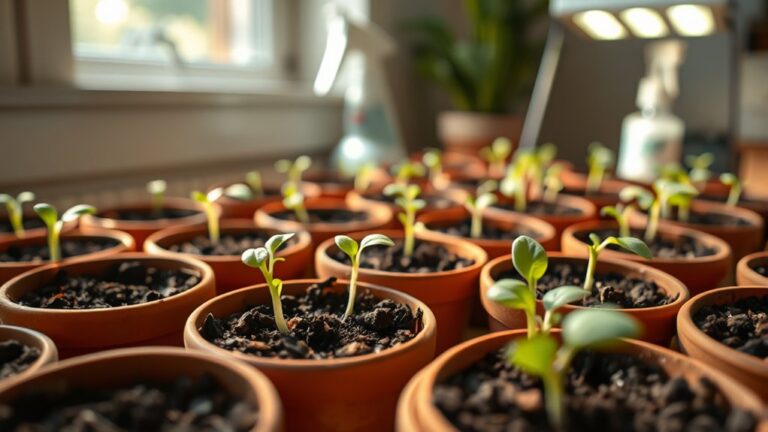
Proper light and temperature are essential for your tomato seedlings to thrive. Seedling light should be sufficient, with 12-16 hours of light daily, using artificial lighting if natural sunlight is limited. Choose full-spectrum LED or fluorescent bulbs that promote healthy growth.
Maintain temperature control by keeping seedlings in a warm, stable environment, ideally between 65-75°F. Use heat mats if needed, especially during cooler months, to prevent stress and promote steady growth.
Proper seedling placement guarantees even light exposure. Rotate seedlings regularly to prevent stretching and ensure uniform development. Keep humidity levels moderate to avoid damping-off disease but don’t let moisture get excessive.
As your seedlings grow through different stages, adjust light duration and intensity accordingly. Consistent temperature and adequate seedling light encourage strong roots and healthy foliage.
How to Plant Tomato Seeds for Best Results
Planting tomato seeds the right way sets you up for healthy, vigorous plants. First, pick the right seed variety based on your climate and space, whether you’re planting indoors or outdoors. Use good-quality seeds and follow germination tips like planting them about ¼ inch deep in moist, well-draining soil.
Keep the soil warm and moist to help the seeds sprout. Once your seedlings emerge, give them plenty of light and good air circulation to keep them healthy. When it’s time to transplant outdoors, wait until the danger of frost has passed and the weather is warm enough.
You can also boost your plants’ health by planting companion plants like basil or marigolds, which help repel pests and prevent diseases. Make sure to plant at the right depth and give your tomatoes enough space to grow.
Early protection from pests and proper planting techniques will give your tomato plants a strong start. With careful planting, your tomatoes will grow strong, produce well, and be more resistant to common problems.
Watering and Fertilizing Your Tomato Plants
Watering and fertilizing are essential for your tomato plants to thrive. Maintaining proper soil moisture is key; keep the soil consistently moist but not waterlogged. Too much water can cause root rot, while too little can stress the plants and stunt growth. Check soil moisture regularly by feeling the top inch—if it feels dry, give your plants a gentle soak.
Fertilizing helps guarantee the right nutrient balance for healthy development. Use a balanced fertilizer, like a 10-10-10 formula, and follow the package instructions. During the growing season, consider side-dressing with compost or a liquid fertilizer to boost nutrients.
Avoid over-fertilizing, which can lead to lush foliage but poor fruit production. Pay attention to your plants’ response; healthy, vibrant green leaves indicate good soil moisture and nutrient levels. Proper watering and fertilizing set the foundation for strong, productive tomato plants.
Solving Common Seedling Problems
When you’re taking care of your seedlings, it’s important to keep an eye out for problems like damping-off. If you spot it early, you can save your plants, but if it’s left unchecked, it can actually kill your seedlings pretty quickly.
Also, be careful not to overwater. Your soil should drain well and stay moist, but it shouldn’t be soggy. Too much water can lead to issues, so finding that sweet spot is key. And don’t forget to watch out for pests—they can attack your young plants, so staying alert and taking action when needed will help keep your seedlings healthy and strong.
Identifying Seedling Damping-Off
Seedling damping-off is a common problem that can quickly ruin your young plants if not identified early. Look for seedling symptoms like wilting, browning, or soft, collapsing stems near the soil line.
These signs often indicate fungal infections that thrive in damp, poorly ventilated conditions. To prevent disease, ensure proper air circulation and avoid overwatering, which creates the perfect environment for fungi.
Damping-off can cause seedlings to topple over or die suddenly, stunting healthy growth. Regularly inspect your seedlings for any soft or discolored stems, and remove affected plants immediately.
Keeping your seedlings in a clean, well-drained environment helps reduce the risk of infection and promotes healthy growth, giving your tomatoes the best start possible.
Preventing Overwatering Issues
Overwatering is a common mistake that can ruin your efforts to grow healthy tomato seedlings. To prevent this, focus on good drainage by using well-draining soil and pots with drainage holes. This allows excess water to escape and keeps roots from sitting in water.
Regularly check the soil’s moisture level by feeling it with your fingers or using a moisture meter. Water seedlings only when the top inch of soil feels dry. Avoid over-saturating the soil to keep your plants happy.
Consistent watering habits are key. They prevent root rot and help your seedlings grow strong and healthy. Remember, too much water can be just as harmful as too little.
Managing Pest Infestations
Managing pest infestations is key to keeping your tomato seedlings healthy. Pests can quickly damage or destroy young plants if you don’t take action.
Encourage natural predators like ladybugs and lacewings, which help control pests naturally. Use organic pesticides like neem oil to target specific pests without harming beneficial insects.
Implement preventive measures such as pest traps and crop rotation to break pest life cycles. Companion planting with herbs like basil or marigolds also deters pests and adds diversity to your garden.
Maintaining healthy soil supports strong seedlings that are more resistant to pests. Introducing beneficial insects and rotating crops regularly can reduce pest populations over time.
When and How to Transplant Tomatoes to Your Garden or Balcony
You’ll want to transplant your tomato seedlings once they’ve grown strong and healthy, and of course, after the last frost has passed. It’s best to wait until the weather is warm enough so your plants can settle in comfortably outside.
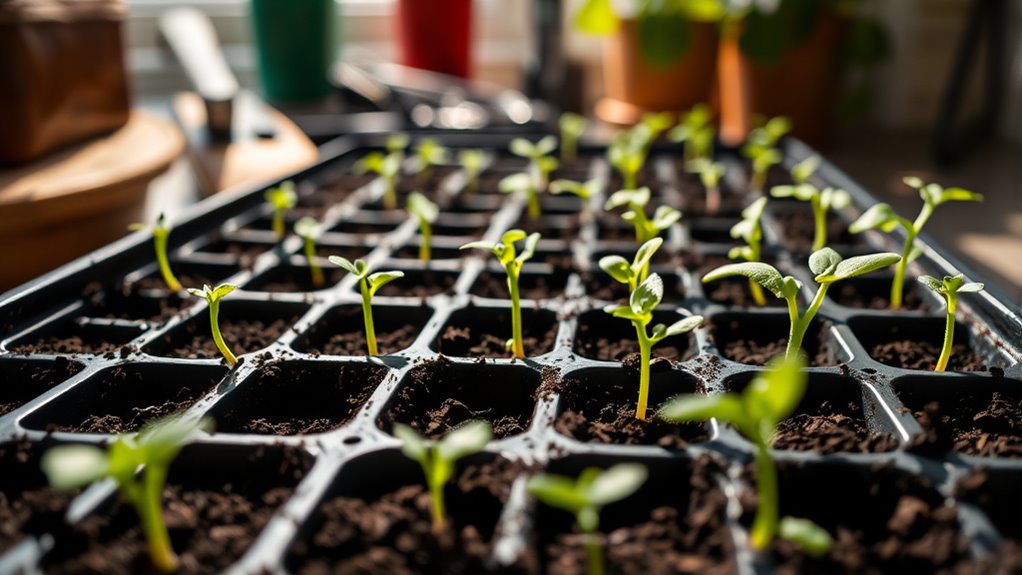
When you’re ready to transplant, just be gentle with your seedlings. Handle them carefully so you don’t damage the roots. Make sure you plant them at the same depth they were in the seedling tray—that helps them grow a strong and healthy root system. Getting the timing and technique just right will give your tomatoes the best start, helping them establish quickly and thrive in their new spot.
Optimal Transplant Timing
Timing is key when transplanting tomatoes to ensure they settle in well and produce a healthy crop. If you transplant too early, your plants might experience shock and slow down their growth.
On the other hand, waiting too long can cause them to become root-bound or too tall for easy handling. Watch for these signs to find the right moment:
- The seedlings have 2 to 3 true leaves.
- Nighttime outdoor temperatures are consistently above 55°F (13°C).
- The roots are strong, just beginning to circle the pot.
Transplant when these conditions line up to encourage healthy root growth and reduce transplant shock. Proper timing helps your tomatoes adapt quickly to their new environment, setting the stage for vigorous growth and plenty of fruit.
Proper Transplant Techniques
Transplanting tomatoes correctly is key to healthy growth and a good harvest. When you transplant, plant your seedlings at the right depth—bury them deeper than in their pots to encourage stronger roots.
Handle the seedlings gently to avoid disturbing the roots. Try not to pull or shake off soil from the roots. Use a trowel to loosen the soil in your garden or container.
Carefully position the plant so the root ball is just below the soil surface. Fill around the roots gently and firmly, making sure they stay in good contact with the soil.
Properly transplanting helps reduce stress on the plant and helps it adapt quickly. This sets your tomatoes up for vigorous growth and a plentiful harvest.
Frequently Asked Questions
How Long Does It Take for Tomato Seeds to Sprout?
Tomato seeds usually take about 5 to 10 days to sprout, but it depends on the temperature.
Keep the soil warm, around 70-85°F, to help them sprout faster.
If it’s too cold, germination can slow down or even stop.
Make sure the soil stays moist but not waterlogged, and you’ll see sprouts within that time frame.
What Are Common Pests That Affect Tomato Seedlings?
Ever met tiny pests that turn your tomato seedlings into their personal buffet? Common culprits include aphids, whiteflies, and spider mites.
To keep them at bay, practice pest identification and opt for organic solutions like neem oil or insecticidal soap. These natural remedies effectively deter pests without harming your delicate seedlings.
Stay vigilant, and your tomato plants will grow strong, pest-free, and ready to reward your gardening efforts.
Can I Grow Tomatoes Indoors Year-Round?
Yes, you can grow tomatoes indoors year-round with proper indoor gardening. Just pick the right seeds that are suited for container growth.
Make sure your plants get plenty of sunlight—aim for 6 to 8 hours daily. If natural light is limited, use grow lights to supplement.
Keep your watering consistent and ensure the temperatures stay warm. Paying attention to these details means you’ll enjoy fresh tomatoes all year, no matter the weather outside.
How Do I Prevent Tomato Plants From Diseases?
Think of your tomato plants as warriors. Protect them from disease by boosting their defenses. Choose disease-resistant varieties and keep the soil healthy with proper compost and drainage.
Avoid overwatering and make sure there’s good airflow around your plants to prevent fungal growth. Regularly check for early signs of disease and remove affected leaves quickly.
These simple steps help strengthen your plants’ natural defenses, so they can thrive and resist common tomato diseases.
What Varieties of Tomatoes Are Best for Beginners?
If you’re a beginner, start with cherry tomatoes or disease-resistant heirloom varieties. Cherry tomatoes are easy to grow, produce quickly, and are forgiving for beginners.
Beefsteak types are larger and flavorful but may need more care. Look for varieties labeled as disease-resistant to help prevent common issues like blight.
These options give you a good chance of success while learning, making your tomato-growing experience enjoyable and rewarding.
Conclusion
Growing tomatoes from seeds is like nurturing a tiny spark into a blazing plant. Patience and care turn your efforts into ripe, juicy rewards.
Follow these simple steps, stay attentive, and you’ll soon be enjoying fresh tomatoes right from your garden or balcony.
With a little effort, you’ll see your seedlings flourish into vibrant, fruitful plants. Watching a small seed become a bountiful harvest makes every step worth it.