7 Simple Steps to Grow Sunflowers From Seeds
Growing sunflowers from seeds is a rewarding experience, but many people struggle with getting them to sprout and thrive. If you’ve ever planted sunflower seeds only to be disappointed by poor growth or slow progress, you’re not alone.
Fortunately, with a few simple tips, you can ensure your sunflowers grow tall and healthy, brightening up your garden.
Start by choosing high-quality, trusted sunflower seeds and prepare well-draining, slightly acidic to neutral soil enriched with organic matter.
Plant seeds 1-2 inches deep, spacing them according to variety—6 inches for smaller, up to 24 inches for larger types—in a sunny spot.
Water deeply, fertilize sparingly, and support tall stems with stakes.
Watch for maturity signs, like yellow or brown backs, and harvest when seeds are firm and black.
Proper drying and storing will guarantee healthy seeds for next season.
Keep going to uncover more tips!
Key Takeaways
- Choose good-quality sunflower seeds and prepare well-draining, pH-balanced soil rich in organic matter.
- Plant the seeds 1-2 inches deep and space them 6-24 inches apart in a sunny, weed-free spot.
- Water deeply and keep the soil consistently moist, making sure your sunflowers get at least six hours of direct sunlight each day.
- Support tall sunflowers with stakes and protect them from wind and pests to help them grow strong.
- When the back of the sunflower turns yellow or brown, it’s time to harvest the seeds. Dry them, store in a cool, dry place, then replant or share.
Choose the Best Sunflower Seeds for Growing
Choosing the right sunflower seeds is key to a successful garden. You want to pick high-quality seeds from trusted sources to ensure healthy growth.
Heirloom varieties are a great choice because they are open-pollinated, meaning you can save seeds for next year and keep the plant’s true traits. When buying seeds, look for reputable suppliers that specialize in heirloom sunflower seeds.
These suppliers usually offer a wider range of vibrant colors and unique sizes. Stay away from cheap or uncertified seeds—they might not grow well or could carry diseases.
Check the seed packets for details about seed origin, germination rates, and planting instructions. By choosing reliable sources and heirloom varieties, you’re setting yourself up for a lush sunflower garden with beautiful, strong blooms.
Getting the right seeds is the first step toward a successful planting season.
Prepare Your Soil for Sunflower Planting
Before you plant your sunflowers, it’s a good idea to make sure your soil drains properly. You don’t want water sitting around and causing root rot, so good drainage is key. Take a moment to clear away any debris or weeds—that way, your sunflower seeds will have a nice, clean space to grow.
Also, it’s helpful to test your soil’s pH level and make any necessary adjustments. This step ensures your sunflowers have the perfect conditions to thrive and grow tall and strong.
Choose Well-Draining Soil
To guarantee your sunflowers thrive, choose soil that drains well and doesn’t hold onto too much water. Sandy or loamy soils are great options because they allow excess water to escape easily.
Poor drainage can lead to waterlogged roots, which can stunt growth or cause diseases like root rot. That’s why good drainage is so important for healthy plants.
Here’s a quick look at some soil types and how they drain:
| Soil Type | Drainage Capability | Ideal for Sunflowers? |
|---|---|---|
| Sandy | Excellent | Yes |
| Clay | Poor | No |
| Loamy | Good | Yes |
Picking the right soil helps your plants get enough moisture without drowning. Good drainage encourages strong roots and vibrant sunflower growth.
If needed, you can improve your soil by adding organic matter. This boosts drainage and creates a better environment for your sunflowers to flourish.
Clear Debris and Weeds
Clear your planting area of any debris and weeds to give your sunflowers the best start. Removing leaves, sticks, and old plant material helps prevent pests and diseases from taking hold.
Weeds compete with your sunflowers for nutrients, water, and sunlight, so weed prevention is essential. Pull weeds by hand or use a hoe to break their roots and stop them from regrowing.
Incorporating compost benefits your soil by enriching it with nutrients and improving its structure. This supports healthy sunflower growth. Before planting, clear the area thoroughly to create a clean, weed-free bed.
This step helps your sunflowers establish quickly and reduces maintenance later. Staying proactive now saves you time and effort throughout the growing season.
Adjust Soil pH Levels
Since soil pH affects how well your sunflowers absorb nutrients, it’s important to test and adjust the pH level before planting. Proper soil testing helps you find out if your soil is too acidic or alkaline, guiding necessary adjustments.
Sunflowers thrive in soil with a pH between 6.0 and 7.5. If your test shows your soil is outside this range, you’ll need to adjust the pH using amendments like lime to raise it or sulfur to lower it.
Keep track of your soil’s pH during testing to monitor changes. Here’s a quick reference:
| pH Level | Condition | Adjustment Needed |
|---|---|---|
| 5.0 or lower | Very acidic soil | Add lime |
| 5.5 – 6.0 | Slightly acidic | Use lime cautiously |
| 6.0 – 7.5 | Ideal for sunflowers | No adjustment needed |
| 7.5 – 8.0 | Slightly alkaline | Add sulfur |
| 8.0 or higher | Very alkaline soil | Use acidifying amendments |
Plant Sunflower Seeds for Healthy Growth
Planting sunflower seeds correctly is key for healthy growth and a strong start. First, pick the right sunflower varieties for your climate and garden space. Some grow tall and need lots of room, while others stay more compact.
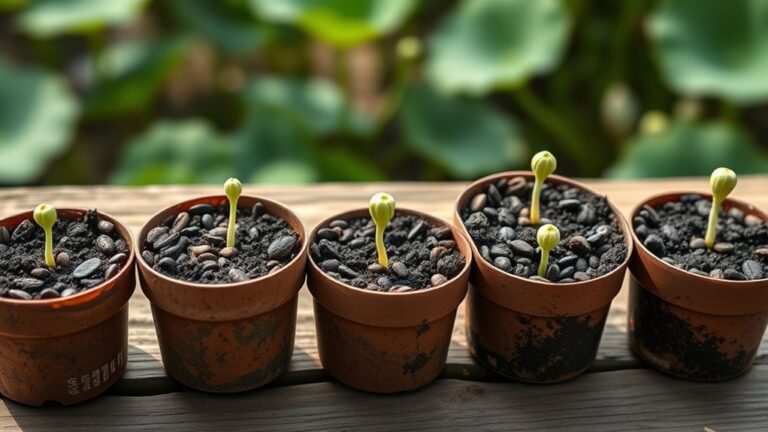
Once you’ve chosen your seeds, focus on planting depth. Usually, plant sunflower seeds about 1 to 2 inches deep. This helps protect them from birds and wind and makes sure they have enough soil contact to germinate well.
Plant sunflower seeds 1 to 2 inches deep for better germination and protection.
Space the seeds based on how big the mature sunflower will be. Usually, 6 inches apart for smaller types and up to 24 inches for larger ones. Clear the planting area of weeds and loose soil to make a good seed bed.
Plant the seeds with the pointed end facing down and cover them lightly with soil. When you do this, you set a solid foundation for healthy, vigorous sunflowers.
Water, Fertilize, and Provide Sunlight for Sunflowers
After planting sunflower seeds at the right depth and spacing, providing proper water, fertilization, and sunlight will help ensure healthy growth. Use watering techniques like watering deeply but less often to encourage strong roots.
Keep the soil consistently moist but not waterlogged, especially during germination and early growth. Sunflowers need at least six hours of direct sunlight each day, so place your plants in a sunny spot to maximize growth.
Fertilize sparingly with a balanced, slow-release fertilizer to supply essential nutrients without overfeeding. Avoid overwatering or letting the soil dry out completely, as both can slow down growth.
Regularly check soil moisture and adjust your watering accordingly. Giving your sunflowers enough sunlight and managing water and nutrients carefully will help them grow tall and produce vibrant blooms.
Support Tall Sunflowers and Prevent Damage
As sunflowers grow taller, supporting their sturdy stems becomes really important to prevent damage from wind or heavy blooms. Using stakes is an effective way to keep your sunflowers upright.
Insert stakes into the soil near each plant early on, and gently tie the stems to the stakes with soft ties or cloth strips. This helps keep the plants stable without hurting the stems.
Wind protection is also key. Try placing your sunflowers in a sheltered spot or create a windbreak with fencing or other plants around the area.
Check the ties regularly to make sure they aren’t constricting as the stems grow. Proper support helps stop the plants from toppling over or breaking, especially during storms.
Deal With Pests and Diseases in Your Sunflowers
Supporting your sunflowers with stakes and windbreaks helps keep them healthy and strong, but it’s just as important to protect them from pests and diseases that could threaten their growth. Staying vigilant and acting quickly is key.
Encourage natural predators like ladybugs and beneficial nematodes to control aphids and beetles naturally. These helpful insects can do a lot to keep pests in check.
Invite ladybugs and beneficial nematodes to naturally control aphids and beetles, keeping your sunflowers healthy.
Apply organic treatments such as neem oil or insecticidal soap at the first sign of trouble. Doing this early can prevent pest outbreaks before they get out of control.
Maintain garden hygiene by removing diseased leaves and debris. This simple step helps reduce the chances of fungal infections and bacterial diseases taking hold.
When and How to Harvest Sunflower Seeds
Knowing the right time to harvest sunflower seeds ensures you get the best flavor and viability. Watch for seed maturation; seeds are ready when the back of the sunflower head turns yellow or brown, and the seeds feel firm.
To check if they’re ripe, gently rub a seed. If it’s black and loose, it’s time to harvest. Use proper harvesting techniques to avoid damaging the seeds.
Here’s a simple guide:
| Stage of Maturation | Visual Clues | Harvesting Technique |
|---|---|---|
| Immature | Green back, soft seeds | Wait until seeds turn black |
| Ripe | Yellow or brown back, firm seeds | Cut the head and dry it in a warm, dry place |
| Overripe | Seeds falling out, mold | Collect seeds immediately |
Once they’re ready, cut the head and dry it in a well-ventilated area for several days.
Frequently Asked Questions
What Are the Ideal Planting Zones for Sunflowers?
You can plant sunflowers in USDA zones 2 through 11, depending on the variety. For the best growth, pick sunflower types that suit your climate.
Plant seeds about 1 to 2 inches deep, making sure they get plenty of sunlight. If you’re in a cooler zone, start seeds indoors; in warmer zones, direct sow in spring.
Choosing the right planting depth and variety helps ensure healthy, tall sunflowers.
How Long Does It Take for Sunflowers to Bloom?
Sunflowers usually bloom between 70 and 100 days after you plant them, depending on the variety.
If you go for early-blooming types, you might see flowers in about 70 days. Larger, late-blooming varieties can take up to 100 days to bloom.
The blooming season varies by type, with some sunflowers flowering in mid-summer and others in late summer or early fall. This makes for a colorful display throughout the warm months.
Can Sunflowers Grow in Containers or Small Spaces?
Yes, sunflowers can grow in containers or small spaces. Just pick a large pot with drainage holes and use good-quality soil.
Choose dwarf or compact sunflower varieties that are suited for smaller spaces. Place your container somewhere sunny that gets at least 6-8 hours of direct sunlight daily.
Water regularly to keep the soil moist but not waterlogged. With the right care, you can enjoy vibrant sunflowers even in limited space.
Are There Any Specific Companion Plants for Sunflowers?
Did you know that planting companion plants can boost sunflower growth by up to 20%? For pest control and healthy soil preparation, consider planting marigolds nearby. They naturally repel pests.
Sunflowers also thrive with beans, which fix nitrogen in the soil and promote stronger growth. These companions help protect your sunflowers from pests and improve soil quality.
Together, they ensure vibrant blooms and a thriving garden.
How Do I Save Sunflower Seeds for Planting Next Year?
To save sunflower seeds for next year, start by harvesting seeds once the back of the flower head turns brown and the seeds are plump.
Use harvesting techniques like cutting the seed head and drying it in a paper bag.
For seed storage, make sure seeds are completely dry, then store them in an airtight container in a cool, dark place.
Proper seed storage keeps your sunflower seeds viable for future planting seasons.
Conclusion
As you nurture your sunflowers from seed to bloom, remember they symbolize resilience and hope. They remind us that patience and care can turn tiny beginnings into radiant giants.
Each stage of growth mirrors your own journey of perseverance. Watching your sunflowers grow is a testament to the power of consistent effort and dedication.
When you finally harvest those seeds, you’re not just gathering food. You’re harvesting the fruits of your commitment and care.
Let your sunflowers stand tall as a symbol of your dedication. They inspire you to face life’s seasons with unwavering optimism and strength.