Step-by-Step Guide to Do You Plant Seeds in Minecraft
Many Minecraft players struggle with setting up efficient farms, especially when it comes to planting seeds and growing crops. If you’ve ever felt unsure about the right steps or wasted time figuring it out, you’re not alone.
Getting your farm just right can seem tricky at first, but with a little guidance, you’ll be harvesting in no time.
To plant seeds in Minecraft, first find and gather seeds by breaking tall grass in lush biomes or checking chests.
Prepare the soil by using a hoe on grass blocks to create farmland near water for hydration.
Plant your seeds on the tilled soil, making sure they stay moist for faster growth.
Keep your crops cared for with proper lighting and water, and you’ll soon harvest your bounty.
Continue exploring to uncover tips on automating and expanding your farm.
Key Takeaways
- Find and gather seeds by breaking tall grass or exploring chests in villages or shipwrecks.
- Prepare farmland by using a hoe on grass blocks and make sure it’s near water to keep it hydrated.
- Plant seeds on tilled soil by right-clicking or using the interact button.
- Keep your crops hydrated and make sure they get enough light for the best growth.
- When your crops are fully grown, harvest them and replant to keep your farm sustainable.
How to Find and Gather Seeds in Minecraft
To find and gather seeds in Minecraft, start by exploring the world and looking for grass blocks. Seeds are usually found by breaking tall grass or grass blocks in plains, forest, or swamp biomes.
When you break tall grass, there’s a chance you’ll get wheat seeds, which are essential for farming. Grass blocks, especially in lush areas, are the main spots to find seeds, so focus your efforts there.
You can also find seeds in chests in villages or shipwrecks, but gathering from natural terrain is the easiest method. Keep an eye out for grass patches and use your hand or a tool to break tall grass to get more seeds.
Choosing the Best Location to Plant Your Crops
Choosing the right spot to plant your crops is key to a successful farm in Minecraft. Look for a place with plenty of sunlight, easy access to water, and minimal mob interference.
Flat land is best because it makes planting and harvesting much easier. To boost your farm’s productivity, try crop rotation. Growing different crops helps prevent soil from losing nutrients and keeps pests away.
Companion planting is also helpful. For instance, planting carrots near potatoes can improve their growth rates.
| Ideal Features | Benefits |
|---|---|
| Sunlight exposure | Ensures healthy crop growth |
| Water source | Keeps soil moist without manual watering |
| Flat terrain | Simplifies planting and harvesting |
Picking a well-lit, accessible location and using good crop management techniques like crop rotation and companion planting will set your farm up for success and lead to plentiful harvests.
How to Prepare the Soil for Growing Crops
Before planting, preparing the soil ensures your crops grow strong and healthy. In Minecraft, knowing soil types is key. Grass blocks turn into farmland when you use a hoe, making them suitable for planting crops.
For better yields, consider using hydrated farmland by sprinkling water nearby. This keeps the soil moist and helps your crops grow faster. Different soil types, like sand or gravel, aren’t good for traditional crops and need special conditions.
To keep the soil productive, practice crop rotation. Growing different crops in the same spot prevents soil from wearing out and reduces pests. For example, plant wheat one season and potatoes the next to keep nutrients balanced.
Always prepare your soil properly by hoeing the area and making sure it stays moist. Good soil preparation sets a solid foundation for successful farming and maximizes your crop yields in Minecraft.
How to Plant Seeds in Minecraft : Step by Step
First off, you’ll want to gather some seeds — whether it’s wheat, carrots, potatoes, or any other crop — and make sure you’ve got the right tools like a hoe and some water nearby. Once you’ve got everything ready, find a patch of dirt or farmland and use the hoe to till the soil, turning it into a suitable planting spot.
Now, plant your seeds on the prepared soil, making sure it’s close to a water source. Seeds need to be near water to grow properly, so placing them next to a pond, river, or irrigation system helps speed things up. After planting, just wait patiently and keep an eye on your crops.
With some time and the right conditions, your seeds will grow into mature crops. Once they’re fully grown, you can harvest them and enjoy your fresh produce — it’s like having a mini farm right in your game!
Gathering Necessary Materials
To plant seeds in Minecraft, you first need to gather the essential materials. This includes different seed types like wheat, carrots, or potatoes, depending on what you want to grow.
You’ll also need tools like a hoe to prepare the soil and a water source nearby to keep your crops hydrated.
Here’s a quick overview of what you’ll need:
| Material | Purpose |
|---|---|
| Seeds (wheat, carrots, potatoes) | Planting and growing crops |
| Hoe | Tilling soil |
| Water bucket | Hydrating farmland |
| Shovel | Clearing land |
| Food | Staying nourished during farming |
Gather these materials, and you’re all set to start your farm in Minecraft.
Planting and Growing Seeds
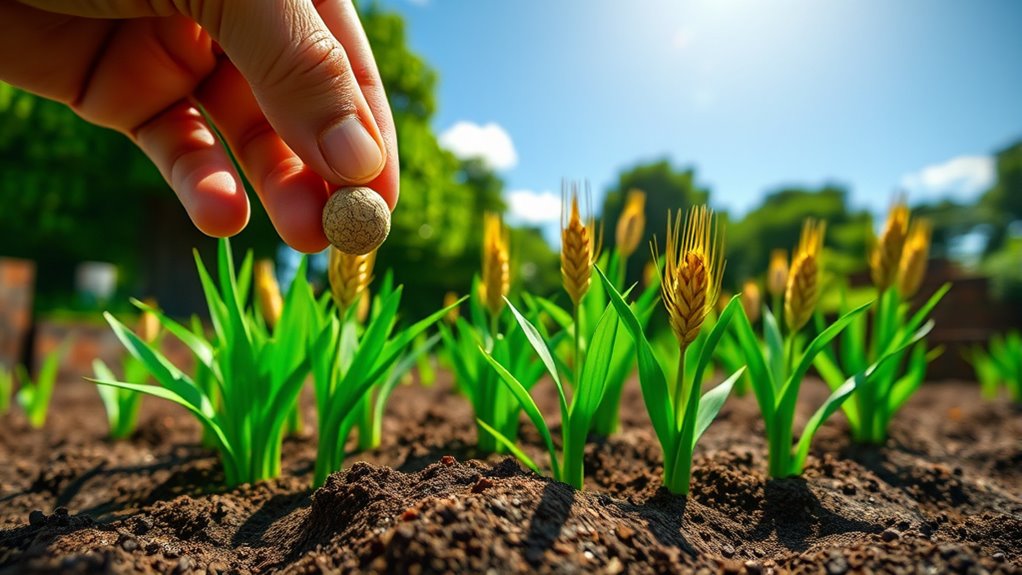
Once you’ve prepared your farmland with a hoe and water, it’s time to plant your seeds. Different seed types, like wheat, carrots, or potatoes, each have specific planting needs. Just select the seed in your hotbar, aim at the tilled soil, and right-click to plant.
To keep your crops healthy, practice crop rotation by switching seed types each season. This helps prevent soil depletion and pests. Watering your crops from a nearby water source also makes them grow faster.
Keep an eye on their progress; wheat, for example, takes about 3-4 in-game days to fully mature. Regularly harvesting mature crops encourages more planting and keeps your farm running smoothly.
With proper planting and crop rotation, you’ll build a successful, sustainable farm that keeps producing.
How to Water and Care for Your Crops
Watering your crops is essential for healthy growth, and it’s simpler than you might think. In Minecraft, keeping your crops hydrated improves their yield and speeds up growth. To do this effectively, consider these key tips:
- Use water sources strategically, placing them within four blocks of your crops to guarantee even watering.
- Practice crop rotation by alternating crop types, which helps prevent soil depletion and pests.
- Investigate irrigation techniques, such as creating channels or using waterlogged blocks, to automate watering and reduce manual effort.
Proper watering prevents your crops from withering and boosts their productivity. Combining efficient irrigation techniques with crop rotation maintains soil health and maximizes harvests.
How to Speed Up Crop Growth and When to Harvest
Want to speed up your crop growth? One way to do that is by using fertilizer wisely — it gives your plants the nutrients they need to grow faster. Also, make sure your crops are getting enough light; sunlight is crucial for healthy growth.
And don’t forget, timing your harvest is just as important. Keep an eye on your crops and wait until they’re fully grown before picking them. That way, you’ll get the maximum yield possible. Mastering these tips will help you farm more efficiently and gather resources quicker!
Use Fertilizer Effectively
Fertilizer is a powerful tool for speeding up crop growth in Minecraft, making farming more efficient and rewarding. By understanding fertilizer types and proper application, you can harvest sooner and maximize your yields.
Here are key tips to use fertilizer effectively:
- Choose the right fertilizer types, like bone meal, which instantly accelerates crop growth.
- Apply fertilizer directly to the crop block for quick results, making sure you don’t waste it on empty soil.
- Use fertilizer strategically on crops nearing maturity to trigger immediate harvests and boost your resource gain.
Optimize Lighting Conditions
Lighting is crucial for speeding up crop growth, especially at night or in shaded spots. Use effective light sources like torches, glowstone, or sea lanterns around your farm. This ensures your crops get the light they need for faster growth, even in low-light areas.
Practicing crop rotation by switching between different crop types helps keep the soil healthy and boosts your yield. Proper lighting not only speeds up growth but also stops mobs from spawning in your farm, keeping your crops safe.
Recognize Harvest Timing
Knowing the right time to harvest your crops is key to getting the best yield and top quality. Keep an eye on crop growth indicators like fully grown wheat or carrots turning their mature color, or pumpkins and melons reaching their full size.
To speed up growth, you can use bone meal or improve lighting conditions, especially during seasonal planting. These tips help your crops mature faster and more evenly.
Look for signs like crops hitting their full maturity in color and size. Also, watch for leaves that start to yellow or wilt slightly, which can indicate readiness.
Make sure there are no pests or diseases affecting your plants, as these can stunt growth or harm the harvest. Harvesting at the right moment ensures your produce is of the highest quality and quantity.
Getting it right makes your farming efforts more efficient and rewarding.
Top Tips to Avoid Common Farming Mistakes
To guarantee a successful farm in Minecraft, it’s important to recognize and avoid common mistakes that can stop your crops from growing well. One key tip is practicing crop rotation; planting different crops in the same spot helps prevent soil from wearing out and keeps pests at bay.
Avoid planting the same crop repeatedly in one area, as this can lower your yields over time. Pest management is also crucial—regularly check your farm for pests like rabbits or insects, and take steps to keep them away, such as creating barriers or using specific plants as deterrents.
Make sure your farmland is well-irrigated with water sources nearby because dry soil can stunt growth. Overcrowding crops can limit space and sunlight, so give each plant enough room to thrive. By rotating crops, managing pests effectively, and spacing your plants properly, you’ll keep your farm productive and avoid setbacks.
How to Use Crops for Food and Crafting
Once your crops start growing, you’ll want to harvest them regularly to keep your hunger bar full and your energy up. It’s pretty satisfying to see those plants mature and know you’re getting the most out of them. Plus, harvesting at the right time means you get the maximum yield, so it’s worth paying attention to their growth stages.
And don’t forget, those crops aren’t just for eating. You can also turn them into all sorts of handy items. For example, wheat can be baked into bread to restore hunger, and other crops can be used in brewing potions or crafting different tools. So, managing your crops well can really give you a lot of benefits both in survival and crafting!
Planting Crops Effectively
Planting crops strategically ensures a steady food supply and access to important crafting materials. To get the best yields, try these key steps:
- Practice crop rotation by planting different crops each season. This helps keep the soil healthy and prevents it from losing nutrients.
- Use fertilization, such as wheat or beetroot, to help your crops grow faster and make the soil more fertile.
- Space your crops properly so they have enough air circulation. This helps prevent diseases and keeps them healthy.
Harvesting for Food
Harvesting crops efficiently is crucial for turning your hard-earned produce into nourishing food and useful crafting materials. When you gather mature crops like wheat, carrots, or potatoes, you can immediately use them in cooking recipes to restore hunger and health.
To maximize your harvest, use a hoe to replant seeds quickly and keep your farm productive. Proper food preservation prevents spoilage and guarantees a steady supply, so consider drying or storing excess crops for later use.
You can also craft bread, carrot stew, or baked potatoes for quick meals. Efficient harvesting not only fuels your adventures but also provides ingredients for crafting useful items, like fermented spider eyes or pumpkin pie, making your farm an essential resource for survival.
Crafting With Crops
Crops in Minecraft aren’t just for eating; they also serve as essential ingredients in crafting a variety of useful items. You can use wheat, carrots, and potatoes to craft food, but they also play a role in other recipes.
For example, wheat is key for making bread, and both carrots and potatoes can be used in brewing or as villager trades. To maximize crop yields, practice companion planting by placing different crops together, which can improve growth rates.
Rotate your crops regularly to prevent soil exhaustion and pests, just like in real farming. This crop rotation helps maintain a healthy farm.
Mastering crop usage in crafting boosts your survival skills and allows for more efficient resource management.
Automating Watering and Harvesting Your Farm
To save time and effort, automating the watering and harvesting process can make your farm much more efficient. Using automated systems and irrigation techniques helps keep crops hydrated without manual work.
Installing dispensers and redstone mechanisms allows water to flow periodically, maintaining consistent moisture levels. This way, your crops stay healthy with minimal effort on your part.
For harvesting, using pistons or villager-based farms can automatically collect ripe crops, boosting productivity. It’s a simple way to gather your yields faster and more reliably.
Don’t forget to include crop rotation strategies. They help prevent soil depletion and keep your soil healthy, which maximizes your farm’s overall yield.
Tools like observers and timers are great for syncing watering and harvesting cycles. They make sure everything happens at the right time without you having to manage every step manually.
| Automation Technique | Purpose |
|---|---|
| Redstone dispensers | Automate watering with minimal effort |
| Pistons and villagers | Automate crop harvesting efficiently |
| Crop rotation | Maintain soil health and maximize yield |
| Timers and observers | Coordinate watering and harvesting tasks |
Expanding Your Farm: From Small Garden to Large-Scale Agriculture
Expanding your farm from a small garden to large-scale agriculture takes some careful planning and the right infrastructure. To be successful, focus on efficiency, crop rotation, and sustainable practices.
Start by designing diverse plots to prevent soil depletion and keep your soil healthy. Mixing things up helps maintain a good balance of nutrients and reduces the risk of pests.
Next, implement crop rotation by alternating crops like wheat, carrots, and potatoes. This reduces disease and boosts your yields over time.
Finally, build irrigation systems and storage facilities to support your larger operation. These will help you farm sustainably and ensure your crops stay healthy.
Frequently Asked Questions
Can I Grow Crops Underwater in Minecraft?
Yes, you can grow crops underwater in Minecraft, but it’s a bit tricky. For underwater farming, you need to create an air pocket or use bubble columns to provide oxygen.
You can plant crop types like wheat, carrots, or potatoes in farmland blocks, but they won’t grow if submerged in water. Building underwater farms with careful planning allows you to harvest crops efficiently without losing access to essential resources.
What Are the Best Tools for Harvesting Crops Efficiently?
Think of your tools as the keys to efficient farming. Nothing beats a good hoe for crop harvesting in Minecraft.
A diamond or netherite hoe speeds up your crop harvesting, making the process swift and effortless.
Using enchanted tools boosts efficiency even more, turning farming into a breeze.
With the right tools, you’ll turn your farm into a well-oiled machine, maximizing crop yields and making your Minecraft life easier.
How Do Biome Types Affect Crop Growth?
Biome types directly impact crop growth because soil fertility varies, and climate effects influence planting success. In lush biomes like plains or forests, crops grow faster thanks to richer soil and milder temperatures.
On the other hand, in desert or tundra biomes, poor soil fertility and extreme climates slow growth or even prevent planting altogether.
Understanding these factors helps you pick the best spots for your farms and get the most out of your crops.
Can Crops Grow Without Direct Sunlight?
Crops can’t grow without sunlight; it’s like trying to grow a tree in the dark—impossible! But with shade farming, you can still cultivate crops by using artificial light sources like torches or glowstone.
These lights mimic sunlight, helping your crops thrive even in shadowy spots. So, while direct sunlight is essential for natural growth, artificial light makes it possible to farm anywhere, anytime, regardless of the sun’s position.
Are There Ways to Protect Crops From Pests or Mobs?
Yes, you can protect your crops from pests and mobs in Minecraft. Using crop rotation helps prevent pest infestations and keeps your farm healthy.
Building fences or walls around your crops acts as a physical barrier, stopping mobs from getting in. Placing pest deterrents like cats can also scare away creepers.
Lighting is another good trick. It stops hostile mobs from spawning nearby and damaging your crops. These strategies all help keep your crops safe and thriving.
Conclusion
Now that you know how to plant seeds and care for your crops, you’re ready to start your own farm in Minecraft. Imagine your farm growing lush and abundant, just like a beautifully tended garden in real life.
Just as a farmer’s patience leads to a bountiful harvest, your dedication will pay off with plenty of food and resources. So get planting, experiment, and watch your Minecraft farm flourish.
Your pixelated paradise awaits—happy farming!