7 Simple Steps to Successfully Plant Lawn Grass Seed
Many homeowners dream of a lush, green lawn but often feel overwhelmed by the process of planting grass seed. You’re not alone—lots of people struggle with getting that perfect, healthy yard to grow.
The good news is, with a few simple steps, you can turn your lawn into a beautiful oasis.
To successfully plant lawn grass seed, start by evaluating your lawn and soil conditions, fixing issues to improve germination.
Next, prepare your soil by testing, amending, and tilling, then choose the right seed for your climate and soil type.
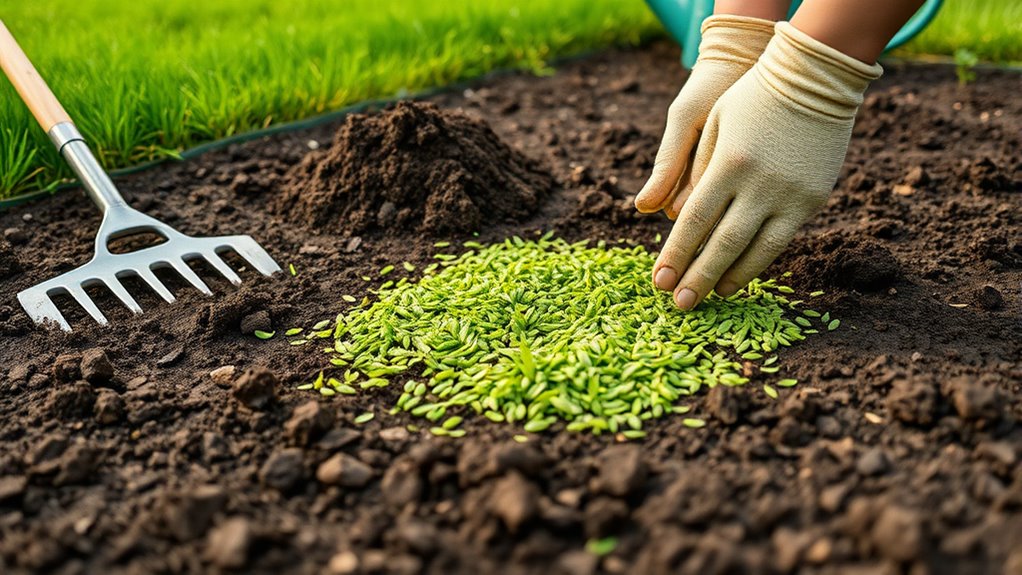
Spread the seed evenly and lightly rake for good contact, then water consistently to keep the soil moist.
Mow, fertilize, and maintain your lawn properly for a lush, healthy look.
For detailed tips, keep exploring these steps.
Key Takeaways
- Assess and improve your soil conditions to give your seeds the best chance to germinate.
- Prepare and level the soil to create a smooth, debris-free surface for planting.
- Choose a grass seed that fits your climate and soil type.
- Sow the seeds at the recommended depth and spacing to ensure even coverage.
- Keep the soil consistently moist until your grass is well established.
Assess Your Lawn and Soil Conditions
Before planting new grass seed, take time to analyze your lawn and soil conditions to give your grass the best start. First, look at your lawn’s overall health—check for bare patches, weeds, or compacted spots. Healthy lawns usually have good color and full coverage.
Next, do a soil test to find out the pH level and nutrient content. This shows if your soil is too acidic or alkaline and if it needs amendments. Knowing this helps you choose the right grass seed for your conditions.
Poor soil quality or an unbalanced pH can make it hard for seeds to germinate and grow well. By checking your lawn and testing your soil early, you can spot issues before planting. This way, your new grass has a better chance to develop strong roots and thrive.
Taking these steps sets a solid foundation for a lush, vibrant lawn that will last.
Prepare Your Soil for Seeding: Testing, Amendments, and Tilling
To make sure your soil is ready for seeding, start by testing its pH level and nutrient content. Knowing the pH helps you figure out if you need to add amendments to create the best conditions for plants.
Measuring nutrient levels shows what fertilizers or organic matter might be needed to boost soil fertility. After testing, you can make targeted amendments to balance the soil.
Tilling the soil helps mix these amendments evenly and loosens the ground for better seed contact and root growth. This step ensures your soil is in great shape for planting.
Choose the Best Grass Seed for Your Climate and Soil
Choosing the right grass seed really comes down to your climate and soil type. It’s all about matching the seed’s needs for temperature and moisture with what’s actually happening in your yard. When you get this right, your lawn has a much better shot at thriving with less hassle.
Climate Compatibility Factors
Selecting the right grass seed depends heavily on your climate and soil conditions. Knowing your climate zones and seasonal changes helps your lawn thrive. Different grass types do best in specific climates, whether you’re in a cool, temperate, or warm zone.
Seasonal changes like hot summers or cold winters also affect which seeds will grow successfully. Think about how your area’s temperatures fluctuate throughout the year.
Consider these factors: how well the grass adapts to your climate zone, its tolerance for seasonal temperature swings, resistance to local pests and diseases, and suitability for your area’s rainfall patterns.
Matching your grass seed to these factors will lead to better germination, healthier growth, and a lush, resilient lawn that suits your environment.
Soil Type Considerations
Your soil type plays an essential role in determining which grass seed will thrive in your yard. Sandy soils drain quickly but often lack nutrients and organic matter, so choose drought-tolerant grasses for these conditions.
Clay soils tend to compact easily, reducing soil drainage and aeration. Select grass varieties suited for heavier, more compacted soils.
Loamy soils offer a balanced mix of sand, silt, and clay, providing ideal nutrient content and good drainage. This makes them perfect for most grass types.
Check your soil’s pH levels to match grass requirements. Most grasses prefer a neutral pH.
Improving soil with organic matter can boost nutrient content and reduce compaction. Understanding your soil’s characteristics helps you choose the best grass seed for your climate and conditions.
This knowledge leads to a healthier, more resilient lawn.
Seed Your Lawn Properly and Effectively
To guarantee successful lawn establishment, proper seed placement is essential. You need to pay attention to seed depth and seed spacing to ensure even germination and healthy growth. Plant the seeds at the right depth, usually about 1 to 2 times the seed’s diameter, to prevent them from drying out or being buried too deep.
Maintaining proper seed spacing helps avoid overcrowding, which can lead to competition for nutrients and water. Keep seed depth consistent across the entire area and space seeds evenly, following recommended guidelines for your grass type.
Raking lightly after seeding is important to guarantee good seed-to-soil contact. Avoid over-seeding, as it can cause clumping and poor growth. Following these steps will give your grass seed the best chance to sprout and grow into a lush, healthy lawn.
Water and Care for Your New Grass Seed
After planting your grass seed properly and ensuring good seed-to-soil contact, the next step is to keep the soil moist to help the seeds germinate. Regular watering encourages seedlings to grow and helps establish strong roots.
Use gentle watering methods, like a fine spray or light sprinkling, to avoid washing away the seeds or compacting the soil. Keep the top inch of soil consistently moist, especially during the first two weeks.
Check frequently, especially in hot or windy weather, and water as needed. Once the grass starts to sprout, gradually reduce how often you water but increase the depth of each watering to promote deep roots.
Proper watering supports healthy seedling growth and ensures even germination across your lawn. Staying consistent with moisture is key to developing a lush, green yard.
Avoid Common Seeding Mistakes
Even experienced gardeners can make mistakes when seeding their lawns, but recognizing and avoiding these common pitfalls can save you time and effort. One key mistake is planting seeds too deep; this prevents proper germination. Conversely, planting too shallow leaves seeds vulnerable.
Pay close attention to the recommended seed depth for your grass type. Timing also matters—seeding during the right season ensures optimal growth. Avoid planting too early or late, as this can expose seeds to bad weather or pests.
Neglecting soil preparation can also hinder seed contact and growth. Make sure your soil is properly raked and leveled before seeding. Lastly, don’t skip watering—keeping the soil evenly moist is essential for good germination.
Tips for Growing Thick, Healthy Grass
If you want your grass to grow thick and healthy, the first thing you should do is get the soil just right. Loosen it up and add some nutrients before you even put down the seeds. Trust me, starting with good soil makes a huge difference!
Once you’ve seeded, keep the soil consistently moist by watering regularly. This helps the seeds germinate and gives the roots a great place to settle in. Following these simple steps will give you a lush, strong lawn that you can be proud of.
Proper Soil Preparation
Before you spread your grass seed, it’s crucial to properly prepare the soil to guarantee healthy, thick growth. Start by testing your soil’s pH; the ideal lawn soil has a pH between 6.0 and 7.0. Adjust the pH if needed using lime or sulfur.
Next, check the nutrient balance—add compost or fertilizer to make sure your soil provides vital nutrients like nitrogen, phosphorus, and potassium. Loosen compacted soil by aerating or tilling to improve root penetration.
Finally, remove debris, weeds, and rocks to create a smooth, even surface for seed contact. Proper soil prep sets your lawn up for success from the start.
Consistent Watering Routine
Establishing a consistent watering routine is key to growing thick, healthy grass. You want to keep the soil moist without overdoing it. Usually, watering once or twice a day—early morning and late afternoon—works well to maintain the right moisture level.
This helps prevent the soil from drying out and encourages strong root growth. Keep an eye on the weather—more watering might be needed during hot, dry periods, and less after rain. Consistent moisture ensures the seed germinates properly and grows into lush grass.
Avoid irregular watering, as it can slow growth or create patchy areas. With a proper routine, your lawn will develop into a resilient, green carpet of grass.
Frequently Asked Questions
How Long Does It Take for New Grass Seed to Establish?
New grass seed usually takes about 7 to 21 days to establish, depending on things like soil temperature and moisture levels. During germination, you’ll see tiny sprouts poking through the soil surface.
After that, the growth timeline can vary. Some grass types grow faster and can turn into a lush lawn in about 4 to 6 weeks. With proper watering and care, your grass will develop into a healthy, green lawn quickly.
What Are Natural Alternatives to Chemical Fertilizers?
Think of your lawn as a living canvas, needing only nature’s paints. Natural alternatives to chemical fertilizers include organic compost and nutrient-rich soil, which nourish your grass without harsh chemicals.
These options boost soil health, support beneficial microbes, and promote lush growth. Using natural fertilizers transforms your lawn into a vibrant, eco-friendly paradise, making you proud of a healthy, thriving yard nurtured by nature’s own remedies.
Can I Seed My Lawn in Winter or During Rainy Seasons?
You can seed your lawn during winter or rainy seasons, but it takes some careful planning. Winter seeding works in milder climates, so pick cold-tolerant grass types.
During rainy seasons, you might face problems like soil erosion and oversaturation. Make sure your yard has proper drainage and avoid over-seeding.
Timing is key. Wait for the right weather conditions to give your grass the best chance to establish and grow healthy.
How Do I Prevent Pests From Damaging New Grass?
Think of pests like tiny invaders trying to ruin your lush lawn. To prevent damage, spot pests early through pest identification. Then, use organic repellents like neem oil or garlic spray to naturally keep them away.
Make a habit of inspecting your grass regularly, especially after rain or watering. Removing debris that attracts pests also helps keep them at bay.
Staying vigilant is key to helping your new grass grow strong. It’s like building a fortress that keeps unwanted visitors out and your lawn healthy.
What’s the Best Way to Reseed Thin or Bare Patches?
To reseed thin or bare patches, start by preparing the soil. Remove debris and loosen the soil to give the seeds a good chance to take root.
Pick a high-quality seed that’s suited to your climate and sun exposure. This helps ensure better growth and a more uniform lawn.
Spread the seed evenly over the area, then lightly cover it with soil or compost. This protects the seeds and keeps moisture in.
Water the area thoroughly and keep the soil consistently moist. Regular watering is key to helping the grass establish.
With proper soil prep and seed choice, your new grass will grow quickly and blend seamlessly with the existing lawn.
Conclusion
So, after all that effort, you might think your lawn will thrive effortlessly. But surprise—success depends on your attention to detail and patience.
Even with perfect steps, nature loves to throw curveballs. So, enjoy the journey, welcome the little setbacks, and remember your lush, green paradise might just be a season away or maybe a few.
Either way, you’ve got this. Who knew that grass could teach us so much about persistence?