How to Take Chia Seeds: A Beginner’s Guide
Many people want to boost their health but struggle to find simple, effective ways to do so. If you’re looking for an easy addition to your diet, chia seeds might be just what you need. You’re not alone—many find incorporating superfoods like these can be tricky at first, but it gets easier with a little guidance.
To start taking chia seeds, measure 1 to 2 tablespoons daily and soak them in water, juice, or milk for 15-30 minutes to create gel, which makes them easier to digest. You can also sprinkle them on oatmeal, yogurt, or add to smoothies for extra nutrition.
Be sure to drink plenty of water, as they absorb liquid and expand.
Keep exploring for more tips to boost their health benefits and enjoy them in various ways.
Key Takeaways
- Soak chia seeds in water, juice, or milk for 15-30 minutes until they form a gel that’s easier to digest.
- Aim for 1-2 tablespoons daily, but feel free to adjust based on your dietary needs.
- Add chia seeds to smoothies, yogurt, oatmeal, or salads for a quick and easy boost.
- Using soaked or ground seeds can help you get the most nutrients and flavor.
- Keep an eye on your intake to avoid digestive discomfort and make sure to stay well-hydrated.
Are Chia Seeds Really That Healthy?
Are chia seeds really that healthy? Many people wonder about the true benefits behind these tiny seeds. Chia seed benefits include high fiber content, omega-3 fatty acids, and antioxidants that support your overall health. They can boost your digestion, help stabilize blood sugar, and even promote heart health.
However, some chia seed myths circulate, like the idea that they’re a miracle cure or that you need huge amounts to see benefits. That’s not true. While they’re nutritious, they work best as part of a balanced diet.
Some believe chia seeds are a miracle cure, but they’re best as part of a balanced diet.
You don’t need to overdo it—small servings can still make a difference. Remember, no food alone can solve every health problem. By understanding the real chia seed benefits and dispelling common myths, you can confidently include them in your daily routine.
Knowing they’re a smart addition, not a magic fix, is key to making the most of their benefits.
What Are Chia Seeds and Why Are They a Superfood?
Chia seeds are these tiny little powerhouses packed with all sorts of good stuff like fiber, omega-3 fatty acids, and antioxidants. They might be small, but they really pack a punch when it comes to health benefits. That’s part of why they’re often called a superfood!
Because of their unique mix of nutrients, chia seeds are super versatile and easy to add to your diet. Whether you sprinkle them on yogurt, toss them into smoothies, or mix them into oatmeal, they’re a simple way to boost your nutrition without much effort.
Nutritional Composition Highlights
These tiny seeds pack a powerful nutritional punch, making them a popular choice for health-conscious individuals. Chia seeds are incredibly nutrient-dense, so you get a lot of benefits in just a small serving.
They’re rich in fiber, which helps with digestion and keeps you feeling full. Chia seeds also contain a good amount of omega-3s, essential fats linked to heart health and brain function.
Plus, they provide protein, calcium, magnesium, and antioxidants—all of which support your overall wellness. Because of their dense nutrient profile, just a small spoonful can significantly boost your daily intake of essential nutrients.
Their versatility makes it easy to incorporate them into your diet. With such focused nutrition, chia seeds truly earn their superfood status.
Health Benefits Overview
Chia seeds are a true superfood because they pack a powerful punch of nutrients and health benefits. You’ll notice that they can help improve digestion, support your heart, and boost your energy levels.
There are many myths about these tiny seeds, but their proven benefits are backed by research. When you add chia seeds to your diet, you get fiber, omega-3s, antioxidants, and protein in small amounts.
These nutrients help reduce inflammation, regulate blood sugar, and support weight management. It’s important to tell fact from fiction—despite the myths, chia seeds are a safe and nutritious addition to your diet.
Understanding their benefits allows you to make smarter choices for your overall wellness. Including chia seeds in your daily routine can help you enjoy their superfood qualities and improve your health.
Unique Superfood Qualities
What makes chia seeds stand out as a superfood is their incredible nutrient density packed into tiny, easy-to-eat seeds. Their superfood roots go back to ancient civilizations like the Aztecs, who appreciated their health benefits.
Chia seeds have unique nutrients such as omega-3 fatty acids, fiber, protein, and antioxidants. These nutrients help support heart health, digestion, and sustained energy levels.
The table below highlights some key superfood qualities:
| Nutrient | Benefits | Food Sources |
|---|---|---|
| Omega-3s | Reduce inflammation, boost brain function | Chia, flaxseeds |
| Fiber | Improve digestion, promote fullness | Whole grains, fruits |
| Protein | Build muscles, repair tissues | Legumes, nuts |
| Antioxidants | Fight free radicals, slow aging | Berries, dark chocolate |
How Can I Prepare Chia Seeds for Eating?
Wondering how to prepare chia seeds for eating? The key is to make them easy to digest and versatile. You can create delicious chia seed puddings or chia gel to incorporate into your meals.
Making chia seeds easy to digest transforms them into versatile, nutritious additions to any meal.
Start by soaking the seeds in liquid—water, milk, or juice—for at least 15 minutes or overnight. This softens the seeds and forms a gel, making them easier to eat and digest.
Here are some simple ways to prepare chia seeds:
- Mix with liquid to create chia gel for smoothies or toppings
- Soak overnight for quick chia seed pudding
- Blend into smoothies for added texture
- Stir into yogurt or oatmeal for extra nutrition
These methods let you enjoy the seeds’ full potential and make them a easy addition to your diet. Preparing chia seeds ahead of time saves you effort and boosts their health benefits, turning them into a daily staple.
What’s the Best Way to Soak and Hydrate Chia Seeds?
To effectively soak and hydrate chia seeds, start by measuring out the amount you need and placing them in a clean container. Use about 1 tablespoon of chia seeds to 1 cup of water or your preferred liquid.
Stir the mixture well to prevent clumping and ensure the seeds are evenly hydrated. Let it sit at room temperature or in the fridge for 15 to 30 minutes for the best results.
During this time, the seeds will absorb the liquid and swell, forming a gel-like consistency. If you want a smoother texture, you can soak them longer, up to a few hours or overnight.
Remember to stir occasionally to prevent settling and clumping. Once fully hydrated, the chia seeds are ready to add to smoothies, puddings, or other recipes.
Proper soaking helps you get the full nutritional benefits and avoids choking hazards.
How Much Chia Seeds Should I Eat Daily?
You might want to aim for about 1 to 2 tablespoons of chia seeds each day. That way, you get all those beneficial nutrients without going overboard. But remember, everyone’s different, and your needs could change depending on your diet and health goals. So, feel free to adjust the amount to suit your lifestyle. And if you’re ever unsure or have health concerns, it’s a good idea to chat with a healthcare professional.
Recommended Daily Intake
Most adults can safely enjoy about 1 to 2 tablespoons (around 12 to 24 grams) of chia seeds daily. This amount fits well within recommended serving sizes and offers health benefits without overdoing it.
Keep in mind that the ideal amount varies based on your diet and health goals. To get the most benefits, try adding chia seeds to smoothies, yogurt, or oatmeal.
Monitoring your intake helps prevent digestive discomfort or potential side effects. Here are some tips to keep in mind:
- Stick to the recommended serving sizes to avoid overconsumption.
- Use chia seeds as a supplement, not a complete meal.
- Gradually increase your intake if you’re new to chia seeds.
- Stay hydrated, since chia absorbs water and expands in your stomach.
Adjusting for Personal Needs
While sticking to general guidelines is helpful, individual needs can vary based on your health, activity level, and dietary preferences. It’s important to listen to your body and adjust chia seed intake according to your personal tolerance.
Some people may experience digestive discomfort if they consume too many at once, so start with smaller amounts and increase gradually. Consider your dietary goals—if you’re aiming for more fiber or omega-3s, you might consume slightly more, but always stay within safe limits.
Your personal preferences also matter. If you prefer adding chia to smoothies or yogurt, that might influence how much you use daily. Ultimately, tailoring your chia seed intake guarantees you benefit from its nutrients without discomfort.
How Can I Easily Add Chia Seeds to My Diet?
Wondering how to incorporate chia seeds effortlessly into your daily meals? Adding them is easy and versatile.
You can sprinkle chia seed toppings on salads, oatmeal, or cereal to boost nutrition. For a quick snack, try energy bites or trail mix with chia seeds mixed in.
Stir them into your yogurt or yogurt parfaits for added crunch and health benefits. Soaking chia seeds overnight creates a gel that works great as pudding or a fruit topping.
You can also sprinkle dry seeds on soups or roasted vegetables for extra texture. These simple methods make adding chia seeds easy without much effort.
Whether as toppings or snacks, chia seeds can seamlessly fit into your routine, enhancing flavor and nutrition with minimal prep.
Chia Seeds in Smoothies, Yogurt, and Baking
Adding chia seeds to smoothies, yogurt, or baked goods is super easy and a great way to boost their nutrition. You can just blend them right into your favorite drinks or sprinkle them on top for a bit of crunch and texture.
When it comes to baking, chia seeds are pretty versatile too. You can use them as a substitute for eggs or just mix them into your batter to add extra fiber and a little bit of a chewy texture. It’s a simple swap that makes your treats a little healthier!
Incorporating Chia Seeds Smoothies
Incorporating chia seeds into smoothies is an easy way to boost their nutritional value and add a subtle, nutty flavor. You can blend chia seeds into a variety of smoothie combinations, enhancing both texture and health benefits.
For best results, experiment with flavor pairings like berries with citrus or banana with almond milk. Chia seeds absorb liquid, creating a thicker, creamier consistency that makes your smoothies more satisfying.
To maximize their benefits, let the mixture sit for a few minutes to allow the seeds to gel. You can also sprinkle them on top for added crunch.
Whether you prefer fruity, green, or protein-packed smoothies, chia seeds are a versatile ingredient that improves your drink’s nutrition and flavor profile.
- Berry and citrus blends for a tangy kick
- Banana and almond milk for creaminess
- Green smoothies with spinach or kale
- Protein-packed options with nut butters
Baking Tips With Chia
Using chia seeds in baking can boost both the nutrition and texture of your treats. You can swap eggs for a chia egg—just mix 1 tablespoon of chia seeds with 3 tablespoons of water and let it sit until it forms a gel.
This works really well in recipes like chia muffins, keeping them moist and hearty. Plus, chia seeds add a subtle crunch and more fiber to your baked goods.
For extra flavor, sprinkle them on top of muffins or stir them into the batter. Keep in mind that chia seeds absorb moisture, so you might need to tweak the liquids a bit.
Check out the table below to see how chia seeds can elevate different baked goods:
| Baked Good | Chia Tip |
|---|---|
| Chia Muffins | Use chia egg for binding |
| Cookies | Add whole or ground chia seeds |
| Bread | Mix into dough for moisture |
| Pancakes | Stir into batter before cooking |
| Muffins | Top with soaked chia seeds |
What Are the Risks and Side Effects of Eating Chia Seeds?
While chia seeds are generally safe for most people, eating them can come with some risks and side effects, especially if you don’t prepare or eat them properly. One concern is allergies, which can cause symptoms like skin rashes, swelling, or difficulty breathing.
Eating too many chia seeds or not drinking enough water may lead to digestive issues like bloating, gas, or constipation. Be mindful of these potential problems:
- Allergic reactions in sensitive individuals
- Digestive discomfort from eating too much
- Choking hazard if eaten dry and not soaked
- Possible interference with medication absorption
To reduce these risks, start with small portions and soak chia seeds before eating. Also, stay well-hydrated. If you notice any negative effects, cut back on your intake or talk to a healthcare professional. Proper preparation helps you enjoy chia seeds safely without unwanted side effects.
Tips for Maximizing the Benefits of Chia Seeds
To get the most benefits from chia seeds, it’s important to prepare and consume them correctly. For better absorption, soak chia seeds in water, juice, or milk for at least 15 minutes before eating. This softens the seeds and helps your body access their nutrients more easily.
You can also blend soaked seeds into smoothies or oatmeal to improve flavor without losing nutrition. Pairing chia seeds with vitamin C-rich foods like citrus or berries can boost mineral absorption, making them even more beneficial.
To improve flavor, try adding natural sweeteners, vanilla, or spices like cinnamon. Toasting or grinding the seeds slightly can also bring out a nuttier taste. Proper preparation not only maximizes nutritional benefits but also makes chia seeds tastier and more enjoyable to eat.
These tips help you get the most from every spoonful, supporting your health goals effectively.
Frequently Asked Questions About Chia Seeds
Have questions about chia seeds? You’re not alone. Many beginners wonder about storage, varieties, and how much to eat.
Chia seed storage is simple—keep them in an airtight container in a cool, dark place to stay fresh.
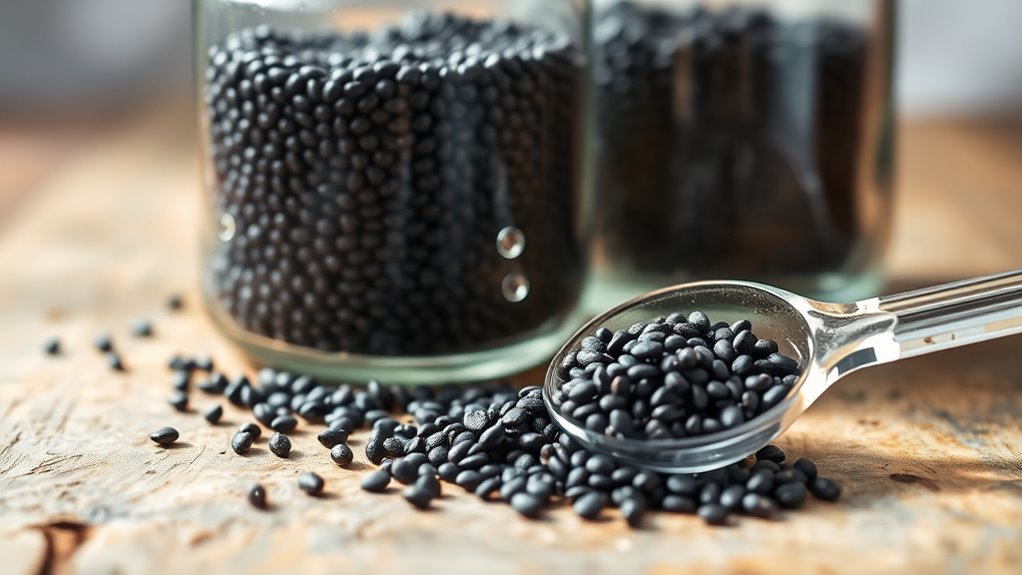
As for varieties, you’ll find black, white, and even flavored options, but they all offer similar health benefits.
Curious about serving sizes? About 1 to 2 tablespoons per day is typical.
Should you soak them? It’s best to soak or hydrate chia seeds before eating to help digestion and nutrient absorption.
And what about allergies? While rare, some people might be sensitive, so start with small servings.
Remember, trying different types and preparations can add variety to your diet and help you find what works best.
With proper storage and understanding of the options, chia seeds are a versatile and healthy addition to your routine.
Frequently Asked Questions
Can Chia Seeds Be Consumed by People With Allergies?
If you have chia seed allergies, it’s safest to avoid eating them because they can cause allergy symptoms like itching, swelling, or trouble breathing.
People with known seed allergies should talk to their doctor before trying chia seeds. Even if you’re not allergic, start with small amounts to see how your body reacts.
Always be careful, especially if you have a history of food allergies or sensitivities.
Are There Any Medications That Interact With Chia Seeds?
You should be aware that chia seeds can interact with certain medications, especially blood thinners and medications for blood sugar control. These interactions might either enhance or reduce the effectiveness of your meds.
It’s really important to talk to your healthcare provider before adding chia seeds to your diet. They can help you understand any potential risks based on your medications.
Always follow health precautions, and if you’re on medication, double-check for potential interactions to avoid any side effects.
How Should I Store Chia Seeds to Keep Them Fresh?
To keep chia seeds fresh, store them in an airtight container in a cool, dark place like your pantry. This helps maintain their quality and makes them last longer.
Their shelf life is about 2 to 4 years if stored properly. Just make sure to avoid sunlight or moisture, as these can cause the seeds to spoil faster.
Check your seeds regularly for any off smells or discoloration to ensure they stay fresh and safe to use.
Can Children Safely Eat Chia Seeds Regularly?
Imagine tiny, glossy chia seeds transforming a child’s snack into a nutrient boost. Yes, children can safely eat chia seeds regularly when given in moderation.
Their benefits include added fiber, omega-3s, and essential nutrients, making them perfect for chia seed recipes like pudding or smoothies. Always start with small amounts, guarantee they’re soaked to prevent choking, and consult a pediatrician if you’re unsure about allergies or specific health concerns.
Do Chia Seeds Have Any Impact on Blood Sugar Levels?
Chia seeds can positively impact blood sugar regulation by slowing digestion and preventing spikes after meals. Their high fiber content and healthy fats help keep blood sugar levels stable.
Including chia seeds in your diet may support better blood sugar control and boost your overall well-being. They also offer benefits like improved heart health and sustained energy.
Conclusion
Now that you’re familiar with how to incorporate chia seeds into your routine, think of them as a tiny treasure chest of health.
With a little patience and curiosity, you’ll discover how these humble seeds can subtly boost your well-being.
Just remember to start slow and enjoy the journey—like tending a small garden—watching your energy grow and your habits flourish.
Welcome chia seeds as your new, nutritious companion on the path to feeling your best.