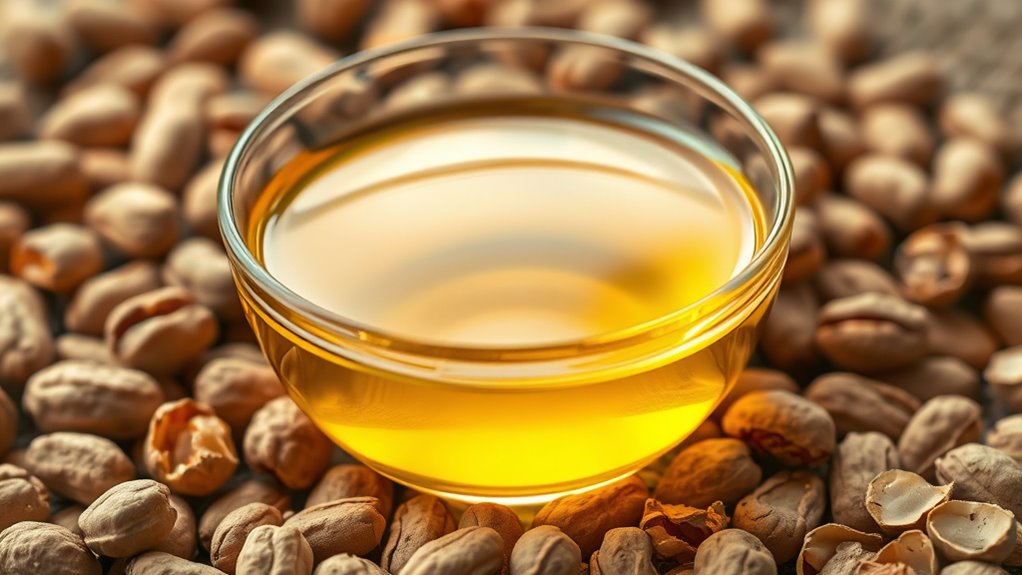
Determining if Peanut Oil Is a Seed Oil
Many people struggle with choosing the right oils for cooking and health. With so many options out there, it’s easy to get overwhelmed and unsure which to trust.
You can determine that peanut oil is a seed oil because it’s extracted from the seeds of the peanut plant (Arachis hypogaea).
Seed oils come from plant seeds, and peanuts are seeds, making their oil a seed oil. The extraction method—like cold pressing or solvent extraction—also confirms its classification.
If you want to learn more about how peanut oil compares with other seed oils and its uses, keep exploring further.
Key Takeaways
- Peanut oil is made from the seeds of the peanut plant (Arachis hypogaea).
- Seed oils come from plant seeds, including peanuts.
- How the oil is extracted—whether by cold pressing or using solvents—helps classify it as a seed oil.
- Botanically, peanuts are seeds, not nuts, which confirms that the oil is seed-based.
- The nutritional and cooking qualities of peanut oil match what you’d expect from typical seed oils.
What Are Seed Oils and How Are They Made?
Seed oils are plant-based oils extracted from the seeds of various crops and are commonly used in cooking and food processing. To understand seed oil definitions, it’s essential to know how they’re made. Extraction methods typically involve pressing or solvent extraction.
Cold pressing uses mechanical force to squeeze oil from seeds, preserving nutrients but yielding less oil. Solvent extraction involves soaking seeds in chemicals like hexane, then removing the solvent to get the oil. This method is more efficient and produces larger quantities of oil, but some prefer cold-pressed oils for their purity.
The choice of extraction impacts the oil’s flavor, nutrient content, and processing level. Regardless of the method, the goal remains the same: to efficiently extract edible oil from seeds while maintaining quality. Knowing these extraction methods helps you understand what’s in your seed oils and how they’re produced.
Is Peanut Oil a Seed Oil? The Key Facts
Peanut oil is often grouped with other seed oils because it comes from the seeds of a plant. Despite its name, it’s technically classified as a seed oil due to how it’s extracted. Its nutritional profile includes healthy monounsaturated fats, vitamin E, and antioxidants, making it a popular choice for cooking.
When it comes to cooking, peanut oil really shines because of its high smoke point and neutral flavor. It’s great for frying and sautéing without adding extra taste to your dishes. Here are some key facts:
- It provides healthy fats that support heart health.
- Its neutral taste works well in a variety of dishes, from stir-fries to baked goods.
- The oil’s stability at high temperatures makes it perfect for deep frying.
- Its nutritional profile offers antioxidants that may benefit overall health.
Knowing these facts helps explain why peanut oil is so versatile in the kitchen and why it’s considered a seed oil based on its source and properties.
Where Do Peanuts Come From? Botanical Origins of Peanut Oil
The origins of peanut oil come from the humble leguminous plant called the peanut, which actually grows underground. It belongs to the Fabaceae family.
This plant’s botanical classification places it among legumes, like beans and lentils. Its history dates back thousands of years, starting in South America before spreading around the world.
Interestingly, peanuts aren’t nuts but seeds that develop inside pods on the plant’s root system.
| Aspect | Details |
|---|---|
| Botanical Classification | Fabaceae family, Arachis hypogaea species |
| Origin Region | South America (Peru, Brazil) |
| Growth Habit | Underground pods, bushy plant |
| Cultivation History | Thousands of years, ancient crop domestication |
| Major Producers | United States, China, India |
Knowing these botanical roots helps explain peanut’s unique position among seed oils and highlights its long history.
How Is Peanut Oil Extracted? The Processing Methods
You might be curious about how peanut oil actually gets extracted. Well, there are a few common ways to do it. One popular method is cold pressing, where peanuts are squeezed without applying heat. This helps preserve the natural flavors and nutrients of the oil.
Then, there’s solvent extraction, which uses chemicals to get as much oil out of the peanuts as possible. It’s a bit more efficient and is often used for larger-scale production. After the oil is extracted, it usually goes through refining processes to improve its purity and quality, making it ready for us to use in cooking or other applications.
Cold Pressing Technique
Cold pressing is a popular way to extract peanut oil because it keeps the natural flavors and nutrients intact. In this method, you use mechanical pressure without applying heat, which helps maintain the quality of the oil.
The process involves a few key steps: first, you thoroughly clean the peanuts to remove dirt and debris. Then, you crush or grind the peanuts into a paste.
Next, you apply mechanical pressure to extract the oil without using heat. After that, the oil is collected and filtered to remove any solids.
This method keeps the natural antioxidants and flavors in the oil, making it a top choice for high-quality peanut oil. It’s a simple, chemical-free process that focuses on preserving the nut’s natural properties.
The result is a pure, flavorful product that retains the peanut’s natural goodness.
Solvent Extraction Process
Solvent extraction is a method that efficiently isolates peanut oil by using chemical solvents to dissolve the oil from crushed peanuts.
This process offers high solvent efficiency, allowing more oil to be extracted than mechanical methods alone. You’ll typically use solvents like hexane, which penetrate the seed material thoroughly.
As the solvent interacts with the peanut paste, it dissolves the oil, increasing the extraction yield considerably. Afterward, the mixture is separated, and the solvent is evaporated, leaving behind the crude peanut oil.
This method maximizes oil recovery, especially for large-scale productions. However, it requires careful handling of chemicals and proper equipment to guarantee safety and ideal extraction efficiency.
Oil Refining Steps
Once the peanut oil is extracted through methods like solvent extraction or mechanical pressing, it goes through a series of refining steps to ensure purity and quality. These steps remove impurities, odors, and color, making the oil suitable for consumption.
The process usually includes:
- Degumming: Removes phospholipids and other impurities.
- Neutralization: Eliminates free fatty acids to improve stability.
- Bleaching: Uses adsorbents to remove pigments and trace metals.
- Deodorization: Applies steam distillation to eliminate odors and volatile compounds.
These refining steps help produce high-quality peanut oil that’s free from unwanted flavors and contaminants. They make sure the oil is safe, consistent, and ready for both use and consumption.
How Does Peanut Oil Compare to Other Seed Oils in Composition?
Peanut oil stands out among seed oils because of its unique composition. This affects its nutritional profile and how you can use it in cooking.
Compared to other seed oils, it has a good balance of monounsaturated and polyunsaturated fats. This impacts both its health benefits and flavor.
You’ll notice that peanut oil has a higher amount of oleic acid, similar to olive oil, which makes it heart-healthy. The table below highlights some key differences:
| Seed Oil | Main Fatty Acid (%) | Notable Nutritional Feature |
|---|---|---|
| Peanut Oil | 50% Oleic, 30% Linoleic | Good for high-heat cooking |
| Sunflower Oil | 20% Oleic, 65% Linoleic | High in polyunsaturated fats |
| Canola Oil | 60% Oleic, 20% Linoleic | Low saturated fat |
| Sesame Oil | 40% Oleic, 40% Linoleic | Rich in antioxidants |
| Soybean Oil | 24% Oleic, 54% Linoleic | Widely used in processed foods |
This comparison helps clarify why peanut oil’s composition is considered health-conscious and distinctive.
Are There Health Benefits or Risks of Peanut Oil and Other Seed Oils?
Are seed oils like peanut, sunflower, and soybean oil beneficial or risky for your health? The answer depends on various factors. While they do offer nutritional benefits, there are some health risks to consider.
They are rich in unsaturated fats, which can help lower bad cholesterol levels. However, some seed oils contain omega-6 fatty acids, which may promote inflammation if eaten in excess.
Rancidity and oxidation during processing can produce harmful compounds that are best avoided. Plus, overconsumption of seed oils has been linked to increased inflammation and potential chronic diseases.
How Can You Tell If an Oil Is a True Seed Oil? Identification Tips
Identifying genuine seed oils can be pretty simple if you keep an eye on a few signs. First, look at the oil’s characteristics: seed oils are usually light in color, with a neutral smell and mild taste.
They often have a high smoke point, which makes them great for frying, sautéing, or dressing salads. Check the label to see what the oil is made from—seed oils come from crushed seeds like sunflower, safflower, or soybean.
If the label says “cold-pressed” or “refined,” that’s usually a clue it’s a seed oil. Visual clues like clarity and smoothness can also help; seed oils tend to be clear and have a smooth texture.
Finally, think about how the oil is used in cooking. Seed oils are versatile and popular because of their neutral flavor and ability to handle high heat.
Common Uses of Peanut Oil in Cooking and Industry
Because of its high smoke point and mild flavor, peanut oil is widely used both in home cooking and in various industries. Its versatility makes it perfect for different cooking methods like frying, sautéing, and stir-frying.
Peanut oil’s high smoke point and mild flavor make it ideal for frying, sautéing, and industrial food production.
In industrial applications, peanut oil is valued for its stability and ability to handle high temperatures. Here are some common ways people use it:
- Deep frying foods like chicken, fries, and donuts, thanks to its high smoke point.
- Sautéing vegetables or meats, because it has a neutral flavor that doesn’t overpower dishes.
- In commercial food production, where it helps create crispy textures and consistent quality.
- Industrial uses such as lubricants and processing aids in manufacturing.
Whether you’re making a quick meal or working in food production, peanut oil’s properties make it a popular choice across many cooking techniques and industries.
Does the Classification of Peanut Oil Influence Its Nutrition?
The way peanut oil is classified—such as refined, unrefined, or roasted—directly impacts its nutritional profile.
Refined peanut oil goes through processing that removes impurities, giving it a milder flavor and lighter color. This process can reduce nutrients like antioxidants and vitamin E but makes it more stable for high-heat cooking.
Unrefined peanut oil keeps more of its natural nutrients, including beneficial phytochemicals. However, it has a stronger flavor and a lower smoke point, which might limit some cooking methods.
Roasted peanut oil adds a rich aroma and depth of flavor, which can slightly change its nutritional makeup. These differences influence how you use each type—refined oil is great for frying and baking, while unrefined or roasted oils are better for dressings or finishing dishes.
Ultimately, how peanut oil is classified shapes its nutritional profile. Picking the right one depends on your health goals and cooking needs.
Final Verdict: Is Peanut Oil a Seed Oil or Not?
Have you ever wondered whether peanut oil qualifies as a seed oil? The final verdict is yes, peanut oil is indeed a seed oil. It’s extracted from the seeds of the peanut plant. When comparing nutritional aspects, peanut oil offers healthy monounsaturated fats, similar to other seed oils, but it also contains antioxidants that are beneficial for health.
In terms of cooking, peanut oil is pretty versatile. It’s great for frying, sautéing, and dressings. Here’s how it stacks up:
- Nutritional comparison shows it’s rich in healthy fats and vitamin E.
- Its smoke point makes it suitable for high-temperature cooking.
- Its flavor profile can elevate a wide range of dishes.
- Its seed origin confirms its classification as a seed oil.
If you’re looking for a seed oil with excellent culinary uses and nutritional benefits, peanut oil fits the bill perfectly.
Frequently Asked Questions
Are All Oils Derived From Plant Seeds Classified as Seed Oils?
Not all oils derived from plant seeds are classified as seed oils. Peanut oil, for example, comes from the seeds of peanuts and is popular for its mild flavor and high smoke point, making it great for cooking and frying.
While many seed oils like sunflower or sesame are considered seed oils, some oils from other plant parts, like avocado or olive oil, aren’t. So, whether an oil is classified as a seed oil depends on the plant part used, not just the seed origin.
How Does the Refining Process Affect Peanut Oil’s Classification?
You’ll be surprised to learn that refining methods significantly influence peanut oil’s classification. When you use extensive refining, it improves oil purity by removing impurities and flavors.
But it can also change its natural composition. This process doesn’t change its seed oil status; instead, it affects quality and clarity.
Nearly 70% of commercially sold peanut oil undergoes refining, showing how refining methods shape the oil’s final properties without shifting its seed oil classification.
Can Peanut Oil Be Considered a Nut Oil or Seed Oil?
You can consider peanut oil a nut oil because it’s made from peanuts, which are technically legumes but often thought of as nuts because of their nut-like qualities.
Its characteristics include a mild flavor and high smoke point, making it great for cooking methods like frying and sautéing.
While some people mistake it for seed oils, peanut oil’s unique properties—like flavor and how it’s used—make it more similar to nut oils.
What Distinguishes Seed Oils From Fruit Oils in Classification?
You’d think the world of oils would be straightforward, but no—seed oils come from seeds like sunflower or sesame, while fruit oils, such as olive or avocado, derive from fruit pulp.
The key difference? Fruit oil characteristics include their origin from fleshy parts and unique fatty acids, whereas seed oil origins involve extraction from seeds, often with different nutritional profiles.
Are There Regulatory Definitions That Specify Seed Oils?
Yes, there are regulatory standards that specify seed oils. Organizations like the USDA and FDA set these standards to classify oils based on their source, processing methods, and composition.
These classifications help ensure quality and safety, clearly distinguishing seed oils like peanut and sunflower oils from fruit oils. Following these regulations helps producers stay consistent, and consumers can easily identify and choose the right oils for their needs.
Conclusion
Ultimately, figuring out whether peanut oil is a seed oil is like cracking a secret code hidden in nature’s pantry. It’s more than just a label—it’s about understanding the story each drop tells, from its botanical roots to your kitchen.
Peanut oil comes from peanuts, which are technically seeds, not nuts. So, yes, peanut oil is classified as a seed oil. It’s part of the same family as sunflower, sesame, and flaxseed oils.
Next time you reach for that bottle, remember you’re holding a small piece of nature’s puzzle. It’s rich with history and purpose, ready to elevate your cooking. Knowing it’s a seed oil adds a new layer to appreciating its role in your meals.