What Is Cloud Seeding and How Does It Work?
Many people worry about unpredictable weather patterns and how they impact our daily lives. Whether you’re planning outdoor activities or managing water resources, understanding weather modification can feel overwhelming.
Cloud seeding is a weather modification method where you disperse substances like silver iodide or dry ice into clouds to encourage rain or snow. It works by providing nuclei for water vapor to condense around, enhancing cloud development.
Different techniques, including aircraft or ground-based generators, are used depending on conditions. While it can help improve water supplies, it also involves environmental risks and ethical questions.
To understand the process and its implications fully, keep exploring further.
Key Takeaways
- Cloud seeding is a weather modification technique that encourages rain or snow by adding substances to clouds.
- It involves dispersing agents like silver iodide or dry ice into clouds to promote droplet formation.
- The process enhances natural precipitation by providing nuclei for water vapor to condense around.
- Methods include ground generators, aircraft dispersal, and rocket or artillery releases.
- Cloud seeding aims to increase rainfall, especially during droughts, but it also has environmental and effectiveness considerations.
What Is Cloud Seeding and Why Is It Used?
Cloud seeding is a weather modification technique that aims to improve precipitation by introducing substances into clouds. This method helps with climate control, especially in areas facing droughts or irregular rainfall.
By dispersing materials like silver iodide or sodium chloride, you can encourage clouds to produce rain or snow, making water sources more reliable. This process benefits agriculture by increasing water availability for crops, which boosts yields and supports local economies.
Dispersing substances like silver iodide enhances rainfall, boosting water supply for crops and supporting local economies.
Governments and farmers use cloud seeding to better manage water resources, especially during dry seasons. It offers a targeted way to reduce drought impacts without changing the overall climate.
Additionally, cloud seeding can lessen the severity of drought-related crop failures, helping farmers keep food production stable. Overall, this technique provides a useful tool for boosting water supply, supporting agriculture, and managing climate in regions prone to water shortages.
How Do Clouds Form and Why Do They Rain?
When warm, moist air rises, it cools as it reaches higher altitudes. This cooling causes the water vapor to condense into tiny droplets. This process is part of the water cycle and depends on atmospheric conditions like temperature, humidity, and air movement.
As the air cools, these droplets gather, forming clouds. If the clouds keep growing and the droplets collide and combine, they become heavier. When they reach a certain size, gravity pulls them down as precipitation—rain, snow, or other forms.
The specific atmospheric conditions, such as temperature gradients and moisture levels, determine whether clouds produce rain or other types of precipitation. Understanding how clouds form and why they rain helps explain the natural water cycle, which sustains ecosystems and replenishes water sources.
Basically, the process is driven by the interplay of heat, moisture, and air currents shaping the weather patterns we see every day.
How Cloud Seeding Works: Scientific Principles Explained
Cloud seeding works by introducing substances into the atmosphere that encourage the formation of precipitation. These substances, like silver iodide or sodium chloride, act as nuclei around which water vapor can condense, promoting cloud growth.
To understand how it works, you need to think about cloud structure and atmospheric dynamics. Clouds have different layers and types, which affect their ability to produce rain.
In seeding, the goal is to modify these structures to improve rainfall. Atmospheric dynamics, including temperature, humidity, and wind patterns, determine how clouds develop and change.
When seeding agents are released, they interact with existing cloud particles, encouraging water droplets to coalesce and grow larger. This process increases the chances of precipitation.
Basically, cloud seeding manipulates natural cloud processes by using what we know about cloud structure and atmospheric dynamics. It helps us stimulate rain in targeted areas.
Different Methods of Cloud Seeding
There are several methods used to carry out cloud seeding, each tailored to specific atmospheric conditions and desired outcomes. These different seeding techniques include ground-based generators, aircraft dispersal, and rocket or artillery methods.
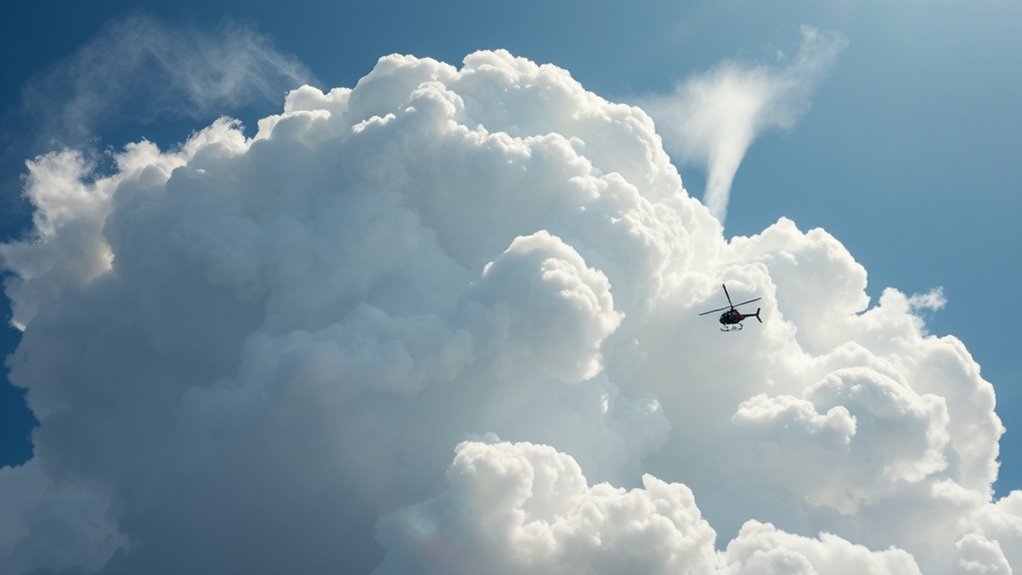
Ground-based methods release seeding agents into the atmosphere using weather balloons or smoke generators, allowing particles to drift into clouds. Aircraft dispersal involves planes flying into clouds and releasing seeding substances directly, offering precise targeting.
Rocket or artillery techniques fire particles into clouds from the ground, which is useful in remote or difficult-to-reach areas. The effectiveness of each method depends on factors like cloud type, altitude, and weather conditions.
While some techniques provide quick results, others may require more time to influence cloud behavior. Overall, understanding the different seeding techniques helps maximize cloud seeding effectiveness.
This ensures better control over weather modification efforts and improves the chances of achieving the desired precipitation outcomes.
Substances Used in Cloud Seeding
You’ll notice that the substances used in cloud seeding often include silver iodide, potassium iodide, and sodium chloride. These are selected because they help encourage the formation of cloud droplets, making it easier for clouds to produce rain. The chemicals vary from simple inorganic salts to more complex compounds, and this variety can influence how they interact with the atmosphere.
Sometimes, natural substances like ice crystals are used instead of synthetic chemicals. This shift raises interesting questions about how effective these natural methods are and what kind of environmental impact they might have. Basically, scientists are always exploring different substances to find the best way to influence weather patterns safely and efficiently.
Common Seeding Agents
Various substances serve as common seeding agents in cloud seeding operations, each chosen for its ability to encourage precipitation. These agents work by altering cloud physics, making it easier for water droplets to grow and fall as rain.
The most frequently used agents include silver iodide, potassium iodide, and solid carbon dioxide, also known as dry ice. Silver iodide, with its similar structure to ice crystals, effectively promotes ice formation in cold clouds.
Dry ice cools the air rapidly, helping droplets grow faster. Here’s a quick overview:
| Seeding Agent | Purpose/Effect |
|---|---|
| Silver Iodide | Promotes ice crystal formation |
| Potassium Iodide | Similar to silver iodide, used in warm clouds |
| Dry Ice (Solid CO₂) | Cools cloud and encourages droplet growth |
Chemical Composition Details
Cloud seeding relies on specific chemical substances that interact with cloud particles to stimulate precipitation. These substances, often silver iodide, potassium iodide, or sodium chloride, are chosen for their ability to mimic natural ice or salt particles, encouraging cloud droplets to coalesce.
When released into clouds, they facilitate chemical interactions that promote droplet growth and eventual rainfall. Silver iodide, with its crystalline structure, is particularly effective in cold clouds.
However, these chemicals raise environmental concerns, as their buildup may impact ecosystems and water quality over time. Understanding the chemical makeup helps evaluate both their effectiveness and potential risks.
Natural vs Synthetic Substances
Both natural and synthetic substances play essential roles in cloud seeding, but they differ greatly in where they come from and their impact on the environment. Natural substances like silver iodide or dry ice mimic natural ice nuclei to encourage cloud formation.
Synthetic substances are man-made chemicals designed to enhance the process, often with more consistent results. You should keep in mind that natural options are usually environmentally friendly but less targeted.
Synthetic options can be tailored for specific atmospheric conditions. Silver iodide, a common natural substance, has minimal ecological risks when used responsibly. Dry ice, which is solid carbon dioxide, rapidly cools clouds and is a natural substance.
While synthetic choices sometimes raise environmental concerns, they are generally safe when used in controlled applications. Understanding these differences helps you evaluate the effectiveness and sustainability of various cloud seeding methods.
How Cloud Seeding Influences Weather and Precipitation
Cloud seeding can help boost rainfall by making clouds better at producing precipitation. Basically, it introduces substances like silver iodide or other particles into the clouds, which encourages water droplets to come together and fall as rain.
It also changes the way clouds are made up, which can affect how they grow and move around. These changes can influence the weather in a local area, sometimes causing noticeable shifts in climate and where the rain falls.
Enhancing Rainfall Efficiency
When cloud seeding is done effectively, it can significantly boost rainfall by encouraging more precipitation to form within a cloud. This helps make water release more predictable and plentiful.
Your efforts can really make a difference in fighting drought, especially in dry areas facing water shortages. To get the best results, consider focusing on these key factors:
- Nucleation techniques that help droplets grow
- Timing your applications during the right cloud development stages
- Targeting specific cloud types for better outcomes
- Using just the right amount of seeding agents
- Keeping a close eye on atmospheric conditions
Altering Cloud Composition
Cloud seeding changes the makeup of clouds by adding substances like silver iodide or salt particles. These act as nuclei for water droplets to form around.
This change impacts cloud properties, making it easier for droplets to merge and grow. By tweaking these properties, you can influence how rain or snow develops.
The added particles give water vapor more surfaces to condense on, which can increase cloud density and change droplet sizes.
As a result, the process that makes clouds produce precipitation is affected, often speeding up raindrop or snowflake formation.
Understanding how cloud composition influences these processes helps in improving seeding methods to get the weather results we want.
Impact on Weather Patterns
By changing the cloud’s composition with seeding substances, you can directly influence weather patterns and how much it rains. Cloud seeding can help increase rainfall in areas prone to drought, which might help reduce some effects of climate change.
But there are ethical issues to think about too. It could disrupt local weather systems or lead to uneven rainfall distribution. We also need to consider the long-term effects on the climate and ecosystems.
Plus, altering natural processes raises questions about responsibility for any unintended side effects. While cloud seeding offers solutions for water shortages, it’s important to carefully consider its broader impact on climate stability.
Advantages and Risks of Cloud Seeding Projects
While cloud seeding offers the potential to increase rainfall and help with droughts, it also has some risks and limitations. One major concern is ethics, since manipulating weather could benefit some communities while hurting others.
Cloud seeding can aid droughts but raises ethical concerns about uneven impacts and environmental risks.
Environmental impact is also a worry. Introducing chemicals like silver iodide might harm ecosystems or pollute water sources if not carefully controlled. Plus, cloud seeding’s effectiveness isn’t always guaranteed, which means results can be unpredictable.
This unpredictability could lead to wasting resources on projects that don’t work or cause unintended effects like changing local weather patterns. Excessive rainfall might even trigger flooding in some areas.
While cloud seeding can help with droughts and support farming, these benefits need to be balanced against environmental and ethical concerns. Careful planning, regulation, and ongoing research are key to minimizing risks and ensuring responsible use.
Examples of Cloud Seeding Around the World
Around the world, countries have experimented with cloud seeding to address various weather-related challenges. These efforts include historical applications and modern initiatives aimed at drought relief, agriculture, and water management.
For example, China has actively used cloud seeding since the 1950s to boost rainfall during droughts, especially in arid regions. In the United States, states like Nevada and California have implemented programs to improve snowfall and water supplies.
Australia has also conducted large-scale cloud seeding projects to enhance rainfall during dry seasons. Other notable examples are Russia’s efforts to increase snowfall for winter sports and water resources, and the UAE’s recent initiatives to combat desertification and secure water sources.
India uses cloud seeding to support agriculture during monsoon seasons. These global efforts show how cloud seeding has evolved from early experiments to strategic tools for managing water scarcity worldwide.
Challenges and Limitations of Weather Modification
Despite global efforts to use cloud seeding for weather modification, many challenges make it hard to use reliably and widely. One big issue is that weather patterns are unpredictable, making it tough to control when and where rain will fall.
Ethical concerns also come up, because changing the weather could unintentionally impact nearby regions. This raises questions about consent and fairness, especially if some areas benefit while others don’t.
Environmental impacts are another worry. Chemicals like silver iodide might harm ecosystems or pollute water sources over time, which is a serious concern.
Plus, there’s no standard way to do cloud seeding, and results can be inconsistent. That damages confidence in how effective it really is.
Costs can be high, and the benefits aren’t always clear or guaranteed. Some wonder if investing in weather modification is worth it.
Future Trends in Cloud Seeding Technology
Advancements in technology are driving promising developments in cloud seeding, making it more precise, efficient, and environmentally friendly. Emerging tools like artificial intelligence, machine learning, and advanced atmospheric sensors help you better predict cloud behavior and optimize seeding efforts.
These innovations enable targeted interventions, which reduce unintended effects and improve success rates. As these tools evolve, ethical considerations become more prominent, prompting you to carefully weigh environmental impacts and regional responsibilities.
Targeted cloud seeding reduces unintended effects while emphasizing ethical environmental and regional responsibilities.
The future of cloud seeding may include AI-driven modeling for improved accuracy, real-time data collection with satellite technology, eco-friendly seeding agents that minimize environmental footprints, autonomous seeding systems reducing human intervention, and transparent ethical frameworks guiding responsible use.
These trends point towards smarter, safer weather modification. Emerging technologies help balance potential benefits with ethical responsibilities.
This progress promises more controlled, sustainable cloud seeding practices that address past limitations.
Frequently Asked Questions
Is Cloud Seeding Safe for the Environment and Wildlife?
Cloud seeding is generally safe for the environment and wildlife when done responsibly. It has minimal ecological impact since the chemicals used, like silver iodide, are usually in small amounts and don’t harm ecosystems.
That said, it’s important to stay aware of potential effects on wildlife health, especially if seeding happens often or over large areas. When managed properly, cloud seeding can boost water supplies without significantly disrupting local ecosystems or animal populations.
How Cost-Effective Is Cloud Seeding Compared to Other Water Management Methods?
You’ll find cloud seeding can be quite cost-effective when you do an economic analysis compared to other water management methods.
It often requires less infrastructure and upfront investment, making it cheaper in the short term.
However, its effectiveness varies by location and climate.
When considering alternative methods like dam construction or water recycling, cloud seeding might be a more affordable option, especially in areas with limited resources.
Can Cloud Seeding Be Used to Prevent Natural Disasters Like Droughts?
Yes, cloud seeding can help with drought mitigation by encouraging rain during dry periods. You can use weather modification techniques to increase precipitation in drought-prone areas, potentially reducing the severity of droughts.
While it’s not a guaranteed solution, cloud seeding offers a tool to support water management efforts. It can supplement natural rainfall and help communities better prepare for and respond to drought conditions.
What Are the Legal and Ethical Considerations in Cloud Seeding?
You need to take into account the legal and ethical aspects of cloud seeding, especially regarding regulatory frameworks and public perception. Regulations vary by region, and you must follow laws to prevent unintended consequences.
Ethically, you should guarantee transparency with communities and avoid disrupting natural weather patterns or causing harm. Maintaining public trust is essential, so clear communication and responsible practices help address concerns and foster acceptance of cloud seeding activities.
How Long Do the Effects of Cloud Seeding Last?
Imagine planting a seed in the sky’s garden; the cloud duration and precipitation impact depend on weather conditions and how well the seed takes root. Usually, cloud seeding effects last from a few hours to a couple of days, creating a brief rainstorm or snowfall.
The actual duration can vary, but generally, the impact fades quickly as clouds disperse or change. This ends the effects of your cloud-boosted rainfall.
Conclusion
In the world of weather wonders, cloud seeding showcases science’s skill to shape skies. While it offers opportunities to increase rainfall and ease droughts, it also presents problems and pitfalls.
By balancing benefits with boundaries, you can better grasp the potential and limitations of weather modification. Welcome the evolving expertise, explore the exciting possibilities, and stay aware of the cautious concerns.
Because shaping showers through cloud seeding should always be done wisely, thoughtfully, and with a sense of wonder.