The Ultimate Guide to Starting Tomato Seeds Indoors
Growing tomatoes from seed can be really rewarding, but many people struggle with starting them off right. If you’ve ever felt overwhelmed by where to begin or uncertain about how to give your plants the best start, you’re not alone.
The good news is, with a little guidance, you can grow healthy, tasty tomatoes right from your home.
Starting tomato seeds indoors gives you a head start on the growing season and healthier plants. Choose varieties suited to your climate, select containers with drainage, and use nutrient-rich soil.
Provide plenty of light, maintain consistent moisture, and fertilize appropriately. Gradually harden seedlings before moving them outdoors once temperatures stay above 55°F.
For detailed steps on selecting, caring for, and transplanting your seedlings, you’ll find everything you need to grow thriving tomatoes.
Key Takeaways
- Choose disease-resistant, climate-appropriate tomato seeds and pick containers with drainage to help your seedlings grow strong and healthy.
- Provide plenty of light—aim for 14-16 hours daily—and keep temperatures between 70-75°F for good germination and healthy seedling development.
- Use nutrient-rich, well-draining soil, water consistently to keep it moist, and fertilize during key growth stages to support healthy growth.
- Gradually harden your seedlings outdoors to prevent shock, watching weather carefully and avoiding frost or extreme heat.
- Transplant your seedlings outside once the danger of frost is gone, making sure to space them properly and prepare the soil for vigorous growth.
Why Starting Tomato Seeds Indoors Gives You an Advantage
Starting tomato seeds indoors gives you a big advantage because it lets you get a head start on the growing season. You can control temperature, light, and moisture, creating perfect conditions for your seedlings.
Indoor germination usually results in stronger, healthier plants because they grow in a stable environment, safe from pests and harsh weather. This means you’re more likely to get good germination rates and tough seedlings.
Starting early also gives your plants more time to grow, leading to earlier harvests and bigger yields. Plus, it helps reduce the chances of seedling diseases, insect damage, or stress from outside conditions.
Choosing the Best Tomato Seeds for Your Climate and Taste
Choosing the right tomato seeds depends on your local climate and your personal taste preferences. If you want unique flavors, heirloom varieties offer diverse flavor profiles and vibrant colors.
Selecting tomato seeds suited to your climate and tastes ensures flavorful, healthy, and vibrant harvests.
For a robust garden, look for seeds with strong disease resistance and climate adaptability. This helps your plants thrive despite weather variations.
Consider growth habits—determinate types produce fruit quickly, while indeterminate plants keep growing and fruiting longer. When sourcing seeds, choose reputable suppliers or local garden centers to guarantee quality and high germination rates.
Local recommendations can help identify varieties that perform well in your area’s conditions. If you’re in a cooler climate, select hardy varieties suited for shorter growing seasons.
For warmer regions, heat-tolerant seeds will provide better results. Ultimately, your choice should reflect both your climate and your culinary preferences to grow flavorful, healthy, and productive tomatoes throughout the season.
Selecting the Right Containers for Seed Starting
When it comes to starting your seeds, picking the right containers is super important. Think about the material—plastic, biodegradable, or terracotta—that works best for you. Each has its own perks, so choose what fits your setup and preferences.
Next, make sure the containers are the right size for your tomato seedlings. You don’t want them to be too cramped or too spacious; just enough room for healthy growth. And don’t forget to check for drainage holes. Good drainage helps prevent water from sitting at the bottom and causing problems like root rot.
Getting these details right helps give your seeds the best start possible, setting them up for strong, healthy growth down the line.
Container Material Choices
Selecting the right containers is key for healthy seedling development. Plastic pots are lightweight and affordable, which makes them popular. But consider eco-friendly options like biodegradable trays or recycled containers to cut down on waste.
Seedling cells and peat pellets are convenient choices, with individual compartments that help promote strong root growth. Clay pots offer breathability, helping prevent overwatering, but they can be fragile.
Wooden boxes are sturdy and reusable, making them a great option for larger setups. Metal containers are durable and heat well, but it’s important to check they won’t overheat or corrode.
When choosing containers, focus on those that support proper moisture retention and good aeration. This will give your tomato seedlings a solid foundation to thrive.
Size and Drainage Needs
The size of your seed-starting containers directly impacts seedling health, so it’s vital to pick the right dimensions. Smaller containers work well for early seedling stages, but as seedlings grow, they need larger containers to develop strong root systems.
Aim for containers that are at least 3-4 inches deep and wide enough to give your seedlings room to grow. Proper drainage solutions are essential; choose containers with drainage holes to prevent waterlogging, which can cause root rot and stunted growth.
If your containers lack drainage, add holes or use a tray with a drainage layer. Good size and drainage help maintain ideal soil moisture, promote healthy seedling size, and prevent issues that could weaken your tomato plants later.
Preparing Your Growing Space for Tomato Seedlings
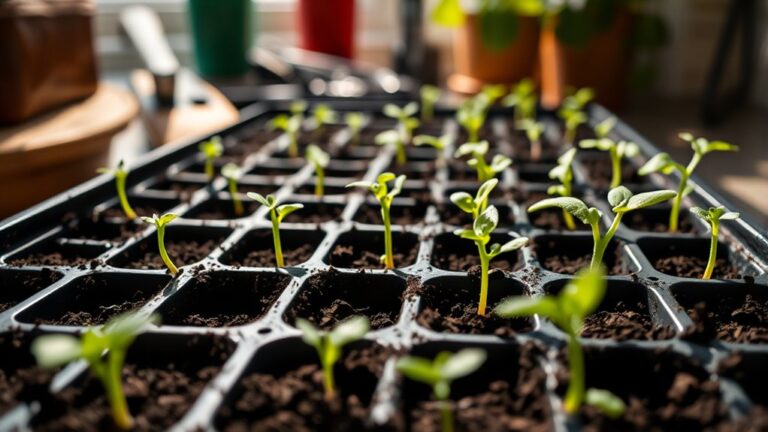
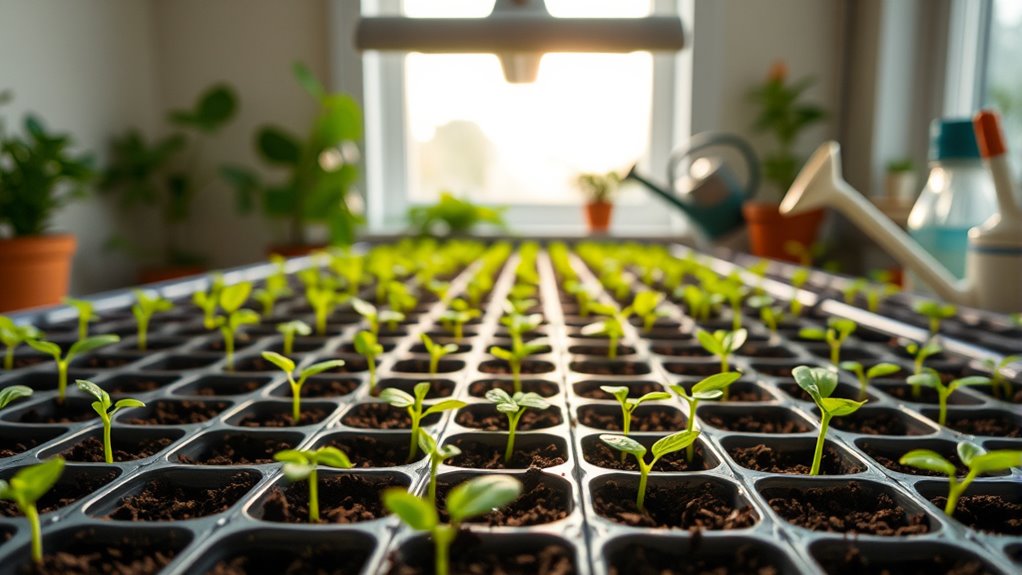
Before planting your tomato seeds, you’ll need to set up a suitable growing space. Make sure your area provides the right conditions, like plenty of light, good ventilation, and stable temperatures.
Choose a spot with a south-facing window or use grow lights to add extra light if needed. Keep the temperature around 70-75°F during the day and a bit cooler at night to help your seedlings grow strong.
As your seedlings get bigger, space them about 2 to 3 inches apart. This prevents overcrowding and helps airflow, which reduces the risk of diseases like damping-off.
Ensure your containers have good drainage to stop water from pooling and harming the young roots. Keep your space clean and organized to lower the chances of pests and diseases.
The Best Soil Mix and How Deep to Plant Tomato Seeds
To give your tomato seeds the best chance to thrive, use a well-draining, nutrient-rich soil mix that retains moisture without becoming waterlogged. A good soil composition includes equal parts of peat moss, compost, and perlite. This blend guarantees proper aeration, moisture retention, and essential nutrients.
When planting, keep the seeds at about ¼ inch deep. Planting too shallow may cause the seeds to dry out, while planting too deep can hinder germination.
Here’s a helpful guide:
| Soil Composition | Planting Depth |
|---|---|
| Equal parts peat moss, compost, and perlite | ¼ inch deep |
| Well-draining, nutrient-rich | Avoid planting deeper |
| Moisture-retentive | Cover lightly with soil |
| Aerated for healthy roots | Keep soil moist but not soggy |
| Organic materials preferred | Use a gentle press to settle soil |
How to Provide Light, Temperature, and Humidity for Healthy Seedlings
Providing the right light, temperature, and humidity is essential for healthy tomato seedlings to develop strong, vibrant plants. First, ensure your seedlings get enough light intensity—aim for 14-16 hours of bright, direct light each day. Use grow lights if natural sunlight isn’t enough.
Keep the lights close to the seedlings, about 2-3 inches above, to prevent stretching. Maintain warm temperatures between 70-75°F during the day and slightly cooler at night to promote steady growth. Humidity should stay around 60-70%, avoiding dryness or mold.
Use a humidity dome or plastic cover to keep moisture in, but make sure to ventilate regularly. This helps prevent excess dampness that could cause problems. Consistent lighting, proper warmth, and balanced humidity create ideal conditions for strong stems and healthy roots.
Monitoring these factors closely will give your tomato plants the best start for vigorous growth.
Watering and Fertilizing Tips to Grow Strong Tomato Plants
Consistent watering and proper fertilizing are key to developing strong, healthy tomato plants from your seedlings. Keeping the right moisture levels prevents issues like root rot or drought stress, helping your plants grow steadily. Water when the top inch of soil feels dry, but avoid overwatering.
Fertilize with a balanced, water-soluble fertilizer, following nutrient timing guidelines. Apply fertilizer when seedlings have two sets of true leaves. Proper timing ensures your plants get the right nutrients during key growth stages, boosting vigor and fruit production.
Use a watering schedule that keeps moisture levels steady and avoid fluctuations that can stress your seedlings. Keep soil evenly moist, and check it daily to prevent drought stress or waterlogging. Adjust watering frequency based on weather conditions.
Follow nutrient timing for best results—reduce fertilizing once fruit sets. Use diluted fertilizer to prevent burn, and apply every 2-3 weeks to keep your tomato plants healthy and productive.
Hardening Off Your Tomato Seedlings Before Moving Outdoors
Before you transplant your tomato seedlings outdoors, it’s a good idea to harden them off first. Basically, you want to gradually introduce your plants to the outside world. Just keep an eye on the weather and temperature — you want to make sure the conditions are just right.
Taking this slow approach helps your plants get used to their new environment, which means they’re less likely to go into shock once they’re outside full-time. It’s all about giving them a gentle transition so they can thrive in their new home.
Gradually Increase Outdoor Exposure
To guarantee your tomato seedlings adapt safely to outdoor conditions, start gradually exposing them to the elements. Begin by placing them outside in a shaded, protected spot for a few hours each day.
Slowly increase their sunlight exposure and outdoor time over a week or so, making sure they experience a gradual shift. This outdoor acclimatization helps your seedlings develop environmental resilience.
It makes them more resistant to wind, direct sun, and temperature changes. Watch their response closely—if they show signs of stress, bring them back indoors for a bit longer.
Consistent, incremental exposure ensures a smooth outdoor transition, reducing transplant shock and encouraging healthy growth once they’re fully ready to thrive outside.
Monitor Temperature and Weather
Monitoring the temperature and weather is essential to guarantee your tomato seedlings are ready for outdoor life. Sudden temperature fluctuations can stress your plants, so keeping an eye on weather patterns helps you choose the right time to harden them off.
Check daily forecasts to avoid exposing seedlings to frost or extreme heat. Consistent, moderate temperatures are ideal for hardening off, typically between 55-70°F (13-21°C).
If a cold snap or storm is forecasted, delay moving your seedlings outside. Pay attention to wind and rain, as strong gusts and heavy downpours can damage delicate plants.
Troubleshooting Common Tomato Seed Starting Problems
Even with careful attention, seed starting can sometimes lead to problems that hinder healthy seedling growth. Damping off is a common issue caused by fungal pathogens, which leads to seedlings collapsing at the soil line. To prevent this, avoid overwatering and ensure good air circulation.
If your seedlings become leggy, it’s probably due to not enough light. Move your grow lights closer or turn up their intensity so your seedlings get the light they need.
Pest management is really important too. Check your seedlings regularly for pests like aphids or fungus gnats, and act quickly if you see any.
Temperature fluctuations can cause problems as well. Too cold or hot conditions can stunt growth or cause diseases. Keep your grow area stable and maintain ideal temperatures for healthy seedlings.
Regularly monitoring environmental conditions and practicing good hygiene can help you catch problems early. This way, your tomato seedlings will have the best start possible.
When and How to Transplant Your Tomato Seedlings Outdoors
Timing is key when transplanting tomato seedlings outdoors. Doing it too early can expose them to cold temperatures and frost, while waiting too long might stress the plants or damage roots.
You should wait until the risk of frost has passed and nighttime temperatures stay above 55°F (13°C). Check local weather forecasts and consider using a soil thermometer to gauge soil warmth.
When it’s time, harden off your seedlings by gradually exposing them to outdoor conditions over a week. This helps reduce transplant shock and ensures healthier growth.
Handle seedlings carefully, keeping their roots intact. Transplant on a cloudy day or late in the afternoon to help minimize stress.
Space plants 18-24 inches apart in well-prepared soil rich in organic matter. Proper timing and gentle handling will help your seedlings establish quickly and grow strong.
Following these tips will give your tomato plants the best start for a healthy, productive season.
Frequently Asked Questions
How Long Does It Take Tomato Seeds to Germinate Indoors?
Tomato seeds usually germinate indoors in about 5 to 10 days. To give them the best chance, keep the temperature between 70-80°F and stay consistent with moisture, but avoid overwatering.
If conditions are just right, you’ll see tiny sprouts pretty quickly. Make sure the soil stays moist but not soggy.
Once the seedlings appear, provide plenty of light to support healthy growth and strong development.
Can I Start Tomato Seeds Without Grow Lights?
Starting tomato seeds without grow lights is possible, but don’t expect your seedlings to thrive like they would under perfect conditions. Natural light can work for seed starting and seedling growth, especially if you place your pots near a south-facing window.
Keep in mind, indoor gardening without artificial light can lead to leggy, weak plants. To get strong, healthy tomato seedlings ready for transplanting, it’s best to supplement with grow lights.
What Are Signs My Seedlings Are Overwatering or Underwatering?
If your seedlings show yellowing leaves, wilting, or mold, you’re probably overwatering, which can harm their health.
On the other hand, if the leaves are drooping, pale, or the soil feels dry, you might be underwatering.
Use proper watering techniques—water only when the top inch of soil feels dry.
Keep a close eye on your seedlings to catch any issues early.
Maintaining consistent moisture levels helps ensure healthy growth and prevents stress that can stunt your tomato seedlings’ development.
How Do I Prevent Damping-Off Disease in Seedlings?
To prevent damping-off disease, focus on seedling hygiene by keeping your workspace clean and sterilizing tools regularly. This helps reduce the chances of spreading fungi.
Make sure your soil drains well to avoid excess moisture, which can encourage the disease. Avoid overwatering and don’t let seedlings sit in standing water.
Providing good air circulation around your seedlings is also important. If needed, you can use a fungicide to give extra protection.
These simple steps will help keep your seedlings healthy and free from damping-off disease.
When Should I Start Fertilizing Tomato Seedlings Indoors?
Ever wonder when to start fertilizing your tomato seedlings? You should begin once they develop their first true leaves, usually around two weeks after sprouting.
Use a balanced fertilizer with seedling nutrition, like a diluted liquid fertilizer or a gentle organic option, to promote healthy growth.
Be careful not to over-fertilize, as that can harm young plants. Keep an eye on their growth to make sure they get the right nutrients at the right time.
Conclusion
Starting your tomato seeds indoors is like planting the seeds of summer’s bounty—nurturing them from tiny sprouts to vibrant, fruitful plants. With patience and care, you’ll watch your garden flourish, transforming your space into a lush oasis of flavor.
Remember, the journey from seed to harvest is a dance of dedication and growth, where each step shapes your success. Embrace this process, and your indoor tomato growing will be rewarding.
When you start your tomato seeds indoors, you’re setting the stage for a bountiful harvest later on. With the right care, your indoor tomato seeds will thrive and produce delicious fruit.
So, welcome this journey. With time and effort, you’ll enjoy the sweet promise of homegrown tomatoes, making your indoor gardening adventure truly worthwhile.