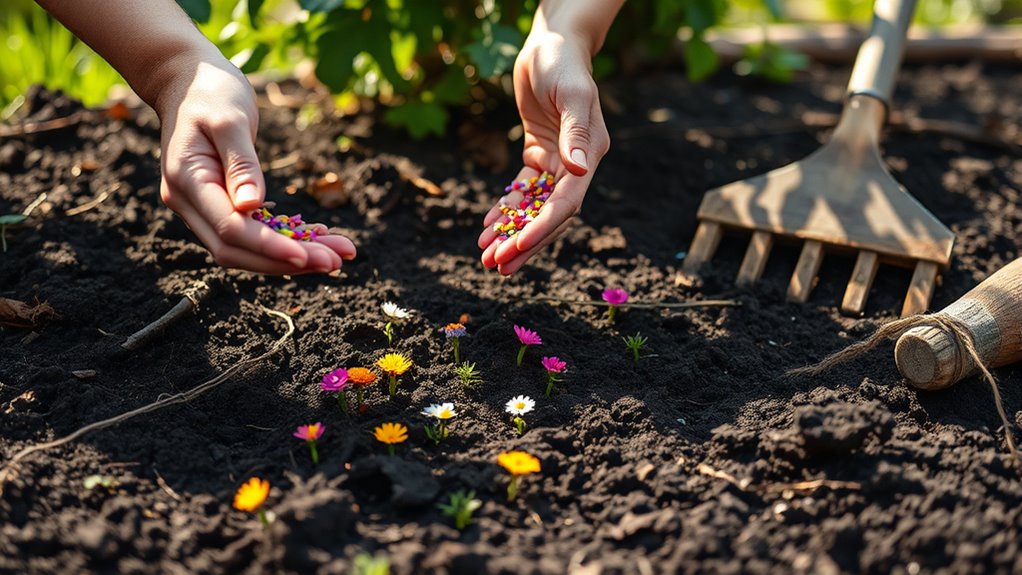
When to Plant Wildflower Seeds – A Step-by-Step Guide
Starting a wildflower garden can be incredibly rewarding, but figuring out the best time to plant your seeds often feels confusing. Many people struggle with timing and soil prep, worried they’ll miss the ideal planting window or ruin their chances for a vibrant bloom.
To determine the best time to plant wildflower seeds, consider your local climate, soil conditions, and the types of wildflowers you want to grow. Typically, plant in spring if you have cold winters, or in fall in milder areas to let seeds overwinter.
Proper soil prep and avoiding frost or drought are key. Stagger plantings for continuous blooms, and understanding bloom timelines helps maximize your garden’s beauty.
Keep exploring for more detailed planting tips.
Key Takeaways
- Determine your local climate zone to find the best planting seasons, usually spring or fall.
- Plant wildflower seeds when soil temperatures hit between 55°F and 65°F for the best germination.
- Avoid planting before the last expected frost in spring or during drought conditions.
- Prepare your soil by clearing out debris, weeds, and making sure it drains well before sowing.
- Stagger planting times across different seasons to get continuous blooms and a variety of wildflowers.
When Is the Best Time to Plant Wildflower Seeds in Your Area?
The best time to plant wildflower seeds depends largely on your local climate and the specific types of wildflowers you want to grow. To pick the right planting time, consider seed varieties suited for your region’s growing season. Some wildflowers prefer early spring, while others do better when planted in fall.
Once you know your ideal planting window, focus on proper planting techniques. Lightly rake the soil to ensure good seed-to-soil contact, and avoid covering tiny seeds too deeply. Timing is key: planting too early might expose seeds to frost, while planting too late could limit germination.
Pay attention to soil moisture and temperature, as these factors influence germination rates. Using the right seed varieties and following good planting practices will give your wildflowers the best chance to grow strong and healthy.
Understanding Your Climate and Growing Season for Wildflowers
To give your wildflowers the best shot at thriving, it’s helpful to get a good handle on your local climate and growing season. Things like when the weather gets warm enough and how much moisture your area typically gets can make a big difference. Knowing the right seasons to plant and what temperatures your wildflowers prefer can really boost your chances of success.
Once you have a good idea of these factors, you can tweak your planting schedule accordingly. That way, your wildflowers will have the ideal conditions to grow strong and healthy.
Local Climate Variability
Understanding your local climate and growing season is key to successful wildflower planting. Climate zones help you figure out the average temperatures and frost dates in your area, guiding when you should plant.
Seasonal changes like rainfall, temperature swings, and frost timing all affect when wildflowers can take root and grow strong. For example, places with clear seasons might need you to plant earlier or later than milder climates.
Knowing these differences helps you adjust your planting schedule so seeds get the best start for germination and growth. By understanding your climate zones and seasonal patterns, you set your wildflowers up for a healthy, vibrant bloom that lasts all season.
Optimal Planting Seasons
Knowing the ideal times to plant wildflowers depends on your specific climate and growing season.
In general, spring planting works well in areas with cold winters, giving seeds time to establish before summer.
Fall sowing is best in milder climates, allowing seeds to overwinter and sprout in spring.
Use this table as a guide for your timing:
| Climate Type | Best Planting Time |
|---|---|
| Cold Winters | Spring planting |
| Milder Winters | Fall sowing |
| Hot/Dry Summers | Avoid planting during peak heat |
Choosing the right season helps ensure better germination and growth.
Pay close attention to your local conditions and adapt your planting schedule accordingly.
Temperature and Moisture Needs
Since wildflowers are sensitive to their environment, paying attention to temperature and moisture is essential for successful planting. Understanding your climate helps you match seeds to the right conditions, so they can thrive.
Be mindful of temperature fluctuations, which can stress seedlings and hinder growth. Proper moisture retention is just as important; too little moisture can dry out seeds, while too much can cause rot.
Focus on creating a stable environment by monitoring seasonal temperature changes to avoid planting during extremes. Ensure consistent moisture levels for ideal germination.
Adjust your watering practices to maintain moisture without oversaturating the soil. This balance helps your wildflowers grow strong and healthy.
How to Assess Soil and Weather Conditions for Wildflower Planting
Before planting wildflower seeds, it’s important to check your soil and weather conditions to give your plants the best chance to grow. Start by testing your soil’s pH; wildflowers usually do well in a pH range of 6.0 to 7.0. If it’s too acidic or alkaline, you might need to make some adjustments.
Next, look at how well your soil retains moisture. It should hold enough water without becoming waterlogged, especially when the seeds are germinating. Dig a small hole and see how long it takes for water to drain away. If it drains too quickly, add organic matter like compost to improve moisture retention.
Also, check the weather forecast to ensure consistent temperatures and rainfall that support seed germination. Avoid planting if heavy rains or droughts are expected soon. By understanding your soil’s pH and moisture levels along with the weather, you’re setting a solid foundation for healthy, vibrant wildflower growth.
Preparing Your Garden Bed for Wildflower Seeds
First, you’ll want to clear out any debris and weeds from your garden bed. This helps create a nice, clean space for your wildflower seeds to settle in and grow. Once that’s done, grab a rake or garden fork and loosen up the soil a bit. This step is important because it improves airflow and drainage, giving your seeds a better chance to establish roots.
Finally, make sure to level out the soil surface. Doing this ensures that the seeds are spread evenly, which is key for consistent germination. With these simple steps, you’re well on your way to a beautiful wildflower garden!
Clear and Remove Debris
Clear the area of any debris, like leaves, sticks, and weeds, to give your wildflower seeds a clean, open space to grow. Removing debris is a key step in preparing the site so your seeds can establish easily.
It also helps prevent pests and diseases and creates a welcoming environment for wildflowers to thrive. Taking a little time to clear debris makes your planting more successful and sets a solid foundation for a beautiful meadow.
Here are three main benefits of debris removal:
- Promotes healthy growth by removing obstacles.
- Prevents weed competition that can choke out seedlings.
- Improves soil contact for better seed germination.
Loosen and Level Soil
Loosen and level the soil to create a smooth, inviting surface for your wildflower seeds. Use a rake or garden fork to break up compacted soil, which helps improve soil texture and drainage.
Aim for a level bed to prevent water pooling, as this can drown seeds or stop them from germinating properly. When considering seed depth, make sure the soil isn’t too dense or hard, since that can restrict seed contact and growth.
Lightly rake the soil again after loosening to remove clumps and debris, creating an even surface. A well-prepared bed with loose, even soil ensures seeds are at the right depth, promoting healthy germination and growth.
Proper soil prep sets the foundation for a vibrant wildflower garden.
Should You Plant Wildflowers in Spring, Fall, or Both?
Deciding whether to plant wildflowers in spring, fall, or both depends on your climate and the types of flowers you want to grow. Spring brings warmer weather and plenty of sunlight, helping seedlings establish quickly.
Fall benefits include cooler temperatures and more moisture, which help seeds germinate and reduce stress on plants.
You can plant in spring to enjoy vibrant blooms early, but watch out for late frosts that could damage young plants.
Opt for fall planting so seeds can settle and sprout in cooler months, creating hardy plants ready for spring.
Planting in both seasons offers a continuous bloom cycle, giving you ongoing beauty and pollinator support throughout the year.
Choose what’s best based on your climate and wildflower preferences to make your garden successful and enjoyable.
Using Soil Temperature and Frost Dates to Time Your Wildflower Planting
To give your wildflowers the best start, it’s a good idea to keep an eye on soil temperature and frost dates. Waiting until the soil warms up enough ensures your seeds can germinate properly—nothing worse than planting too early and watching those chilly nights undo your hard work.
And don’t forget about frost dates! Avoid planting too early in the season, because a late frost can really damage your young plants. Planning around these factors helps keep everything on track, so your wildflower display can flourish beautifully.
Monitoring Soil Temperature
Monitoring soil temperature is really important for timing your wildflower planting just right. Keeping an eye on soil temperature helps you know when seeds will germinate best. It also helps you avoid planting too early or too late, which can boost your chances of success.
Here are three reasons why it matters:
- It sparks hope as your seeds sprout when conditions are perfect.
- It cuts down frustration by preventing failed germination from cold soil.
- It builds confidence in your gardening skills as you learn to read natural signs for planting.
Use a good soil thermometer to check the temperature regularly. When the soil hits the right range—usually between 55°F and 65°F for wildflowers—you can plant with confidence.
Planning Around Frost Dates
Understanding your frost dates is key to timing your wildflower planting just right. Accurate frost predictions help you avoid planting too early, which can damage seeds and lower their chances of germinating.
Usually, you want to plant after the last expected frost date in spring or before the first frost in fall. Keep an eye on local weather forecasts and soil temperature data, since soil warms up gradually.
Planting too soon risks frost damage, but waiting too long might cut your growing season short. Planning around reliable frost dates gives your seeds the best chance to sprout and establish well.
Adjust your planting schedule accordingly, and remember that soil temperature should be consistently above freezing for optimal seed growth.
Tips for Successful Wildflower Seeding in Different Climates
Adapting your wildflower seeding strategy to your local climate is key to success. Different climates need different approaches to help your wildflower garden thrive.
Start by researching native species that are suited to your area. These plants are adapted to your climate and usually require less water and maintenance.
Next, choose your seeds carefully. Think about your region’s temperature and rainfall patterns. Picking the right seeds makes it more likely they’ll germinate successfully.
Then, adjust your seeding time to match your climate’s seasonal rhythm. Planting too early or too late can hold back growth.
For hot, dry areas, go for drought-tolerant species and plant in early fall or late winter. In cooler, wetter places, spring planting tends to work best.
Common Mistakes When Timing Wildflower Planting and How to Avoid Them
Timing your wildflower planting can be tricky, and rushing or delaying can lead to poor germination or wasted effort. One common mistake is planting too early or too late for your region.
Planting too early risks seed rot or damage from frost, while planting too late might mean seeds don’t get enough time to establish before bad weather hits.
Another mistake is neglecting proper seed selection. Choosing seeds that aren’t suited for your season or climate can lower your chances of success.
Make sure to research your local conditions and pick native or well-adapted seeds.
Don’t rush the process based on guesswork—wait for the right planting window. Proper timing and good seed choices give your wildflower meadow the best shot to thrive.
Being aware of these common mistakes helps you maximize germination and create a healthy, vibrant wildflower landscape.
Creating a Wildflower Bloom Timeline Throughout the Year
Creating a wildflower bloom timeline throughout the year helps you plan your planting and enjoy a vibrant landscape from spring to fall. By understanding bloom diversity, you can select wildflower species that flower at different times, ensuring continuous color and life.
Spring: Plant early bloomers like poppies and lupines, which burst forth as temperatures warm and set the stage for a lively season.
Summer: Focus on mid-season wildflowers such as black-eyed Susans and coneflowers that thrive in the heat and create a splash of color.
Fall: Incorporate late bloomers like goldenrod and asters to extend the visual interest and support pollinators preparing for winter.
Mapping out these stages helps you stagger planting times and choose species with overlapping bloom times. This maximizes wildflower diversity and guarantees a dynamic, thriving landscape that enchants from spring’s first blossoms to fall’s last.
Factors That Affect Wildflower Growth and Blooming Times
Various factors influence when wildflowers bloom and how well they grow. Understanding these elements is key to planning successful plantings. Climate, soil type, and sunlight all play a role in seed germination and growth rates.
Additionally, seed diversity helps create a wide range of bloom times and attracts various pollinators. This diversity enhances pollinator attraction and supports a healthy ecosystem.
Consider this table:
| Factor | Effect on Growth | Tips |
|---|---|---|
| Climate | Determines bloom timing | Match seeds to your zone |
| Soil Quality | Impacts seed germination | Improve with compost |
| Sunlight Exposure | Affects plant health and blooms | Plant in full sun or shade |
| Pollinator Needs | Influences blooming success | Plant varied seed types |
Frequently Asked Questions
Can I Plant Wildflower Seeds Indoors Before Outdoor Planting?
Yes, you can plant wildflower seeds indoors before outdoor planting. Indoor gardening lets you start seed germination early, giving your wildflowers a head start.
Use quality seed-starting soil, keep the soil moist, and place your containers in a warm, bright spot. Once your seedlings are strong enough, gradually harden them off before transplanting outdoors.
This process helps ensure better growth and survival once your wildflowers are in their natural environment.
How Long Does It Take for Wildflowers to Bloom After Planting?
Wildflowers usually take about 60 to 90 days to bloom after planting, but this can vary based on the species and growing conditions.
You’ll start to see signs of growth within a few weeks as seedlings appear. The timing for blooms can differ, so a little patience is key.
Providing proper watering, sunlight, and good soil can help speed up the process, so you get to enjoy those vibrant wildflowers sooner.
Keep an eye on your garden for healthy signs of development, and you’ll be rewarded with beautiful blooms before you know it.
Do Different Wildflower Species Require Separate Planting Times?
Yes, different wildflower species often need separate planting times because of their compatibility and seasonal preferences.
You should look into each species’ ideal planting season—some bloom in spring, while others do better in fall.
Knowing their unique needs helps ensure better germination and healthier growth.
Adjust your planting schedule based on your local climate and seasonal changes for the best results.
This way, your wildflower garden will be more successful and beautiful.
Can Wildflower Seeds Be Planted in Containers or Only in the Ground?
Sure, wildflower seeds thrive only in the wild, right? Actually, you can plant them in containers, making container gardening a fantastic option.
Just choose the right seed for your space, and make sure your containers have proper drainage. This way, you can enjoy a wildflower garden anywhere—on a balcony, porch, or windowsill.
It’s gardening on your terms!
How Do I Extend the Blooming Period of My Wildflower Garden?
To extend your wildflower garden’s blooming period, try staggering planting times and choosing a variety of species that bloom at different times. This way, you’ll have flowers popping up throughout the season.
Improve pollinator attraction by selecting plants that bloom one after another. Proper soil prep is key—amend your soil with compost and make sure it drains well so plants stay healthy.
Regular deadheading encourages more flowers to appear, and watering during dry spells helps keep your garden vibrant longer. These simple steps create a pollinator-friendly space that blooms all season.
Conclusion
By paying close attention to your local climate, soil, and seasonal rhythms, you set the stage for a vibrant wildflower display that gracefully unfolds throughout the year.
Welcome the subtle dance of timing and patience, trusting that nature’s gentle cues will guide your efforts. With thoughtful planning and a bit of nurturing, your garden will bloom in harmony with the world’s silent, beautiful clock.
When you plant wildflower seeds at the right time, you give them the best chance to thrive. This careful timing is key to creating a stunning, natural-looking wildflower garden that lasts all season.