Do Sunflower Seeds Go Bad?
Are you tired of opening a bag of sunflower seeds only to find they’re stale or moldy? You’re not alone—many people struggle with keeping their seeds fresh and tasty. Proper storage can make all the difference, but knowing when seeds go bad is just as important.
Yes, sunflower seeds can go bad over time due to factors like rancidity, mold, or moisture. You’ll notice signs like a bitter smell, off taste, slimy texture, or visible mold.
Proper storage in airtight containers in a cool, dark place extends their freshness, but they typically last 6 to 12 months unopened. To keep your seeds fresh longer and avoid spoilage, understanding how storage affects them is key—you’ll find more helpful tips below.
Key Takeaways
- Sunflower seeds can go bad if they develop a rancid smell or bitter taste due to oxidation.
- Signs of spoilage include mold, discoloration, or a slimy texture.
- Proper storage in airtight containers in a cool, dark place helps extend their shelf life.
- Unopened seeds last about 6 to 12 months, but once opened, they should be eaten within a few weeks.
- If seeds have off odors, mold, or a strange flavor, it’s best to discard them to stay safe.
Can Sunflower Seeds Go Bad, and Are They Safe to Eat?
Sunflower seeds can definitely go bad over time, especially if they’re not stored properly. When fresh, they offer impressive nutritional benefits, including healthy fats, protein, vitamins, and minerals. However, spoiled seeds lose their nutritional value and can become unsafe to eat.
Signs of spoilage include a rancid smell, a bitter taste, or a change in texture. Consuming bad sunflower seeds may cause digestive discomfort or food poisoning. To keep them safe, store seeds in an airtight container in a cool, dark place, away from humidity and heat.
Proper storage can extend their shelf life and help preserve their nutritional benefits. While eating slightly stale seeds might not cause harm, it’s best to discard them if they show signs of spoilage. Always check for freshness before eating, and trust your senses—if it smells or tastes off, it’s safer to avoid eating them.
What Causes Sunflower Seeds to Spoil?
Sunflower seeds can spoil pretty quickly if they’re exposed to moisture. When moisture gets in, it creates the perfect environment for mold and bacteria to grow, which isn’t good for either the seeds or your health.
Another thing to watch out for is oxidation—basically, when air hits the seeds, they can turn rancid. This not only changes the taste but can also make them unsafe to eat. So, if you leave your seeds in a warm or humid spot, it speeds up the spoilage process and makes mold more likely to develop.
Moisture Exposure Accelerates Spoilage
Moisture is one of the quickest ways for sunflower seeds to go bad because it creates a perfect environment for mold and bacteria to grow.
When seeds soak up water, spoilage speeds up, making them unsafe to eat. To avoid this, managing moisture is really important.
Store your seeds in airtight containers in a cool, dry place to keep moisture out. Here’s a quick look at how moisture impacts sunflower seeds:
| Effect of Moisture | Spoilage Signs | Prevention Tips |
|---|---|---|
| Promotes mold | Slimy texture | Use moisture-proof containers |
| Encourages bacteria | Unpleasant odor | Keep seeds dry and sealed |
| Causes clumping | Discoloration | Avoid humid environments |
Controlling moisture helps prevent spoilage and keeps your sunflower seeds fresh longer.
Oxidation Causes Rancidity
When sunflower seeds are exposed to air and light, oxidation happens. This breaks down their fats and causes an off-flavor called rancidity.
The process speeds up if seeds aren’t stored properly or kept for too long, leading to spoilage. To prevent this, store sunflower seeds in airtight containers in cool, dark places.
Exposure to oxygen, heat, and light all contribute to faster fat breakdown. Managing these factors can really help extend their freshness.
Good storage habits don’t just keep the seeds tasting fresh—they also help preserve their nutritional value. Paying attention to how you store them is key to avoiding rancidity.
Improper Storage Promotes Mold
Improper storage conditions can quickly lead to mold growth on sunflower seeds, making them unsafe to eat. Mold prevention starts with proper storage techniques, like keeping seeds in airtight containers and storing them in a cool, dry place.
Exposure to moisture or high humidity encourages mold development, so avoid storing seeds in the refrigerator or pantry where moisture levels fluctuate. Make sure your storage area is clean and free of mold spores, which can spread easily.
Using airtight containers helps prevent air and humidity from reaching the seeds. Regularly check your sunflower seeds for any signs of mold or moisture, and discard any affected seeds immediately.
How Do I Know If My Sunflower Seeds Are Spoiled?
How can you tell if your sunflower seeds have gone bad? Look for signs like a rancid smell, sour taste, or a bitter aftertaste. If the seeds emit a stale or off odor, it’s a sign they’ve spoiled.
Check the appearance—discoloration, mold, or excessive dryness all suggest deterioration. Proper storage, like keeping seeds in an airtight container in a cool, dark place, helps maintain their quality.
If the seeds feel sticky or have a slimy texture, discard them immediately. Also, pay attention to any unusual flavor. If it doesn’t taste right, it’s best not to eat them.
Spoiled sunflower seeds can cause stomach upset or other health issues. Trust your senses and throw out seeds that seem off. Regularly inspecting your stored seeds helps you enjoy fresh, safe snacks without risking your health.
How Long Do Sunflower Seeds Stay Fresh?
Sunflower seeds can stay fresh for quite a while if stored properly, but knowing how long they remain good helps you enjoy them at their best. Typically, unopened sunflower seeds stored in a cool, dark place can stay fresh for about six to twelve months.
Once opened, they’re best consumed within a few weeks to maintain peak freshness. Freshness indicators include a mild, nutty aroma and a firm texture. If they smell rancid or develop a bitter taste, it’s time to toss them.
Proper storage tips involve keeping seeds in an airtight container, away from heat and humidity, to prolong their shelf life. Refrigeration or freezing can extend freshness even further, especially if you don’t plan to eat them quickly.
Regularly checking for signs of spoilage guarantees you enjoy sunflower seeds at their best and avoid eating stale or rancid seeds.
Does Storage Method Affect How Long Sunflower Seeds Last?
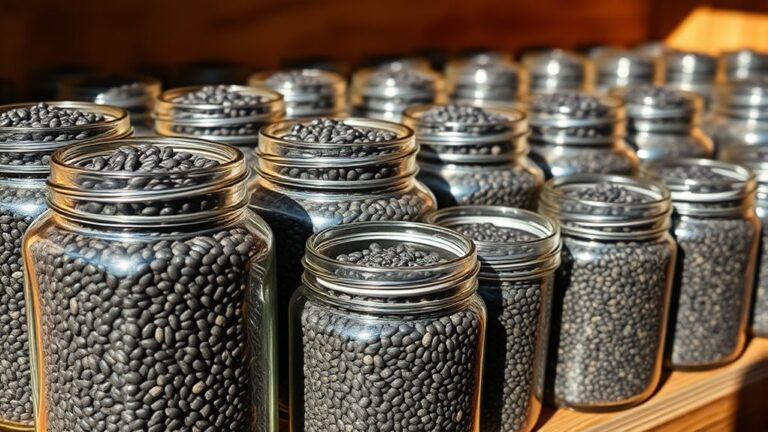
The way you store sunflower seeds really affects how long they stay fresh. Proper storage helps keep their flavor, texture, and nutrition intact. Using the right containers is important—airtight options like glass or metal keep out moisture and air that can cause spoilage.
Temperature also matters. Keep seeds in a cool, dark place to prevent them from going rancid quickly. Avoid direct sunlight, which can speed up spoilage.
Here are some helpful tips: Store sunflower seeds in airtight containers to block air and moisture. Keep them in a cool, dark environment, ideally below 70°F. Avoid exposing them to sunlight.
Never store seeds near heat sources like stoves or ovens. If you buy in bulk, refrigeration can help extend their freshness.
Are Flavored or Roasted Sunflower Seeds More Prone to Spoiling?
Flavored and roasted sunflower seeds tend to spoil more quickly than plain ones because the added seasonings and roasting process can introduce moisture and oils that promote spoilage. Flavored varieties often contain oils, sugars, or seasonings that create a more hospitable environment for mold and bacteria, especially if not stored properly.
Roasted varieties, whether dry-roasted or oil-roasted, also carry a higher risk because the roasting process can strip away some natural preservatives, making them more vulnerable over time. If you keep these seeds in warm or humid conditions, spoilage speeds up.
To keep them fresh longer, store flavored and roasted varieties in airtight containers in a cool, dry place. Once opened, they’re more prone to going bad faster than plain sunflower seeds.
Proper storage is key to keeping both flavored and roasted seeds fresh and safe to eat for longer periods.
What’s the Difference Between Rancid and Spoiled Sunflower Seeds?
You’ll probably notice that rancid sunflower seeds tend to have a sharp, sour smell and a bitter taste. That’s a good sign they’ve gone bad due to oxidation. Basically, the oils in the seeds have started to break down, and that’s what causes that unpleasant smell and flavor.
On the other hand, spoiled seeds might look a bit different. You might see mold growing on them, or they could have a strange color or texture that just doesn’t seem right. Sometimes, they become soft or sticky, which is definitely not normal. If you notice any of these signs, it’s best to avoid eating them because they could be unsafe.
Knowing what to look for makes it easier to tell whether your sunflower seeds are still good or if they’ve gone bad. Better safe than sorry, right?
Signs of Rancidity
Understanding the difference between rancid and spoiled sunflower seeds is key to recognizing when they’ve gone bad. Rancidity signs often include a bitter or sour smell, which means the fats have oxidized.
You might notice a stale or off flavor when tasting, a common spoilage sign. Changes in texture, like seeds becoming sticky or greasy, also indicate they might be bad.
Color shifts, such as darkening or spots, can point to rancidity. Plus, a loss of freshness or a musty odor suggests the oils have gone rancid.
Keep an eye out for these signs to avoid eating seeds that have gone bad. Recognizing these indicators helps you stay safe and enjoy fresh sunflower seeds.
Indicators of Spoilage
While signs of rancidity focus on changes in smell, flavor, and texture, distinguishing spoiled sunflower seeds involves different indicators. Look for mold, discoloration, or a slimy surface—these are clear signs of spoilage beyond just rancidity.
If the seeds develop an off-putting smell or taste, that’s a strong clue they’re no longer fresh. Spoiled seeds often feel softer or sticky instead of crisp, which means moisture has gotten in and bacteria might be growing.
To keep your sunflower seeds fresh longer, store them in airtight containers in a cool, dark place. Regularly checking your seeds helps catch spoilage early, so you avoid eating compromised seeds and keep your snack safe and tasty.
Recognizing these spoilage indicators is key to preventing spoilage and making sure your sunflower seeds stay good.
Taste and Smell Differences
Distinguishing between rancid and spoiled sunflower seeds depends on their taste and smell. Rancid seeds usually have a sharp, bitter taste that stays on your palate, while spoiled seeds might taste sour or off.
Smell is also a good indicator. Rancid seeds give off a greasy, stale odor, whereas spoiled ones may smell sour or moldy. To tell the difference:
- Rancid seeds have a nutty, bitter taste
- Spoiled seeds produce a sour or moldy smell
- Rancidity creates a greasy, stale aroma
- Spoiled seeds may have a pungent, foul smell
- Both can taste off, but smell is usually quicker to notice
Use your senses carefully. A strong smell or unusual taste means the seeds are no longer safe to eat.
How Can I Keep My Sunflower Seeds Fresh Longer?
To keep your sunflower seeds fresh longer, store them in an airtight container in a cool, dark place. This helps prevent moisture and air from reaching the seeds, which can cause spoilage.
Using airtight containers helps maintain their crispness and extends their shelf life. For extra preservation, try vacuum sealing your seeds to remove air and reduce oxidation.
Airtight containers and vacuum sealing keep sunflower seeds fresh and crispy longer.
Keep your seeds in a cool environment like a pantry or refrigerator to slow down natural deterioration. If you refrigerate them, store the seeds in moisture-proof bags or containers to prevent humidity from causing mold or staleness.
Controlling humidity is key. Too much moisture shortens freshness, so avoid damp areas. Minimize light exposure because sunlight can speed up seed spoilage.
When Should I Throw Out Sunflower Seeds?
You should toss sunflower seeds if they start to smell sour or bitter—that’s a sign they’ve gone rancid. Even if they look fine, it’s a good idea to check how long they’ve been stored. Over time, seeds can spoil even if they seem okay on the outside.
When in doubt, it’s better to be safe and just throw them out rather than risk eating spoiled seeds. Better safe than sorry, right?
Signs of Rancidity
Sunflower seeds can go bad over time, and recognizing the signs of rancidity is key to avoiding health risks and unpleasant tastes.
Look out for a sour or bitter smell, an off-flavor, and a dull, greasy texture. If your seeds develop a discolored or sticky appearance, they’ve likely spoiled.
You might also notice a change in aroma, becoming more pungent or sour. To prevent spoilage, regularly check your seeds and discard them if these signs appear.
Proper storage helps slow down spoilage, but once rancidity sets in, it’s best to toss them out. Keep an eye out for these key indicators so you can enjoy fresh seeds and avoid consuming spoiled ones.
Storage Duration Limits
While sunflower seeds can stay fresh for a decent amount of time, they shouldn’t be kept indefinitely. Typically, they last from 6 to 12 months when stored properly in an airtight container in a cool, dark place.
Over time, their nutritional value decreases, and the risk of rancidity increases. This makes them less healthy and less flavorful. If you’re unsure when you bought them, it’s best to look for signs of spoilage, like a bad smell or taste.
Proper storage can help keep them fresh longer, but once their shelf life is up, it’s safest to toss them out. Keeping track of purchase dates and storing seeds correctly helps preserve their benefits and prevents eating stale or spoiled seeds.
FAQs About Sunflower Seeds Spoilage and Storage
Are sunflower seeds safe to eat after they’ve been stored for a while? Generally, yes, if they’ve been kept properly, but their health and nutritional benefits decrease over time. Spoiled seeds can taste rancid and have an unpleasant smell, which means they’re no longer safe to eat.
Sunflower seeds are safe to eat if stored properly, but their nutritional value diminishes over time.
To tell if your seeds are still good, look for signs like an off smell or flavor, discoloration or mold, excessive dryness or shriveling, clumping or unusual textures, and pests or insects.
Proper storage in an airtight container in a cool, dark place helps keep them fresh and preserves their nutrients. Just remember, storing seeds too long reduces their health benefits.
When in doubt, it’s best to discard questionable seeds. Eating fresh seeds ensures you get the full nutritional value and avoid any health risks.
Frequently Asked Questions
Can Sunflower Seeds Be Frozen to Extend Their Shelf Life?
Yes, you can freeze sunflower seeds to extend their shelf life. Just make sure to store them in airtight containers or resealable bags to keep out moisture and odors.
Try to remove as much air as possible before sealing the bags. Then, place the containers in the freezer, and they’ll stay fresh longer.
When you’re ready to enjoy them, let the seeds thaw at room temperature for the best flavor and crunch.
Do Organic Sunflower Seeds Last Longer Than Non-Organic?
Think of organic sunflower seeds as a well-tended garden. Their natural benefits often mean they last longer if stored properly.
Generally, organic seeds can last longer than non-organic ones because they’re less processed and contain fewer preservatives.
To maximize seed storage, keep them in a cool, airtight container away from light and humidity.
With proper care, organic seeds can stay fresh and flavorful for several months longer.
Can Sunflower Seeds Develop Mold Without Smelling or Tasting?
Yes, sunflower seeds can develop mold growth without smelling or tasting it. Mold can grow silently if seeds are stored in humid or damp conditions, even if they seem fine.
To prevent this, always store your sunflower seeds in a cool, dry place, ideally in an airtight container. Regularly check your seed storage for any signs of mold or moisture.
Early detection helps avoid health risks, so it’s a good idea to keep an eye on your seeds regularly.
Are Sunflower Seed Shells Edible and Safe to Eat?
Yes, sunflower seed shells are safe to eat, and some people enjoy their crunchy texture. While they’re often discarded, shells do offer nutrition and benefits like fiber.
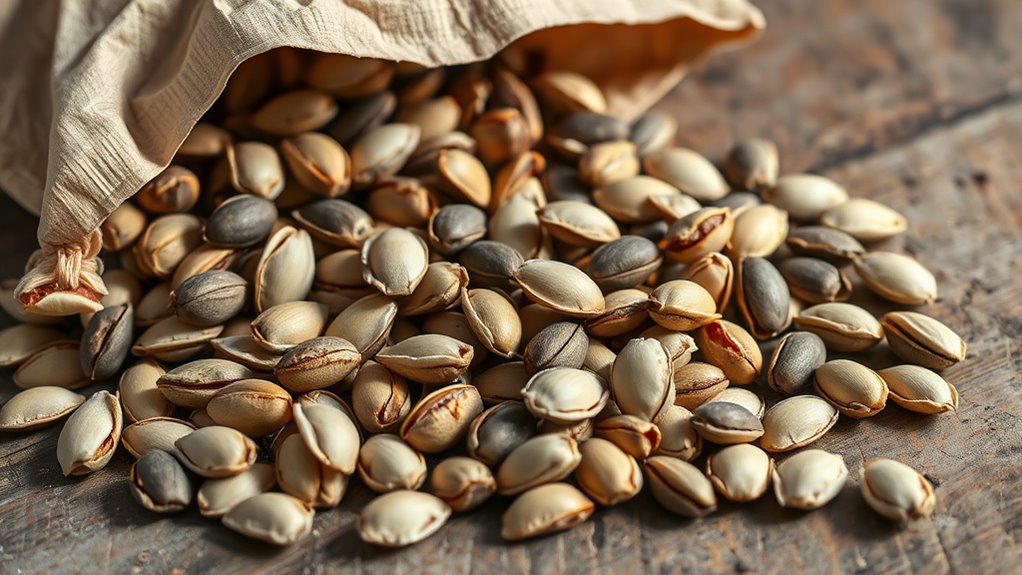
Imagine holding a tiny, golden armor. These shells provide a subtle crunch and added fiber, but be cautious—they can be tough on digestion if you eat too many. Always chew thoroughly, and consider how your digestion handles them before indulging.
How Does Humidity Affect Sunflower Seed Freshness?
Humidity affects sunflower seed freshness quite a bit. When there’s too much moisture in the air, seeds tend to soak up it up, which can lead to mold and spoilage.
On the flip side, keeping the humidity low helps maintain their crunch and flavor. To keep your seeds fresh, store them in airtight containers in a cool, dry place.
Follow these tips to extend their shelf life, and always check for signs of moisture or mold before eating.
Conclusion
Think of sunflower seeds as delicate treasure chests. If you leave them exposed to air, heat, or moisture, their riches spoil and fade away.
To keep your bounty fresh, store them wisely and watch for signs of decay. When they start to turn rancid or develop an off smell, it’s time to let go.
Treat your seeds like precious gems. Cherish and care for them so they stay vibrant and tasty for your enjoyment.
Remember, sunflower seeds do go bad, so proper storage is key to keeping them fresh and delicious.