What Happens When You Eat Passion Fruit Seeds?
Feeling overwhelmed by confusing health advice and unsure about what’s safe to eat? You’re not alone—many people struggle to understand the true benefits of superfoods like passion fruit seeds.
When you eat passion fruit seeds, you get a tasty mix of fiber, healthy fats, and antioxidants that support digestion and boost your immune system. The seeds are safe to swallow or chew, and they help promote regular bowel movements.
While they are generally healthy, eating too many may cause bloating or discomfort due to their high fiber content.
Keep exploring to uncover more tips on enjoying these nutrient-packed seeds wisely.
Key Takeaways
- Passion fruit seeds are safe to eat and offer beneficial fiber, healthy fats, and antioxidants.
- Chewing the seeds helps improve digestion and nutrient absorption, while swallowing them whole might reduce these benefits.
- The high fiber content supports digestion, prevents constipation, and feeds good gut bacteria.
- Eating too many seeds can cause digestive discomfort like bloating, gas, or cramps.
- These seeds provide nutritional benefits that support heart health, reduce inflammation, and boost your immune system.
What Are Passion Fruit Seeds and Are They Safe to Eat?
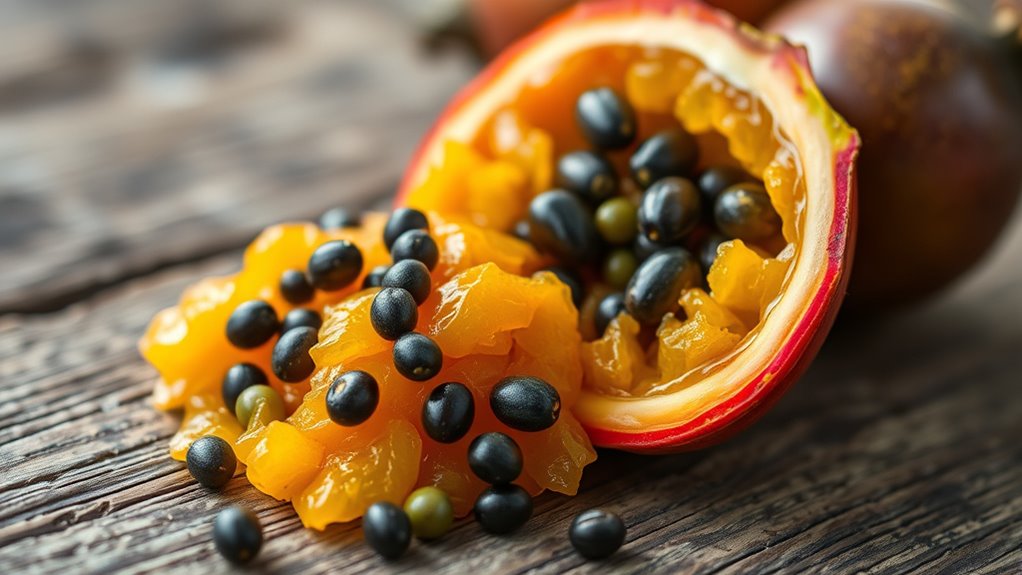
Passion fruit seeds are small, dark, and crunchy bits found inside the juicy pulp of the fruit. They are completely safe to eat and provide benefits like fiber and healthy fats.
Passion fruit seeds are small, dark, crunchy, and packed with fiber and healthy fats—completely safe and delicious to enjoy.
Different seed varieties exist, but most look and feel similar. While some people worry about choking, the seeds are soft enough to swallow or chew comfortably.
Eating passion fruit seeds can give your snack or dessert a nice crunch. They also contain antioxidants that support your health, making them a nutritious addition.
The seeds’ shell is hard but edible, and when eaten with the pulp, they’re easy to digest. Overall, passion fruit seeds are a safe, tasty, and healthy part of the fruit.
They add texture and nutritional value, so just make sure you’re eating ripe fruit. Enjoy their benefits without any worries.
What Nutrients Do Passion Fruit Seeds Provide?
Passion fruit seeds are small but mighty sources of essential nutrients. They contain healthy fats, fiber, vitamins, and minerals that support your overall health.
These seeds are packed with antioxidants, which can help fight oxidative stress and reduce inflammation. They also have omega-3 and omega-6 fatty acids, which are good for your heart and brain.
The fiber in passion fruit seeds helps keep digestion steady and can help regulate blood sugar levels. Plus, they provide vitamin C, which boosts your immune system.
Minerals like magnesium and potassium are also present, which are important for muscle function and maintaining healthy blood pressure. Eating these seeds offers many health benefits, from cardiovascular support to immune health.
Even though they’re small, passion fruit seeds pack a powerful nutritional punch. Adding them to your diet can help you enjoy their full range of health benefits.
How Do Passion Fruit Seeds Impact Your Digestion?
Passion fruit seeds are packed with fiber, which is great for keeping your digestion running smoothly and regularly. It’s like giving your gut a little boost! But, keep in mind, eating too many seeds at once might lead to some discomfort or bloating — nobody wants that.
On the bright side, the nutrients found in these seeds can actually support your gut health when you enjoy them in moderation. So, just be mindful about how much you’re munching on, and you’ll be able to reap the benefits without any unwanted side effects.
Fiber Content Aids Digestion
Because passion fruit seeds are high in dietary fiber, they can play a big role in supporting your digestion. The fiber helps bulk up your stool, making it easier to pass and encouraging regular bowel movements.
This benefits your stomach health by preventing constipation and lowering the chances of digestive problems. The benefits go beyond digestion — fiber also acts as a prebiotic, feeding the good bacteria in your gut.
These bacteria help with digestion and overall gut health. Adding passion fruit seeds to your diet can help keep your digestive system healthy, making sure nutrients are absorbed well and waste is eliminated smoothly.
Possible Digestive Discomfort
While passion fruit seeds offer many health benefits, eating them in excess or without proper preparation can sometimes cause digestive discomfort. Consuming large amounts might lead to bloating, gas, or stomach cramps.
If you have a seed allergy, your digestive system could react more strongly, causing irritation or allergic responses. The tough outer shell of the seeds can also be hard to digest and may cause minor blockages or discomfort.
Be mindful of these potential issues:
- Bloating and gas
- Stomach cramps
- Digestive problems with seed allergies
- Hard-to-digest seed shells
To avoid problems, enjoy passion fruit seeds in moderation and make sure they are properly prepared.
Nutrients Support Gut Health
The nutrients in passion fruit seeds can actually support your digestion and promote gut health. These seeds contain dietary fiber, which acts as a prebiotic by feeding the beneficial bacteria in your gut microbiome.
This helps maintain a balanced and diverse gut environment, offering probiotic benefits. A healthy gut microbiome improves nutrient absorption, reduces inflammation, and supports overall digestion.
Eating passion fruit seeds regularly can help keep this microbial balance intact, leading to smoother digestion and fewer discomforts. The fiber also adds bulk to your stool, helping prevent constipation.
Can Eating Passion Fruit Seeds Boost Your Health?
Eating passion fruit seeds may offer some health benefits because of their rich nutrient content. Including these seeds in your diet could help improve your overall well-being through various nutrients.
The seeds are packed with antioxidants, fiber, and healthy fats that support your body’s functions. These nutrients might help reduce inflammation, improve digestion, and strengthen your immune system.
Some specific benefits include providing antioxidants that fight free radicals, supporting digestive health with high fiber, promoting heart health through healthy fats, and increasing energy levels to reduce fatigue.
While eating seeds can be a nutritious addition, it’s important to enjoy them in moderation. Incorporating passion fruit seeds into your diet might help boost your health, but they work best alongside a balanced, varied diet.
What Are the Potential Risks and Side Effects of Passion Fruit Seeds?
Although passion fruit seeds can offer health benefits, consuming them also comes with potential risks and side effects you should be aware of. One concern is seed toxicity; while most seeds are safe in moderation, large quantities might cause digestive discomfort or toxicity issues, especially if you have underlying health conditions.
Some people may experience allergic reactions, which can range from mild itching or swelling to more severe symptoms like difficulty breathing. If you notice any adverse reactions after eating passion fruit seeds, it’s best to stop consumption and consult a healthcare professional.
There’s also the risk of choking if seeds are swallowed whole without proper chewing. However, this falls more under safety precautions. Overall, while passion fruit seeds can be part of a healthy diet, being mindful of potential seed toxicity and allergic reactions helps you enjoy them safely.
Should You Chew or Swallow Passion Fruit Seeds Whole?
Ever wondered whether you should chew or swallow passion fruit seeds? The choice affects your digestion and how you enjoy the fruit.
Chewing helps break down the seeds, making it easier for your body to absorb nutrients and releasing more flavor. If you prefer swallowing, it’s quicker and might reduce the chance of choking, but you won’t get the full texture and nutrient benefits.
Chewing seeds improves nutrient absorption and flavor, while swallowing is quicker but offers fewer benefits.
Think about these points:
- Chewing boosts nutrient release and can help digestion.
- Swallowing whole is easier and keeps the seeds intact.
- Chewing can increase your fiber intake.
- Swallowing might be better if you dislike the gritty texture.
At the end of the day, it’s all about what feels right for you. If you want the most health benefits, chewing is the way to go. If convenience matters more, swallowing whole might suit you better. Just be sure to chew thoroughly if you decide to chew.
How to Eat Passion Fruit Seeds Safely and Enjoyably
To enjoy passion fruit seeds safely and make the most of their flavor and nutrients, it’s important to handle them properly. Start by scooping out the seeds from ripe passion fruit, which show their vibrant color and juicy pulp.
You can incorporate the seeds into various recipes like smoothies, fruit salads, or yogurt bowls. Their seed textures add a delightful crunch, making your snacks more interesting.
When experimenting with flavors, try pairing passion fruit seeds with mint, coconut, or citrus for a fresh twist. Consuming seeds in moderation offers health benefits, including fiber, antioxidants, and vitamins.
Do Passion Fruit Seeds Contain Antinutrients or Toxins?
Are passion fruit seeds safe to eat, or do they contain antinutrients or toxins? For most people, passion fruit seeds are safe and generally non-toxic, but they do have compounds that could affect nutrient absorption or digestion if eaten in large amounts.
Some seeds contain small amounts of antinutrients like phytates, which can bind minerals and make them less available to your body. Toxins are rare in passion fruit seeds, but eating a lot might cause minor digestive discomfort.
The fiber in the seeds helps support digestion, but consuming too many can cause issues. Chewing the seeds well can help your body process them better and reduce potential problems.
What Do Nutrition Experts Say About Passion Fruit Seeds?
Nutrition experts generally consider passion fruit seeds safe to eat in moderation, focusing on their nutritional benefits rather than risks. These seeds are packed with nutrients like fiber, antioxidants, and healthy fats that support overall health.
Many nutritionists highlight their role in boosting digestive health, as the fiber helps regulate bowel movements and promotes gut wellness. Passion fruit seeds also contain phytochemicals that may reduce inflammation and fight oxidative stress.
Passion fruit seeds support digestion, reduce inflammation, and fight oxidative stress with their fiber and phytochemicals.
Experts agree that when enjoyed responsibly, these seeds can be a valuable part of a balanced diet. They’re especially good for those looking for natural sources of fiber and antioxidants.
However, moderation is important because eating too many might cause digestive discomfort. Overall, nutrition pros see passion fruit seeds as a healthy, nutrient-rich snack that adds variety to your diet without many risks.
They’re a smart choice for anyone focused on health and want to include more wholesome foods in their meals.
Final Tips for Incorporating Passion Fruit Seeds Into Your Diet
If you’re thinking about adding passion fruit seeds to your diet, it’s a good idea to start with small amounts. That way, you can see how your body reacts and avoid any surprises.
One easy way to enjoy them is by tossing them into smoothies. They blend well and make the drink more interesting, plus they’re easier to digest that way.
Just keep an eye on how your digestion is doing after you try them. If you notice any discomfort, it’s best to cut back and see if things improve.
Start With Small Amounts
Starting with small amounts allows your body to gradually adapt to the seeds’ fiber and nutrient content. This helps you enjoy the passion fruit benefits without overloading your digestive system.
When beginning seed consumption, start slow and observe how your body reacts. Increasing gradually reduces the risk of discomfort or digestive issues.
Keep in mind that the seeds are rich in fiber, which can aid digestion but may cause bloating if introduced too quickly. To get the most out of them, incorporate small servings consistently.
Remember, patience is key when adding new foods to your diet. Monitor your body’s response before increasing intake, and consider combining seeds with other fiber-rich foods.
Stay hydrated to support digestion, and if you’re unsure, don’t hesitate to consult a healthcare professional.
Incorporate in Smoothies
Adding passion fruit seeds to smoothies is an easy and delicious way to enjoy their benefits. Blend them into your favorite recipes to boost fiber and add a subtle crunch.
Try experimenting with flavor combos like tropical fruits, berries, or citrus for vibrant, nutritious drinks. To get the best taste, start with small amounts of seeds and gradually add more as you get comfortable.
Mix passion fruit seeds with ingredients like mango, banana, or coconut for a refreshing twist. Here’s a quick guide to help you incorporate seeds smoothly:
| Base Fruit | Complementary Ingredients | Flavor Ideas |
|---|---|---|
| Mango | Coconut milk, lime | Tropical delight |
| Berries | Yogurt, honey | Berry blast |
| Banana | Almond milk, cinnamon | Creamy and sweet |
| Citrus (orange) | Ginger, mint | Invigorating tang |
| Pineapple | Mint, coconut water | Exotic revitalization |
Monitor Digestive Response
As you start adding passion fruit seeds to your diet, it’s important to watch how your digestive system reacts. Keep an eye out for signs like bloating, gas, or discomfort, which can show how well your body is breaking down the seeds.
Monitoring your gut microbiome is also helpful, since these seeds can affect the balance of beneficial bacteria. To get the best results, introduce the seeds gradually and make sure to stay hydrated.
Pay attention to any changes in your bowel movements or feelings of bloating. Notice if you experience more gas or discomfort, and see if your digestion improves over time.
Adjust your intake based on how your body responds to find what works best for you.
Frequently Asked Questions
Can Passion Fruit Seeds Cause Any Allergic Reactions?
Yes, passion fruit seeds can cause allergy symptoms in some people. While the seeds are nutritious, allergic reactions might include itching, swelling, or difficulty breathing.
If you notice these symptoms after eating passion fruit seeds, stop eating them right away and seek medical help. Everyone’s immune system responds differently, so it’s important to be cautious, especially if you have a history of food allergies.
Are There Differences in Seed Safety Between Ripe and Unripe Passion Fruits?
You should be cautious because unripe passion fruit seeds pose more risks than ripe ones. Ripe seeds have a smoother texture and are safer to eat, offering benefits like fiber and antioxidants.
Unripe seeds tend to be harder and might cause digestion issues or irritation. Waiting for the fruit to fully ripen not only makes the seeds safer but also helps you get the most nutritional benefits.
How Many Passion Fruit Seeds Can Be Safely Consumed Daily?
You can safely eat about 10 to 15 passion fruit seeds daily, considering their seed nutrition benefits like fiber and antioxidants. Incorporating this amount into your daily routine offers health benefits without risking potential toxicity from the seeds’ trace amounts of cyanogenic compounds.
Do Passion Fruit Seeds Affect Blood Sugar Levels?
Eating passion fruit seeds can influence blood sugar levels because of their nutrients like fiber and antioxidants. These components may help control blood sugar by slowing down digestion and preventing sharp glucose spikes.
That said, if you have diabetes or are worried about your blood sugar, it’s a good idea to keep an eye on how your body responds. Including seeds in your diet in moderation is generally safe, but always check with your healthcare provider if you’re unsure about how they might affect you.
Are Passion Fruit Seeds Suitable for Children or Pregnant Women?
You should be cautious with passion fruit seeds if you’re pregnant or feeding children, as they may pose risks.
While the seeds offer nutritional benefits and boost digestive health, their high fiber content can be tough for little tummies and delicate pregnancies.
Think of the seeds as tiny treasure chests—beneficial but requiring careful handling.
Always consult a healthcare professional before including them in a child’s or pregnant woman’s diet.
Conclusion
Eating passion fruit seeds is like planting tiny treasures in your diet—packed with nutrients and potential health benefits. Just as a small seed can grow into a thriving plant, consuming these seeds wisely can support your digestion and boost your wellness.
But remember, moderation is key, and listening to your body helps avoid any unwanted side effects. With mindful enjoyment, you can turn this exotic fruit into a delightful, nourishing part of your daily routine.
Incorporating passion fruit seeds into your diet can be beneficial, but always be mindful of how your body responds. When eaten in moderation, passion fruit seeds can be a nutritious addition that supports your health and adds a tasty twist to your snacks.