Benefits of Dogs Eating Flax Seeds
Many dog owners want to keep their furry friends healthy and happy, but figuring out the best ways to do that can be tricky. You’re not alone—lots of people struggle with finding simple, natural options to support their dog’s well-being.
Feeding your dog flax seeds offers many health benefits. They’re rich in omega-3 fatty acids, which support a healthy coat, skin, and joints, especially as your dog ages or stays active.
Flax seeds also improve digestion, promote regular bowel movements, and boost immune health with antioxidants and protein.
Just remember to choose ground flax seeds for better absorption and proper portion sizes.
Keep exploring to find out how to safely include flax seeds in your dog’s diet.
Key Takeaways
- Flax seeds provide omega-3 fatty acids that promote healthy skin, a shiny coat, and help reduce dryness or irritation.
- Their high fiber content supports good digestion and regular bowel movements in dogs.
- Rich in antioxidants and lignans, flax seeds help boost the immune system and fight off free radicals.
- They also have anti-inflammatory properties that can support joint health and reduce stiffness.
- When properly prepared, flax seeds can improve nutrient absorption and boost overall vitality in dogs.
What Are Flax Seeds and Why Are They Good for Dogs?
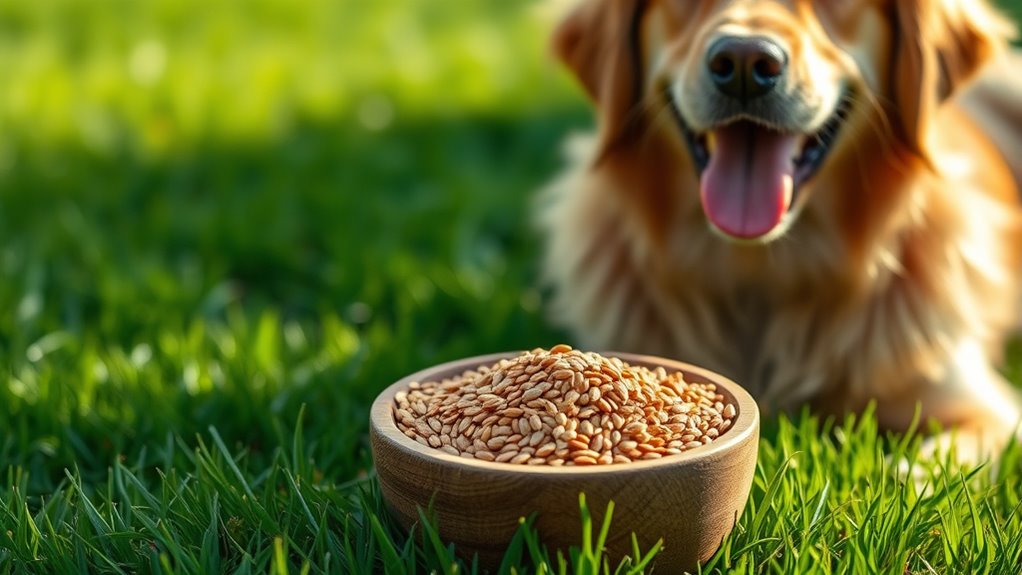
Flax seeds are small, nutrient-packed seeds that offer many health benefits for dogs. Their history goes back thousands of years, originally cultivated in ancient Egypt and the Mediterranean.
Over time, flax seed history shows its value as a dietary staple because of its rich nutrient profile. For dog nutrition, these seeds provide essential fatty acids, fiber, and antioxidants that support overall health.
Flax seeds are a nutrient-rich addition to support your dog’s health and vitality.
They’re especially known for their omega-3s, which promote healthy skin and a shiny coat. Flax seeds also contain lignans, compounds with antioxidant properties that may help reduce inflammation.
When added properly to your dog’s diet, flax seeds can improve digestion and support immune function. Just remember, ground flax seeds are easier for dogs to digest than whole seeds.
Nutritional Benefits of Flax Seeds for Your Dog’s Health
Flax seeds are a great addition to your dog’s diet because they’re packed with omega-3 fatty acids. These healthy fats help keep your dog’s coat shiny and their skin healthy. It’s like giving them a little boost for a brighter, more vibrant look!
Plus, flax seeds are high in fiber, which is awesome for your dog’s digestion. They can help keep things moving smoothly and support regular bowel movements. Adding a small amount to their meals can really make a difference in their overall health and happiness.
Omega-3 Fatty Acids
Because omega-3 fatty acids are essential for your dog’s overall health, adding flax seeds to their diet can be a natural and effective way to boost these important nutrients. Flax seeds are packed with omega-3s that support your dog’s skin, coat, brain, and joints.
These healthy fats help reduce inflammation and improve mobility, making them especially beneficial for aging or active dogs. To get the most out of flax seeds, keep these tips in mind:
- Flax seeds are a plant-based omega-3 source, perfect for dogs allergic to fish.
- Regularly feeding them can help maintain a shiny coat and healthy skin.
- Omega-3s also support your dog’s cognitive function and mental clarity.
- Including flax seeds in their diet may help manage inflammation-related issues.
Adding ground flax seed ensures your dog gets concentrated omega-3s for optimal health.
Digestive Health Support
Adding ground flax seeds to your dog’s diet can promote healthy digestion by providing a rich source of dietary fiber. The fiber helps regulate bowel movements, preventing constipation and supporting overall gut function.
Flax seeds act as a prebiotic, encouraging growth of good gut bacteria that are key for nutrient absorption and immune health. The soluble fiber in flax seeds forms a gel-like substance in the digestive tract, soothing inflammation and aiding digestion.
Regular inclusion of flax seeds can improve your dog’s gut health, making digestion more efficient and reducing discomfort. By supporting the balance of gut bacteria, flax seeds help your dog feel more comfortable and energetic.
How Flax Seeds Help Improve Your Dog’s Skin and Coat
Feeding your dog flax seeds can really make a difference in how their coat looks and feels. You might notice their fur becoming shinier and their skin healthier overall. It’s pretty amazing how such a simple addition can have such a positive impact!
The omega-3 fatty acids in flax seeds play a big role here. They help cut down on itchiness and skin irritations, which means your pup can stay comfortable and happy. Adding flax seeds to their diet is a great way to support their skin and coat from the inside out.
All in all, including flax seeds in your dog’s meals can lead to a happier, more vibrant-looking pet — and who doesn’t want that?
Enhances Coat Shine
A handful of flax seeds can make a noticeable difference in your dog’s coat shine. The omega-3 fatty acids and lignans in flax seeds boost coat health, giving it a vibrant, natural glow. When your dog’s skin is well-nourished from these nutrients, their coat reflects that health.
To get the most benefit, think about these key factors:
- Consistent supplementation supports ongoing coat health.
- Omega-3s help reduce dryness, making the coat sleek and shiny.
- Lignans improve the natural oils that give the coat its luster.
- A proper balance of nutrients ensures a resilient, glossy coat.
Adding flax seeds to your dog’s diet is an easy way to naturally enhance their coat’s shine, making it softer, smoother, and more radiant.
Reduces Skin Irritations
Because of their anti-inflammatory properties, flax seeds can significantly reduce skin irritations in dogs. When added to your dog’s diet, they help promote healthier skin by calming inflamed or itchy areas.
Flax seeds are packed with omega-3 fatty acids, which help repair and strengthen the skin barrier, reducing redness and discomfort. They also support allergy relief by soothing the immune response to environmental or food allergens.
Regular intake can lessen the severity of skin irritations caused by allergies or dermatitis. This means fewer scratching episodes and less skin damage for your dog.
Adding flax seeds to their diet can boost overall skin health and provide a calming effect. It helps your dog have a healthier, more comfortable coat.
Supporting Digestion With Flax Seeds: What You Need to Know
Supporting your dog’s digestion with flax seeds can be really helpful thanks to their high fiber content. The different types—whole, ground, or oil—offer various benefits, but ground flax seeds are the easiest for your dog to digest.
They contain natural digestive enzymes that help break down food more effectively, which can reduce discomfort and improve nutrient absorption.
Here are four key points to keep in mind:
- Ground flax seeds provide more accessible fiber and nutrients than whole seeds.
- The high fiber supports regular bowel movements and helps prevent constipation.
- Digestive enzymes in flax seeds assist in breaking down complex nutrients.
- Regularly adding flax seeds can promote a healthier, more balanced digestive system.
Do Flax Seeds Boost Your Dog’s Immune System?
Flax seeds are packed with nutrients that can help boost your dog’s immune defenses. The omega-3 fatty acids, lignans, and fiber in flax seed all contribute to a healthier immune system.
These nutrients may help reduce inflammation and support your dog’s ability to fight off illnesses. Including flax seed regularly in your dog’s diet can improve their overall resilience against infections.
Here’s a quick look at how flax seed benefits your dog’s immune system:
| Benefit | How It Helps |
|---|---|
| Omega-3 Fatty Acids | Reduce inflammation and support immune response |
| Lignans | Provide antioxidant properties and fight free radicals |
| Fiber | Promote gut health and boost immune function |
| Protein | Help repair tissues and support immune cells |
| Vitamins | Enhance overall immune health |
Adding flax seed can be an easy way to promote a stronger immune system in your dog.
How to Safely Feed Flax Seeds to Your Dog
Want to give your dog some flax seeds? That’s a great idea, but it’s important to do it safely. First off, make sure you’re giving only small amounts—that way, you won’t overwhelm your pup’s system. It’s also a good idea to prepare the seeds properly, like grinding them up, because that makes them easier for your dog to digest. And of course, moderation is key—don’t go overboard. By paying attention to these little details, you can help your furry friend enjoy the benefits of flax seeds without any worries.
Proper Portion Sizes
Making sure your dog gets the right amount of flax seeds is essential for safe and effective health benefits. Start with small amounts based on your dog’s size, usually about 1 teaspoon for small dogs and up to 1 tablespoon for larger ones.
Remember, different flax seed varieties — ground or whole — impact absorption, so ground flax seeds are often better. Maintain a consistent serving frequency, ideally a few times a week, to avoid overdoing it.
Here are some key points to keep in mind:
- Use ground flax seeds for better nutrient absorption.
- Adjust portion sizes according to your dog’s weight and age.
- Keep the serving frequency moderate, no more than 2-3 times weekly.
- Consult your vet if you’re unsure about specific quantities or flax seed types.
Proper portioning guarantees your dog benefits without risks.
Preparation and Serving
Preparing flax seeds properly before serving them to your dog helps maximize their health benefits and minimizes potential risks. First, choose the right flax seed types—ground flax seeds are best because they’re easier for your dog to digest than whole seeds.
Always grind the seeds just before serving to preserve nutrients. Use simple serving methods: sprinkle a small amount of ground flax seeds over your dog’s food or mix them into wet or dry meals.
Avoid giving whole seeds, which could pose a choking hazard or pass through the digestive system without releasing nutrients. Start with a small quantity and gradually increase as your dog adjusts.
Proper preparation guarantees your dog gains maximum benefits from flax seeds safely.
Are Flax Seeds Safe for Dogs? Risks and Precautions
Are flax seeds safe for dogs? Generally, yes, but it’s important to know the risks. While flax seeds can offer health benefits, giving too much might cause flax seed toxicity, leading to digestive upset or more serious problems.
Some dogs may develop allergies to flax seeds, which can cause itching, swelling, or stomach issues. To keep your dog safe, consider a few precautions.
First, limit the amount you give to prevent toxicity. Watch for signs of allergic reactions like skin irritation or vomiting. Always introduce flax seeds slowly so you can see how your dog responds.
If your dog has any health issues or you’re unsure about feeding flax seeds, it’s best to check with your veterinarian. Being cautious helps you avoid potential problems and ensures your dog gets the benefits safely.
Best Ways to Prepare Flax Seeds for Your Dog
The best way to prepare flax seeds for your dog is to choose the right form—ground, soaked, or cooked—and serve them in moderation. Ground flax seed types are easiest for your dog to digest and absorb nutrients from, so consider grinding whole seeds before feeding.
Soaking flax seeds in water softens them, making them gentler on your dog’s stomach. Cooking can also reduce any potential anti-nutrients. Whichever method you pick, avoid overfeeding and stick to the recommended amounts.
Proper storage is key to keeping flax seeds fresh. Store whole seeds in an airtight container in a cool, dark place. Ground flax should be kept in the refrigerator to prevent spoilage.
Never leave flax seeds exposed to sunlight or humidity, as this can degrade their nutritional value. Freshly prepared flax seeds offer the most benefits, so only prepare what your dog can eat within a few days.
Signs Your Dog Might Benefit From Flax Seeds
Incorporating flax seeds into your dog’s diet can bring noticeable health benefits, especially if your dog shows signs of specific needs. Look out for these indicators that suggest your dog might benefit from flax seed advantages:
- Dry, flaky skin or persistent itching, signaling improved skin health.
- Constipation or irregular bowel movements, indicating better digestion.
- Dull coat or hair loss, which flax seeds can help boost coat shine.
- Signs of joint stiffness or inflammation, as flax seeds contain anti-inflammatory properties.
If your dog exhibits any of these symptoms, adding flax seeds may support their overall health. These seeds are rich in omega-3 fatty acids, fiber, and lignans, which can address common issues and promote well-being. Recognizing these signs helps you know when flax seeds can be added to your dog’s diet for better health and happiness.
FAQs About Feeding Flax Seeds to Dogs
Wondering how to safely include flax seeds in your dog’s diet? First, understand the different flax seed types—whole, ground, or oil—and pick the best form for your pup. Ground flax seeds are usually easier to digest and help your dog absorb more nutrients.
Start with small amounts—about a teaspoon for small dogs and a tablespoon for larger ones. Then, gradually increase the amount if your dog handles it well. Always introduce new foods slowly so you can watch for any reactions.
Be aware that some dogs might be allergic to flax seeds. If your dog shows signs like itching, swelling, or stomach upset, stop giving it and check with your vet. It’s also important to use high-quality flax seeds that are stored properly to prevent them from going rancid.
When in doubt, ask your vet for advice, especially if your dog has health issues or takes medication.
Frequently Asked Questions
Can Puppies Safely Eat Flax Seeds?
Yes, puppies can safely eat flax seeds in moderation, but it’s important to consider their digestion and check with your vet first.
Proper preparation is key—grinding the seeds helps with digestion and nutrient absorption.
Start with small amounts to see how your puppy reacts because too much can upset their stomach.
Always introduce new foods gradually and keep an eye out for any adverse reactions.
How Much Flax Seed Is Safe for My Dog?
Think of flax seed nutrition as a hidden treasure for your dog’s health. You should give your dog about one teaspoon of ground flax seed per 10 pounds of body weight daily, mixing it into their food.
Always opt for proper flax seed preparation—ground seeds are best absorbed. Too much can cause digestive issues, so moderation is key.
Start small and observe how your pup responds for safe, healthful benefits.
Are There Any Dogs Allergic to Flax Seeds?
Some dogs can have allergies to flax seeds, so it’s important to watch for signs like itching, swelling, or digestive issues.
If your dog shows any allergic reactions, stop giving flax seeds and talk to your vet.
Being aware of flax seed allergies helps keep your dog safe and healthy by avoiding potential allergens that could cause discomfort or harm.
Always introduce new foods slowly and keep an eye on how your dog responds.
Can Flax Seeds Replace Other Dietary Supplements?
Sure, flax seeds can sound like the miracle cure, but don’t ditch your vet-recommended supplements just yet. They’re great for omega fatty acids and digestive health, yet they can’t replace a balanced diet.
Think of flax seeds as a supportive sidekick, not the superhero. Incorporate them wisely to complement your dog’s dietary balance, but always check with your vet before making big changes.
How Often Should I Feed Flax Seeds to My Dog?
You should feed your dog flax seeds about 2-3 times a week. Start with small amounts, like a teaspoon, to see how your dog reacts.
Make sure to grind the flax seeds before giving them to your dog. This helps improve digestibility and absorption of nutrients.
Store the flax seeds in an airtight container in a cool, dark place to keep them fresh. Always watch your dog for any adverse reactions.
If you notice anything unusual, or if you’re planning to make big changes to your dog’s diet, it’s best to check with your vet first.
Conclusion
Adding flax seeds to your dog’s diet can be a game-changer for their health, from shiny coats to better digestion. Just remember, it’s not a one-size-fits-all solution—consult your vet before making changes.
When used safely, flax seeds can give your canine companion a leg up in staying healthy and happy. It’s worth doing your homework because, in the end, a well-informed decision is the best kind of head start.
Incorporating flax seeds can boost your dog’s overall well-being, thanks to their rich omega-3 fatty acids and fiber. Just be sure to introduce them gradually and in proper amounts.
Remember, always check with your vet about adding flax seeds to your dog’s diet. That way, you’re giving your furry friend the benefits of flax seeds while keeping them safe.
Overall, flax seeds can be a wonderful addition to a balanced diet, helping your dog stay vibrant and healthy. Knowledge is power, so do your research and enjoy the benefits of flax seeds for your dog.