Can Chickens Eat Sunflower Seeds?
Are you looking for a healthy treat to keep your chickens happy and healthy? Many chicken owners wonder if sunflower seeds are a good option and worry about the right amount to feed. You’re not alone—finding safe, nutritious snacks for your flock can feel overwhelming.
Yes, your chickens can eat sunflower seeds as a nutritious treat when given in moderation. They provide healthy fats, protein, fiber, vitamins, and minerals, which support egg production and overall health.
Be careful not to overfeed or give spoiled seeds, and choose between whole or shelled seeds based on your chickens’ age and behavior.
To guarantee safety and maximize benefits, consider how to serve them properly—more details are just ahead.
Key Takeaways
- Chickens can safely eat sunflower seeds in moderation as a nutritious treat.
- Sunflower seeds offer healthy fats, protein, fiber, vitamins, and minerals that are good for chickens.
- Feed them 2-3 times a week, no more than 1-2 tablespoons per hen.
- Use both whole and shelled seeds to encourage foraging and make it easier for chickens to eat, depending on their age.
- Avoid giving spoiled or moldy seeds, and keep an eye on your chickens for any reactions to prevent health problems.
What Nutrients Do Sunflower Seeds Provide for Chickens?
Sunflower seeds are a nutrient-rich treat for chickens, offering a variety of essential vitamins and minerals. The nutrient breakdown shows they are high in healthy fats, mainly polyunsaturated and monounsaturated fats, which support energy and overall health.
Sunflower seeds provide chickens with healthy fats, vitamins, and minerals to support their overall health and energy.
Their seed composition includes significant protein, helping with muscle development and feather growth. You’ll also find fiber, which promotes healthy digestion.
Sunflower seeds are packed with vitamin E, an antioxidant that helps protect cells from damage. They also contain B-vitamins that support metabolism.
Minerals like magnesium, selenium, and zinc play important roles in immune function and reproductive health. The seed’s nutrient profile makes sunflower seeds a beneficial supplement for your chickens’ well-being.
However, it’s important to offer them in moderation to prevent excess fat intake, which can lead to other health issues.
Are Sunflower Seeds Safe for Chickens to Eat?
You might be wondering if sunflower seeds are safe for your chickens to eat. Well, it really depends on how you go about feeding them. Sunflower seeds can be a tasty treat and provide some good nutrients, but there are a few things to keep in mind.
There are some potential risks and concerns you should be aware of, like overfeeding or giving them seeds that aren’t prepared properly. Learning the right way to offer sunflower seeds ensures your flock gets the benefits without any health issues. So, a little knowledge goes a long way in keeping your chickens happy and healthy!
Nutritional Benefits for Chickens
Chickens can safely enjoy sunflower seeds in moderation, as these seeds offer valuable nutritional benefits that support their health. Sunflower seeds are rich in healthy fats, protein sources, and essential vitamins, helping boost energy and overall well-being.
Different seed varieties provide varying nutrient profiles, so you can choose the best options for your flock. Including sunflower seeds in their diet can improve feather quality and strengthen their immune system.
They also provide antioxidants that help fight inflammation. Just keep in mind that moderation is key to avoid excess fat intake.
Incorporating sunflower seeds as a treat or supplement can make mealtime more enjoyable and add variety to your chickens’ diet. Be sure to balance seed intake with other nutritious feed components for optimal health.
Potential Risks and Concerns
While sunflower seeds can be a healthy treat, there are potential risks to consider if you give them in excess. One concern is sunflower seed toxicity, which can happen if chickens eat moldy or spoiled seeds. Mold can produce harmful toxins that affect your flock’s health.
Sunflower seeds are high in fat, so feeding too many may lead to digestive problems like diarrhea or obesity. The shells can also cause choking or blockages if swallowed whole.
It’s important to feed sunflower seeds in moderation and make sure they’re clean and free from mold. Always keep an eye on your chickens’ reactions and remove any uneaten or spoiled seeds quickly.
Being cautious helps prevent health issues linked to sunflower seed toxicity and digestive discomfort.
Proper Feeding Guidelines
Feeding sunflower seeds to your flock can be safe and beneficial when done correctly, but it’s important to follow proper guidelines to prevent health issues. First, limit how often you feed seeds, like offering them a few times a week instead of every day.
Second, store seeds in a cool, dry place to stop mold and spoilage. Third, serve seeds in moderation — no more than 10% of their diet — to keep their overall nutrition balanced.
Always keep an eye on your chickens’ health and adjust the amount you feed based on how they’re doing. Avoid giving them spoiled or salted seeds, and introduce sunflower seeds gradually to see how they respond.
Proper storage and controlled feeding help your chickens enjoy the nutritional benefits without risking their well-being.
How Much Sunflower Seeds Should I Feed My Chickens?
Determining how much sunflower seeds to give your chickens depends on their overall diet and nutritional needs. It’s important to control portions and avoid overfeeding to prevent obesity and nutritional issues.
Usually, sunflower seeds should be treats, not your main food. A small handful per hen each day is enough, especially if they also get commercial feed, grains, and greens.
Here’s a simple guide to help with feeding frequency and portion sizes:
| Feeding Frequency | Portion Control |
|---|---|
| 2-3 times a week | About 1-2 tablespoons per hen |
| Daily | No more than 10% of their diet |
| Occasional treats | Limit to a small handful |
| During molting | Slightly increase the amount |
| Regular diet | Keep sunflower seeds minimal |
Follow these tips to keep your chickens healthy and happy.
Should I Offer Whole or Shelled Sunflower Seeds?
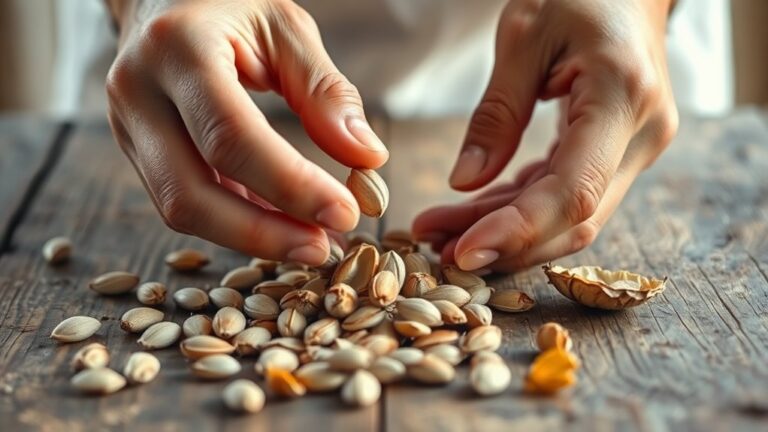
Should you offer whole or shelled sunflower seeds to your chickens? It depends on your goal and your flock’s preferences. Whole seeds give a natural, crunchy treat that encourages foraging behavior, while shelled seeds are easier for chickens to eat and digest.
If you want to promote foraging, offer whole seeds so they can peck and crack them open. Shelled seeds are a good choice if you want to save time and reduce waste, especially for younger or less experienced chickens.
Consider these points:
- Whole seeds help keep chickens active and engaged
- Shelled seeds are quicker to consume and easier to digest
- Mixing both can add variety and prevent boredom
Ultimately, the choice depends on your chickens’ size, age, and feeding habits. Both options can be healthy, but offering a balance might be your best bet for a happy, healthy flock.
What Are the Potential Risks of Feeding Sunflower Seeds?
Feeding sunflower seeds to your chickens can be a nice treat, but you’ve got to be careful. If you give them too much, it can cause health problems down the line. And, of course, there’s always the risk that the seeds might be spoiled or contaminated, which could make your chickens sick.
Plus, feeding too many sunflower seeds can lead to obesity in your flock. That’s not good news for their overall health and well-being. So, it’s best to offer sunflower seeds in moderation and make sure they’re fresh and safe.
Risk of Overfeeding
While sunflower seeds can be a tasty treat for your chickens, overfeeding them can lead to health issues. Too much seed can cause symptoms like weight gain, poor feather quality, and digestive problems. It’s important to monitor how often you feed them to prevent these issues.
Overfeeding can also cause nutrient imbalances and increase fat deposits, which affect your chickens’ overall health. To avoid these risks, try limiting sunflower seed portions to occasional treats.
Make sure to provide a balanced diet alongside seeds and watch for signs of excess weight or lethargy. Keeping an eye on how much and how often you feed helps ensure your chickens enjoy sunflower seeds safely.
Moderation is key to preventing health problems and keeping your chickens happy and healthy.
Potential Toxicity Concerns
Though sunflower seeds are generally safe for chickens when given in moderation, there are some potential toxicity concerns to keep in mind. Sunflower seed toxicity is rare but can happen if chickens eat moldy or spoiled seeds, which might contain harmful mycotoxins.
Eating large amounts of sunflower seeds can also cause health issues like choking or upset stomach. Seeds that have been treated with pesticides or chemicals could introduce toxins into your flock’s diet.
Always check seeds carefully before feeding. Avoid seeds that look moldy, discolored, or damaged. Too much sunflower seed intake over time might cause nutritional imbalances, so moderation is key.
Being aware of these risks helps keep your chickens healthy and safe.
Risk of Obesity Development
Sunflower seeds are calorie-dense treats that can quickly lead to weight gain in your chickens if given in excess. Overfeeding them may increase the risk of obesity, which can cause health issues like fatty liver disease and reduced mobility. To prevent this, monitor your chickens’ feeding frequency and portion sizes carefully.
Consider these tips:
- Limit sunflower seed treats to occasional snacks rather than daily feedings
- Use them as rewards instead of bulk feed
- Balance their diet with high-quality chicken feed and fresh greens
How Do Sunflower Seeds Fit Into a Balanced Chicken Diet?
Incorporating sunflower seeds into a chicken’s diet can be beneficial when done correctly, but it’s important to understand how they fit into a balanced nutritional plan. The seed variety matters; unsalted, raw sunflower seeds are best to avoid added salts or oils.
These seeds are rich in healthy fats and nutrients, but they shouldn’t replace the main components of your chickens’ diet. Instead, use sunflower seeds as an occasional treat or supplement.
Regarding feeding frequency, moderation is key. Offer sunflower seeds sparingly, no more than once or twice a week, to prevent overconsumption of fats and calories. Balance their diet with high-quality grains, greens, and formulated poultry feed to ensure your chickens get all essential nutrients.
Can Sunflower Seeds Improve Egg Quality and Production?
Adding sunflower seeds to your chickens’ diet can positively influence egg quality and production because of their rich nutrient profile. Sunflower seeds are full of healthy fats, protein, and vitamins that support your hens’ overall health and reproductive system.
Sunflower seeds boost egg quality with healthy fats, vitamins, and improved shell strength.
Different seed varieties, like black oil or striped sunflower seeds, have varying nutrient levels. This can impact egg production and shell quality in different ways.
Including sunflower seeds can:
- Make eggs richer in omega-3 fatty acids and vitamins.
- Help improve shell strength, which means fewer broken eggs.
- Support consistent egg production by giving hens the energy they need.
What Are the Best Ways to Serve Sunflower Seeds to Chickens?
When it comes to feeding sunflower seeds to your chickens, you want to do it in a way that’s safe and easy for them to enjoy. Just a little tip—serve the seeds in moderation. Too much can lead to health issues or make them picky eaters, so keep portions reasonable.
Now, the best way to serve sunflower seeds is to offer them either as a treat or mixed into their regular feed. You can also scatter them on the ground or in a feeder, which encourages natural foraging behavior. Just make sure the seeds are unsalted and unroasted to keep things healthy for your feathered friends. By sticking to these simple tips, your chickens can enjoy their sunflower seeds without any problems!
Proper Serving Techniques
To serve sunflower seeds to your chickens effectively, it’s best to offer them in a way that encourages natural foraging behavior while preventing waste. Use proper feeding techniques to keep your flock healthy and avoid overfeeding.
For example, scatter the seeds on the ground or use a shallow dish to mimic how chickens find food in the wild. Keep serving sizes small to prevent excess waste and ensure your chickens stay active.
Consider these tips:
- Scatter seeds in the run to promote foraging.
- Use a shallow tray or dish to control portioning.
- Avoid pouring large quantities at once to prevent spoilage.
Recommended Portion Sizes
Serving sunflower seeds in appropriate amounts helps keep your chickens healthy and prevents waste. To manage portion control, offer no more than a tablespoon of seeds per bird weekly, since seeds are high in fat. Spread out feeding frequency to avoid overfeeding; a small handful once or twice a week is enough.
Monitor your chickens’ reactions and adjust portions if you notice digestive issues or weight gain. Remember, sunflower seeds should be a supplement, not a replacement, for a balanced diet. For the best results, serve seeds as an occasional treat instead of daily.
Keeping portion sizes small and limiting how often you feed them ensures your chickens get the nutrients they need without risking health problems related to excess fat or calories.
Are There Different Types of Sunflower Seeds Suitable for Chickens?
Are all sunflower seeds created equal when it comes to feeding chickens? Not quite. Different seed varieties have different nutritional profiles, which can affect your chickens’ health and what they prefer to eat.
Some seeds are hulled, meaning the shells are removed, while others are whole and require more effort for your flock to crack open.
You should consider these options:
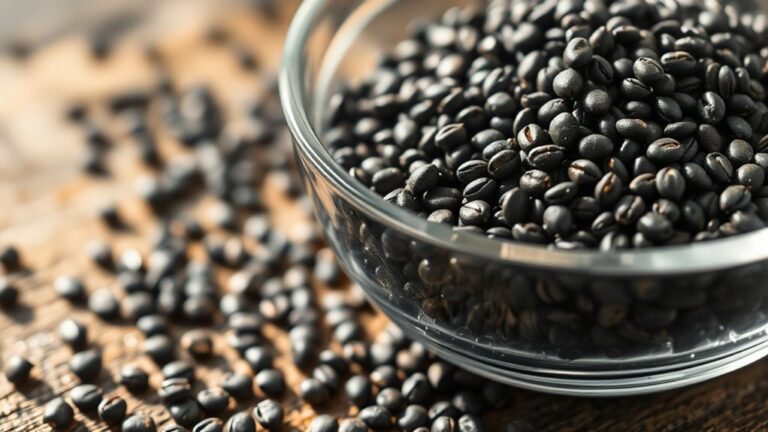
- Black oil sunflower seeds: high in fat and energy, perfect for boosting overall nutrition.
- Striped sunflower seeds: larger and often hulled, which some chickens find easier to eat.
- Unhulled seeds: add extra grit and encourage natural foraging behaviors.
Choosing the right seed variety depends on what your chickens prefer and their nutritional needs. Hulled seeds are easier for smaller or less experienced birds, while unhulled seeds can help promote natural pecking.
Tailoring the seed type ensures your flock gets the most benefits from sunflower seeds.
What Precautions Should I Take When Feeding Sunflower Seeds?
Feeding sunflower seeds to your chickens requires some precautions to prevent health issues and secure a balanced diet. First, monitor their feeding frequency; offering seeds as an occasional treat rather than a daily staple helps prevent excess fat intake. Too many seeds can lead to obesity or nutrient imbalances.
Moreover, seed preparation is essential. Always opt for unsalted, unflavored sunflower seeds, and consider cracking or crushing them to make swallowing easier and guarantee proper digestion. Avoid feeding raw seeds with shells that are difficult for chickens to process, as they can cause blockages.
Limit the amount of seeds you offer, and observe your chickens’ reactions to prevent overeating. Providing a varied diet rich in grains, vegetables, and protein will keep your flock healthy. By controlling feeding frequency and properly preparing the seeds, you help your chickens enjoy sunflower seeds safely without risking their health.
Frequently Asked Questions
Can Sunflower Seeds Replace Other Chicken Treats?
Sunflower seeds can be a nutritious treat alternative for your chickens, but they shouldn’t fully replace other treats. They offer benefits like healthy fats and protein, making them a good supplement.
That said, variety is really important for a balanced diet. Use sunflower seeds in moderation alongside other treat options.
This way, your chickens get all the nutrients they need without overindulging.
Do Sunflower Seeds Cause Allergies in Chickens?
Sunflower seeds generally don’t cause allergies in chickens, but it’s possible if they have a sensitivity. Sunflower seed nutrition offers healthy fats and protein, making them a good treat.
Watch for chicken allergy symptoms like sneezing, coughing, or skin irritation. If you notice these signs after feeding sunflower seeds, stop giving them and consult a vet.
Always introduce new treats gradually to monitor your chickens’ reactions.
How Often Can I Feed Sunflower Seeds to My Chickens?
Think of sunflower seeds as a treasure chest—delightful but best enjoyed in moderation. You can feed your chickens sunflower seeds a few times a week, about 2-3 times, to get the most benefit without overdoing it.
Sunflower seed benefits include added protein and nutrients, but feeding frequency is key to prevent obesity or nutritional imbalance. Keep it balanced, and your chickens will thrive on this tasty treat.
Are Roasted Sunflower Seeds Safe for Chickens?
Roasted sunflower seeds are generally safe for chickens if prepared properly, but they may lose some nutritional benefits compared to raw seeds. Roasting can improve flavor, but avoid adding salt or seasonings.
When feeding roasted seeds, offer them in moderation to prevent excess fat intake. Always verify seeds are unsalted and plain, and break them into smaller pieces so your chickens can easily digest them.
This helps maximize their nutritional benefits and keeps your chickens happy and healthy.
Do Sunflower Seeds Affect Chicken Weight Gain?
Sunflower seeds can influence your chickens’ weight gain, depending on how much they eat. While they offer great nutritional value, eating too much can lead to weight management issues and obesity.
To keep your chickens healthy, offer sunflower seeds in moderation. Balance treats with their regular diet to avoid overfeeding.
Proper portion control ensures they get the benefits of the seeds’ nutrients without risking unwanted weight gain. This promotes overall health and energy in your flock.
Conclusion
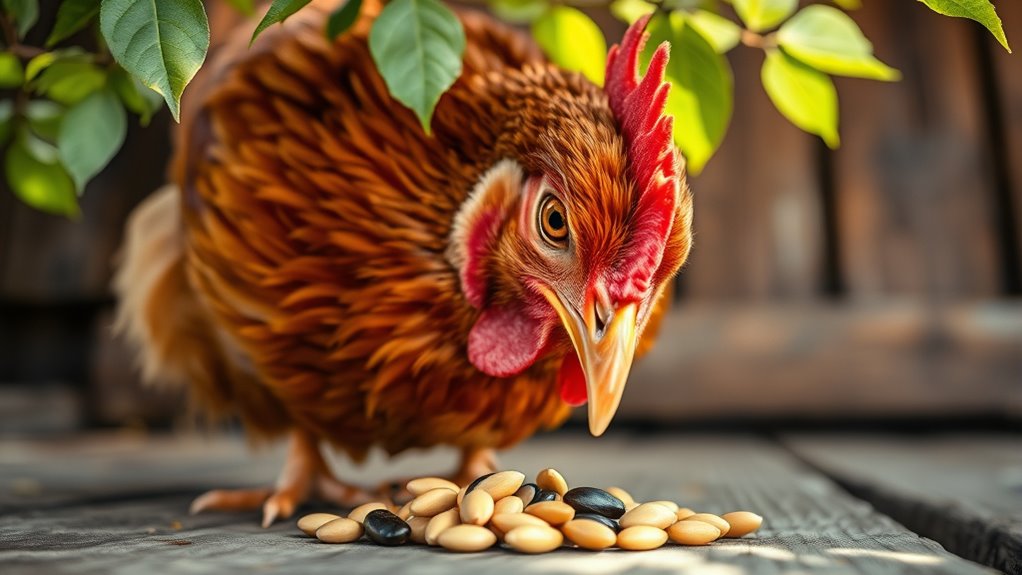
Imagine your chickens pecking happily at a handful of sunflower seeds, their feathers shimmering in the sunlight. When fed responsibly, these seeds can be a nutritious treat that boosts their health and egg production.
Just be mindful of portions and choose the right type. Small, thoughtful servings help keep your flock lively and healthy.
With proper feeding, chickens can enjoy sunflower seeds as a tasty addition. So, yes, chickens can eat sunflower seeds—just in moderation and with care.