Benefits of Chia Seeds: Are They Good for Dogs?
Many dog owners want to give their furry friends the best nutrition but often face confusion about which supplements are truly beneficial. You’re not alone in wanting to help your dog stay healthy and happy. Incorporating superfoods like chia seeds could be a great way to boost their diet.
Chia seeds can be a healthy addition to your dog’s diet, offering omega-3 fatty acids, fiber, and antioxidants that support a shiny coat, healthy skin, and better digestion. They may also aid in weight management by promoting fullness and slowing digestion.
However, it’s important to introduce them gradually and in moderation to avoid any digestive upset or choking hazards.
Want to learn how to safely incorporate chia seeds into your dog’s routine? Keep exploring for helpful tips.
Key Takeaways
- Chia seeds provide omega-3 fatty acids that promote healthy skin and a shiny coat in dogs.
- They support digestion and regular bowel movements thanks to their high fiber content.
- Chia seeds help maintain heart health and reduce inflammation in dogs.
- They aid in weight management by increasing satiety and slowing digestion.
- When properly introduced, chia seeds are a safe supplement to enhance overall canine health.
Are Chia Seeds Safe and Nutritious for Dogs?
While chia seeds are generally considered safe for dogs in moderation, it’s important to understand their nutritional value and potential risks. Chia benefits include being rich in omega-3 fatty acids, fiber, and antioxidants, which can support your dog’s overall health. These nutrients help promote healthy skin, a shiny coat, and better digestion, making chia a nice addition to your dog’s diet.
But remember, moderation is key. Too many chia seeds can cause digestive upset or blockages, especially if they aren’t soaked properly. Always introduce them slowly and in small amounts. Keep in mind that chia should complement, not replace, a balanced diet.
It’s a good idea to check with your vet before adding chia to your dog’s meals, especially if your pet has existing health issues. When used correctly, chia seeds can be a safe and nutritious supplement that adds valuable nutrients and supports your dog’s well-being.
What Are the Health Benefits of Chia Seeds for Dogs?
Chia seeds can be a great addition to your dog’s diet because they offer a bunch of health benefits. For starters, they can help improve your dog’s digestion and make bowel movements a lot easier. It’s like giving their tummy a little boost!
Plus, chia seeds are loaded with omega fatty acids. These healthy fats are fantastic for keeping your dog’s coat shiny and their skin healthy. You’ll notice them looking even more vibrant and feeling comfortable.
And that’s not all—these tiny seeds can also support a healthy heart. They help maintain proper cardiac function, which is super important for your dog’s overall well-being. So, a little chia can go a long way in keeping your furry friend happy and healthy!
Improved Digestive Health
Because of their high fiber content, chia seeds can really boost your dog’s digestive health. The fiber helps promote healthy bowel movements and supports fermentation benefits, keeping a balanced gut environment.
They also help with hydration by soaking up water and softening stool, which can lower the chances of constipation. Here are four ways chia seeds can help:
- Improve nutrient absorption by encouraging healthy gut bacteria
- Reduce inflammation and soothe digestive discomfort
- Support regular bowel movements to prevent issues
- Enhance fermentation benefits for better digestion
Adding chia seeds to your dog’s diet can lead to a happier, healthier gut, making digestion easier and more comfortable.
Rich in Omega Fatty Acids
Since they are rich in omega-3 and omega-6 fatty acids, chia seeds can greatly boost your dog’s overall health. Their nutritional profile is packed with these essential fatty acids, which support your dog’s immune system, coat, and skin health.
The fatty acids help reduce inflammation and improve joint mobility, making chia seeds a great supplement for active or aging dogs. Including them in your dog’s diet can also promote a shiny coat and prevent dry skin.
Because these fatty acids are essential for cell function, adding chia seeds ensures your dog gets a natural source of important nutrients. Just remember to introduce them gradually and in appropriate amounts to avoid any digestive upset.
Supports Heart Function
Adding chia seeds to your dog’s diet can support healthy heart function by providing essential nutrients that promote cardiovascular wellness. These tiny seeds are packed with omega-3 fatty acids, which are crucial for maintaining good heart health. Incorporating chia seeds into your dog’s diet can help reduce inflammation, improve blood circulation, and support overall canine nutrition.
Consider these benefits:
- Boosts omega-3 intake for better heart health
- Reduces inflammation that can affect the cardiovascular system
- Promotes healthy blood flow and circulation
- Supports the maintenance of a balanced heart rhythm
How Do Chia Seeds Support Your Dog’s Digestive Health?
Chia seeds are full of fiber, which is great for helping your dog’s digestion stay regular and smooth. They can also help soothe any irritation in your dog’s tummy and encourage the growth of good gut bacteria. Adding a small amount of chia seeds to your dog’s diet can really support their overall digestive health and comfort.
Fiber Promotes Regularity
Because of their high fiber content, chia seeds can really help improve your dog’s digestive regularity. The fiber in chia seeds helps add bulk to the stool and keeps bowel movements smooth.
When combined with natural digestive enzymes, they also support your dog’s ability to break down food more efficiently. Here are four ways chia seeds promote regularity:
- Increase stool bulk, making elimination easier
- Keep bowel movements consistent
- Help support a healthy balance of gut bacteria
- Prevent constipation and diarrhea
Soothes Digestive Tract
When your dog has digestive discomfort, chia seeds can help calm and soothe their upset stomach. They provide probiotic benefits that support a healthy gut and help reduce inflammation.
Chia seeds contain digestive enzymes that assist in breaking down food more efficiently, easing the strain on your dog’s digestive system. These enzymes promote better nutrient absorption and can help with symptoms like bloating or gas.
The soaked chia seeds form a gel-like coating in the stomach, which can soothe irritation and calm the digestive tract. By adding chia seeds to your dog’s diet gradually and in moderation, you’re giving natural support to ease minor digestive issues.
Just remember to introduce them slowly to avoid overloading your dog’s system and ensure they tolerate this helpful addition.
Supports Gut Microflora
As your dog’s digestive system benefits from the soothing effects of chia seeds, they also help support the balance of good bacteria in the gut. Chia seeds contain prebiotic fibers that nourish beneficial bacteria, boosting gut health.
They help keep the microbiome balanced, which is key for good digestion and a strong immune system. Here are four ways chia seeds support your dog’s gut microflora:
- Promote growth of beneficial bacteria
- Improve digestion efficiency
- Reduce levels of harmful bacteria
- Support overall gastrointestinal health
Can Chia Seeds Help Improve Your Dog’s Coat and Skin?
Have you noticed your dog’s coat looking dull or flaky? Chia seeds can boost their coat health and skin hydration, making a visible difference. Rich in omega-3 fatty acids, they help reduce inflammation and promote a shiny, smooth coat. Adding chia seeds to your dog’s diet provides essential nutrients that support skin elasticity and lessen dryness.
Here’s a quick look at their benefits:
| Benefit | How it Helps |
|---|---|
| Improved coat health | Enhances shine and reduces dullness |
| Skin hydration | Keeps skin moist and less flaky |
| Omega-3 fatty acids | Supports anti-inflammatory effects |
| Nutrient-rich | Provides vitamins and minerals |
| Overall skin comfort | Reduces itchiness and irritation |
Incorporating chia seeds daily can make your dog’s coat look healthier and their skin feel more comfortable.
How Do Chia Seeds Help With Weight Management and Satiety?
Adding chia seeds to your dog’s diet can help with weight management by making them feel full longer. This boost in satiety can lead to better appetite control, which is important for weight loss.
Chia seeds absorb water and expand in the stomach, creating a feeling of fullness that discourages overeating. Here are four ways they can help:
- Promote satiety — The fiber content slows digestion, keeping your dog feeling full for hours.
- Reduce calorie intake — Less hunger means fewer snacks or large portions.
- Balance blood sugar levels — Stable blood sugar prevents spikes that trigger hunger.
- Support fat metabolism — Some nutrients in chia seeds may help break down fats.
Adding chia seeds to your dog’s diet is a simple, natural way to support weight loss and control their appetite, promoting overall health and well-being.
What Are the Recommended Serving Sizes and Feeding Tips?
To ensure your dog benefits from chia seeds without eating too much, start with small, manageable portions and gradually increase the amount as your pet’s response becomes clear.
Generally, the recommended serving sizes are about half a teaspoon for small dogs and up to one tablespoon for larger breeds each day.
Use about half a teaspoon for small dogs and up to one tablespoon for larger breeds daily.
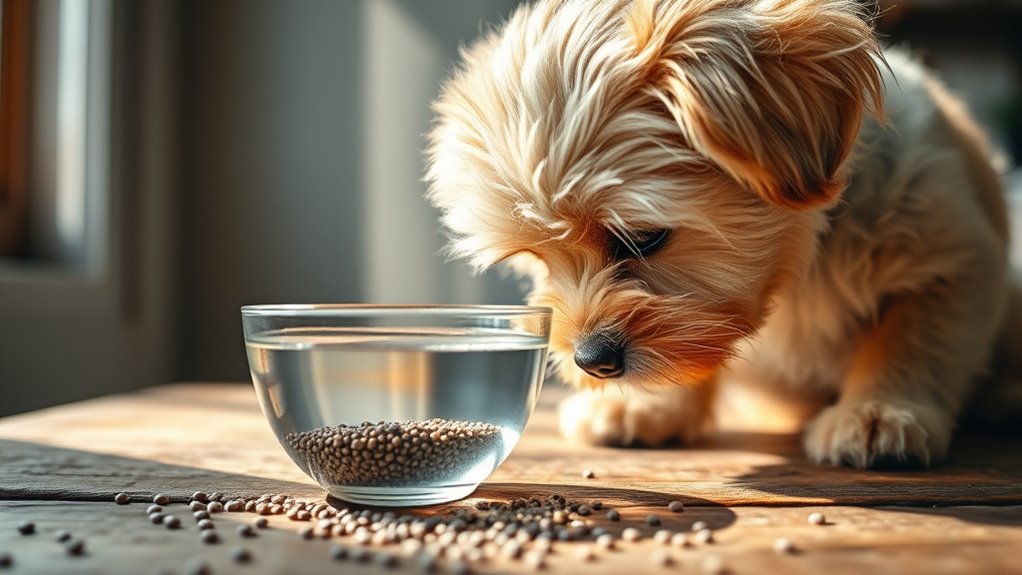
Incorporate the seeds into your dog’s regular meals by soaking the chia in water for 10-15 minutes until it forms a gel. This makes it easier for your dog to digest.
Mix the gel into their food or offer it as a treat. Always introduce chia gradually to watch for any reactions or sensitivities.
Remember, moderation is key. Too much can cause digestive issues. Small, consistent servings help your dog enjoy chia seeds safely.
Adjust the amount based on your dog’s size, age, and health. If you’re unsure, consult your veterinarian for guidance.
What Are the Potential Risks or Side Effects of Feeding Chia Seeds to Dogs?
Feeding chia seeds to your dog can be a bit tricky, and there are some risks to keep in mind. For example, choking is a concern, especially if the seeds are not served in a way that’s easy for your dog to swallow. You also want to watch out for digestive upset, like diarrhea or stomach discomfort, since chia seeds are high in fiber and can be a bit hard for some dogs to handle.
Plus, just like with any new food, there’s always a chance your dog could have an allergic reaction. So, it’s a good idea to start with a small amount and see how they react. It’s best to chat with your vet before adding chia seeds to their diet, just to be safe.
Choking Hazard Risks
While chia seeds are generally safe for dogs when given in moderation, there’s a risk they can pose a choking hazard if not prepared properly. To reduce this risk, it’s important to consider specific seed preparation methods.
First, avoid giving dry seeds directly because they can expand and block your dog’s airway. Instead, soak the seeds before offering them. This softens the seeds and makes them safer to eat.
Monitor portion sizes to prevent excessive swelling. Giving small amounts helps reduce the choking risk. You can also mix the seeds with wet food or treats, which keeps them moist and easier for your dog to swallow.
Proper seed preparation is key to keeping your dog safe. Always soak or grind chia seeds before sharing them to prevent choking hazards.
Digestive Upset Potential
Although chia seeds are nutritious, giving them to your dog can sometimes lead to digestive upset. Because of their high fiber content, they may disrupt your dog’s digestive balance if introduced too quickly or in large amounts.
Excess fiber sources can cause symptoms like diarrhea, constipation, or stomach discomfort. To minimize risks, start with small portions and watch your dog’s reaction. Make sure the seeds are soaked or ground to help digestion and prevent choking.
Overfeeding chia seeds may overwhelm your dog’s digestive system, so moderation is key. If you notice any signs of upset, cut back on the amount or stop feeding them altogether. Proper introduction and careful portioning help your dog enjoy the benefits without adverse side effects.
Allergic Reactions Possibility
Even though chia seeds offer health benefits for dogs, they can also trigger allergic reactions in some animals. Keep an eye out for symptoms like itching, swelling, difficulty breathing, or upset stomach. These signs mean your dog might be sensitive to the ingredient and need quick attention.
To stay safe, be aware of these potential risks:
- Mild allergic signs such as skin irritation or sneezing.
- More serious reactions like swelling of the face or throat.
- Digestive problems, including vomiting or diarrhea.
- Hidden sensitivities that might not show up right away.
Introduce chia seeds gradually and watch your dog closely. If you see any allergic symptoms, stop giving chia immediately and talk to your vet to avoid serious health issues.
How Can You Safely Incorporate Chia Seeds Into Your Dog’s Diet?
Are you wondering how to introduce chia seeds into your dog’s diet safely? Start small by offering a teaspoon of soaked chia seeds mixed into your dog’s regular food. This helps prevent choking hazards, especially for smaller dogs, and makes the seeds easier to digest.
Always soak the seeds in water for at least 15-20 minutes before serving to expand and soften them, reducing the risk of choking. Keep serving sizes moderate; a teaspoon or tablespoon per day is enough for most dogs.
Soak chia seeds for 15-20 minutes to soften and reduce choking risks, serving in moderation for your dog’s health.
Monitor your pet closely for any adverse reactions when adding chia seeds for the first time. Avoid overfeeding, as too many seeds can cause digestive upset.
Incorporate chia gradually into their diet, and check with your veterinarian if you’re unsure about the right amount or have concerns about your dog’s health. This careful approach allows you to enjoy the benefits of chia seeds safely.
What Should Pet Owners Consider Before Adding Chia Seeds to Their Dog’s Food?
Before adding chia seeds to your dog’s food, it’s important to consider your pet’s individual health needs and any sensitivities they might have. Making sure chia seeds are safe for your dog is key to their well-being.
Think about allergies or sensitivities. Some dogs might react poorly to new foods, so it’s best to introduce chia gradually.
Chia seeds are high in fiber, which can upset your dog’s stomach or cause diarrhea if given too much. Keep an eye on how your dog responds.
Chia absorbs water, so always ensure your dog has access to fresh water. This helps prevent choking or blockages when they eat the seeds.
Stick to recommended amounts to avoid overfeeding, which can lead to weight gain or digestive issues. Moderation is the way to go.
How Do Chia Seeds Compare to Other Superfoods for Dogs?
When comparing chia seeds to other superfoods for dogs, it’s clear that each offers unique benefits. Chia seeds are rich in omega-3 fatty acids, fiber, and antioxidants, making them a versatile choice.
However, superfood alternatives like blueberries provide powerful antioxidants and vitamins, while sweet potatoes offer complex carbs and fiber. Spinach supplies iron and calcium, supporting overall health.
Unlike some superfoods, chia seeds are easy to add to your dog’s diet — you can soak them or sprinkle them on food, and they’re generally well-tolerated. Other superfoods might need preparation or have specific serving guidelines.
It’s important to consider your dog’s individual needs when exploring superfood options. While chia seeds excel in omega-3 content and fiber, a mix of different superfoods can give your dog a broader range of nutrients.
Ultimately, choosing the right superfood depends on your dog’s health and preferences. Chia seeds can be a valuable addition or a helpful supplement to a balanced diet.
Frequently Asked Questions
Can Puppies Safely Eat Chia Seeds?
Yes, puppies can safely eat chia seeds if given in moderation. Start with a small amount to avoid upsetting your puppy’s digestion.
Chia seeds can provide omega-3 fatty acids and fiber, which support healthy digestion and a shiny coat.
Just remember to introduce new foods gradually and check with your vet to make sure it’s right for your puppy’s specific needs and health.
Are There Specific Dog Breeds That Benefit More From Chia Seeds?
You might wonder if some dog breeds benefit more from chia seeds. While all dogs can enjoy their nutritional perks, breeds with joint issues or skin sensitivities often see more advantages.
Large or active breeds, in particular, may experience improvements in coat health and joint support. Keep in mind, consulting your vet ensures chia seeds are suitable for your dog’s specific health needs.
This way, chia seeds can be a smart, natural addition to your pet’s diet tailored to their breed.
How Long Does It Take to See Health Improvements From Chia Seeds?
You might see health improvements in your dog within a few weeks, but it varies based on individual health and nutritional factors. Typically, noticeable changes can happen anywhere from 2 to 4 weeks after adding chia seeds to their diet.
Consistency is key, so keep an eye on how your dog responds and give it time. Remember, patience and proper dosage are important for the best results, helping your furry friend get the most benefit.
Can Chia Seeds Replace Traditional Dog Supplements?
Chia seeds can complement, but not replace, traditional dog supplements. Their nutritional value adds omega-3s, fiber, and antioxidants, boosting your pup’s health.
You should follow dosage guidelines carefully—start small and gradually increase to prevent digestive upset. While chia seeds support overall wellness, they shouldn’t substitute vet-recommended supplements or treatments.
Consistent consultation guarantees your dog’s diet remains balanced, benefiting both body and belly.
Are There Natural Alternatives to Chia Seeds for Similar Health Benefits?
Yes, natural alternatives like flaxseed benefits and hemp seed nutrition can offer similar health benefits. Flaxseeds are rich in omega-3 fatty acids, fiber, and antioxidants, supporting digestion and skin health.
Hemp seeds provide a complete protein source, healthy fats, and minerals, promoting energy and coat shine. Incorporating these into your dog’s diet can improve overall health, making them excellent substitutes or complements to chia seeds for your pet.
Conclusion
While chia seeds offer numerous health benefits, they’re not a magic cure-all. Just like a shiny coat doesn’t guarantee a healthy dog, adding seeds alone can’t replace a balanced diet or veterinary care.
You hold the power to nourish your dog with mindful choices, balancing superfoods like chia seeds with regular checkups. In the end, it’s a harmonious blend of care and moderation that truly keeps your beloved companion thriving.