What Defines Vegetable Oil as a Seed Oil?
Many people find themselves overwhelmed when choosing the right cooking oil. With so many options out there, it’s easy to feel unsure about what’s best for your health and recipes.
Vegetable oil is classified as a seed oil because it’s extracted from the seeds of plants like soybeans, sunflower, or canola, which are rich in oil. These seeds are pressed or chemically processed to extract the oil, which is typically neutral in flavor and used in cooking, baking, and food processing.
Understanding the source and extraction methods helps you choose the right oil for your needs.
There’s much more to uncover about their qualities and uses.
Key Takeaways
- Vegetable seed oils come from the seeds of plants like soy, sunflower, or canola.
- They’re typically extracted using methods like cold pressing or solvent extraction from oil-rich seeds.
- These oils usually have a neutral flavor and high smoke points, making them versatile in cooking.
- They mainly contain beneficial fats such as monounsaturated and polyunsaturated fatty acids.
- The nutritional profile and how they are used depend on the seed source and extraction method.
What Are Seed Oils and Where Do They Come From?
Seed oils are vegetable oils extracted from the seeds of plants, and they’re commonly used in cooking, food processing, and even cosmetics. The origins of seed oils come from various plants, each producing seeds rich in oil.
These oils are obtained through different methods, with cold pressing and solvent extraction being the most common. Cold pressing involves mechanically crushing seeds to release the oil without heat, which helps preserve nutrients and flavor.
Solvent extraction uses chemicals to dissolve the oil, then separates it from the seed material. These methods influence the quality and composition of the seed oil.
Some oils also undergo refining to remove impurities, which can affect their nutritional value and shelf life. Understanding where seed oils come from and how they’re extracted helps you see the variety in vegetable oils and their uses.
Whether for cooking or cosmetics, knowing their origins and extraction methods gives you insight into their properties and benefits.
Which Plants Provide Seeds for Seed Oils?
Lots of plants give us seeds that we can turn into seed oils. Think about soybeans, sunflower seeds, and canola—they’re some of the most common ones. These seeds are packed with oils that we extract for all sorts of things, like cooking, cosmetics, and even industrial uses.
And it’s pretty interesting because seeds from different plant families produce different kinds of oils. Each type has its own unique properties, making them suitable for various purposes. So, the next time you’re cooking or shopping for products, you might want to think about where those oils come from!
Common Seed Sources
Numerous plants serve as sources for seed oils, providing raw materials for both culinary and industrial uses. Seeds from crops like soybeans, sunflower, and canola are commonly used for oil extraction, especially in cooking. These seeds are pressed or solvent-extracted to produce oil.
Here’s a quick overview of some common seed sources:
| Seed Source | Key Uses |
|---|---|
| Soybeans | Widely used for cooking oils and processed foods |
| Sunflower | Popular for frying and salad oils |
| Canola | Known for its light flavor and versatility |
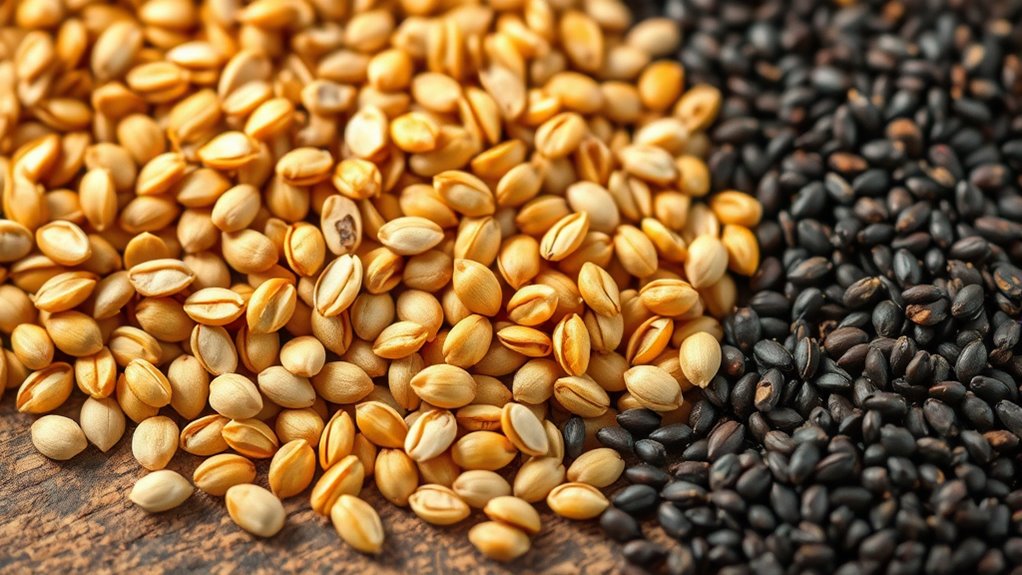
| Sesame | Used in cooking and traditional cuisines |
These seeds are chosen because they have high oil content and are versatile for different applications.
Oil-Rich Plant Seeds
A variety of plants produce seeds that are rich in oils, making them great sources for seed extraction. These oil-rich seeds come from different plant types, each with unique oil profiles.
Seeds from plants like soybeans, sunflowers, and rapeseed are commonly used because they have high oil content. Other good sources include sesame, flaxseed, and safflower.
The extraction process usually involves pressing or using solvents to get the oil out efficiently. Different seed varieties have varying oil yields and compositions, which affects the type of vegetable oil produced.
Botanical Families of Seeds
Seeds for seed oil come from plants belonging to various botanical families, each with unique traits that influence how the oil is made and its composition.
The seed anatomy varies a lot, which affects both extraction methods and nutritional content.
For example, oilseed crops like soybeans and sunflower seeds come from the Fabaceae and Asteraceae families, respectively, and are high in polyunsaturated fats.
On the other hand, seeds from the Brassicaceae family, like canola, have a different seed structure that impacts how the oil is extracted.
The botanical family shapes the seed’s physical traits and biochemical makeup, which in turn affects the oil’s quality, stability, and flavor.
Understanding these differences helps you see how the origin of a seed influences the properties of vegetable oils.
How Are Seed Oils Different From Fruit or Nut Oils?
While seed oils and fruit or nut oils are both used for cooking and other things, they really differ in where they come from and how they’re made. Seed oils come from the seeds of plants, often extracted by pressing or using solvents, which can affect their benefits.
In contrast, fruit and nut oils are pressed from the flesh or kernels of fruits and nuts. They usually have unique flavors and different nutrient profiles compared to seed oils.
| Seeds | Fruits/Nuts |
|---|---|
| Small, hard, and rich in oil | Larger, fleshy, with water content |
| Usually extracted by pressing | Often cold-pressed or cold-processed |
| Neutral flavor, less aroma | Rich, distinctive flavors |
| Examples include soybean, sunflower | Include olive, almond |
Knowing these differences helps you pick the right oil for your health and cooking needs.
What Are the Key Traits of Seed Oils?
Seed oils are known for their high oil content and relatively neutral flavors, making them versatile in cooking and food production. Their key traits include a high smoke point, which allows you to use them for frying and sautéing without breaking down.
They’re often rich in polyunsaturated fats, which can offer health benefits when consumed in moderation. These oils are generally light and flavorless, so they don’t overpower dishes. That makes them ideal for baking, dressings, and marinades.
Furthermore, seed oils tend to be affordable and widely available, contributing to their popularity in commercial food production. Their neutral taste and stability at high temperatures make them a practical choice for various culinary uses.
While they don’t have strong flavors, their health benefits come from their fatty acid profiles. These can support heart health when used as part of a balanced diet. Overall, seed oils are valued for their adaptability and functional traits.
What Are the Nutritional Benefits of Seed Oils?
Because of their rich composition of healthy fats, seed oils offer notable nutritional benefits that can support your overall health. Their nutritional profiles are packed with monounsaturated and polyunsaturated fats, which are essential for heart health and reducing inflammation.
These healthy fats help lower bad cholesterol levels and boost good cholesterol, decreasing your risk of cardiovascular issues. Seed oils also contain vitamin E, a powerful antioxidant that protects your cells from damage and supports immune function.
Moreover, they provide omega-3 and omega-6 fatty acids, which are crucial for brain health and hormone regulation. Incorporating seed oils into your diet can improve skin health and promote better nutrient absorption.
How Are Seed Oils Extracted and Processed?
Extracting seed oils involves a series of carefully controlled processes that maximize yield while preserving nutritional quality. The extraction methods vary, but common techniques include cold pressing and solvent extraction.
Cold pressing uses mechanical pressure to squeeze oil from seeds without heat, which helps maintain nutrients and flavor. Solvent extraction involves chemicals like hexane to dissolve the oil, then removing the solvent later. This method often yields more oil but may raise concerns about chemical residues.
After extraction, processing techniques such as refining, bleaching, and deodorizing are employed to improve appearance, scent, and stability. These steps help remove impurities, unwanted odors, and color, making the oil look appealing and last longer.
Depending on the desired quality, some producers may skip certain refining steps to keep more nutrients intact. Overall, the choice of extraction and processing methods influences the oil’s nutritional profile, purity, and shelf life.
These differences make the oil suitable for various culinary and industrial uses, depending on what is needed.
Are Seed Oils Healthy, or Do They Pose Risks?
Are seed oils truly healthy, or do they carry potential risks? While they’re often praised for their health benefits, such as providing essential fatty acids, some concerns remain.
High consumption of seed oils may increase inflammation and oxidative stress because of their high omega-6 fatty acid content. It’s important to weigh these potential risks against benefits like supporting heart health.
Here’s a quick comparison:
| Aspect | Health Benefits | Potential Risks |
|---|---|---|
| Nutritional Value | Rich in omega-3 and omega-6 | Can promote inflammation if overused |
| Processing Method | Provides stable cooking options | May contain harmful compounds from processing |
| Impact on Health | Supports heart health | Potential link to chronic diseases |
Understanding these aspects helps you make informed choices about adding seed oils to your diet.
Which Common Vegetable Oils Are Actually Seed Oils?
Many vegetable oils you see on the shelf are actually made from seeds, like sunflower, soybean, and rapeseed oils. These come from specific plants that are grown all around the world. Knowing which oils come from seeds can help you make smarter choices when you’re cooking or shopping.
Types of Seed Oils
While the term “vegetable oil” often refers to a broad category of plant-based fats, many of the oils in grocery stores actually come from seeds. These seed oils have different flavors and are extracted using methods like cold pressing or refining.
Knowing which oils are seed-based helps you choose better options for cooking and health.
Some common seed oils are canola oil, which has a mild flavor and is versatile for frying and baking. Sunflower oil has a light taste and is often used in salad dressings. Sesame oil offers a nutty flavor and is popular in Asian dishes.
These oils are appreciated for their neutral or distinct flavors, depending on how they’re processed.
Common Plant Sources
Most common vegetable oils in grocery stores actually come from seeds, not fruits or other plant parts. These seed oils are popular because they offer benefits like supporting heart health and reducing inflammation.
You’ll see seed oils used in everything from frying to salad dressings. They’re versatile, affordable, and a staple in many kitchens around the world.
Here’s a quick look at some common seed oils:
| Oil Type | Common Plant Sources |
|---|---|
| Sunflower Oil | Sunflower seeds |
| Canola Oil | Rapeseed plants |
| Sesame Oil | Sesame seeds |
These oils are widely used for cooking, baking, and processing foods. Their plant-based benefits make them a popular choice for many recipes.
How Do Seed Oils Fit Into Cooking and Food Preparation?
Seed oils play a big role in everyday cooking and food prep because they’re versatile, affordable, and have neutral flavors that don’t overpower dishes. Their mild taste makes them perfect for a variety of techniques, from sautéing to frying, without changing the flavor of your food.
You can use seed oils for baking, roasting, or even dressings, thanks to their high smoke points and light texture. They blend easily into recipes, letting the natural flavors of your ingredients stand out.
Here are some ways seed oils fit into your kitchen:
- Great for sautéing vegetables or proteins without adding strong flavors
- Perfect for deep frying because of their high smoke points
- Excellent for making salads and dressings since they don’t compete with other ingredients
How to Choose the Best Seed Oils for Your Kitchen
Choosing the right seed oils for your kitchen starts with understanding their unique qualities and how they fit your cooking needs. Start by considering flavor profiles—some oils like flaxseed or sesame add distinct tastes, while others like sunflower or canola are more neutral.
Next, pay attention to smoke points, which tell you how hot the oil can get before it starts to burn. For high-heat cooking like frying or sautéing, pick oils with higher smoke points such as avocado or peanut oil.
For dressings or low-heat recipes, milder oils like grapeseed or light olive oil work well. Also, think about nutritional aspects like omega fatty acids or antioxidants to match your health goals.
Frequently Asked Questions
What Distinguishes Seed Oils From Other Plant-Based Oils?
Seed oils are different from other plant-based oils because they come from seeds instead of fruits or leaves. This makes them unique in their origin and composition.
You get nutritional benefits like healthy fats and vitamin E from seed oils, which is why they’re popular for cooking and baking. Their neutral flavor and high smoke points make them versatile in the kitchen.
These oils are great for frying, sautéing, or making dressings. They offer convenient and healthful options for your cooking needs.
Are All Seed Oils Suitable for High-Heat Cooking?
Think of seed oils as athletes in a race; some excel at high heat, others falter. Not all seed oils are suitable for high-heat cooking because their heat stability varies.
Oils with a high smoke point handle high temperatures better, preventing smoke and flavor loss.
Choose oils like grapeseed or sunflower, which have higher smoke points, to ensure safe, flavorful frying without burning or creating unhealthy compounds.
How Does Seed Oil Production Impact the Environment?
Seed oil production can seriously affect the environment, especially if unsustainable methods are used. You might see the ecological footprint grow because of deforestation, high water use, and pesticide application.
To help reduce this, choose brands that focus on sustainability—like those using organic farming and eco-friendly extraction methods. Picking responsibly produced seed oils helps cut down environmental damage and supports a more sustainable future for farming.
Can Seed Oils Be Used in Skincare and Cosmetics?
Yes, seed oils can be used in skincare and cosmetics. They offer benefits like deep absorption and hydration, which make them popular ingredients.
You’ll find seed oils like sunflower, jojoba, and rosehip in many products because they help nourish and protect your skin. Their lightweight texture allows for quick absorption, leaving your skin soft, supple, and well-moisturized without clogging pores.
What Are the Common Methods to Refine Seed Oils?
You refine seed oils through methods like cold pressing, solvent extraction, and refining processes such as bleaching, deodorizing, and degumming. Cold pressing preserves nutrients but gives less oil, while solvent extraction increases the yield but might need extra refining.
Refining processes include bleaching to remove impurities, deodorizing to get rid of odors, and degumming to clarify the oil. These steps help ensure the oil is clean, stable, and ready for use in foods or cosmetics.
Conclusion
Remember, not all oils are created equal—knowing what makes a seed oil helps you make smarter choices.
When selecting your oils, consider their source, nutritional profile, and how you’ll use them in cooking.
A wise cook knows that “you are what you eat,” so opt for quality and balance.
By understanding seed oils, you’re better equipped to nourish your body and enjoy flavorful, healthy meals every day.
And that’s what makes vegetable oil a seed oil — knowing its origin and benefits helps you choose what’s best for your health.