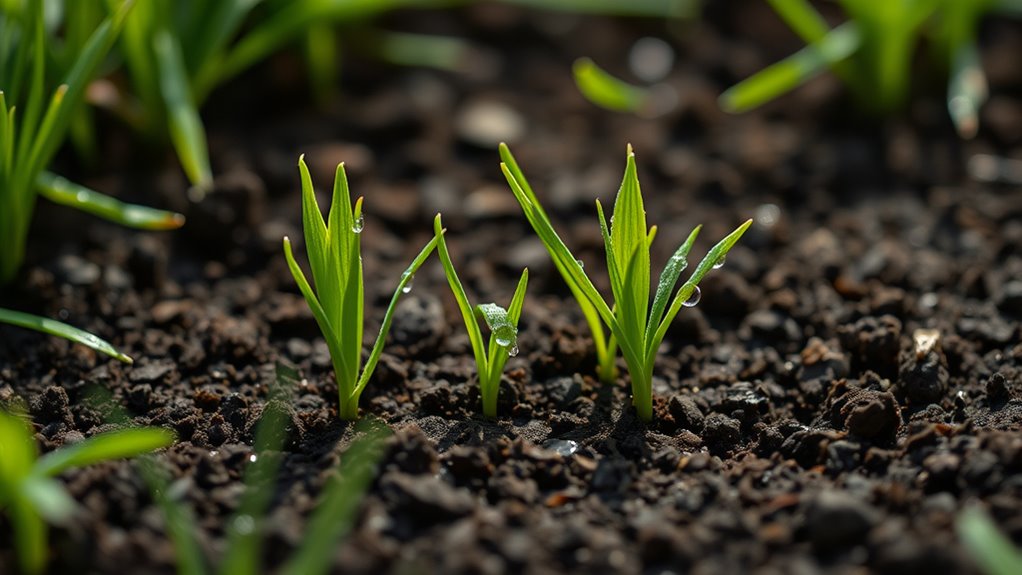
How Long Does Grass Seed Take to Grow?
Are you eager to get a lush, green lawn but frustrated with how long it takes for grass seed to grow? You’re not alone—many people struggle with waiting for their yard to flourish.
Luckily, understanding the growth timeline can help set realistic expectations and guide your efforts.
Grass seed typically takes between 7 to 21 days to germinate, depending on the variety and conditions. Faster-growing seeds like annual ryegrass appear in about a week, while cool-season grasses may take closer to three weeks.
Proper moisture, temperature, sunlight, and soil quality all impact growth speed.
If you want to guarantee quick establishment, you’ll want to optimize these factors.
Keep going, and you’ll find out how to help your grass grow healthier and faster.
Key Takeaways
- Germination usually happens within 7 to 21 days, but it depends on the seed type and conditions.
- Fast-germinating seeds might sprout in about a week, while cool-season grasses tend to take closer to three weeks.
- It generally takes 6 to 12 weeks for the grass to fully establish, with maturity reached in 3 to 6 months.
- Keeping the soil moist, having proper temperature, and plenty of sunlight help speed up growth.
- Poor soil prep, inconsistent watering, or extreme weather can slow down the process.
How Long Does It Take for Grass Seed to Germinate?
Ever wondered how quickly your grass seed will sprout? The time it takes for seed types to germinate varies, but generally, you can expect some action within 7 to 21 days.
Different seed types have distinct germination stages, starting with imbibition, where seeds absorb water and swell. Next comes the activation of metabolic processes, leading to root emergence. During this phase, you’ll see the seed coat crack open as the sprout pushes through the soil.
Fast-germinating seeds, like annual ryegrass, may take just a week, while cool-season grasses like Kentucky bluegrass could take closer to three weeks. Proper moisture, temperature, and soil conditions influence these germination stages, helping seeds evolve from dormancy to sprouting.
Understanding the seed types you’re planting helps set realistic expectations for germination timing. This way, you can better plan your lawn care schedule and enjoy your new grass sooner.
What Factors Affect Grass Seed Growth Speed?
Several key factors influence how quickly grass seed grows, including moisture, temperature, soil quality, and seed type. Sunlight exposure affects photosynthesis, so more sunlight usually speeds up growth.
Temperature also plays a role. Germination generally happens best between 60-75°F. Too hot or cold can slow down or stop growth altogether.
Soil quality impacts nutrient availability. Rich, well-draining soil encourages healthier and faster sprouting. Consistent moisture levels are important too—too little water delays germination, while too much can cause rot.
| Factor | Effect | Ideal Range |
|---|---|---|
| Sunlight Exposure | Speeds up photosynthesis | 6-8 hours daily |
| Temperature | Influences seed metabolism | 60-75°F |
| Soil Quality | Provides essential nutrients | Well-draining, fertile soil |
| Moisture | Supports germination | Consistent, moist conditions |
How Can You Create the Best Conditions for Fast-Growing Grass?
Creating ideal conditions for fast-growing grass starts with preparing your soil properly. Make sure your soil is well-drained and loosened to help roots establish quickly.
Next, focus on sunlight exposure; grass needs at least six hours of direct sunlight daily to thrive. If your yard is shaded, consider trimming trees or choosing shade-tolerant grass varieties.
Ensure your grass gets at least six hours of sunlight daily; trim trees or select shade-tolerant varieties for shaded areas.
Temperature control is also essential. Most grass types grow best when daytime temperatures are between 60-75°F. Avoid planting during extreme cold or heat, as these conditions slow germination.
Keep the soil consistently moist but not waterlogged to encourage steady seed growth. Using a starter fertilizer with balanced nutrients can further boost growth.
How Does Soil Quality Impact Grass Seed Development?
Soil quality plays an important role in the success of your grass seed development. Healthy soil provides the right balance of nutrients, which are crucial for seed germination and root growth.
If the pH balance is off, grass seeds may struggle to absorb nutrients, leading to stunted growth or poor establishment. Drainage issues can cause waterlogged soil, suffocating roots and encouraging disease.
Adding organic matter improves soil structure, boosts nutrient availability, and supports microbes that help break down nutrients for the plants.
Compaction reduces soil aeration and makes it harder for roots to grow, slowing down development.
To promote healthy growth, make sure your soil isn’t too compacted, drains well, and has a balanced pH. Improving these factors gives your grass seed the best chance to grow quickly and create a lush, healthy lawn.
How to Choose the Right Grass Seed for Quick Results
Choosing the right grass seed can really help you get a lush lawn quickly. The key is picking varieties that suit your climate and soil conditions.
Look for seed types that match your yard’s sunlight, moisture, and soil. Different grasses thrive under specific growth conditions, so choose accordingly.
Think about these factors:
- Seed varieties: Decide between cool-season or warm-season grasses based on where you live.
- Growth rate: Some seeds sprout faster than others.
- Climate compatibility: Pick varieties suited for your local climate for better success.
- Sunlight needs: Choose grass that does well in full sun or shade, depending on your yard.
- Maintenance requirements: If you want less upkeep, go for low-maintenance seed types.
Watering Tips to Promote Rapid Germination
Proper watering is key to making sure your grass seed germinates quickly and evenly. Focus on watering techniques that keep the soil moist without overdoing it. Use a gentle spray or light sprinklers to prevent seeds from being displaced or washed away.
Water frequently in the first few weeks, aiming for moist soil but not soggy. Typically, watering twice daily—early morning and late afternoon—works well. Keeping the soil consistently moist encourages faster germination and healthy roots.
Be careful not to overwater, as this can cause fungal problems or seed rot. On the flip side, underwatering dries out the soil and slows down sprouting. Check the soil regularly; it should feel damp but not soaked.
Adjust your watering schedule based on the weather. Hot, windy days might mean more frequent watering. Consistent, proper watering creates the perfect environment for quick germination and strong root growth.
Common Mistakes That Slow Down Grass Growth
If you don’t take the time to prepare your soil properly, your grass seeds might have a tough time taking root. This can really slow down their growth and make the whole process longer than it needs to be. And let’s be honest, watering can be tricky—if you’re not consistent, your seeds could end up too dry or waterlogged, which also delays germination. To give your grass the best shot at growing quickly and staying healthy, try to avoid these common mistakes. A little prep and regular watering can make a big difference!
Poor Soil Preparation
Poor soil preparation is a common mistake that can really slow down grass seed growth. Without proper prep, seeds struggle to establish roots, which delays germination.
To improve soil health, use aeration techniques to loosen compacted ground. This helps roots access air and water more easily.
Adding nutrient-rich amendments like compost or topsoil supplies essential nutrients for healthy growth. Skipping these steps can lead to poor seed-to-soil contact, lower germination rates, and weaker grass.
Make sure to break up hard soil, level the surface, and mix in amendments thoroughly. A well-prepared bed promotes faster germination and stronger grass development.
Getting the soil right is key to a lush, green yard. Proper prep ensures your lawn gets off to the best start possible.
Inconsistent Watering Schedule
Inconsistent watering can really delay grass seed germination and growth. When you water irregularly, the soil has a hard time staying evenly moist, which is key for healthy grass.
Too little watering dries out the soil, stopping seeds from sprouting and slowing down development. Overwatering, on the other hand, can cause pooling and root rot, making things worse.
To help your grass grow steadily, set a regular watering schedule that keeps the soil moist but not waterlogged. Usually, watering once or twice a day works well, especially in hot or dry weather.
Consistency is everything. Sticking to a predictable routine helps seeds develop strong roots and speeds up germination. This way, your grass will grow thick and healthy.
How to Care for Your New Grass Seed After Planting
After planting your grass seed, it’s essential to keep the soil consistently moist to promote healthy germination. Regular watering helps the seeds establish strong roots and prevents them from drying out.
To give your grass the best start, consider adding soil amendments like compost or topsoil to improve drainage and nutrients. Keep an eye out for pests; using natural pest control methods can prevent insects or animals from disturbing your new lawn.
Here are some tips to care for your freshly planted seed:
- Water lightly and frequently to maintain moisture without over-saturating.
- Use mulch or straw to protect seeds from birds and temperature fluctuations.
- Avoid heavy foot traffic on the area to prevent seed displacement.
- Check for pest activity and apply pest control as needed.
- Rake lightly to keep the soil loose and promote seed-to-soil contact.
Following these steps guarantees your new grass has the best chance to thrive.
How Long Until Your Grass Fully Establishes?
Typically, you can expect your grass to fully establish within 6 to 12 weeks after planting, depending on the grass type and growing conditions. During this time, seed establishment moves from germination to a lush, mature lawn.
The growth timeline varies based on factors like soil quality, watering, and sunlight. You’ll notice the grass becoming thicker, greener, and more resilient as it develops.
| Stage | Timeframe |
|---|---|
| Germination | 7-14 days |
| Seedling Development | 2-4 weeks |
| Early Growth | 4-8 weeks |
| Full Establishment | 6-12 weeks |
| Maturity | 3-6 months |
Knowing this timeline helps set realistic expectations and ensures you give your lawn proper care at each stage. Patience is key because your lawn’s full potential takes time to unfold.
Tips to Speed Up Your Grass Growth Process
If you want your grass to grow faster, the first thing you should do is get your soil ready. Making sure it’s well-prepared helps it soak up all the nutrients it needs, giving your grass a strong start.
Next, pick seed varieties that germinate quickly. That way, you’ll see results sooner rather than later. And don’t forget to keep the soil consistently moist—regular watering is key. Following these simple steps will create the perfect environment for your grass to establish itself faster and grow lush and healthy.
Optimize Soil Preparation
Preparing your soil properly can really speed up grass seed germination and growth. Start with soil testing to check pH levels and nutrient deficiencies.
If needed, add compost or fertilizer to balance nutrients and promote healthy roots. Loosen compacted soil to improve aeration and water absorption so seeds can establish quickly.
Remove weeds, rocks, and debris that could block growth. Consider leveling the soil for even seed coverage and better sunlight exposure.
Incorporate organic matter to improve soil structure and help retain moisture. Proper soil prep creates a fertile environment that encourages faster germination and strong growth, giving your grass the best start possible.
Choose Fast-Germinating Seeds
Choosing the right grass seed can really help speed up germination and overall growth. Look for seed varieties known for high germination rates, so you’ll see sprouts sooner.
Pick seeds labeled as fast-germinating or early-starting—they’re bred to sprout quickly under ideal conditions. Some seeds naturally have higher germination rates, which means more seeds will sprout successfully.
This helps your lawn fill in faster and establishes a strong, healthy turf sooner. Seeds with proven germination rates will save you time and effort in the long run.
Choosing these seeds gives you a head start on your lawn project and encourages quicker, more reliable growth.
Maintain Proper Watering
Maintaining proper watering is key to speeding up grass growth. Consistent moisture helps seeds germinate quickly and develop strong roots.
Using effective watering techniques ensures you keep the right moisture level without overdoing it. Too much water can drown seeds, while too little stalls growth.
To improve your watering habits, try watering early in the morning for better absorption. Keep the soil moist but not soaked.
Use a gentle spray to avoid disturbing the seeds. Water frequently but lightly, especially during hot weather.
Finally, adjust your watering based on rainfall and soil moisture levels to keep everything balanced.
Frequently Asked Questions
What Is the Average Time for Grass Seed to Fully Establish?
The average time for grass seed to fully establish is about 2 to 3 months. To help it grow quickly, focus on proper seed watering—keeping the soil consistently moist but not waterlogged.
Good soil preparation is also key. Loosen the soil and remove weeds to create the best conditions for growth. Regular watering and patience will help your grass develop strong roots and a lush, healthy look over time.
Does Grass Seed Type Influence Growth Speed Significantly?
You’ll notice that grass seed type impacts growth speed more than you might expect. Cool season grasses thrive in spring and fall, growing quickly with proper soil preparation and watering.
Warm season grasses take longer, especially in summer’s heat. Seed quality and sunlight exposure also matter; high-quality seeds in ideal conditions sprout faster.
How Does Climate Affect Grass Seed Germination Time?
Climate has a big effect on how quickly grass seeds germinate, mainly through soil temperature and moisture. Warmer soil speeds things up, especially in spring and summer, while cooler soil makes it take longer.
Moisture is key—if the soil stays moist but isn’t waterlogged, the seeds tend to sprout faster. On the flip side, dry or overly wet conditions can slow down or prevent germination.
Adjust your watering and planting schedule based on your climate to get faster, successful grass growth. This way, you’ll give your seeds the best chance to sprout nicely.
Can Lawn Fertilizers Speed up Grass Seed Growth?
Fertilizer can definitely give your grass seed a boost, but timing is everything. When you fertilize, it helps the seeds absorb nutrients better, so they sprout faster.
Make sure to apply fertilizer when the grass is actively growing—usually in spring or early summer. Doing it too early or too late can slow growth or even cause damage.
Getting the timing right means your soil gets the essential nutrients it needs, leading to a lush, healthy lawn with quicker germination and stronger growth.
How Do Pests Impact Newly Planted Grass Seed?
Pests can really damage newly planted grass seed by eating or disturbing it. They can lower the chances of seeds germinating and make the young grass weaker.
To protect your lawn, try using natural repellents or barriers. Keeping the area clean and watching for pests also makes a big difference.
Conclusion
With patience and proper care, your grass will grow strong, lush, and green—like a thriving carpet stretching across your yard.
By understanding the factors that influence growth, creating ideal conditions, choosing the right seed, and avoiding common mistakes, you set the stage for success.
Nurture your soil, water consistently, and stay attentive. Watch as your efforts transform bare patches into a vibrant, inviting landscape.
With time and care, your grass seed will sprout and flourish, turning your outdoor space into a peaceful retreat that blossoms with life.