Heirloom Seeds 101 – A How-To Guide for Gardeners
Starting your own heirloom garden can feel overwhelming, especially if you’re worried about choosing the right seeds or keeping them healthy. You’re not alone—many gardeners struggle with maintaining the authenticity and diversity of heirloom varieties.
Heirloom seeds are open-pollinated varieties passed down through generations, offering authentic flavors and genetic diversity. To cultivate them successfully, you need to choose healthy seeds suited to your climate, plant at proper depths, and keep different varieties separated to prevent cross-pollination.
Proper watering, sunlight, and pest management are key. Saving seeds involves drying and storing them in cool, dark places.
If you want to learn more about creating a vibrant, sustainable heirloom garden, keep exploring these essential tips.
Key Takeaways
- Understand the importance of heirloom seeds for preserving genetic diversity and traditional farming practices.
- Choose varieties that suit your local climate and match your taste preferences for better success in your garden.
- Follow proper planting, spacing, and maintenance techniques to keep seed purity and ensure healthy growth.
- Use seed saving and storage methods to keep heirloom traits alive for future seasons.
- Get involved with the community through seed swaps, sharing knowledge, and supporting biodiversity efforts.
What Are Heirloom Seeds and Why Do They Matter?
Heirloom seeds are open-pollinated seeds passed down through generations, often for decades or even centuries. Their history reflects a rich tradition of seed conservation, helping preserve genetic diversity and unique flavors.
Unlike hybrid seeds, heirloom seeds produce plants true to type, so you get consistent results year after year. Choosing heirloom seeds connects you with a legacy of farmers and gardeners who value maintaining authentic varieties.
Heirloom seeds produce true-to-type plants, ensuring consistent, authentic harvests year after year.
These seeds matter because they protect biodiversity and offer resilience against pests and changing climates. Plus, they let you save seeds from your own harvest, encouraging self-sufficiency.
Heirloom seed conservation keeps rare and culturally significant plant varieties alive, preventing their extinction. This way, future gardeners can enjoy a wide array of flavors, colors, and textures rooted in history.
Embracing heirloom seeds means supporting efforts to preserve these treasured varieties and keeping them thriving in your garden.
How to Choose the Best Heirloom Seed Varieties for Your Garden
When you’re picking out heirloom seeds, it’s a good idea to think about your climate first. You want to choose varieties that will actually thrive in your area, so your garden has the best chance to flourish.
Next, think about what you like in terms of taste and how the plants look. Do you prefer sweet tomatoes or colorful peppers? Picking varieties that match your preferences makes gardening even more rewarding.
It’s also smart to check if the seeds have any disease resistance traits. That way, you’ll be less likely to run into problems and can enjoy a healthier, more vibrant garden.
Climate Compatibility Tips
Choosing the right heirloom seed varieties starts with understanding your local climate. Begin by figuring out your climate zone, which helps you know which plants will do best naturally in your area.
Heirloom seeds differ in how well they adapt to different conditions, so picking varieties suited to your zone boosts your chances of success.
Think about seasonal changes, like the length of your growing season and typical temperature swings, to pick seeds that will mature properly.
Pay close attention to frost dates and temperature ranges to avoid planting too early or too late.
Matching seed varieties to your climate zones and considering seasonal shifts gives your garden the best shot at a bountiful harvest.
Proper climate compatibility leads to healthier plants and a more rewarding gardening experience.
Taste and Appearance Factors
Your garden’s flavor and visual appeal depend on choosing seed varieties with the right taste and appearance. Think about what flavor profile suits your cooking—whether you like sweet, tangy, or savory.
Looks matter just as much. Consider color variations and aesthetic designs that can make your garden more attractive. Heirloom varieties often offer both vibrant hues and great flavor, making your harvest both delicious and beautiful.
Use this table to compare key factors:
| Variety | Taste Profile | Visual Appeal | Culinary Uses |
|---|---|---|---|
| Cherokee Purple | Sweet, smoky | Deep purple skin | Salads, roasting |
| Sungold | Very sweet | Bright orange, cherry | Snacks, garnishes |
| Green Zebra | Tart, tangy | Green with yellow stripes | Salsas, salads |
| Brandywine | Rich, complex | Large, pinkish-red | Sandwiches, fresh eating |
Pick varieties that match your taste preferences and aesthetic goals for a rewarding garden.
Disease Resistance Traits
Selecting heirloom seed varieties with strong disease resistance can really boost your garden’s chances of success. Understanding how disease resistance works helps you pick plants that can naturally fight off common problems, so you might not need to use chemicals.
Look for varieties labeled as resistant or tolerant to specific diseases like blight, powdery mildew, or fusarium wilt. Keep in mind that heirloom plants can vary; some are more vulnerable to certain diseases because of their genetics.
What Is Open-Pollination and Why Is It Important?
Open-pollination is all about letting nature do its thing. It relies on natural processes like the wind, insects, or birds to transfer pollen from one plant to another. This way, plants can reproduce naturally without human intervention.
What’s really great about open-pollination is that it encourages genetic diversity. That means plants can adapt better and stay resilient over time. Plus, by supporting this method, you’re helping to preserve heirloom varieties and keep the rich heritage of traditional seeds alive for future generations.
Natural Pollination Processes
Natural pollination processes happen when plants reproduce by transferring pollen from one flower to another. This is often helped by wind, insects, or animals.
These natural methods support beneficial insects that help move pollen and keep plant interactions healthy. Recognizing the importance of habitat diversity is key to maintaining ecosystem balance and supporting pollination.
Some main factors influencing natural pollination include flowering patterns, which attract pollinators with their timing and structure. Seasonal timing also matters, as it needs to match when beneficial insects are active.
Pollen transfer depends on insect movement or wind dispersal. Having diverse habitats with a variety of flowering plants provides the right environment for pollinators and supports successful pollination.
Understanding these elements helps promote effective natural pollination, which is essential for open-pollinated heirloom seeds and sustainable gardening.
Genetic Diversity Benefits
When plants reproduce through open-pollination, they depend on natural processes like wind, insects, and animals to move pollen between flowers. This method encourages genetic diversity, which is key to a healthy and resilient garden.
With more genetic resilience, plants are better equipped to handle pests, diseases, and changing environmental conditions. Open-pollinated heirloom seeds carry the unique heritage of diverse plant lines, helping to preserve special traits across generations.
This diversity helps prevent genetic bottlenecks that often happen in hybridized or commercially bred seeds. It keeps your garden strong, adaptable, and full of variety.
Preservation of Heritage
By choosing heirloom seeds that are open-pollinated, you’re helping preserve traditional plant varieties passed down through generations. This practice highlights the importance of maintaining genetic diversity and cultural heritage.
Open-pollination allows plants to reproduce naturally, ensuring seed conservation and better adaptation to local conditions. It’s a simple way to support the long-term health of your garden.
Here’s why it matters:
- It keeps unique traits linked to regional heritage alive.
- Seeds stay true to their lineage over many generations.
- Plants become more resilient and suited to your environment.
- It promotes biodiversity by maintaining a variety of open-pollinated strains.
How to Plant and Grow Heirloom Seeds Successfully
To successfully plant and grow heirloom seeds, start by choosing healthy, well-developed seeds from reputable sources. Proper seed starting is key—plant the seeds indoors or directly in the garden, following the recommended depth and spacing instructions.
Keep the soil consistently moist and make sure it’s well-draining to promote healthy germination. Once seedlings emerge, provide plenty of sunlight and maintain even temperatures to encourage strong growth.
Incorporate companion planting techniques by pairing heirloom varieties with compatible plants. This can improve pest control, boost growth, and enhance flavor. For example, basil benefits tomatoes, while marigolds help deter pests from many vegetables.
Regularly check your plants for signs of disease or pests and address issues promptly. With patience and attentive care, your heirloom plants will thrive, producing flavorful, unique produce that celebrates garden heritage.
How to Save and Store Heirloom Seeds for Future Seasons
Once you’ve grown and harvested your heirloom vegetables, saving seeds ensures you can enjoy their unique flavors year after year. To do this effectively, follow these simple steps:
- Seed drying: After harvesting, spread seeds on a paper towel or screen in a dry, well-ventilated space. Let them dry completely to prevent mold and keep them viable.
- Cleaning: Remove any remaining plant debris or pulp so only pure seeds are stored. This helps keep your seeds healthy for planting later.
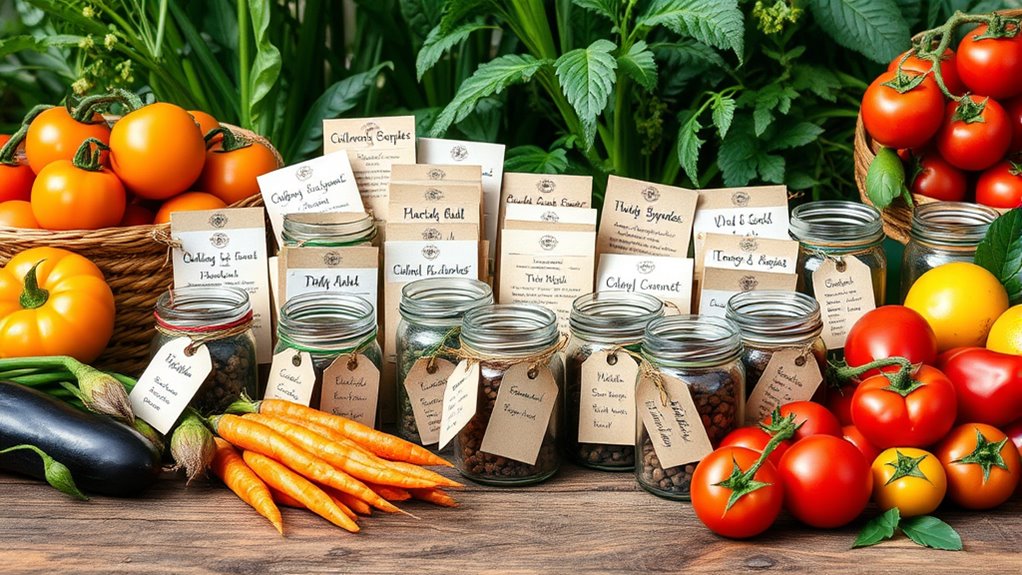
- Storage containers: Use airtight, opaque containers like glass jars or mylar bags. These protect seeds from moisture and light, which can damage them.
- Labeling: Clearly mark containers with the seed type and harvest date. This makes it easy to identify your seeds in the future.
Storing seeds in a cool, dark spot like a pantry or cellar helps keep them viable over the winter. Proper drying and the right containers will preserve your heirloom seeds for many future planting seasons.
Troubleshooting Common Challenges in Heirloom Gardening
Heirloom gardening can be deeply rewarding, but it also presents unique challenges that can disrupt your planting season. Pest management is often a top concern; pests can quickly damage delicate heirloom plants.
To combat this, use integrated pest management techniques like encouraging beneficial insects, removing pests by hand, or applying organic controls. Maintaining soil health is just as essential.
Poor soil can stunt growth and increase vulnerability to pests and diseases. Regularly test your soil’s pH and nutrient levels, and enrich it with compost or organic matter to boost fertility.
Avoid overwatering, which can lead to root rot and fungal issues. Keep a close eye on your plants for signs of trouble and act swiftly.
Why Growing Heirloom Seeds Benefits Biodiversity and Flavor
Growing heirloom seeds not only boosts your garden’s resilience but also helps preserve biodiversity and enhance flavor. When you pick heirlooms, you’re supporting a wider genetic pool, which offers many benefits for the environment.
This diversity helps plants adapt to changing conditions and fight off pests naturally. Plus, heirlooms often have richer, more vibrant flavors that hybrid varieties just can’t match.
Here are four key reasons why heirloom seeds matter:
- They promote genetic diversity, creating a more resilient ecosystem.
- They preserve unique, region-specific traits not found in hybrids.
- They boost flavor, making your produce tastier and more vibrant.
- They help safeguard heirloom varieties for future generations, protecting culinary traditions.
How to Maintain Seed Purity and Prevent Cross-Pollination
If you want to keep your heirloom seeds pure, one of the best things you can do is make sure different varieties are kept separate. It’s all about giving each type enough space so they don’t accidentally cross-pollinate.
Timing is also key — planting different varieties at different times can really help prevent unwanted pollination. And if you want to get extra cautious, physical barriers like row covers or netting can act as a protective shield, keeping bees and other pollinators at bay.
Isolate Different Varieties
Maintaining seed purity means carefully isolating different varieties to prevent cross-pollination. This step is key for heritage preservation and keeping seed lineages intact.
To effectively isolate varieties, consider these strategies:
- Physical Barriers: Use row covers or fencing to block pollen transfer between plants.
- Distance: Plant different varieties far apart, usually at least 50 to 100 feet, to reduce the chance of cross-pollination.
- Timing: Stagger planting dates so that flowering doesn’t happen at the same time, limiting cross-pollination opportunities.
- Isolation Gardens: Set up dedicated plots for each variety, especially for heirloom seeds, to protect seed lineage and preserve their unique traits.
Time Planting Strategically
Timing your planting carefully is key to keeping seed purity and avoiding cross-pollination. By syncing your planting schedule with your local calendar and making seasonal tweaks, you control when your flowers bloom and reduce overlap between different varieties.
| Early Planting | Late Planting |
|---|---|
| Avoids overlap | Guarantees isolation |
| Reduces cross-pollination | Helps keep seeds pure |
| Allows seed drying | Prevents mixing of varieties |
| Syncs with pollinator activity | Limits insect transfer between plants |
| Adjusts for frost | Ensures plants reach maturity |
Plan your planting based on each heirloom’s specific needs, considering the seasons. Proper timing helps preserve the true traits of your heritage plants and keeps your seeds true to type.
Use Physical Barriers
Using physical barriers is one of the most effective ways to keep your seed pure and prevent cross-pollination in your heirloom garden. Proper garden design and pest control are key to avoiding unwanted hybridization.
Consider these strategies: Install row covers or insect netting around plants to block pollinators and pests that can carry pollen between varieties. Use fencing or plant cages to create physical separation between different heirloom varieties.
Space plants far enough apart—usually at least 50 feet for wind-pollinated crops—to reduce accidental cross-pollination. Employ barrier fabrics or cloches to protect vulnerable plants from pests and cut down on external pollen influence.
These barriers help preserve the integrity of your heirloom seeds while supporting a thoughtful garden design.
What Resources and Tools Can Help You Save Heirloom Seeds
Saving heirloom seeds is easier when you have the right resources and tools at your fingertips. To master seed saving, you’ll want some essential supplies like clean, dry containers, labels, and a good seed drying rack.
A fan or dehumidifier can help with proper seed drying, preventing mold and spoilage. Consider investing in quality seed envelopes or small jars to store your seeds safely and keep track of variety and harvest date.
Resource recommendations include seed saving guides, which provide detailed instructions, and online forums where experienced gardeners share tips. A magnifying glass can help you inspect seed quality, while a scale guarantees accurate measurement for germination testing.
These tools simplify the process and improve your success rate. With the right resources, seed saving becomes more efficient and rewarding, helping you preserve the unique qualities of your heirloom garden for years to come.
Next Steps: Expanding Your Heirloom Garden and Sharing Your Seeds
Expanding your heirloom garden is a rewarding way to dive deeper into your plant collection and connect with traditional varieties. To grow further, try seed swapping with fellow gardeners. This exchange adds diversity and helps preserve rare heirlooms.
Expand your heirloom garden through seed swapping to increase diversity and preserve rare traditional varieties.
Joining a community gardening project can also broaden your reach, giving you chances to share seeds and knowledge. Here’s how to get started:
- Reach out to local seed swapping events or online groups focused on heirlooms.
- Choose healthy, well-preserved seeds to ensure successful growth.
- Get involved in community gardening projects to promote shared learning.
- Keep records of your seed varieties and growing tips to help others and make future exchanges easier.
These steps help you create a resilient, diverse garden and strengthen community bonds. Sharing seeds amplifies your gardening efforts and keeps heirloom traditions alive for future generations.
Frequently Asked Questions
How Do I Identify Authentic Heirloom Seed Varieties?
To identify authentic heirloom seed varieties, look for seeds with distinct characteristics that match the known traits of the variety, such as color, shape, and size.
Check the seed packet or source for transparency about its origins and history. Reputable seed catalogs or local seed exchanges that emphasize heritage and authenticity are good options.
Are Heirloom Seeds Suitable for All Climate Zones?
Heirloom seeds can be incredibly versatile, but they aren’t a one-size-fits-all solution for every climate zone. You need to consider climate adaptability and seed preservation techniques to succeed.
Some heirloom varieties thrive in specific conditions, while others may struggle. If you choose wisely and adapt your gardening methods, many heirloom seeds can work well for your zone.
With the right approach, you can turn your garden into a thriving, resilient paradise using heirloom seeds suited to your climate.
What Are Common Pests Specific to Heirloom Plants?
You’ll encounter pests like aphids, tomato hornworms, and Colorado potato beetles on heirloom plants.
To manage these pests, try pest management techniques such as handpicking or using organic insecticides.
Additionally, consider companion planting—placing marigolds beside tomatoes or basil near peppers—to naturally deter pests.
Regular inspections help catch infestations early, making pest control easier and keeping your heirloom plants healthy.
How Long Can Heirloom Seeds Be Stored Effectively?
Think of heirloom seeds as fine wine—if stored properly, they can age beautifully. Typically, seed longevity varies between 1 to 5 years, but ideal storage conditions extend this window.
Keep seeds in a cool, dark, and dry place, like a pantry or a sealed jar in the fridge. Proper storage conditions guarantee your heirloom seeds stay viable longer and give you a better chance for a successful garden year after year.
Can I Grow Heirloom Seeds Indoors or in Containers?
Yes, you can grow heirloom seeds indoors or in containers.
For indoor gardening, pick a sunny spot or use grow lights. Set up containers with proper drainage to keep things healthy.
Use good quality soil and keep the environment warm and humid. Container setups are great for many heirloom varieties, so you can enjoy fresh, homegrown produce all year round.
Just make sure your plants get enough light and water for healthy growth.
Conclusion
Growing heirloom seeds not only preserves unique flavors and varieties, but it also supports biodiversity, which is essential for resilient gardens.
Did you know that over 90% of seed varieties have disappeared since the 1900s? By saving and sharing heirlooms, you’re helping keep our food heritage alive for future generations.
Start small, stay dedicated, and watch your garden thrive while making a meaningful difference in preserving our world’s rich agricultural history.
Including heirloom seeds in your gardening efforts helps protect this precious diversity.